





Satinwood Nesting Tables
Satinwood nesting tables are versatile sets of graduated tables designed to slide neatly together, offering a practical surface solution for period interiors.
Satinwood Nesting Tables
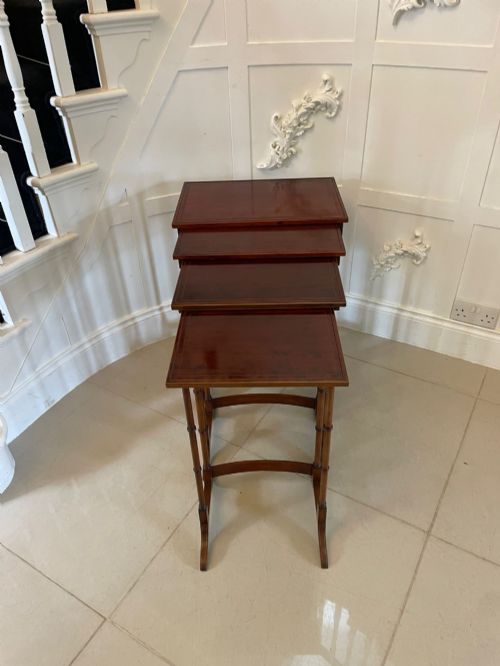
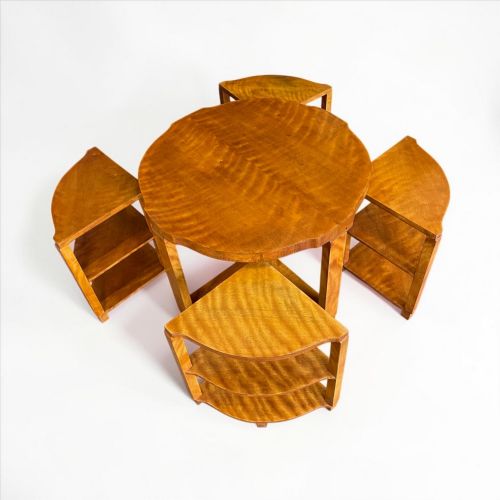
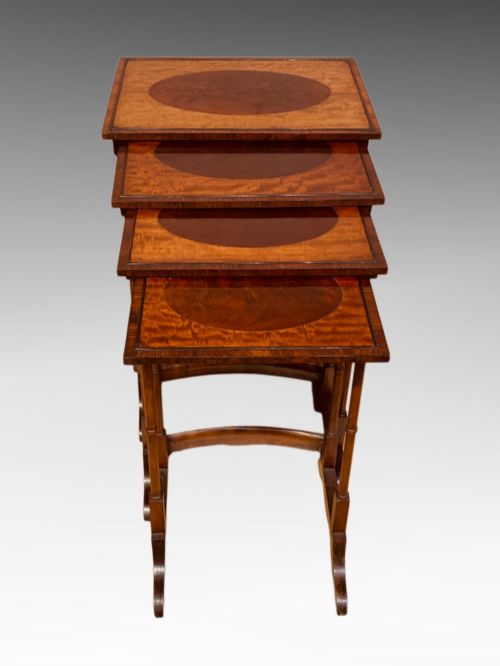
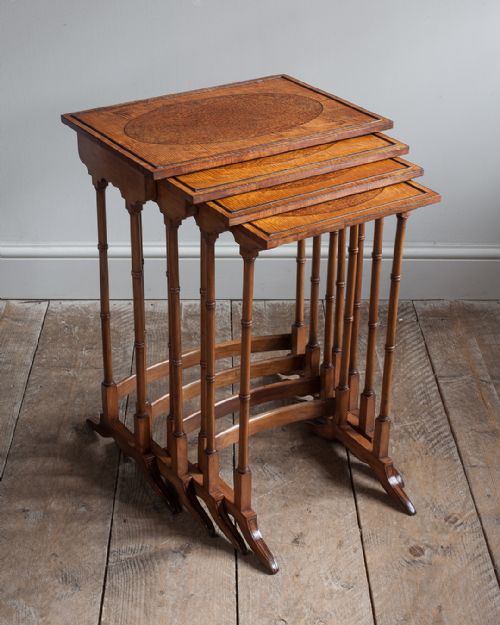
Satinwood nesting tables appear in various historical periods, notably the Edwardian era, the Victorian period, and the 1930s Art Deco years, often taking the traditional form of a quartetto set.
A buyer examining these listings will frequently encounter sets comprising four graduated tables designed to stow away beneath the largest top when not in use.
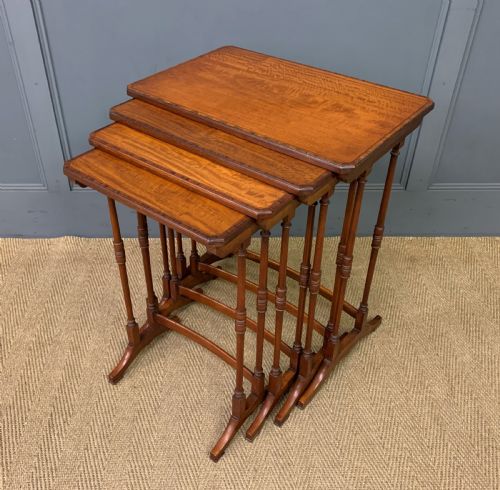
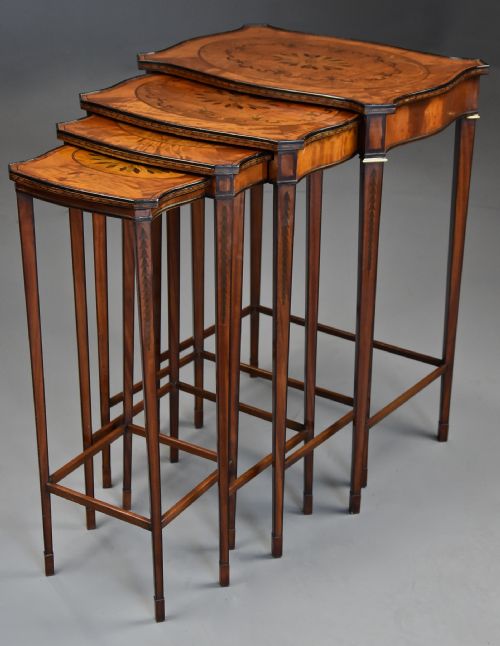
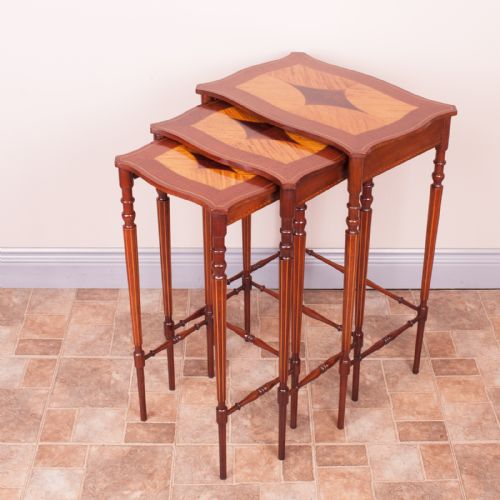
The forms range from rectangular coffee and occasional tables to serpentine shapes influenced by the Sheraton style, using figured woods and contrasting stringing.
What varies in quality
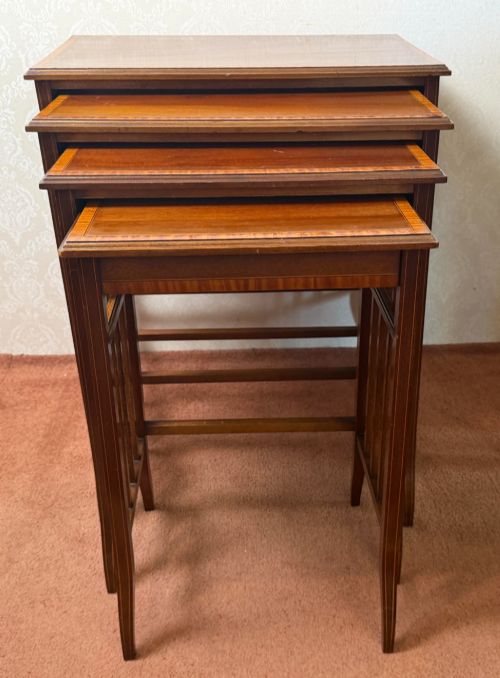
The refinement of the timber selection dictates the visual appeal, with heavily figured satinwood and precise boxwood inlay marking out the superior examples from plain variants.
Structural joinery and the precision of the graduated sizing determine how cleanly the tables slide together and whether the framework remains rigid over decades of use.
Several sets include a tiny sliding table meant strictly for holding a pocket watch or a cup of very small tea.
The Satinwood Nesting Tables Glossary
- Quartetto
- A set of four tables designed to nest inside one another. This term appears frequently in Edwardian furniture records.
- Cross-banding
- A strip of veneer applied to the edge of a table top running perpendicular to the grain of the main panel. It creates a neat decorative border.
- Stringing
- Thin lines of contrasting wood inlaid into the surface of the timber. Boxwood is commonly used for this delicate linear detail.
- Sheraton style
- A neoclassical design vocabulary originating in the late eighteenth century and revived during the Edwardian period. It emphasises clean lines and light wood inlays.
Satinwood Nesting Tables: Frequently Asked Questions
What is a quartetto nest?
A quartetto nest is a set of four graduating tables built to slide neatly underneath one another. This design saves floor space while providing extra surfaces.
Cabinetmakers produced these sets in various woods throughout the nineteenth and early twentieth centuries for drawing rooms and parlours.
How were satinwood tables used?
Owners pulled out individual tables as needed for serving afternoon tea, holding lamps, or writing letters. They functioned as flexible occasional furniture.
When entertaining finished, the smaller tables stacked back under the main top to clear the room.
How do I date Edwardian pieces?
Edwardian furniture often displays Sheraton revival styling, featuring light satinwood veneers and delicate boxwood stringing. Makers during this period frequently used mahogany frames.
Comparing construction methods and timber characteristics helps distinguish these items from later twentieth-century reproductions.
Are these tables sturdy enough for daily use?
Most sets use solid timber frames and stable veneer substrates designed for everyday household activities. Gentle handling preserves the delicate inlaid edges.
Placing them away from direct heat sources prevents the timber and veneer from drying out over time.