


Saryk Turkmen Weaving
Saryk Turkmen weaving brings powerful tribal character into a room through deep reds and geometric guls.
Saryk Turkmen Weaving
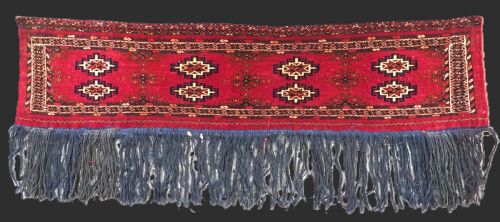
Saryk Turkmen weaving comprises tribal textiles created in Central Asia during the nineteenth century, including torba faces, chuval faces, and ensis. These pieces function primarily as dowry weaving and functional tent furnishings, carrying strong traditional tribal patterns.
The objects seen here are predominantly torba faces and chuval faces dating from the eighteen-seventies and eighteen-eighties, alongside mid-nineteenth-century examples. Collectors encounter classic Salor designs, kedjebe patterns, and schemle gul motifs within this tribal grouping.
How they were made
The structure relies on wool foundations worked with natural dyes, often incorporating white cotton and crimson silk highlights for contrast. Artisans also utilised flat woven details on backs and borders to complete the construction.
Weavers employed fine knotting techniques suited to portable dowry pieces, producing dense surfaces that held intricate tribal guls. Natural dye stuffs provided the rich red ground colours characteristic of these Central Asian textiles.
Nomadic weavers tucked crimson silk into their wool bags so brides could admire a flash of secret brightness.
What varies in quality
Quality rests on the fineness of the weave and the clarity of the design structure, with smaller sizes often displaying tighter knot density. The inclusion of delicate materials like crimson silk and white cotton elevates the technical merit of an individual piece.
The definition and layout of traditional motifs, such as Salor guls or kedjebe patterns, determine the visual success of the textile. Pieces complete with plain weave backs or well-preserved flat woven details retain a higher degree of their original domestic form.
The Saryk Turkmen Weaving Glossary
- Chuval
- A large storage bag face produced by tribal weavers. They typically feature repeating rows of major guls.
- Gul
- A medallion motif repeated across Turkmen carpets and tent bags. Each tribal group utilised distinct primary gul designs.
- Kedjebe
- A lattice or tent pattern associated with wedding processions. This design appears frequently on finer torba faces.
- Ensi
- A tent door hanging designed to cover the entrance of a yurt. These textiles follow a specific cruciform layout.
Saryk Turkmen Weaving: Frequently Asked Questions
What is a saryk turkmen torba?
A torba is a small utility bag used inside nomadic tents for storage. They formed an essential part of traditional Turkmen dowry weaving.
These pieces were hung against the lattice walls of the tent and often display intricate tribal designs such as kedjebe or Salor guls.
How were these bags used?
Nomadic families utilised these textiles for storing personal possessions, small household goods, and dowry items within the tent. Their sturdy construction suited daily domestic life.
Over time, the finer faces became valued as decorative items showcasing the weaver's skill and tribal identity.
What materials appear in these textiles?
Traditional pieces are built from wool dyed with natural colorants, creating the characteristic deep red ground tones. Artisans frequently added white cotton and crimson silk to highlight specific design elements.
Flat woven details and plain weave backs also appear on surviving examples from the nineteenth century.
How do you date saryk weaving?
Dating relies on assessing the natural dye palette, the quality of the wool, and the structural characteristics of the weave. Nineteenth-century examples often display specific regional guls and hand-spun materials.
Comparative analysis with known tribal formats helps place pieces within the eighteen-fifties to eighteen-eighties period.