
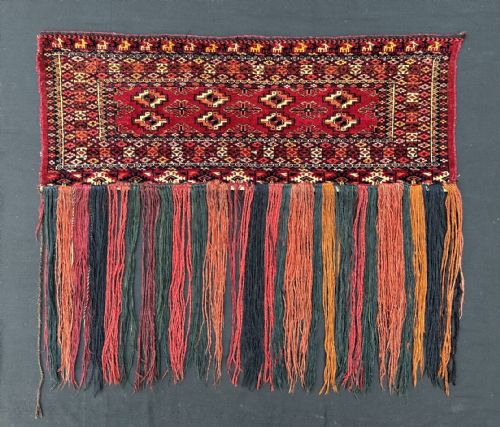


Antique Oriental Tent Bag
An antique oriental tent bag is a woven tribal storage piece offering rich colour and pattern, coveted by collectors of Central Asian textiles.
Antique Oriental Tent Bag
The versions you meet on this page date from the mid-nineteenth century up to nineteen hundred, spanning periods like eighteen seventy and eighteen eighty. They appear as bag faces or complete examples retaining their original wool backs.
Nomadic weavers utilised these textiles inside tents for storage, dowry purposes, and household organisation. Their distinctive designs reflect the specific tribal heritage and regional traditions of the Merv Oasis and the Amu Darya region.
How they were made
These nomadic weavings rely on wool as the primary structural and decorative material, frequently combined with natural dyes to achieve deep crimson and ivory grounds. Selected examples incorporate white cotton and crimson silk highlights.
The construction involves meticulous weaving techniques resulting in fine structures, particularly visible in dowry pieces and chuval faces. Artisans arranged traditional motifs such as kepse güls, ertum güls, schemle güls, and curled leaf designs across the surface.
Nomadic weavers packed their worldly goods into these bags, trusting sheep wool to survive desert migrations and tent life.
What varies in quality
Quality in these tribal textiles depends upon the density of the weave and the precision of the tribal pattern execution. Finer examples display intricate gül arrangements and smaller formats that require exceptional skill from the weaver.
The vibrancy and integrity of the natural dyes significantly influence the visual impact of each bag face. Examples retaining complete wool backs and original structures hold greater documentary value for textile historians.
The Antique Oriental Tent Bag Glossary
- Torba
- A small Central Asian tribal storage bag used inside tents. These pieces typically feature horizontal formats and distinct tribal gül patterns.
- Chuval
- A large nomadic storage bag used by Turkmen tribes for household goods and bedding. They often display multiple primary güls across the main field.
- Gül
- A repeating medallion or floral motif characteristic of Turkmen carpet and textile design. Each tribe utilised specific gül variations to signify identity and heritage.
- Kand
- A wool pile weaving technique employed by Central Asian nomads. It provides durability and texture to functional tent furnishings.
Antique Oriental Tent Bag: Frequently Asked Questions
What is an antique oriental tent bag?
An antique oriental tent bag is a traditional woven storage piece made by nomadic tribes in Central Asia. These textiles served practical functions inside dwellings while displaying intricate tribal designs.
Collectors prize them for their historical significance, natural dyes, and complex geometric patterns that identify specific weaving groups.
How were tent bags used originally?
Nomadic families utilised these bags to store clothing, household items, and dowry goods inside their tents. They hung against the lattice walls or served as container units during migrations.
Their robust construction protected possessions from damp ground and dust while adding decoration to the interior living space.
How do I live with a tent bag?
You can display these textiles as wall hangings to protect the pile from foot traffic and heavy wear. Placing them away from direct sunlight preserves the natural dyes.
Alternatively, smaller torba faces work well mounted behind glass or placed on low-traffic surfaces where their detailed weave remains visible.
How do I identify different tribal designs?
Tribal attribution relies on specific structural motifs such as the kepse gül associated with Yomut weavers or the ertum gül used by Chodor groups. Examining the border patterns and secondary ornaments clarifies origin.
Palette choices also help distinguish between workshops and tribal groups across the Turkmen regions and the Amu Darya valley.