


Terracotta Wool Torba
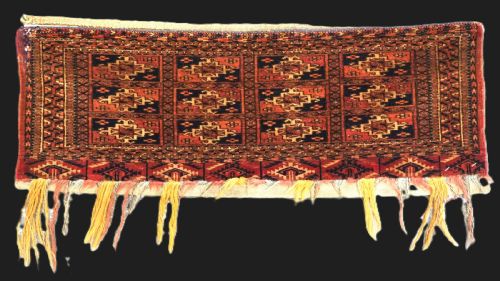
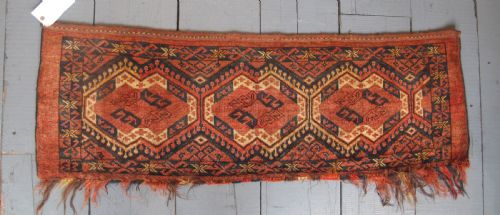
These terracotta wool torba examples are tribal storage bags woven by Central Asian nomads, bringing rich earthy tones and traditional guls to your interior.
Terracotta Wool Torba
A terracotta wool torba is a traditional tribal storage bag or bag face created by Turkmen and Central Asian nomadic groups. These pieces served practical domestic functions within nomadic tents, often used for storing household goods or as dowry items.
The selections available here date from the mid-nineteenth century through the early twentieth century. You will encounter various tribal subgroups, including Tekke, Yomut, Saryk, Ersari, and Chodor, each bringing distinct design vocabularies to their weaving.
Most items appear as complete bags with original backs and tassels, or as preserved bag faces designed for hanging. Collectors prize these textiles for their authentic tribal heritage and deep terracotta colour palettes.
Materials and construction
Weavers constructed each terracotta wool torba using wool foundations and surfaces, frequently incorporating natural dyes to achieve deep terracotta and madder red hues. Cotton occasionally appears in the structural elements or supplementary details of certain pieces.
The techniques range from finely knotted pile weaves to flatweave structures such as banded flatweaves and ikat designs. Artisans employed traditional gul motifs, including kepse, ertmen, and schemle designs, executed with tight knotting and precise geometric layout.
Nomadic weavers occasionally included tiny superstitious amulets woven right into the wool to protect the household bag contents.
Assessing quality and structure
Quality in a terracotta wool torba is defined by the density of the weave and the clarity of the tribal guls. Finer knots and smaller sizes often indicate specialised dowry weaving intended for ceremonial or personal use rather than utility.
The preservation of original elements such as the reverse backing, complete tassels, and intact borders elevates the standing of a textile. Depth and saturation in the natural dyes further distinguish superior examples from standard nomad work.
The Terracotta Wool Torba Glossary
- Torba
- A small Turkmen storage bag traditionally used inside a yurt. These rectangular pouches often hung against tent walls.
- Gul
- A medallion or repeating primary motif used in Turkmen carpet and textile design. Each tribal group utilised specific gul patterns to signal identity and lineage.
- Mafrash
- A larger rectangular storage bag or chest face used by nomadic groups for bedding and household goods. They share construction methods with smaller torbas.
- Flatweave
- A textile produced without a raised pile, created by interweaving warp and weft threads directly. Examples include banded and plain-weave utility pieces.
- Asmalyk
- A pentagonal trappings piece associated with wedding processions and camel decorations. The design style sometimes influences smaller bag face compositions.
Terracotta Wool Torba: Frequently Asked Questions
How were these tribal bags used?
Nomadic families hung these bags inside tents to store personal items, clothing, or household goods. Their sturdy wool construction protected contents from dust and dampness on the steppe.
Certain finer examples served ceremonial purposes during weddings or formed part of a bride's valued dowry collection.
How do I care for a textile?
Protect antique wool textiles by keeping them out of direct sunlight to prevent natural dye fading. Gentle vacuuming through a mesh screen helps remove surface dust without disturbing the pile.
Mounting bag faces on padded boards distributes weight evenly if you choose to display them on a wall.
How are different tribal groups identified?
Tribal attribution relies on the specific gul motifs, border arrangements, and structural palettes used by weavers. Tekke, Yomut, Saryk, and Ersari groups each maintained distinct design traditions.
Knot density and wool preparation also offer clues to the specific Central Asian region where the textile was made.