


Salt Glazed Ceramic Pitcher
A salt glazed ceramic pitcher brings robust historic utility and distinctive textured surfaces into any interior setting.

Salt Glazed Ceramic Pitcher
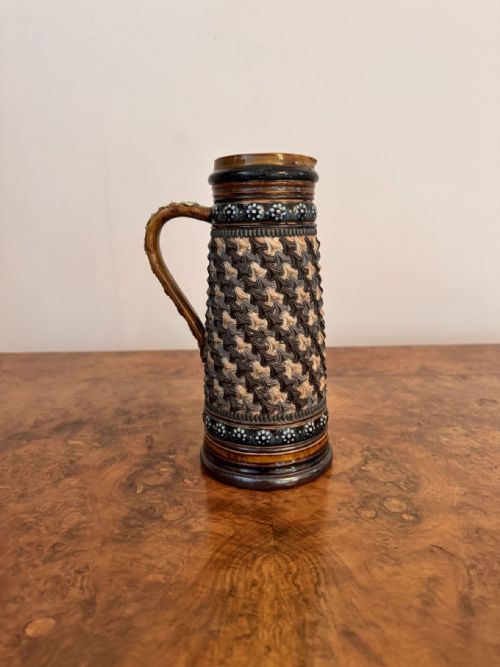
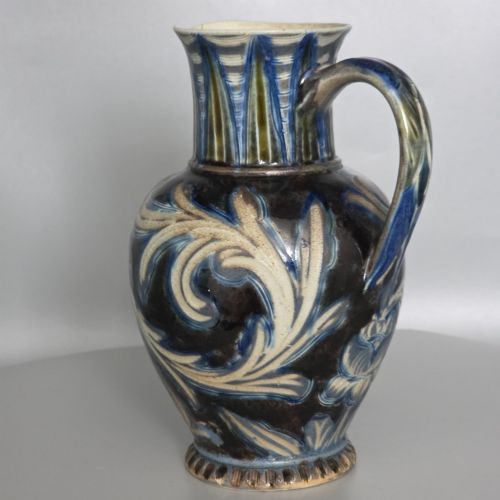
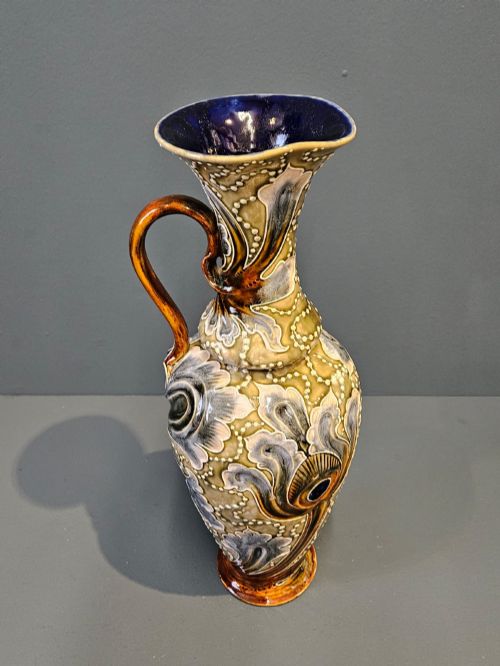
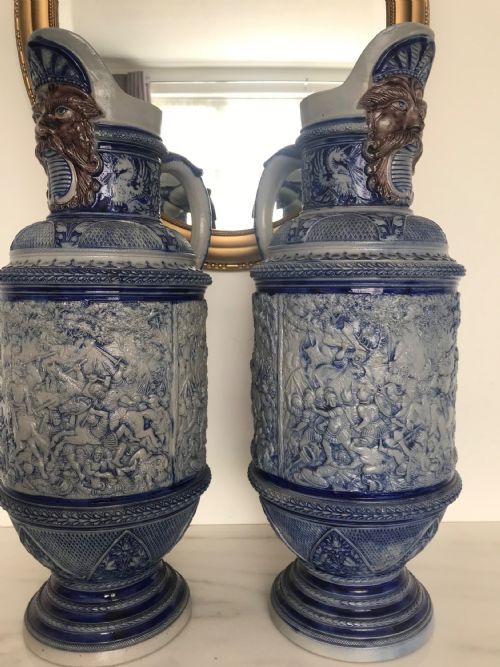
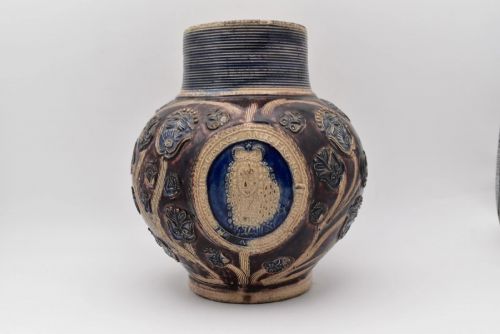
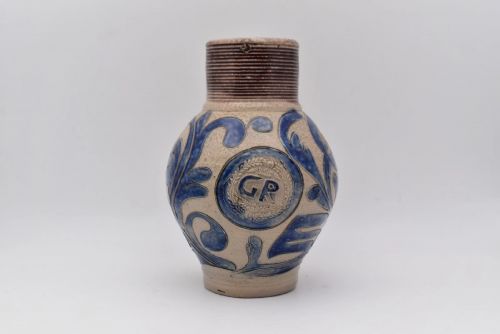
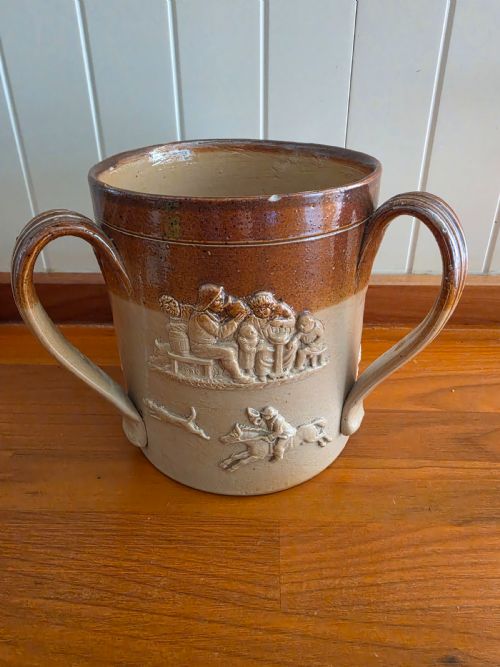
A salt glazed ceramic pitcher is a utilitarian pouring vessel shaped from dense clay and finished with a characteristic textured surface. When you examine this selection, the salt glazed ceramic pitcher category encompasses robust German Westerwald vessels alongside English harvest jugs and Doulton Lambeth pieces.
Most examples found here span from the seventeenth century through the Victorian era, offering substantial forms ranging from simple domestic jugs to elaborate exhibition pieces. These vessels served practical roles in storing and pouring liquids before shifting into decorative display objects.
Materials and production methods
Potters built these vessels using stoneware and clay, throwing the forms on a wheel before applying decorative incisions or moulded sprigging. Cobalt and manganese pigments often highlight the incised patterns and relief motifs before the firing stage.
During the peak heat of the kiln firing, common salt was thrown into the flames, vaporising to react with the silica in the clay body. This chemical reaction formed a durable, pebbled orange peel glaze across the surface of the ceramic.
Current listings feature stoneware and ceramic pieces spanning from the sixteenth century through the Victorian era, utilising cobalt and manganese decoration.
Assessing quality and craftsmanship
Quality in these pitchers rests upon the crispness of the moulded relief work and the precision of the hand-incised detailing. Superior examples display sharply defined portraits, royal ciphers, or battle scenes rather than softened or blurred impressions.
The integration of precious metal mounts, such as silver rims or hinged lids, distinguishes exhibition-grade pieces from standard utilitarian ware. Artisans also demonstrated high skill through complex construction, such as multi-handled tygs and functional puzzle jugs.
Doulton Lambeth·Simon Peter Gerz
The Salt Glazed Ceramic Pitcher Glossary
- Stoneware
- A dense, hard ceramic fired at high temperatures until vitrified and completely non-porous. This material withstands liquids without requiring an internal liquid glaze.
- Cobalt
- A metallic blue pigment utilised under the salt glaze to colour incised designs and relief motifs. It maintains its deep blue tone through extreme kiln temperatures.
- Sprigging
- A decorative technique where moulded clay reliefs are applied to the surface of an un-fired vessel using slip as an adhesive. These raised ornaments often depict heraldic symbols or figures.
- Bartmann jug
- A historic German stoneware container featuring a bearded mask applied to the neck, often called a Bellarmine. These vessels date back to the sixteenth and seventeenth centuries.
- Tyg
- A drinking vessel featuring three or more handles designed to be passed around a communal table. They appear frequently in early English pottery.
Salt Glazed Ceramic Pitcher: Frequently Asked Questions
What is a salt glazed ceramic pitcher?
A salt glazed ceramic pitcher is a heavy stoneware pouring vessel created by introducing salt into the kiln during firing. This process produces a durable, slightly pitted surface texture akin to an orange peel.
These pieces range from early German Westerwald imports to later Victorian art pottery jugs produced in England for domestic and display use.
How do I date an old pitcher?
Dating relies on stylistic markers, maker stamps, and the specific glazing techniques characteristic of particular centuries. Seventeenth and eighteenth-century pieces often feature royal ciphers and Westerwald salt glaze details, while Victorian examples frequently display studio incisions.
Examining the base and handle construction alongside any applied crests helps place the vessel within its correct production period.
What are Bartmann jugs?
Bartmann jugs are early German stoneware containers characterised by a moulded bearded mask on the neck and round bellies. They date back to the sixteenth and seventeenth centuries and were imported extensively into Britain.
Collectors prize these historic vessels for their distinct anthropomorphic salt glaze decoration and early manufacturing origins.
Can I use these pitchers daily?
While these antique stoneware vessels were originally designed for liquids like ale and water, modern use requires careful consideration of their age and historic value. Many collectors prefer to display them safely rather than subject fragile antique handles to daily kitchen routines.
If utilised for serving, hand washing in warm water without harsh detergents protects the historic ceramic body and any attached silver mounts.