







English Salt Glaze Stoneware
English salt glaze stoneware combines durable ceramic bodies with distinctive textured surfaces, offering collectors sturdy vessels with rich historical character.

English Salt Glaze Stoneware
When searching for english salt glaze stoneware, buyers encounter robust utility vessels and decorative items dating from the eighteenth, nineteenth, and early twentieth centuries. The selection here leans heavily towards nineteenth-century examples, particularly Victorian jugs and pitchers produced by established potteries.
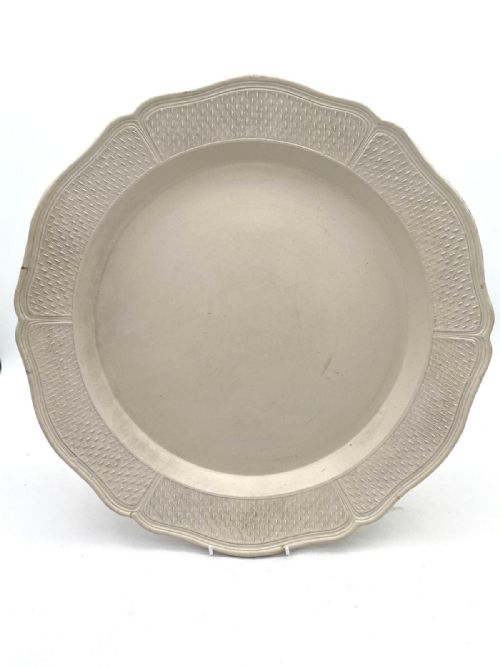
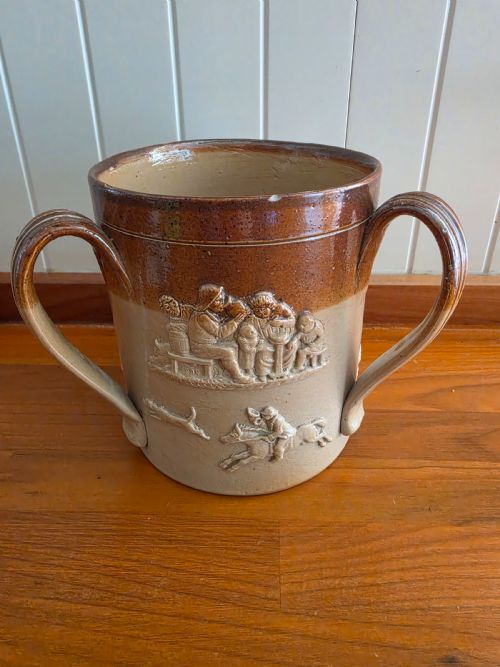
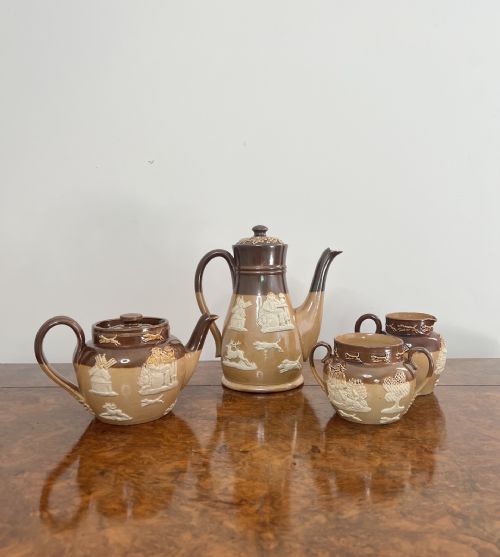
Form follows function across these listings, spanning large chargers, three-handled tygs, harvest jugs, spirit flasks, and complete tea sets. Many items reflect domestic and tavern use, while others showcase the elaborate decorative styles of the Victorian era.
Origins range from eighteenth-century provincial output to later nineteenth-century studio and factory production, encompassing English country pottery traditions alongside urban workshops. Jugs and pitchers form the core of what is available for daily collection and display.
Materials and methods
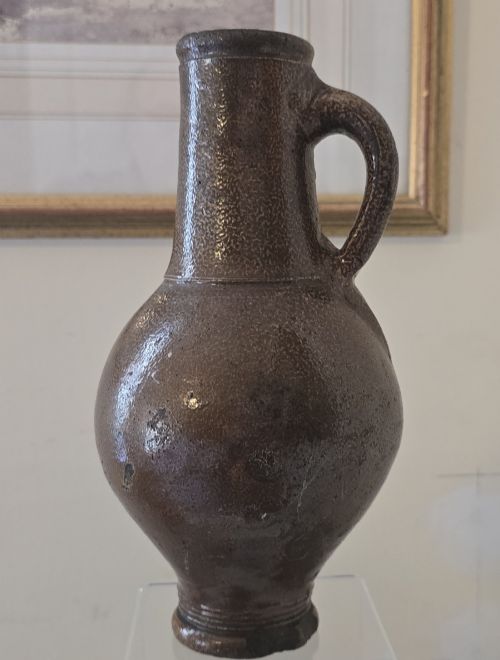
Potters shaped dense clay bodies into vessels before throwing salt into the kiln during high-temperature firing. The vaporised salt reacted with the silica in the clay to form a durable, glossy glaze with a characteristic orange-peel texture.
Many pieces incorporate applied cream-coloured sprigged reliefs, incised floral patterns, or applied metallic mounts in sterling silver and silver plate. These additions transformed utilitarian storage vessels into presentation pieces and commemorative items.
English Salt Glaze Stoneware Retail Price Guide 2026
Typical asking prices for english salt glaze stoneware among the pieces listed under this phrase on Sellingantiques today, from the lower quarter to the upper quarter. They describe what is for sale here now, not the wider market.
Materials documented across the inventory include stoneware, salt glaze, ceramic, clay, sterling silver, and silver plate.
Judging the range
Quality depends upon the crispness of the moulded decoration, the evenness of the orange-peel texture, and the balance of the thrown form. Pieces with sharp sprigged details and clean salt distribution stand above plain utility ware.
The presence of hallmarked silver mounts or named maker attributions elevates individual pieces. Exhibition-scale items and complex puzzle jugs demonstrate superior technical ambition from the potter.
Emma Shute·Doulton Lambeth·Royal Doulton·Mortlake·C & A Painter
The English Salt Glaze Stoneware Glossary
- Salt glaze
- A hard, vitreous ceramic finish achieved by throwing common salt into the kiln at peak temperature. This process creates a pitted, orange-peel texture unique to stoneware.
- Tyg
- A large drinking vessel featuring three or more handles designed for communal passing around a table. These ceramic mugs frequently appear in seventeenth and nineteenth-century forms.
- Sprigged
- A decorative technique where separately moulded clay reliefs are applied to the surface of an unbaked vessel using slip as an adhesive. Cream-coloured sprigs often contrast with darker stoneware bodies.
- Puzzle jug
- An intricate drinking vessel with a perforated neck and hollow rim that forces the user to solve a drinking puzzle without spilling the liquid. These drinking vessels test both ceramic skill and tavern dexterity.
English Salt Glaze Stoneware: Frequently Asked Questions
What is english salt glaze stoneware?
English salt glaze stoneware refers to durable ceramic objects fired with salt to create a textured, impermeable finish. These pieces include jugs, flasks, and chargers made in Britain from the eighteenth century onwards.
Potters utilised local clays to produce sturdy vessels intended for domestic storage, tavern service, and formal display. The distinctive pitted surface remains the defining characteristic of this historical ceramic category.
How do I date these stoneware items?
Dating relies on stylistic clues, manufacturing techniques, and specific factory marks found on the ceramic body. Eighteenth-century examples often display simpler profiles and distinct sprigged ornamentation.
Victorian pieces frequently incorporate ornate Art Nouveau motifs, silver rims, or specific jubilee commemorations. Examining the handle construction and base finish helps place an object within the nineteenth-century timeline.
How were harvest jugs used?
Harvest jugs served as communal drinking vessels filled with ale or cider during agricultural labour and festive seasonal gatherings. Their large capacity and sturdy stoneware walls made them practical for outdoor celebrations.
Many harvest jugs featured hunting scenes, tavern motifs, or silver mounts suited for presentation. They combined utility with celebratory display in rural communities.
Can I use antique stoneware daily?
Most antique stoneware remains physically robust enough for gentle everyday use due to the vitrified nature of the clay body. However, items with delicate silver mounts or historical significance are typically preserved for display.
Hand washing in warm water without harsh detergents protects both the salt glaze surface and any applied metal elements. Owners should avoid sudden temperature changes to preserve the integrity of older ceramics.