

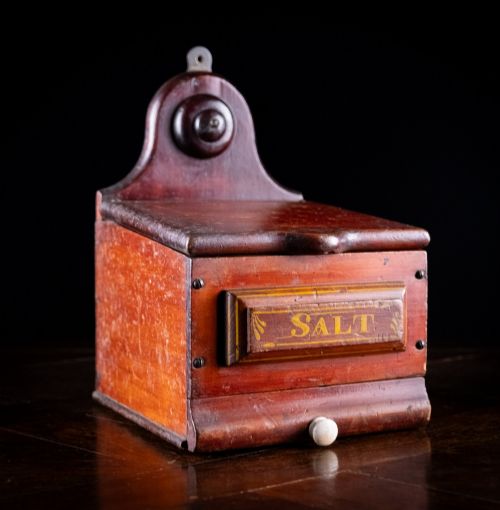
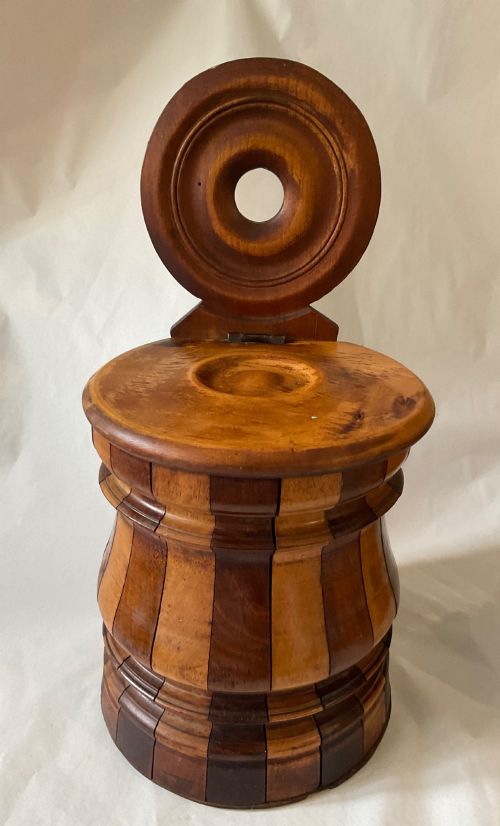
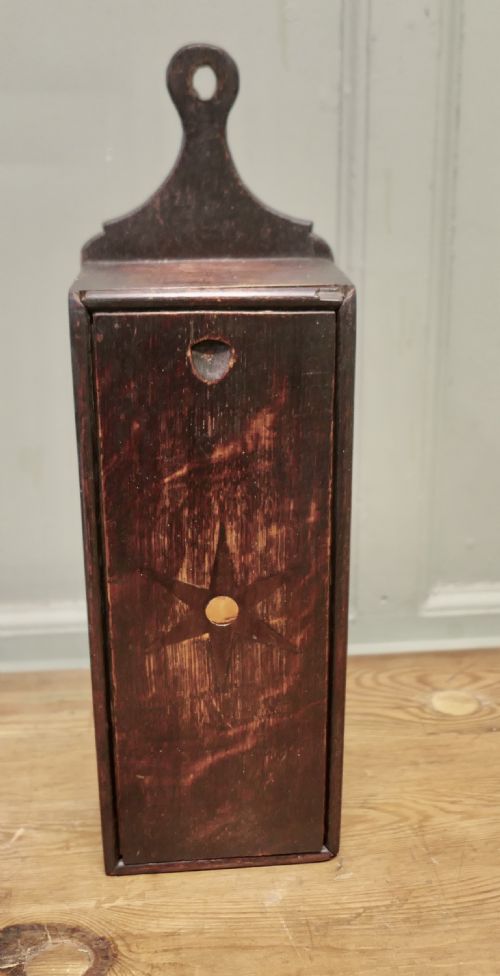
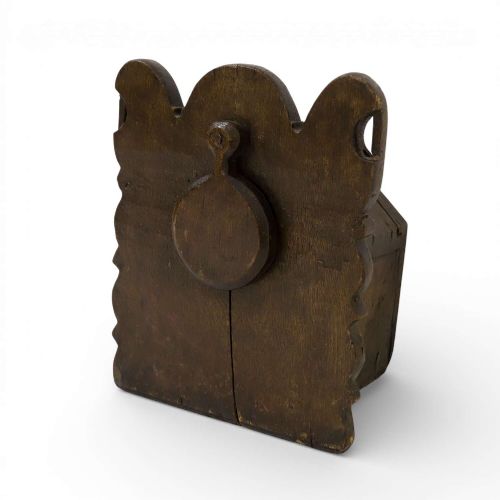


Rustic Wooden Salt Box
A rustic wooden salt box keeps household salt close to hand on the kitchen wall, combining practical domestic utility with honest period character.
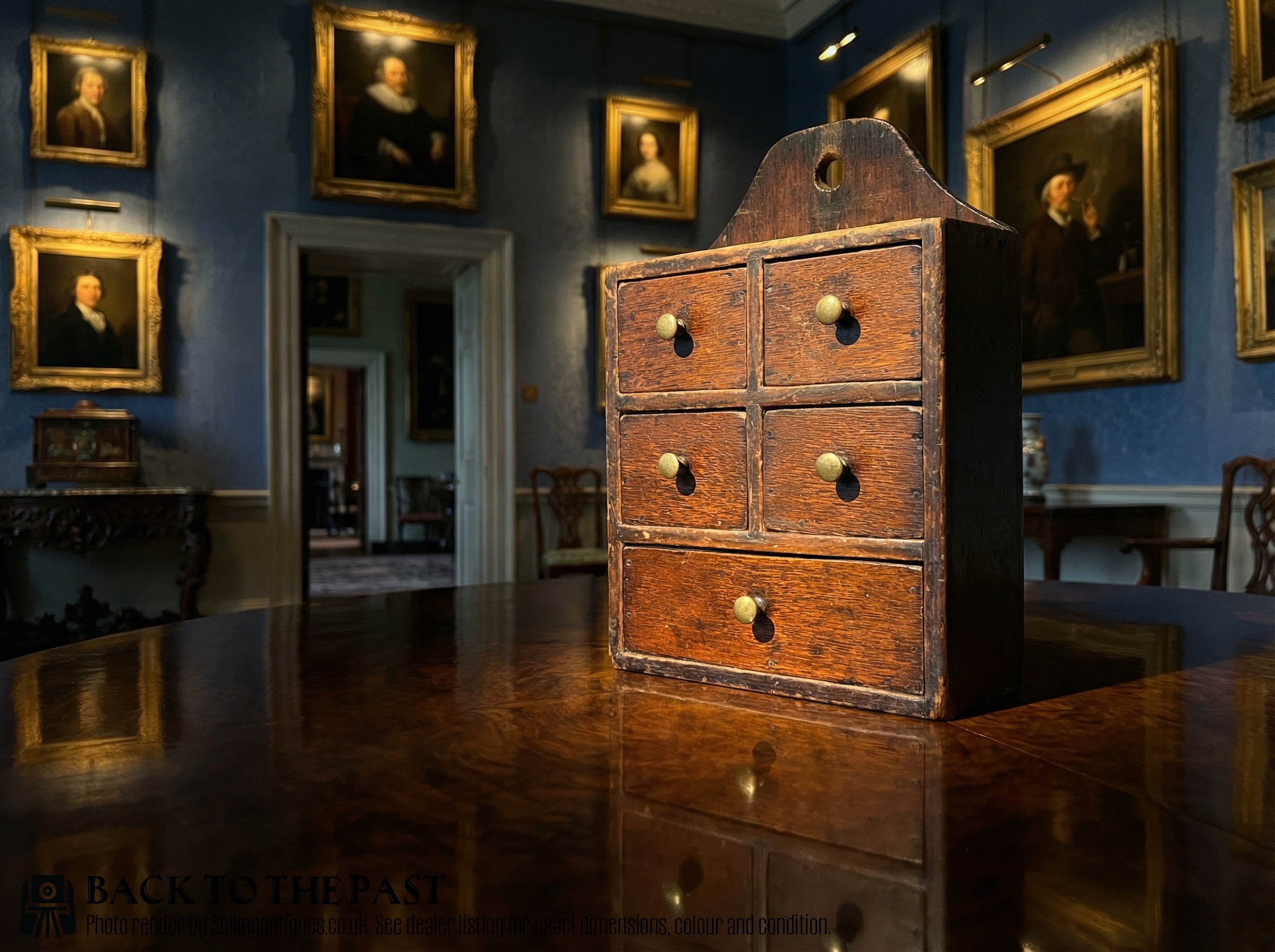
Rustic Wooden Salt Box
When you search for a rustic wooden salt box, you encounter wall-hanging containers designed for daily domestic use in kitchens. These pieces span the eighteenth and nineteenth centuries, including Victorian country examples and earlier vernacular forms.
The selections on this page include salt boxes alongside related kitchenware such as hanging candle boxes, spice cabinets, and knife boxes. Oak and pine dominate the forms, frequently featuring original iron or brass hardware.
Most items belong to English and Welsh country traditions, showing the robust construction methods of their respective periods. They hang securely from walls, keeping essential dry goods protected from damp floors and pests.
How they were made
Maker-joiners built these domestic containers from solid hardwoods and softwoods like oak, pine, and mixed timbers. Boards joined together with pegged joints or early fixings to withstand constant kitchen handling.
Makers integrated original iron and brass hardware, including hinges and latches, to support frequent opening and wall hanging. Some pieces retain traces of historic red paint or subtle wood inlay work.
Rustic Wooden Salt Box Retail Price Guide 2026
Typical asking prices for rustic wooden salt box among the pieces listed under this phrase on Sellingantiques today, from the lower quarter to the upper quarter. They describe what is for sale here now, not the wider market.
An eighteenth-century oak box retains unexpected traces of red paint under generations of kitchen grease.
What varies in quality
Quality rests in the survival of original surfaces, such as traces of early paint and untouched timber patination. Altered hardware or replaced boards shift a piece away from its original state.
The proportion of the box and the crispness of any carved detailing distinguish standard utility items from finer vernacular workshop pieces. Solid construction of the hanging backboard ensures structural integrity over centuries.
The Rustic Wooden Salt Box Glossary
- Vernacular
- Everyday objects built by local craftspeople for practical use rather than following high-style academic design. This term describes items shaped by local tradition and available materials.
- Salt Box
- A wall-mounted container featuring a sloping lid designed to keep salt dry and accessible. These boxes hung near cooking hearths in kitchens.
- Pine
- A softwood commonly used in British country furniture and domestic boxes, often paired with oak. It provided an accessible material for regional makers.
- Patina
- The surface sheen and colour developed by wood through decades of handling, cleaning, and ageing. Original patina marks an untouched antique surface.
Rustic Wooden Salt Box: Frequently Asked Questions
How were salt boxes used?
These boxes hung on kitchen walls near the hearth to keep coarse salt dry and within reach for daily cooking. The sloping lid allowed easy access while protecting the contents from kitchen grime.
Over generations, similar wall-hung containers accommodated candles, spices, or kitchen knives. They served as indispensable storage items in traditional homes before modern pantries.
How do I hang a wall box?
Most period boxes feature an integrated backboard with a pre-drilled hanging hole or secure bracket slot. Traditional fixings should align with the original weight distribution of the timber.
Ensure the mounting point supports the combined weight of the box and its contents safely. Avoid placing them in areas subject to extreme damp or direct heat sources.
What woods were used?
Makers relied on native timbers such as oak, pine, and mixed hardwoods available locally. Oak provided durability for eighteenth-century examples, while pine appeared frequently in Welsh and nineteenth-century pieces.
Combination pieces utilised mixed timbers for structural parts and secondary panels. These material choices reflect the regional availability of wood during the period.
How do I date these boxes?
Dating relies on construction methods, timber characteristics, and hardware styles found on the piece. Eighteenth-century examples often show pegged joints and hand-wrought iron hinges.
Victorian and later nineteenth-century items display machine-sawn timber elements and standard brass or iron fittings. Comparing the wear patterns helps confirm the age of the woodwork.