



Antique Five Drawer Cabinet
An antique five drawer cabinet offers compact storage, and these pieces span Victorian, Edwardian, and Art Deco periods in mahogany, walnut, and oak.
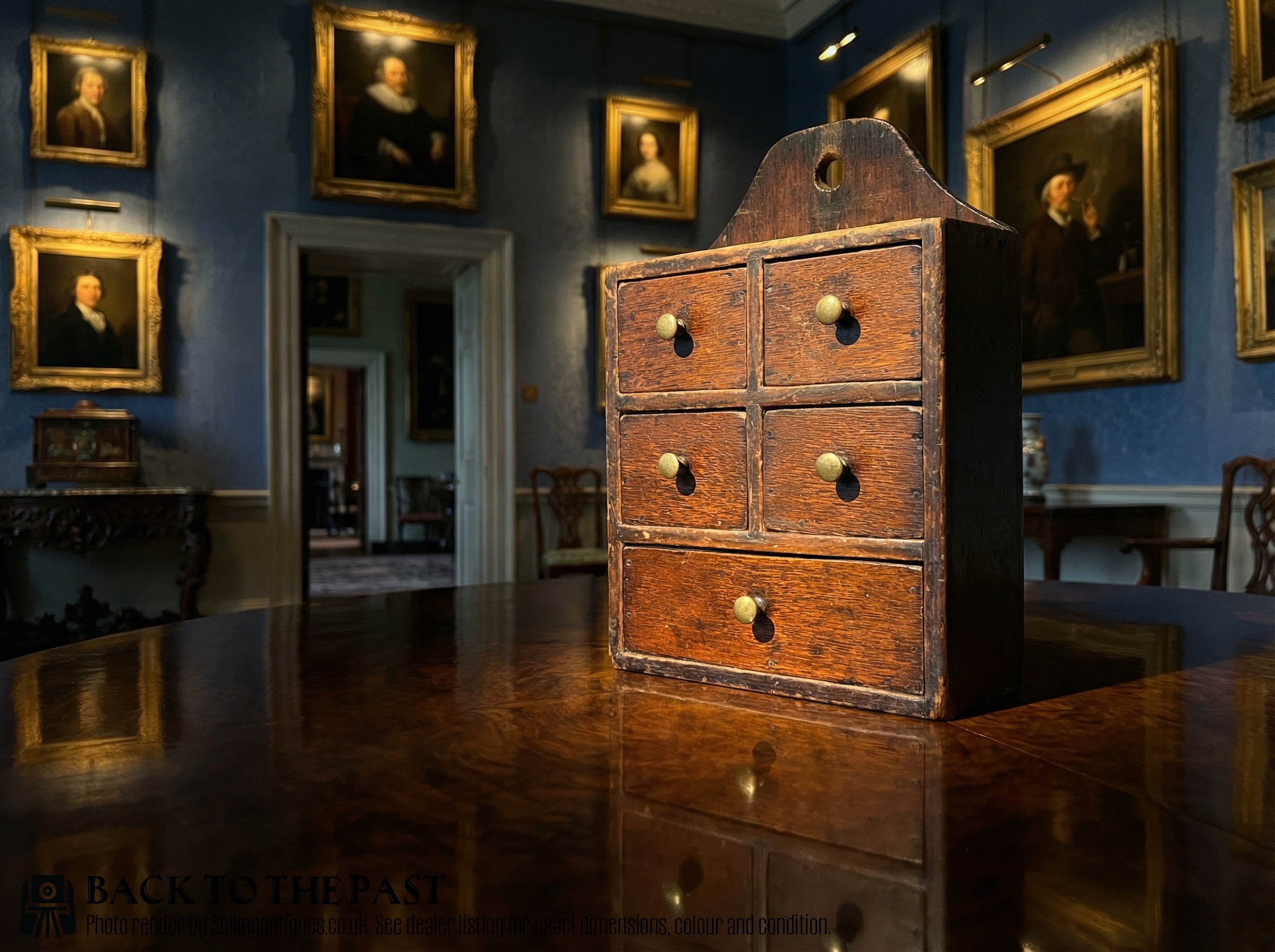
Antique Five Drawer Cabinet
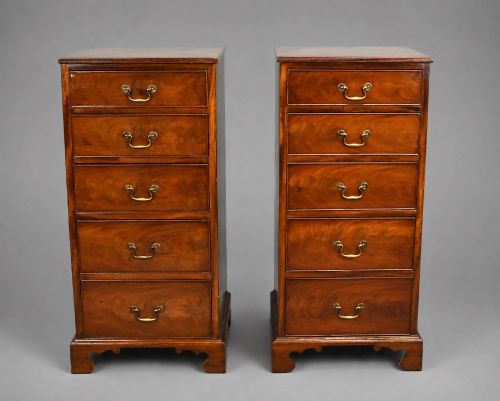
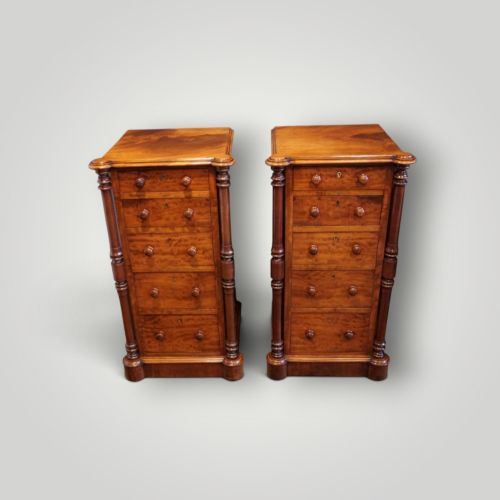
An antique five drawer cabinet brings practical height and traditional proportion to a room, appearing most frequently as a tall chest, gentleman's tallboy, or bedside chest. Buyers seek an antique five drawer cabinet to gain useful drawer space while retaining period character in timber and form.
The selections span the nineteenth century, the Victorian and Edwardian eras, and the 1920 and 1930 Art Deco period. Forms range from narrow tall chests and bedside pairs to spice cabinets and collectors cabinets.
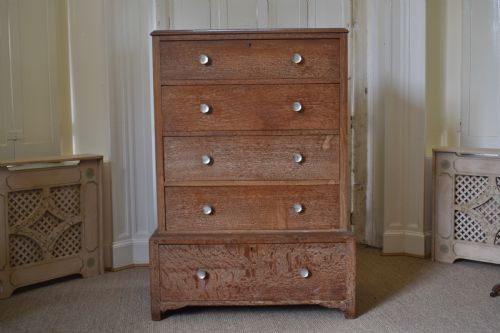
Origin and styling vary widely across the inventory, encompassing English walnut and mahogany pieces alongside North African narrow tall chests and limed oak examples. These cabinets serve multiple domestic roles, functioning equally well in a bedroom or a study.
How they were made
Makers utilised solid timbers and figured veneers, applying mahogany, walnut, burr walnut, flame mahogany, and satin birch over structural carcasses of oak and pine. Brass handles, escutcheons, and drawer pulls provide the primary metalwork across the periods.
Surface treatments vary from polished wood finishes that highlight the grain to limed oak and satinwood treatments. Construction methods reflect the prevailing cabinet-making standards of the Victorian, Edwardian, and Art Deco eras.
Antique Five Drawer Cabinet Retail Price Guide 2026
Typical asking prices for five drawer cabinet among the pieces listed under this phrase on Sellingantiques today, from the lower quarter to the upper quarter. They describe what is for sale here now, not the wider market.
The inventory includes pieces from the Victorian era, the Edwardian period, and the 1920s and 1930s.
What varies in quality
The choice of surface timber creates the primary distinction between standard pieces and those with elevated visual impact, particularly through the use of matched flame mahogany, burr walnut, or satin birch veneers. The crispness of proportion and the integration of brass hardware further separate standard utilitarian chests from finer cabinet-maker output.
Design execution distinguishes regional vernacular pieces from branded examples produced by established makers such as Warings Liverpool or Heal's. The fidelity to period styles, whether Sheraton, Queen Anne Revival, or Art Deco, governs the overall coherence of the piece.
Warings Liverpool·Heal's
The Antique Five Drawer Cabinet Glossary
- Tallboy
- A tall chest of drawers, often consisting of one chest stacked upon another or built as a single tall vertical unit to maximise storage.
- Bedside chest
- A small chest of drawers designed to sit beside a bed, frequently found as matched pairs in the inventory.
- Collectors cabinet
- A specialised cabinet featuring multiple shallow drawers intended for storing small specimens or items.
- Flame mahogany
- A veneer cut from the fork of the mahogany tree, displaying a distinctive flamed or fire-like grain pattern.
- Burr walnut
- A veneer derived from the deformed growth or burl of a walnut tree, prized for its swirling, complex grain patterns.
Antique Five Drawer Cabinet: Frequently Asked Questions
Where should I place a tall chest?
A tall chest works well in bedrooms or hallways where floor space is limited but vertical storage is required. Its height allows it to hold significant volume without dominating the room's footprint.
Ensure there is adequate clearance for drawers to open fully, particularly in narrower corridors or beside a bed.
How do I care for walnut veneer?
Keep walnut veneer cabinets away from direct sunlight and heat sources to prevent the wood from drying out and the veneer from lifting. Dust regularly with a soft, dry cloth.
Apply a quality wax polish sparingly to nourish the timber and maintain the natural lustre of the surface.
How do I identify a Victorian chest?
Victorian chests are generally constructed from solid mahogany or walnut, often featuring flame veneers, hand-cut dovetails, and turned wooden or brass handles. The proportions tend to be heavier and more substantial than Edwardian equivalents.
Examine the drawer linings and backboards in pine or oak to understand the internal construction methods of the period.