




Georgian Wooden Salt Box
A georgian wooden salt box brings domestic history into a room, offering practical wall storage shaped by centuries of daily use.
Georgian Wooden Salt Box
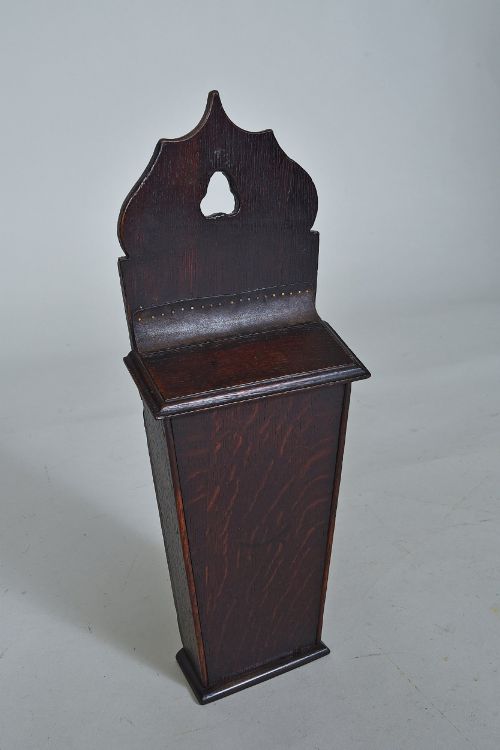
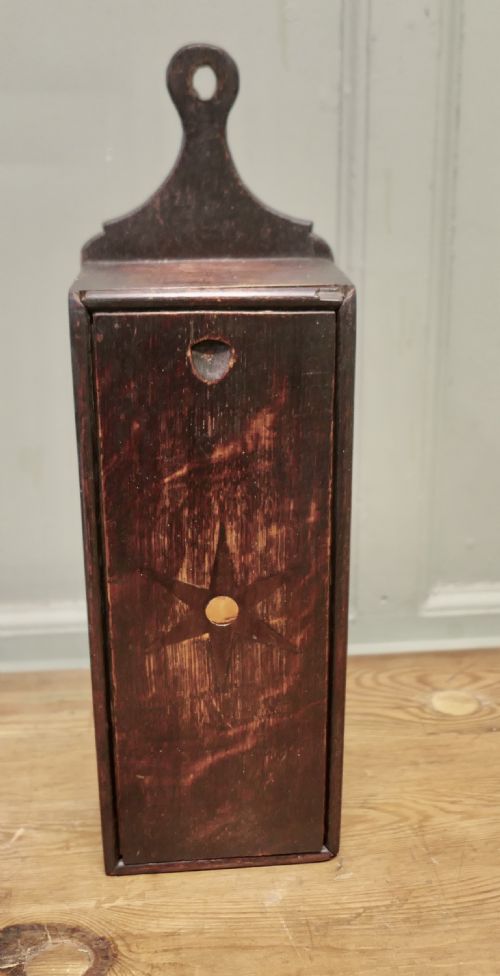
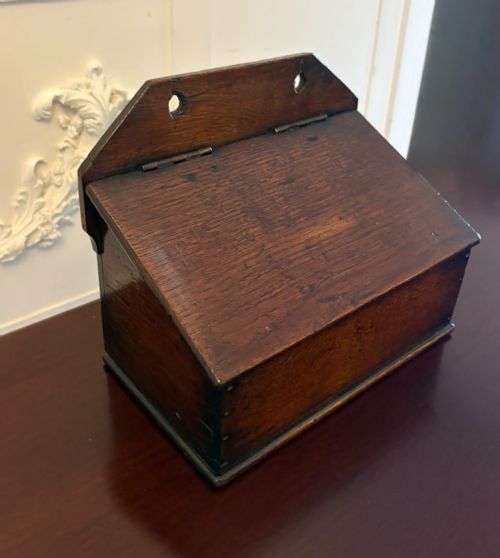
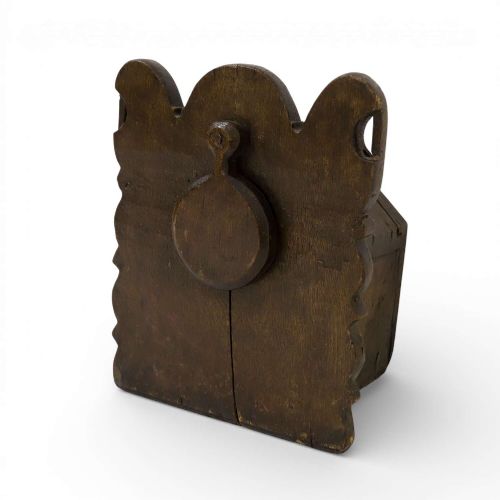
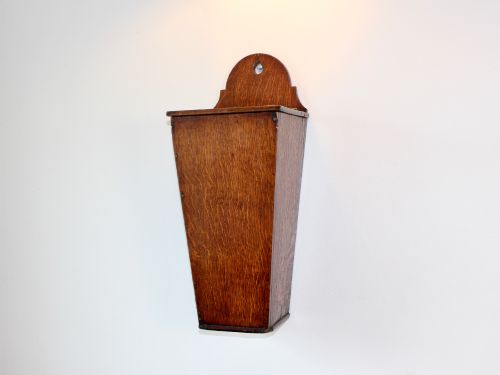
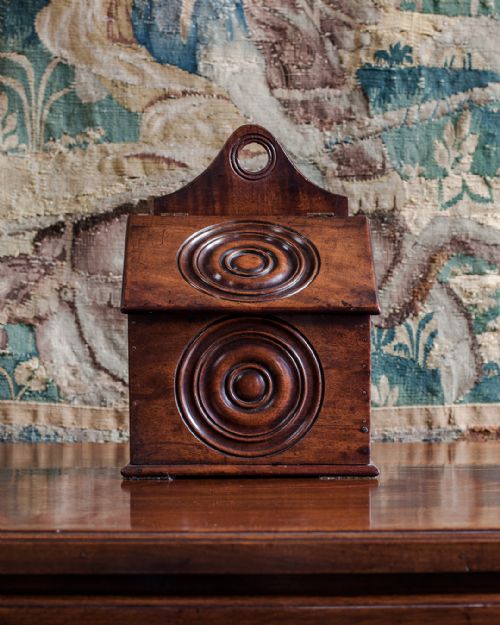
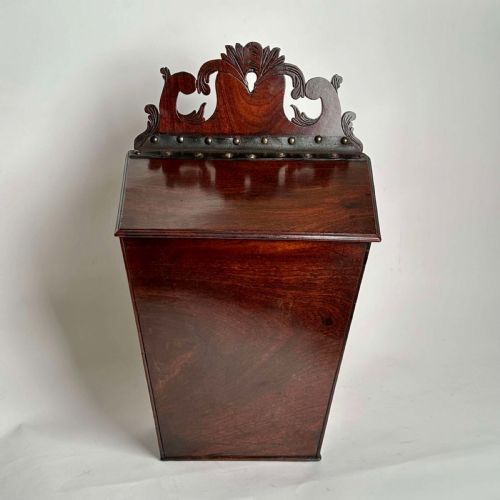
A georgian wooden salt box serves as a utilitarian household container designed to keep coarse cooking salt dry near a hearth or kitchen table. These wall-hanging wooden receptacles typically feature a sloping lid and a high backboard pierced for suspension.
The versions most commonly met on this page belong to the Georgian and eighteenth-century periods, alongside examples stretching back into the seventeenth century. They appear primarily in oak and mahogany, often taking the form of dedicated salt or candle boxes designed to hang securely on panelled walls.
How they were made
Cabinetmakers and country joiners built these boxes using solid timbers such as oak, mahogany, and Welsh pine, occasionally incorporating boxwood inlay for simple decoration. Construction relied on pegged joints and dovetailed corners to withstand the heavy daily demands of a working household.
Original iron hardware, including strap hinges and latches, fastens the lids and secures the wall mountings. Traces of early red paint and remnants of glass or brass details sometimes survive on the older pieces.
Georgian Wooden Salt Box Retail Price Guide 2026
Typical asking prices for georgian wooden salt box among the pieces listed under this phrase on Sellingantiques today, from the lower quarter to the upper quarter. They describe what is for sale here now, not the wider market.
One wall clock listed among the boxes keeps time with a fusee movement, proving that some wooden cases had ticking ambitions.
What varies in quality
The calibre of a piece depends on the choice of timber and the crispness of the original joinery, distinguishing utilitarian country work from more finished urban cabinetmaking. Superior examples retain their original brass or iron hardware and unreplaced hanging brackets.
Surface patination dictates much of the character, where centuries of handling have mellowed the grain of the oak or mahogany. Retained pigments, such as traces of early red paint, elevate the historical interest of vernacular pieces.
The Georgian Wooden Salt Box Glossary
- Treen
- Small handmade wooden household objects produced by turners and joiners. These utilitarian items include boxes, small containers, and domestic implements shaped for everyday tasks.
- Fusee
- A conical pulley mechanism used in clock movements to maintain even tension on the drive chain as the mainspring unwinds. This mechanical arrangement helps ensure steady timekeeping in wall clocks.
- Vernacular
- Everyday objects made by regional craftsmen following local traditions rather than high-style academic designs. These pieces prioritise practical function and local materials over fashionable ornament.
- Dovetail
- A joint formed by interlocking wedge-shaped fingers used to join the corners of boxes and drawers. This traditional method provides exceptional tensile strength without relying entirely on adhesives.
Georgian Wooden Salt Box: Frequently Asked Questions
What is a georgian wooden salt box?
A georgian wooden salt box is a wall-mounted household container historically used to store dry salt near the kitchen hearth. They were shaped with sloping lids to protect the contents from moisture and soot.
Most surviving examples date from the eighteenth and early nineteenth centuries, constructed by regional makers in solid woods like oak and mahogany.
How were salt boxes used?
These boxes hung on kitchen or pantry walls where salt stayed within easy reach for cooking and food preservation. The enclosed wooden body and sloping lid kept damp kitchen air away from coarse salt.
Many designs doubled as candle boxes, featuring similar hanging backs and lidded compartments suited for storing tallow dips.
How do I date a wooden salt box?
Dating relies on examining the timber species, construction methods, and hardware style. Eighteenth-century pieces commonly show hand-sawn board marks, pegged joints, and forged iron strap hinges.
Stylistic shifts from seventeenth-century country framing to Georgian mahogany cabinetwork help place a piece within its proper period context.
Can I hang an antique salt box on the wall?
Most antique salt boxes were built specifically for wall suspension, featuring an integrated backboard with a hanging hole. Ensuring the mounting pin or screw engages securely with the backboard prevents strain on the historical wood.
Placing them away from direct heat sources and damp walls protects the aged timber and original iron hardware.