
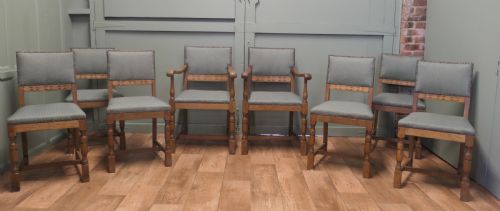
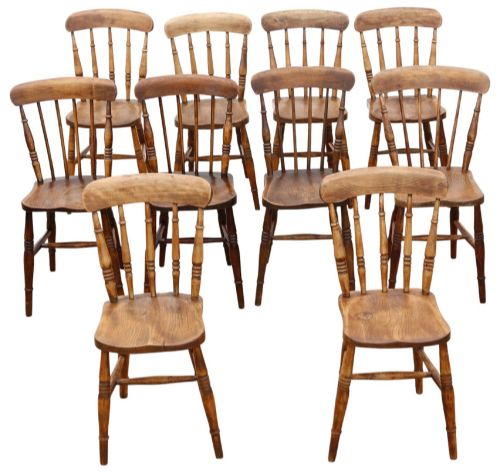
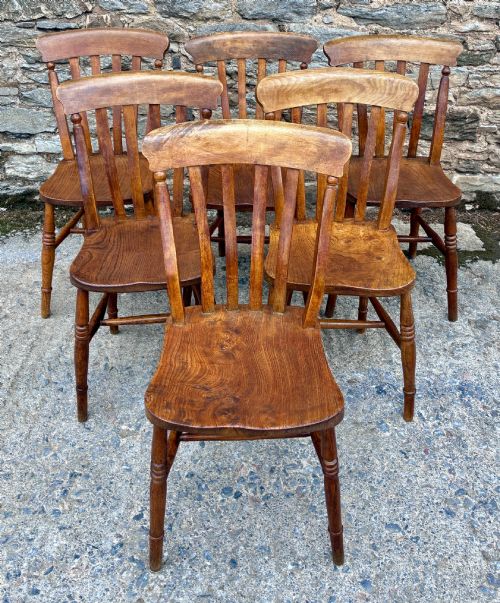
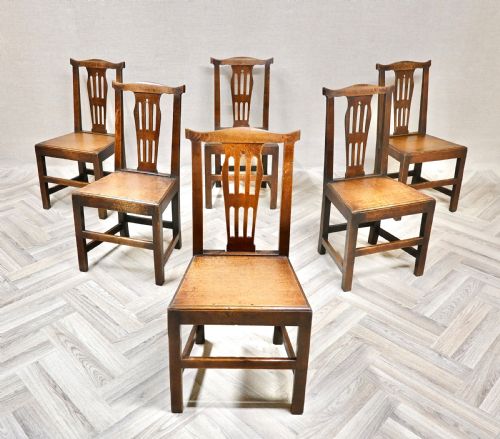
Rustic Wooden Chairs Set
These rustic wooden chairs set groups of traditional seating ready for the kitchen or dining room table.
Rustic Wooden Chairs Set
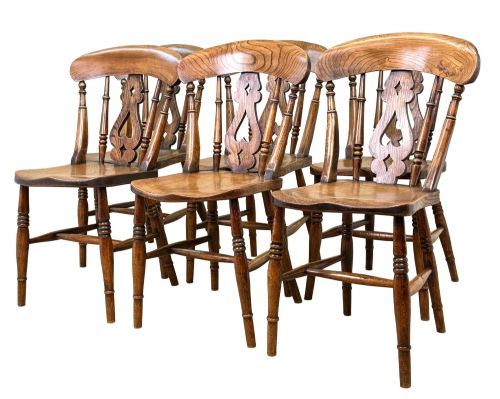
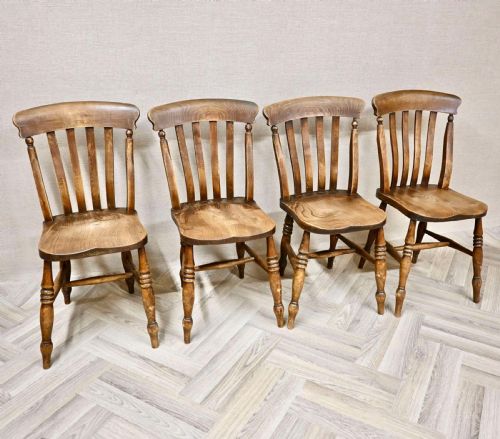
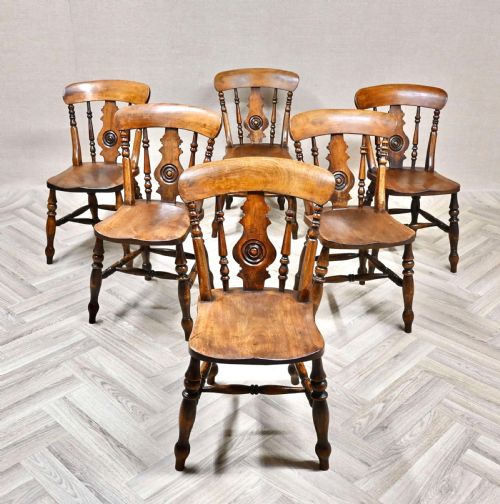
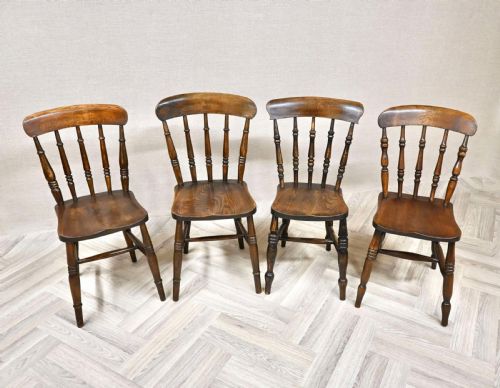
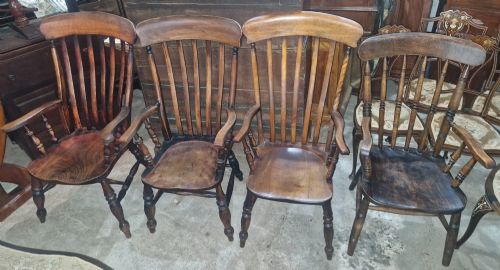
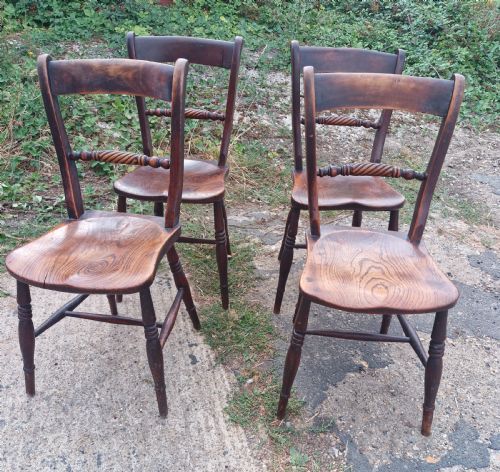
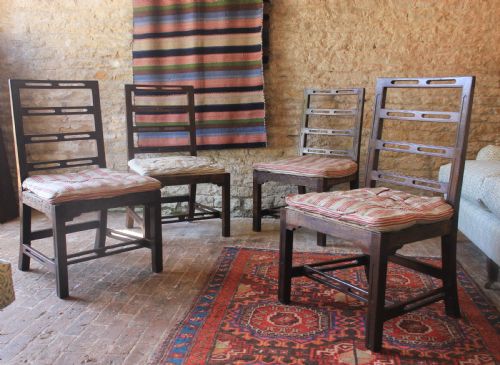
A rustic wooden chairs set brings together multiple antique seats designed for daily farmhouse and kitchen use. Buyers searching for a rustic wooden chairs set will mostly encounter groups originating from the nineteenth century, including Victorian periods, alongside regional country styles.
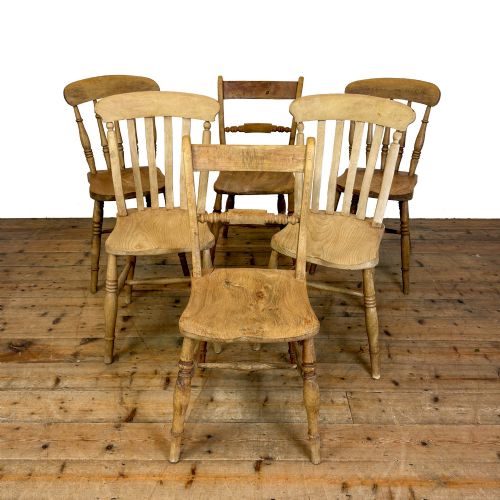
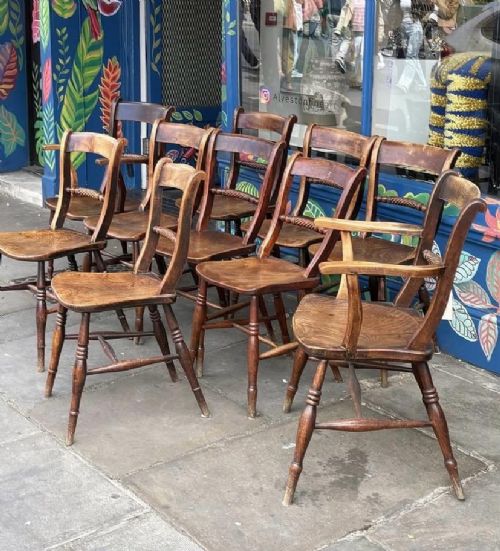
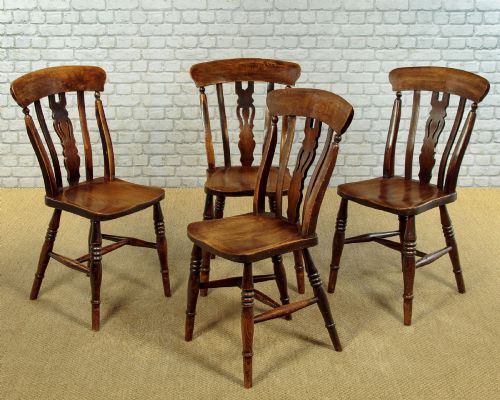
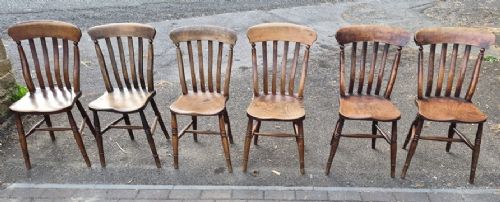
The configurations range from matched sets of four and six up to larger gatherings of ten or twelve chairs. Many options appear as harlequin groupings, where individual pieces share common regional forms and materials while showing subtle variations in their turnings.
Forms span traditional Windsor armchairs and side chairs, ladderbacks, lathe backs, and hoop and stick variations. These items served hardworking domestic roles in English country kitchens and rural homes before reaching the marketplace.
Evaluating Quality
Quality shows in the selection of timbers, particularly where rich grain figuring marks the elm seat boards and matching is maintained across a large harlequin grouping. Superior examples display crisp turnings on legs and spindles that retain their original profiles without excessive wear.
Structural integrity and the retention of original surface patination distinguish finer sets from ordinary examples. Strong joints, minimal replacement components, and honest signs of age elevate the standing of a dining group.
Many nineteenth-century kitchen chairs still bear the faint curved indentations of the original owners who sat in them daily.
The Rustic Wooden Chairs Set Glossary
- Harlequin set
- A collection of chairs assembled to match in style, period, and materials while individual pieces show slight variations in design. This practice allowed larger dining groups to form from smaller surviving batches.
- Windsor
- A chair built with a solid wooden seat into which the legs and back spindles are directly inserted. Regional variations include hoop backs, low backs, and comb backs.
- Lathe back
- A chair featuring flat wooden slats or splats arranged vertically within the back frame. These slats are often slightly curved for comfort.
- Stretcher
- A horizontal wooden rod connecting the legs of a chair to provide structural rigidity. Double stretchers offer additional reinforcement.
- Rush
- Woven marsh plant material traditionally used for seating pads. It provides a flexible and durable surface.
Rustic Wooden Chairs Set: Frequently Asked Questions
How do I care for antique wooden kitchen chairs?
Keep the wood nourished by applying traditional beeswax periodically to maintain the surface moisture and natural sheen. Avoid placing the seating near direct heat sources or in strong sunlight to prevent timber shrinkage.
Check the stretcher joints occasionally to ensure the legs remain tight and stable during regular daily dining use.
What is a harlequin set of chairs?
A harlequin set combines individual chairs that share a common period, material, and general regional style rather than coming from a single original workshop batch. This method of gathering seating makes it practical to seat larger dinner parties around an antique table.
Collectors appreciate these groupings for the subtle variety they introduce while preserving a cohesive appearance in the room.
Are these chairs suitable for daily dining use?
Most nineteenth-century country chairs were built for demanding kitchen work and possess sturdy timber construction. Their robust elm seats and pegged joints handle everyday sitting comfortably.
Ensure that individual leg joints and stretchers are secure before placing a heavy load upon older examples.
How do I identify a Thames Valley chair?
Thames Valley chairs typically feature distinctive turned components and high-quality elm and ash construction associated with workshop traditions along the river region. The turnings often display refined details compared to more basic provincial seating.
Examining the wood species and the specific shaping of the arm supports helps distinguish this regional group.