

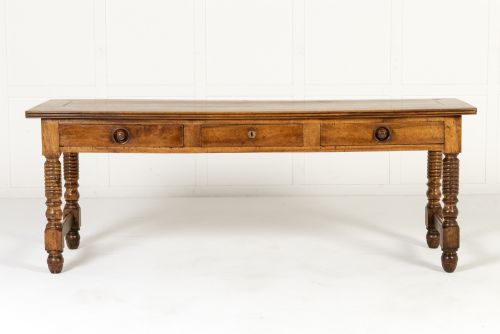
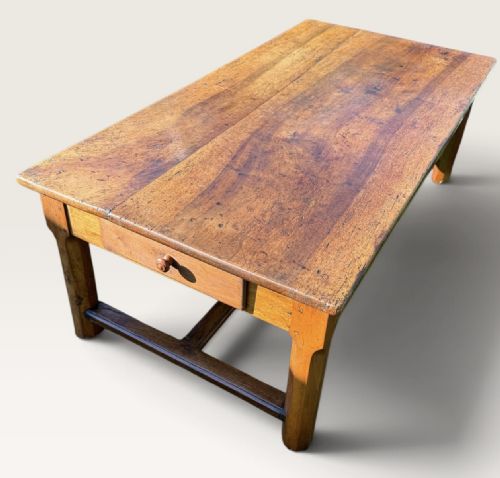
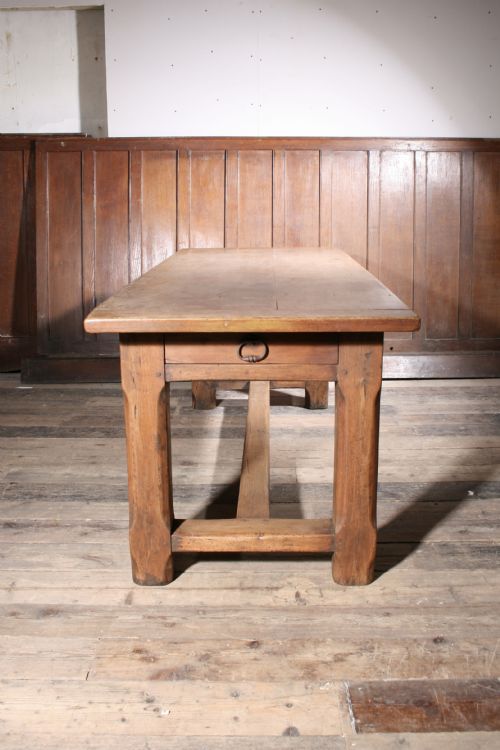
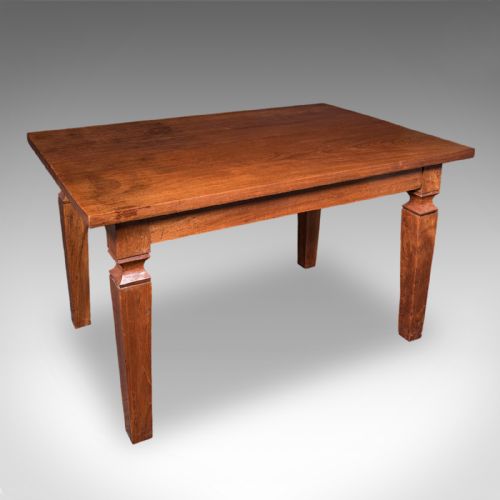


Rustic Walnut Table
A rustic walnut table brings deep, honest timber grain and centuries of European craft straight into your daily life.
Rustic Walnut Table
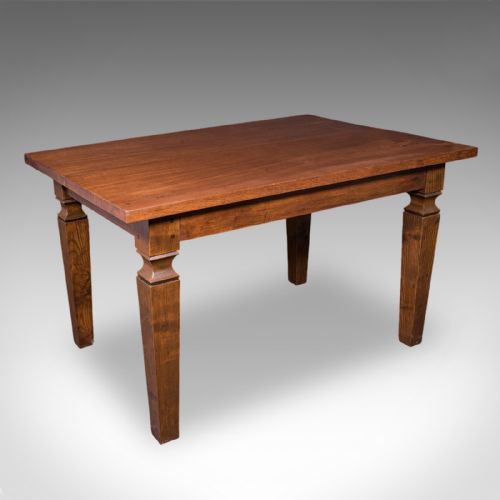
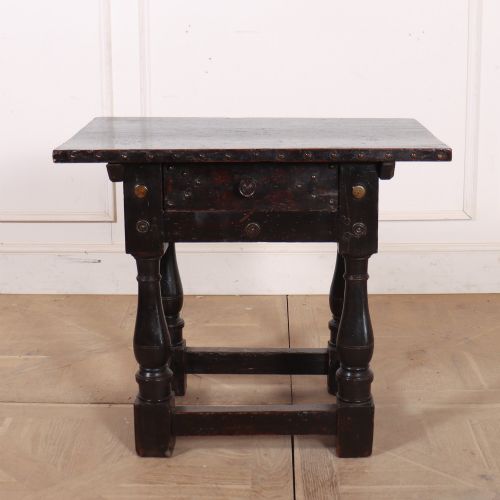
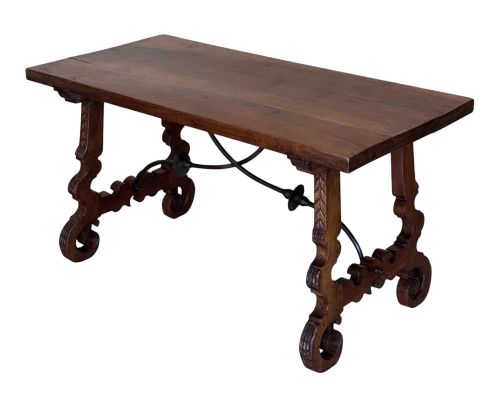
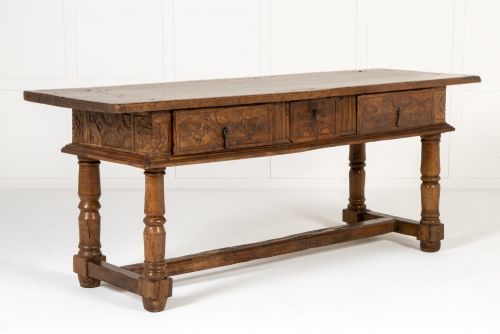
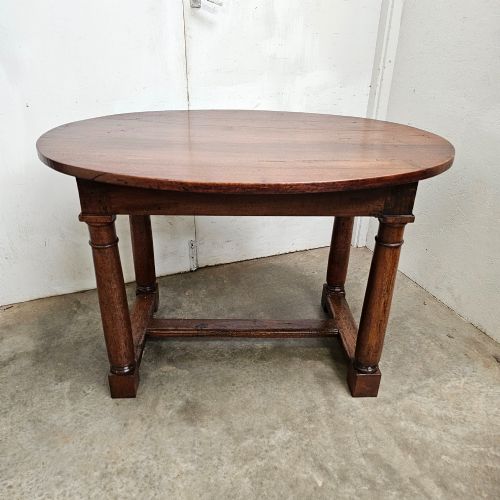
A rustic walnut table is a substantial piece of historic furniture designed for everyday utility, appearing most often in dining, side, and farmhouse formats across this selection. These items span from the 17th century through the 19th century, reflecting provincial European domestic life.
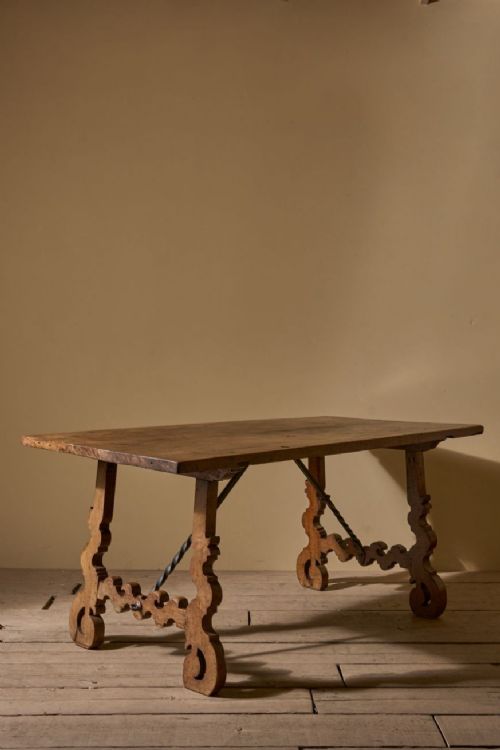
The pieces originating from France, Spain, and Italy dominate the current selection, showing distinct regional styles such as Spanish Baroque and French Provincial. Dining tables, refectory tables, and side tables form the core of what you will encounter.
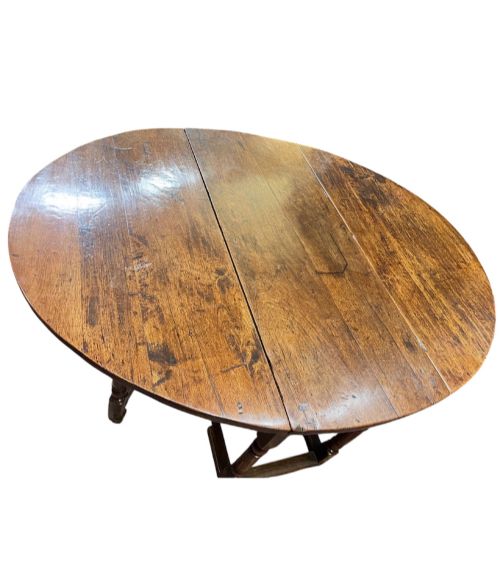
Makers and builders of these items relied on solid timber construction, utilising walnut alongside supplementary woods like fruitwood and oak. Their forms range from gateleg and trestle designs to simple circular and oval tops.
What varies in quality
The quality of a rustic walnut table depends upon the integrity of the timber selection and the retention of its original surface patination. Pieces retaining their early boards and authentic structural framing command greater regard than those rebuilt with replacement timber.
Proportion and execution of hand-carved details also separate standard utility items from finer provincial examples. The depth of colour in the walnut grain and the honesty of past repairs dictate the character of each piece.
Rustic Walnut Table Retail Price Guide 2026
Typical asking prices for rustic walnut table among the pieces listed under this phrase on Sellingantiques today, from the lower quarter to the upper quarter. They describe what is for sale here now, not the wider market.
The Rustic Walnut Table Glossary
- Refectory table
- A long, narrow dining table traditionally used in monasteries and large halls. These examples often feature thick walnut tops supported by trestles or robust legs.
- Gateleg table
- A table with hinged leaves supported by swing-out legs. This format allows the surface area to expand or contract according to space.
- Fruitwood
- A secondary dense wood utilised alongside walnut in provincial cabinetmaking. It offers a contrasting warm tone and fine grain.
- Trestle table
- A table consisting of two or more support frames connected by a horizontal beam. This construction maximises legroom beneath the top.
- Demi-lune
- A half-moon shape typical of console tables designed to sit flush against a wall. These often appear in pairs within Italian and French interiors.
Rustic Walnut Table: Frequently Asked Questions
Are these tables suitable for daily dining?
These pieces were built precisely for heavy daily use in historic kitchens and dining halls. Their sturdy construction handles modern meals and gatherings with ease.
Use protective mats for hot dishes to safeguard the historic finish. Embrace minor surface marks as part of the ongoing patina.
What is the difference between French and Spanish styles?
French provincial styles often feature softer cabriole or tapered legs with refined surface moulding. They reflect domestic farmhouse life in regions like Provence.
Spanish examples frequently incorporate wrought iron stretchers, heavier trestle bases, and starker geometric lines. Their appearance tends toward the architectural and baroque.
How can I tell the age of the timber?
Age is determined by observing tool marks, peg construction, and the natural oxidation of the walnut grain over centuries. Hand-sawn boards show subtle irregularities absent in machine-cut lumber.
Examine the underside and joints for signs of historic hand-planing. Wear patterns around the edges also indicate decades of human contact.