

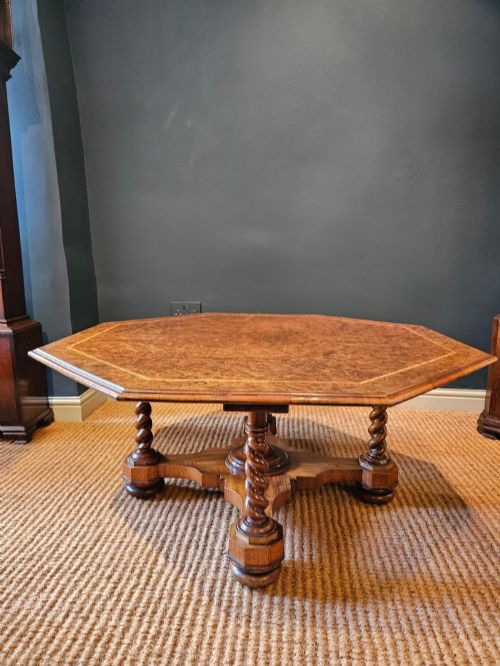


Large Walnut Coffee Table
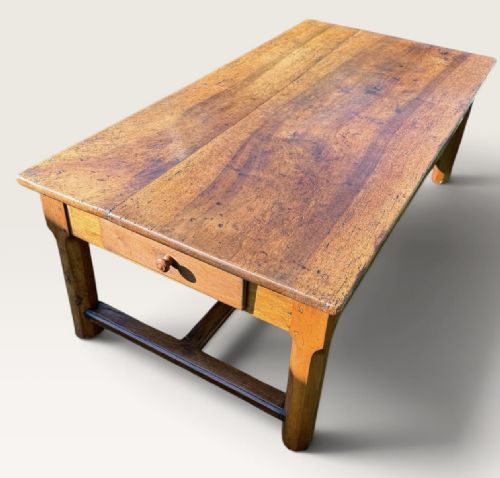
A large walnut coffee table brings substantial grain and warmth to a room, anchoring the space with period presence.
Large Walnut Coffee Table
A large walnut coffee table serves as a central surface in a room, drawing the eye with rich timber figures and substantial proportions. Buyers seeking a large walnut coffee table most frequently encounter Victorian examples alongside Art Deco and eighteenth-century pieces. These low tables often originate as adaptations from earlier stools, chests, or occasional tables, repurposed for modern living.
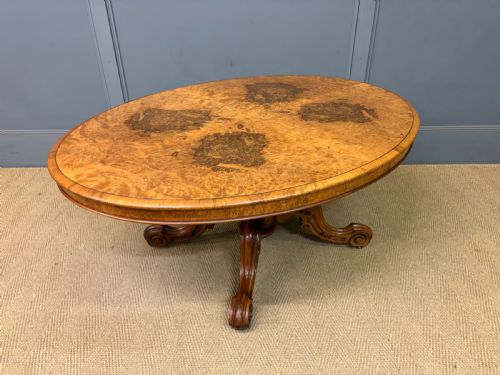
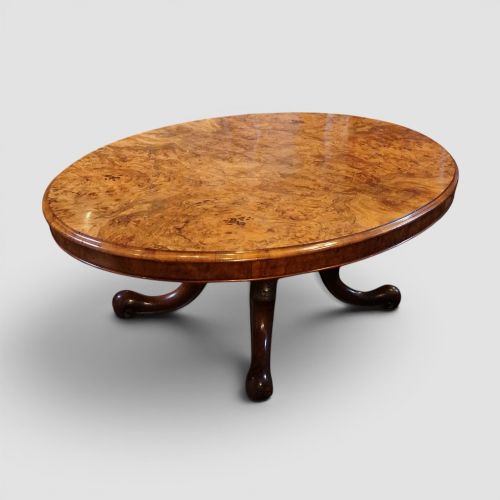
The selections span oval, round, octagonal, and rectangular formats, offering various footprints to suit different room layouts. Victorian pieces frequently showcase burr walnut surfaces, whilst Art Deco items emphasise smooth, figured veneers. Alongside dedicated coffee tables, listings occasionally include footstools, ottomans, and low chests converted for similar utility.
Materials and construction
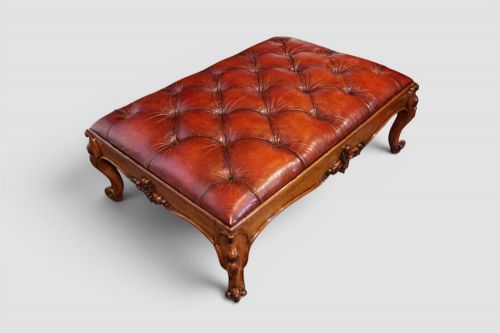
Construction relies heavily on walnut and burr walnut, valued for their deep tones and complex grain patterns. Craftsmen utilised figured walnut veneer and solid timber, often supported by secondary woods beneath the surface. Details such as boxwood inlay, brass galleries, ormolu mounts, and hand-dyed red leather panels appear across specific periods.
The joinery matches the demands of large furniture, accommodating substantial timber tops and sturdy bases. Artisans employed book-matched veneer techniques to create symmetrical grain patterns across expansive oval and rectangular surfaces. Trellis bases, carved supports, and pedestal configurations provide the necessary structural stability for heavy wooden tops.
Formations range from standard coffee tables to occasional tables, chests, and nineteenth-century centre stools adapted for modern living spaces.
Judging quality and execution
Quality rests primarily on the choice of timber and the complexity of the wood grain visible on the surface. Burr walnut and highly figured veneers command attention through their natural patterning, particularly when arranged symmetrically across a large top. The crispness of carved details and the integration of decorative elements like boxwood stringing or brass mounts distinguish finer examples.
Proportion and structural integrity also dictate the standing of a piece. Well-executed conversions from nineteenth-century stools or chests maintain balanced dimensions suitable for a low surface. The depth of the hand-dyed leather inserts and the finish applied to the wood further separate standard items from exceptional ones.
The Large Walnut Coffee Table Glossary
- Burr walnut
- A specialised timber cut from the abnormal growths of a walnut tree, yielding dense, swirling grain patterns. This highly decorative veneer is prized for large table tops.
- Book-matched
- A technique where two adjoining veneer leaves are opened like a book to mirror each other. This creates a symmetrical, repeating pattern across the table surface.
- Ormolu
- Gilded bronze mounts applied as decorative accents on furniture. Found on select French and English pieces from various periods.
- Boxwood
- A pale, dense wood frequently used for fine inlay work and stringing. It provides sharp visual contrast against dark walnut surfaces.
- Buttoned leather
- Upholstery secured with deep indentations formed by buttons, common on Victorian stools adapted for table use.
Large Walnut Coffee Table: Frequently Asked Questions
How do I clean a walnut table?
Dust regularly with a soft, dry cloth to prevent particulate buildup on the timber and veneer surfaces. Avoid harsh chemical cleaners that can strip the historic polish.
Apply a quality beeswax periodically to nourish the wood and maintain its natural sheen. Keep the table away from direct heat sources and strong sunlight to prevent the walnut from drying out or fading.
Can I use a converted stool as a table?
Many large tables in walnut begin their lives as Victorian footstools, centre stools, or low chests. These pieces make sturdy coffee tables due to their robust original frames and solid timber construction.
When adapted, their height and proportions suit modern seating arrangements whilst retaining their period character. Inspect the surface finish and base stability to ensure everyday utility.
What is burr walnut?
Burr walnut comes from a growth or burl on the walnut tree, where the grain grows in a deformed, swirling pattern. Cabinetmakers slice this wood into thin veneers to cover large table tops with intricate designs.
This material is inherently more decorative than straight-grained walnut. It forms the defining visual feature of many Victorian and Art Deco pieces.