




Dark Walnut Low Table
These dark walnut low table pieces bring rich timber tones and low proportions to a room, offering a sturdy surface for daily use.
Dark Walnut Low Table
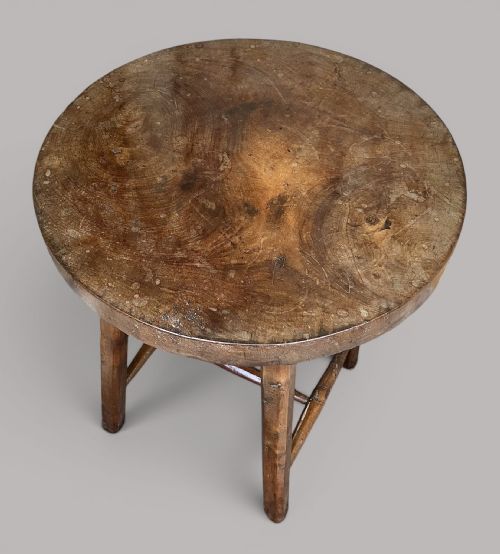
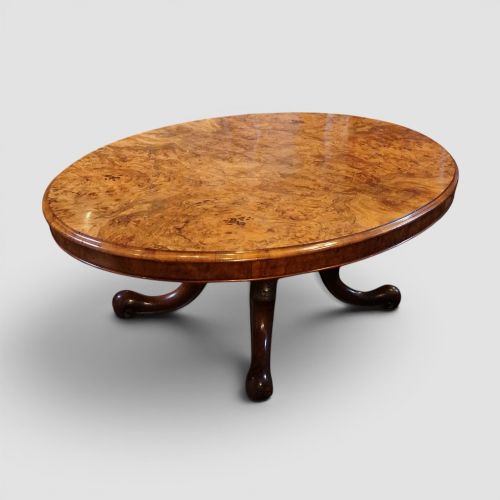
A dark walnut low table brings together centuries of furniture design, spanning Georgian primitive works to Edwardian and Victorian creations. Buyers searching for a dark walnut low table will encounter various forms, including coffee tables, circular occasional tables, and adapted wine tables lowered for modern living.
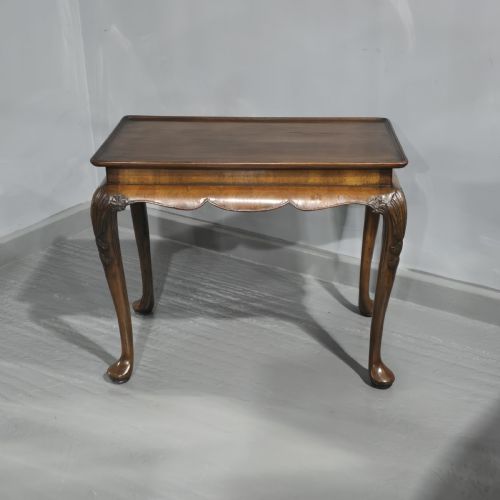
Origins stretch across traditional English workshops, French provincial circles, and Italian ateliers, reflecting diverse period aesthetics from Queen Anne revival to Victorian carving. These varied forms provide practical low surfaces suited to contemporary interiors while retaining their historical character.
How they were made
Construction relies heavily on walnut timber, utilised in both solid planks and decorative burr veneers applied to stable secondary woods. Cabinetmakers shaped these surfaces with hand tools, incorporating carved details, shaped edges, and turned legs suited to the prevailing style of the period.
Certain examples integrate contrasting elements such as inset marble tops, glass panels, or brass hardware, secured with traditional joinery methods appropriate to their date of manufacture. Structural adaptation is also evident, where taller wine or dressing tables have been lowered to serve as coffee tables.
Listings feature walnut across solid, burr, and carved forms, paired with materials including marble, brass, glass, and wrought iron.
What varies in quality
Quality in a dark walnut low table rests upon the selection of the timber and the crispness of any carved ornamentation. Figured burr walnut veneers and substantial solid planks demonstrate a higher grade of material choice than plain secondary timbers.
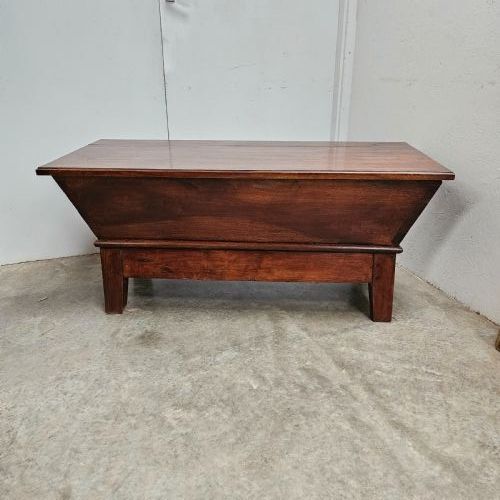
The integrity of the construction, from the stability of the joints to the smoothness of surface finishes, distinguishes finer workshop production from simpler vernacular pieces. Alterations, such as the conversion of older tables or coffers, also influence the character and standing of an individual piece.
Gillows of Lancaster
The Dark Walnut Low Table Glossary
- Burr walnut
- A prized timber veneer showing swirling knot formations. This grain pattern occurs at the junction of a branch and the trunk, creating decorative movement across the surface.
- Georgian vernacular
- Furniture made in the provinces during the eighteenth century following traditional local patterns. These pieces prioritise robust construction over academic stylistic refinement.
- Occasional table
- A small movable table designed for light, varied use around a room. They appear in circular, rectangular, and oval formats across multiple nineteenth and twentieth century periods.
- Dough-proving box
- A utilitarian wooden coffer traditionally used for rising bread dough. When fitted with a low base or legs, these repurposed boxes function as coffee tables with deep storage compartments.
- Queen Anne style
- A graceful design movement characterised by cabriole legs and curved outlines. Walnut became the dominant timber of this era, establishing the dark tones seen in later revivals.
Dark Walnut Low Table: Frequently Asked Questions
What periods do these low tables cover?
The selection spans from the eighteenth century through the Georgian and Victorian eras into the Edwardian period and early twentieth century. Each era brings distinct proportions and carving styles to the timber.
Earlier examples often display vernacular or primitive construction, while later Victorian and Edwardian pieces frequently feature elaborate turnings or imported marble inserts.
How do I identify solid walnut from veneer?
Solid walnut displays consistent grain continuity around the edges and underside of the top boards. Burr walnut veneer exhibits complex, swirling patterns applied over a stable core timber to create decorative impact.
Examining the edges and corners under good light helps reveal the thickness of the surface layer and the underlying construction method.
Were these tables originally made this low?
Many historical tables began life as taller items such as wine tables, dressing tables, or occasional stands. Cabinetmakers or later owners frequently lowered the legs to adapt them for contemporary coffee table use.
This conversion practice is common among nineteenth-century examples and preserves functional utility while retaining antique timber character.
How do I care for a dark walnut surface?
Walnut benefits from occasional treatment with appropriate waxes or polishes to nourish the timber and maintain its deep colour. Avoid placing hot items or liquids directly onto the wood to prevent marking the polish.
Keeping the table away from direct heat sources and strong sunlight preserves the stability of the timber and prevents the finish from drying.