
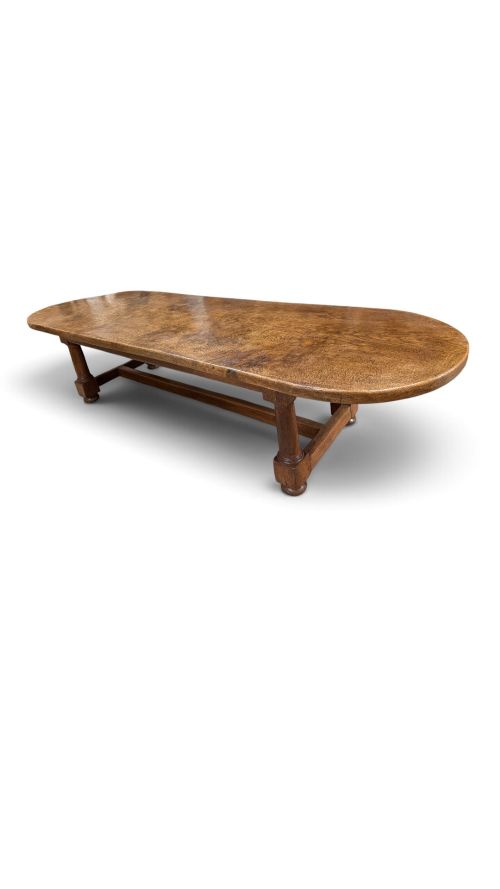
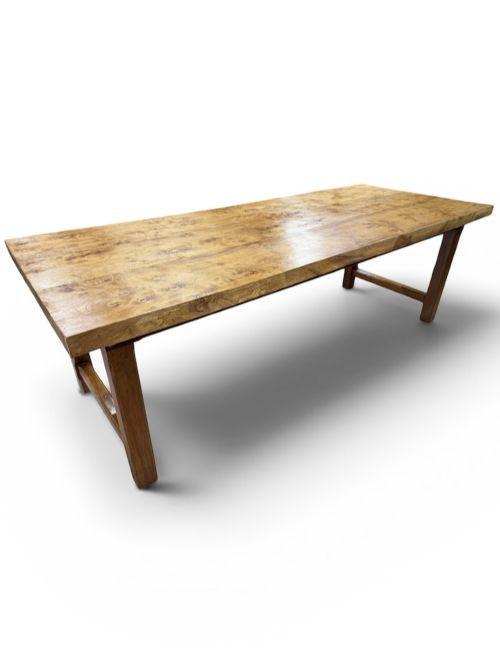
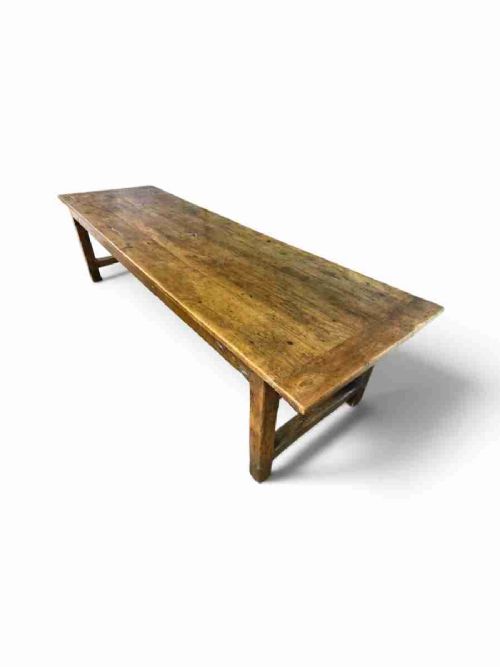
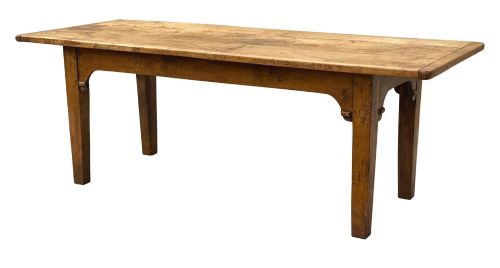
Rustic Refectory Table
A rustic refectory table brings sturdy communal dining history into a modern room through honest timber and time-worn joinery.
Rustic Refectory Table
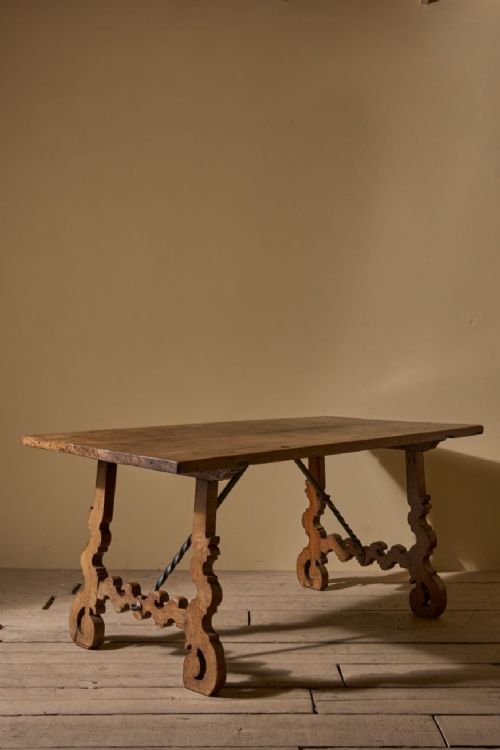
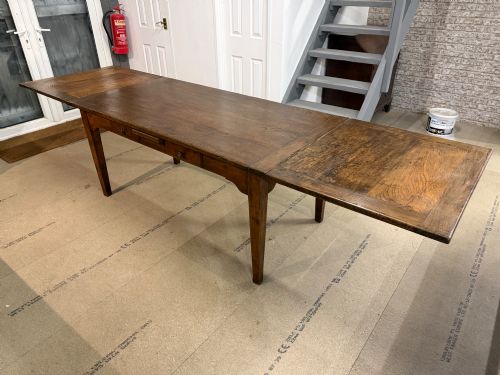
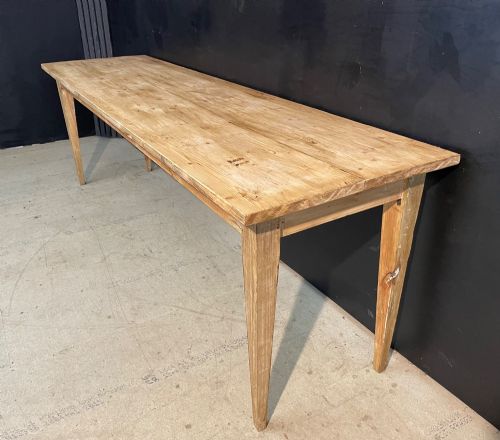
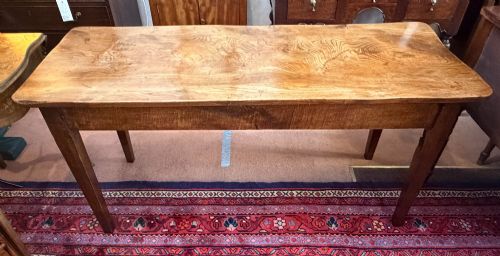
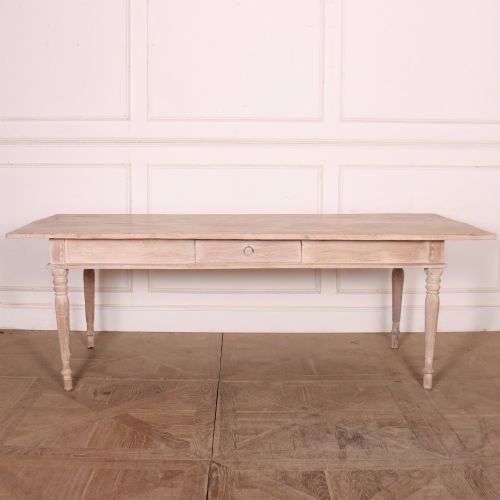
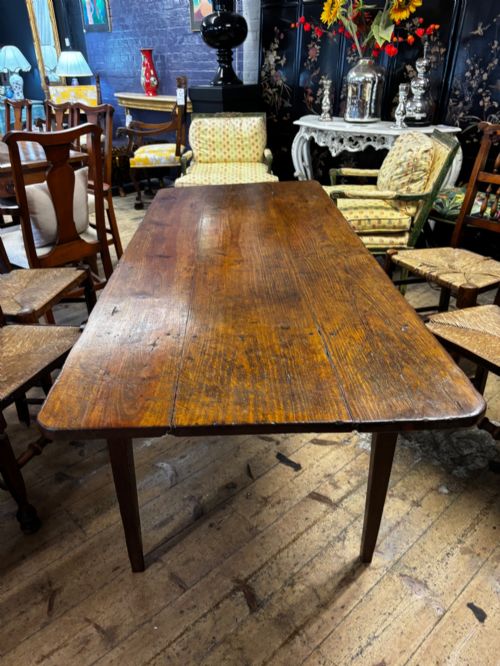
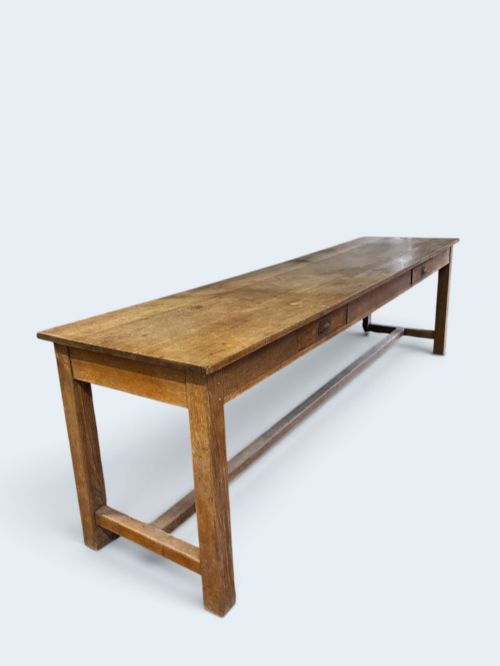
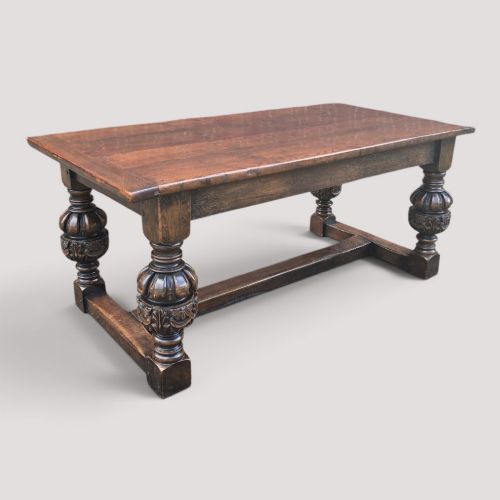
When searching for a rustic refectory table, you encounter long, heavy dining surfaces originally designed for monastic or large household dining. The examples seen here span centuries of utility, from eighteenth-century oak boards to Edwardian and early twentieth-century interpretations.
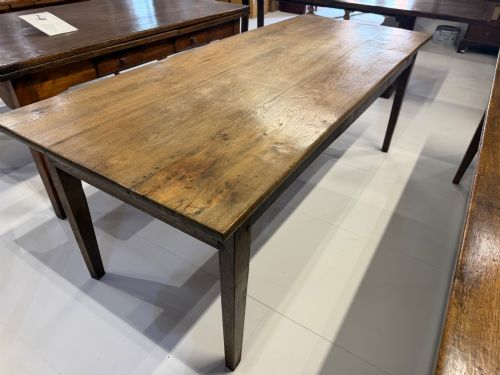
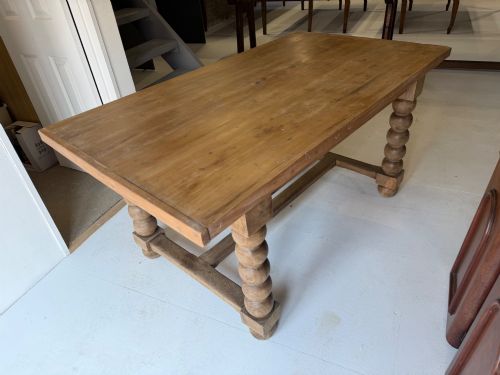
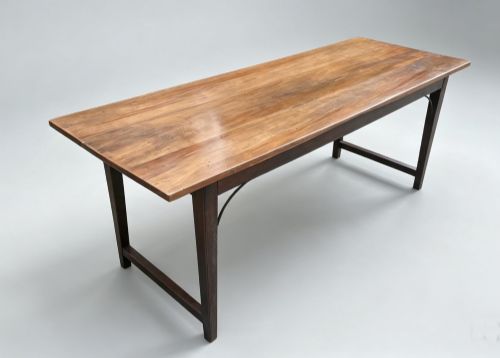
Most pieces on this page lean heavily into regional domestic traditions, appearing as French provincial fruitwood or cherry designs, Spanish elm variants, and English oak or pine farmhouse tables. Their primary purpose remains gathering people around a solid plank top supported by trestles, turned legs, or stretcher bases.
How They Were Made
Makers relied on solid hardwoods like oak, elm, beech, and fruitwoods, often pairing single or double plank tops with pegged joints and heavy stretchers for stability. Pine and deal appeared frequently in utilitarian kitchen contexts, shaped with simple hand tools and adzed surfaces.
Construction techniques prioritized durability over delicate ornamentation, utilising sturdy trestle ends, tapered legs, or bobbin turnings to support heavy daily use without modern hardware.
Rustic Refectory Table Retail Price Guide 2026
Typical asking prices for rustic refectory table among the pieces listed under this phrase on Sellingantiques today, from the lower quarter to the upper quarter. They describe what is for sale here now, not the wider market.
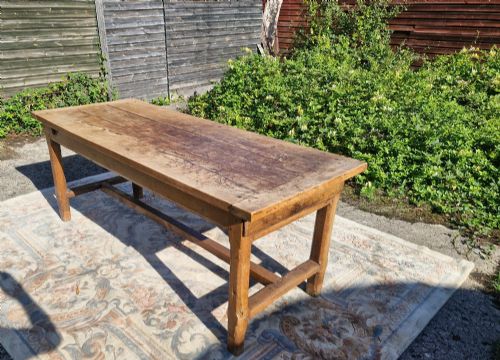
Several tables retain generations of kitchen flour packed firmly into the deep grain of their scrubbed pine boards.
What Varies in Quality
Quality rests in the integrity of the timber selection and the retention of original surfaces, such as untouched beeswax or early paint. Tables featuring single plank tops or dense, mature oak show superior timber quality compared to later assembled pine variants.
Proportion and structural honesty elevate certain examples, where trestle ends and stretcher placement balance mass with practical leg room, reflecting thoughtful joinery rather than hasty assembly.
Jack Grimble of Cromer
The Rustic Refectory Table Glossary
- Refectory table
- A long dining table historically used in monastic dining halls. These pieces typically feature long timber tops supported by stretcher-linked legs or trestle ends.
- Trestle ends
- Upright architectural supports placed at either end of a table, connected by a central longitudinal stretcher. This design maximises leg room along the length of the board.
- Plank top
- A table surface constructed from joining several wide boards side by side. Single plank variations are particularly prized for their width and clear grain.
- Stretcher
- A horizontal wooden bar running between table legs to provide rigidity and structural support. They frequently double as footrests on early dining furniture.
- Adzed
- Describes timber surfaces showing the textured, faceted tool marks left by a hand adze. This technique imparts a distinct undulating feel to early oak tops.
Rustic Refectory Table: Frequently Asked Questions
What is a rustic refectory table?
A rustic refectory table is a long, heavy dining surface rooted in utilitarian or monastic traditions, built from solid timbers like oak, pine, or fruitwood.
These pieces feature robust construction, often incorporating trestle ends or stretchers, and show the natural grain, wear, and patination accumulated through generations of domestic use.
How were these tables originally used?
They served as the central gathering place for communal meals in large households, farms, and monasteries.
Beyond dining, their expansive plank tops accommodated food preparation, daily chores, and family gatherings, making them the literal and social hearth of the kitchen.
How do I live with an antique table?
Living with these tables involves embracing their existing patina, character marks, and the minor indentations of daily life.
Routine maintenance requires gentle cleaning and occasional waxing to nourish dry historic timber without stripping away the accumulated surface history.
How can I tell eighteenth-century oak from later timber?
Early eighteenth-century oak displays deep colour variation, distinct medullary rays, and hand-cut joinery with wooden pegs that differ from mass-produced fasteners.
Examining the underside reveals tool marks and board widths that reflect older sawmilling methods rather than uniform twentieth-century plank dimensions.