


Rustic Oak Storage Box
A rustic oak storage box brings honest country craftsmanship and solid timber utility directly into a modern room.

What a rustic oak storage box is
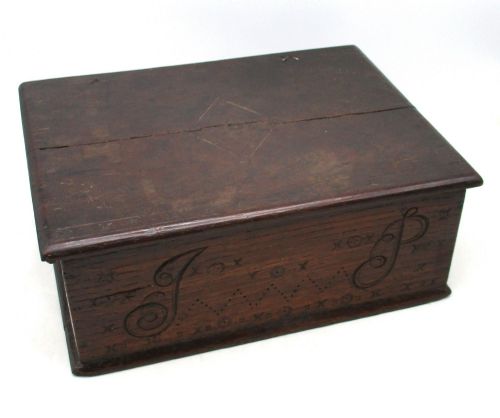
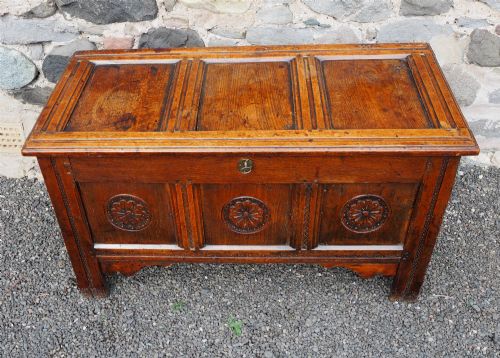
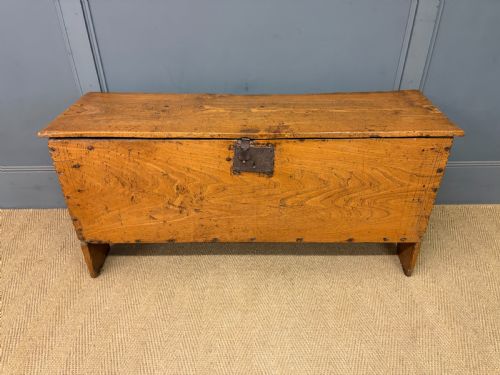
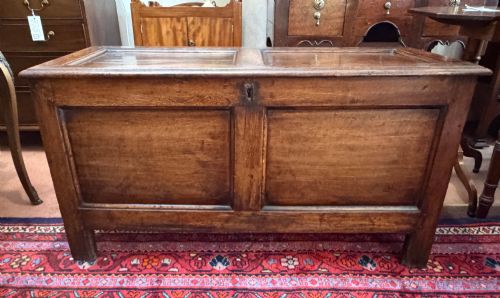
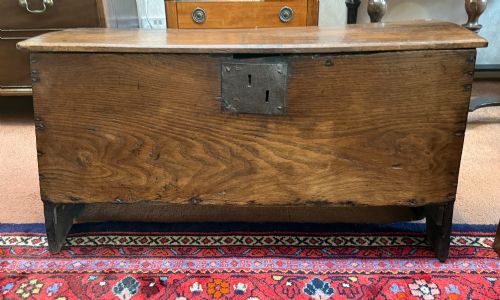
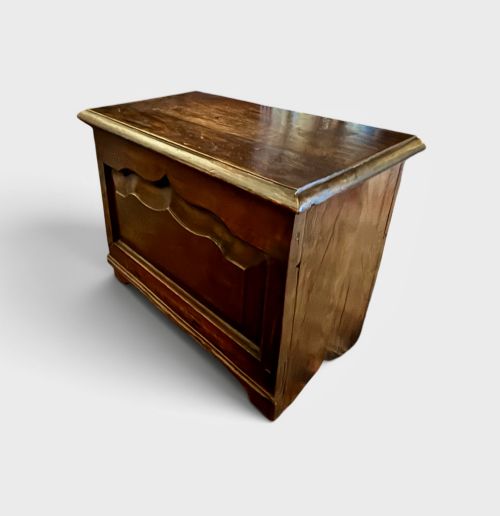
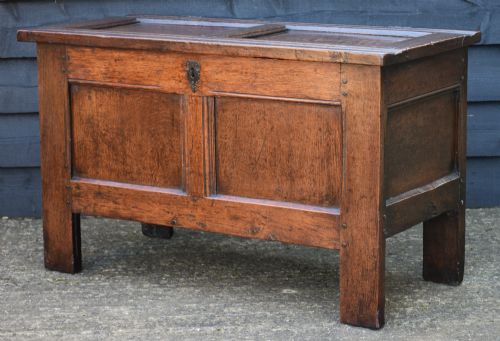
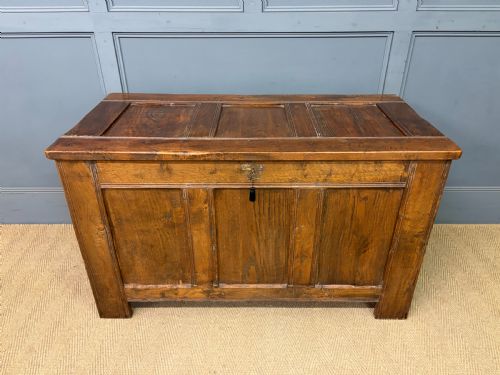
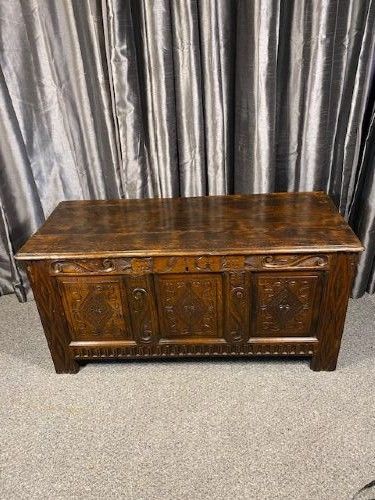
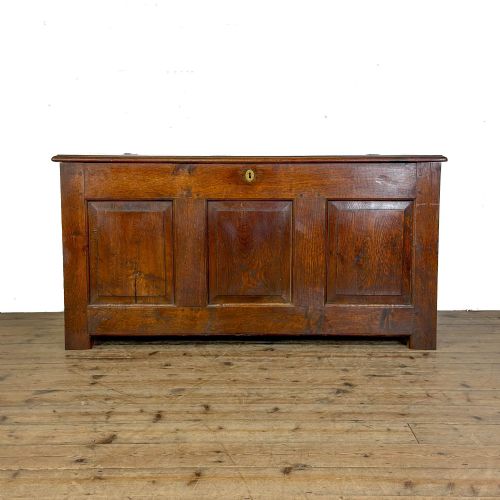
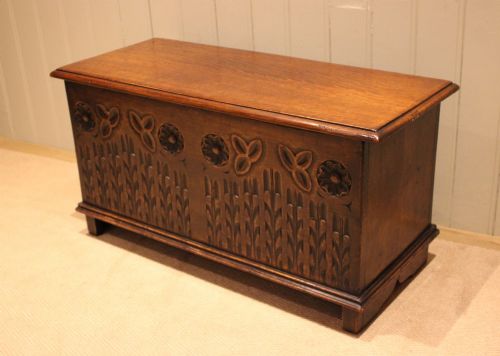
A rustic oak storage box encompasses sturdy coffers, mule chests, document boxes and country kitchen work boxes originating from the seventeenth, eighteenth and early nineteenth centuries. These pieces were built for everyday household storage and utility rather than formal display, carrying the marks of regional English workshop practice.
The versions most commonly encountered on this page date from the seventeenth and eighteenth centuries, often categorised under Georgian provincial or Jacobean styles. They present straightforward timber construction designed to hold household goods, linens or documents safely over generations.
How they were made
Makers utilised solid oak timbers, chosen for strength and local availability, supplemented by iron and brass fittings such as hinges and locks. Construction relied on traditional joinery methods suited to heavy wood, ensuring rigid durability for domestic storage.
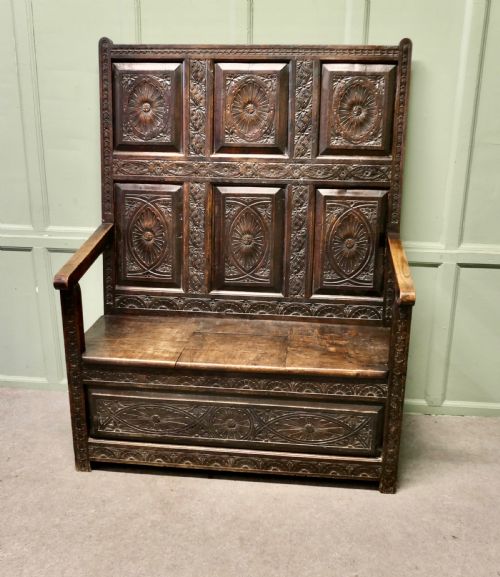
Surface decoration on these boxes and coffers frequently involved hand carving or simple panel framing. The natural grain of the oak remained central to the appearance, finished through decades of handling and wax rather than heavy varnishes.
Retail Price Guide 2026
Typical UK retail prices for rustic oak storage box, calculated from the Sellingantiques database of over a million retail prices indexed since 2003. This retail price guide relies exclusively on Sellingantiques data; no external sources or auction records are used, so the figures do not describe the wider market.
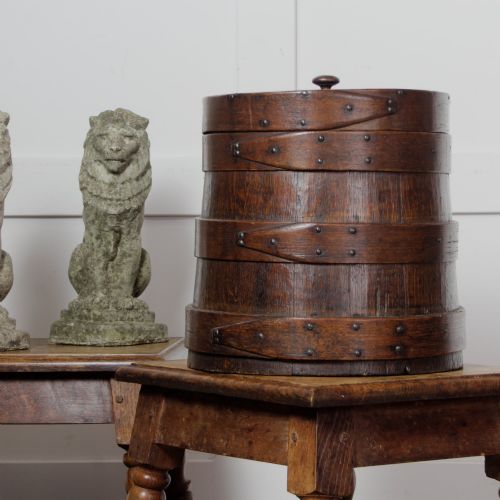
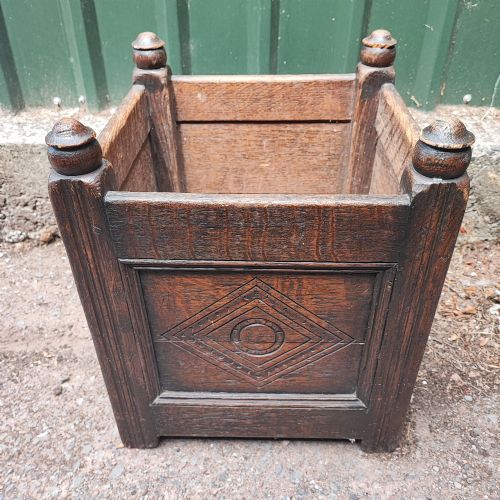
Some country kitchen work boxes doubling as garden trugs remind us that Georgian life involved getting mud on your boots.
What varies in quality
Quality rests in the integrity of the original oak timber and the retention of early iron or brass hardware. Pieces that keep their authentic patination and untouched surface finish stand above those with excessive modern restoration.
The sophistication of the hand carving and the proportion of the box structure distinguish finer regional workshops from basic utilitarian containers. Well-executed joints and balanced dimensions indicate a higher standard of provincial craftsmanship.
The Rustic Oak Storage Box Glossary
- Coffer
- A large wooden chest traditionally used for storing valuables, linens or documents. These sturdy containers often feature panelled construction and heavy hinged lids.
- Mule chest
- A storage chest characterised by one or more drawers built into the base beneath the main compartment. This form bridges the gap between the simple coffer and the chest of drawers.
- Document box
- A compact box designed to secure important papers, letters and small valuables. They frequently display carved decoration on the lid and front panels.
- Provincial
- A term describing furniture made outside metropolitan centres by local craftsmen. These pieces often display regional quirks and straightforward construction methods.
- Patina
- The surface sheen and colour developed by wood and metal over centuries of use and exposure. A desirable patina shows genuine age without artificial distress.
Frequently Asked Questions
What were oak storage boxes used for?
These boxes served as secure containers for household valuables, documents, linens and clothing in domestic settings. Their robust construction kept contents safe from damp and pests.
Over time, specific forms evolved to handle particular household tasks, from country kitchen work boxes to large bedroom coffers.
How do I care for antique oak?
Keep antique oak away from direct sunlight and sudden temperature changes to prevent the timber from splitting. Regular gentle dusting and occasional waxing maintain the surface finish.
Avoid modern silicon polishes, which can build up and damage the historic patination of the wood.
How can I tell seventeenth century oak from eighteenth century oak?
Seventeenth century pieces often display heavier frame and panel construction with deep hand-carved motifs typical of Jacobean styles. Iron hardware from this era tends to be hand-forged and simple in outline.
Eighteenth century examples frequently show sleeker Georgian proportions and sometimes incorporate base drawers, as seen in mule chests.
Are these boxes suitable for daily use?
Sturdy oak construction makes these historic boxes well-suited for holding blankets, books or modern belongings in a home. The solid timber and strong hinges easily withstand regular opening and closing.
Placing them in stable indoor environments ensures the ancient wood remains protected for continued use.