


Rustic French Pottery
These rustic French pottery pieces bring tactile earthy character to a room, spanning confit pots, oil jars, and water filters from past centuries.
Rustic French Pottery
Rustic French pottery encompasses utilitarian vessels and storage containers made for everyday domestic and agricultural life in the French countryside. When searching for rustic French pottery, buyers encounter functional items such as confit pots, olive jars, walnut oil jugs, and water filtration fountains designed for practical rural tasks.
The pieces on this page lean heavily towards nineteenth-century examples, alongside select eighteenth-century vessels and early twentieth-century items. Forms range from large multi-handled olive jars and deep glazed terracotta bowls to cream jugs and salt-glazed vinegar barrels originating from provincial French traditions.
Makers shaped these utilitarian objects using regional styles spanning French country, provincial, and European folk aesthetics. Buyers most frequently meet earthenware and terracotta bodies coated in rich glazes, alongside unpainted storage jars and salt-glazed stoneware.
Materials and construction methods
Potters built these vessels primarily from local terracotta, earthenware, and robust stoneware, selecting clays that could withstand heavy daily use. They employed traditional hand-shaping and wheel-throwing techniques to form thick, durable walls capable of holding liquids, oils, and preserves.
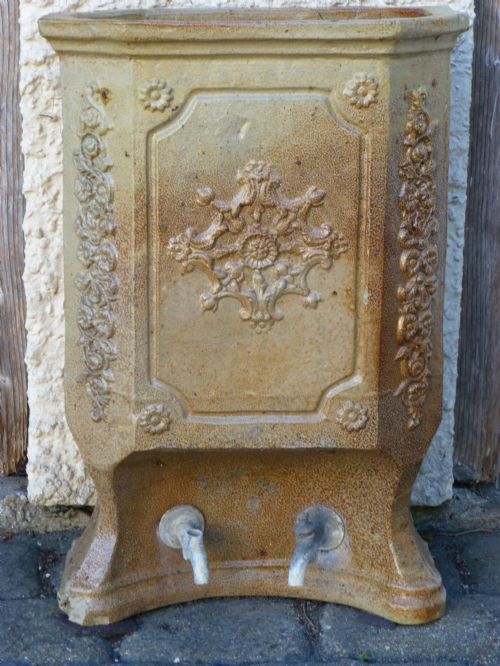
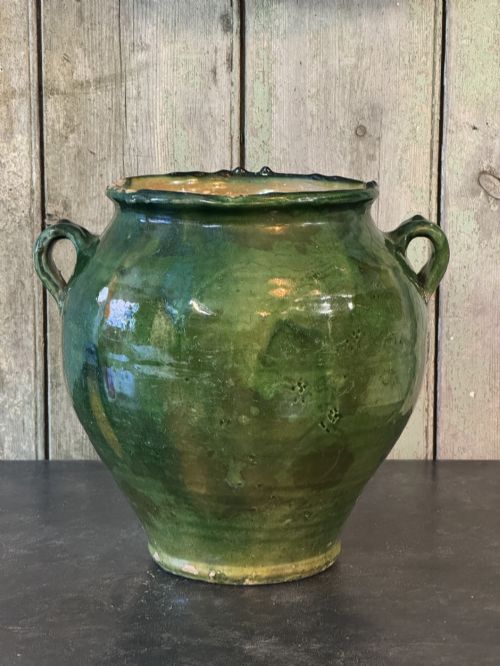
Surfaces were frequently finished with lead or mineral glazes, often producing vibrant green or earthy tones that sealed the porous clay beneath. Salt-glazing techniques were also utilised on specific storage barrels and water filtration fountains to create a dense, impervious finish.
Listings feature eighteenth-century and nineteenth-century pieces alongside early twentieth-century items, utilising terracotta, earthenware, and salt-glazed stoneware.
Assessing quality and character
Quality in these utilitarian pots rests upon the integrity of the clay body and the intentional distribution of the glaze. Superior examples display even thickness across heavy walls and rich, stable glaze coverage that accentuates the handmade contours of the vessel.
The retention of original surface treatments, such as historic paint on olive jars or intact multi-handle configurations on oil pots, elevates a piece. Subtle firing imperfections and natural wear from agricultural service contribute to the authenticity and visual depth of the better specimens.
The Rustic French Pottery Glossary
- Confit pot
- A traditional French earthenware jar with one or two handles, originally used for cooking and preserving meats in fat. These pots typically feature a glazed upper portion and an unglazed lower body.
- Terracotta
- A porous, brownish-red fired clay commonly used for utilitarian vessels, garden pots, and large storage jars. It is often coated with a protective glaze to hold liquids.
- Stoneware
- A dense, vitreous ceramic fired at high temperatures until the clay body becomes non-porous and extremely durable. Salt-glazed stoneware is particularly resilient against acids and liquids.
- Olive jar
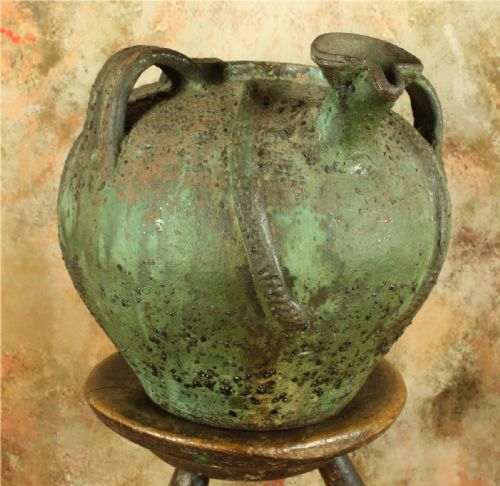
- A large, bulbous storage vessel designed in the French countryside for holding and maturing olive oil. Many examples feature multiple handles for lifting and pouring.
- Salt glaze
- A glassy, slightly textured finish achieved by throwing common salt into the kiln during high-temperature firing. This chemical reaction creates an orange-peel texture across the stoneware surface.
Rustic French Pottery: Frequently Asked Questions
What were confit pots used for?
Confit pots served rural households as practical vessels for preserving duck, goose, or pork in fat during the winter months. Their heavy earthenware walls helped maintain a stable internal temperature for stored provisions.
Over time, these utilitarian jars became staples of French country kitchens before transitioning into decorative interior objects valued for their tactile glazes.
How do I clean antique earthenware?
Clean antique earthenware gently using warm water and a soft cloth to protect the historic glaze and porous clay body. Avoid harsh chemical detergents that can penetrate unglazed areas or damage fragile surfaces.
Allow the vessel to dry completely after washing to prevent moisture accumulation inside the historic ceramic material.
Are these pots waterproof?
Many of these pieces were originally designed to hold liquids, oils, or preserves and feature internal glazes for that purpose. However, centuries of use and age can render some terracotta bodies slightly permeable.
It is advisable to place a protective saucer beneath antique earthenware if you intend to use them as indoor planters or vase holders.
How do I date a pottery piece?
Dating relies on examining the potting technique, clay composition, glaze characteristics, and overall form in relation to known periods. Eighteenth and nineteenth-century pieces often display heavier hand-thrown construction marks and characteristic provincial glaze colours.
Comparing handle placement and utilitarian function against documented historical types helps narrow down the manufacturing era.