



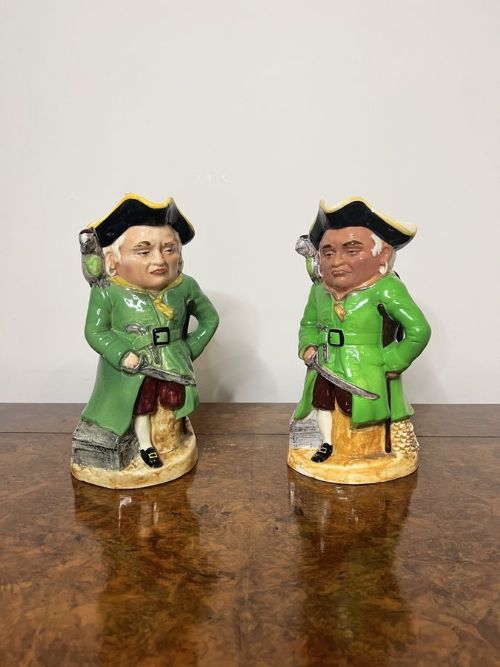


Green Earthenware Jug
A green earthenware jug brings earthy texture and rich colour to a table, combining domestic utility with centuries of ceramic history.
Green Earthenware Jug
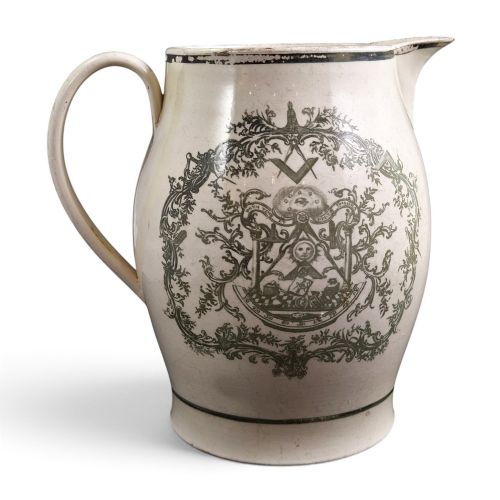
A green earthenware jug encompasses everything from 18th-century creamware and Regency Staffordshire to Victorian majolica, Edwardian sets, and studio pottery. These vessels range from practical cream jugs and water vessels to large oil pots, amphorae, and decorative pitchers.
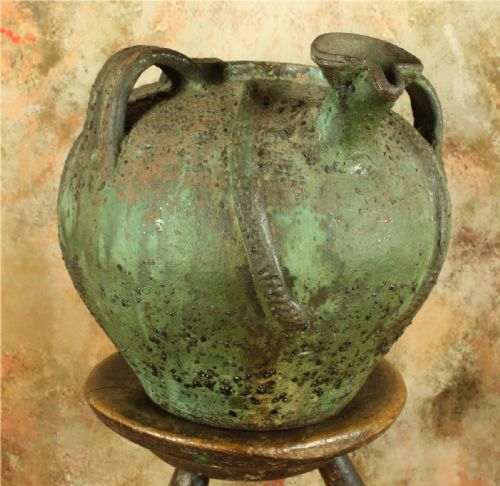
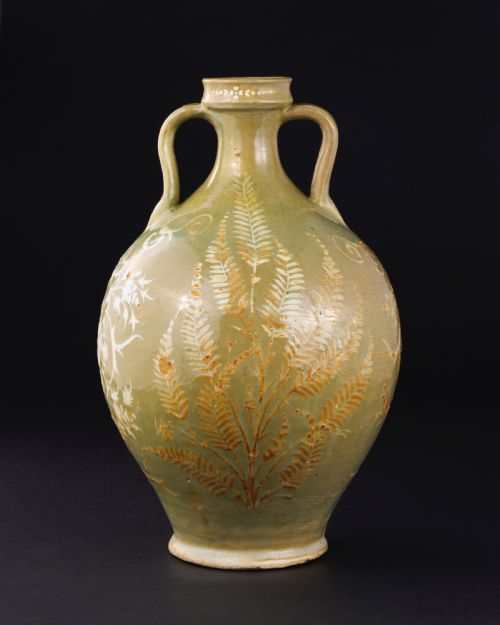
The green earthenware jug appears in regional forms across England, France, Turkey, and Persia, spanning periods from the 17th century through the mid-20th century. Buyers encounter robust terracotta bodies alongside refined creamware and lead-glazed majolica wares.
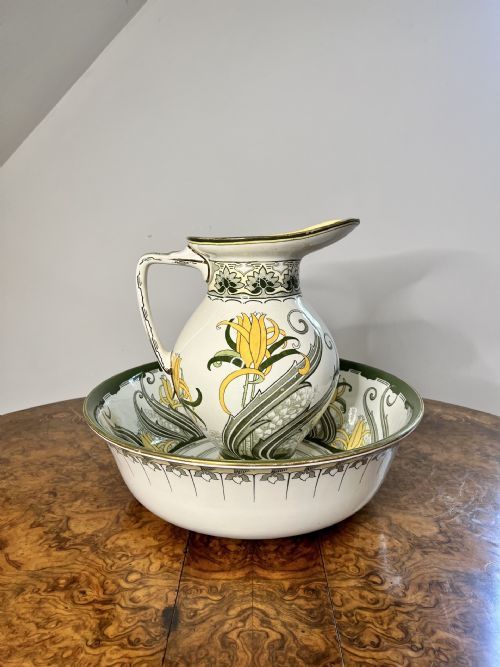
Many examples arrive with matching bowls, while others stand alone as sculptural vessels or water pitchers. The selection includes both utilitarian kitchen items and artistic studio pottery from makers working in distinct revivalist styles.
How they were made
Makers shaped these vessels from terracotta, creamware, and general ceramic bodies, often employing traditional throwing and moulding techniques. The resulting forms rely on the inherent plasticity of the clay before drying and firing.
Surface decoration frequently depends on glazes, ranging from smooth celadon and olive-green applications to richly coloured majolica and slipwork. These liquid glass coatings fuse with the clay body during the kiln firing to waterproof the vessel and impart colour.
Some jugs arrive accompanied by matching bowls, ready for Victorian washing routines or enthusiastic still life oil painters.
What varies in quality
Quality rests in the crispness of moulded relief details, the evenness of the glaze application, and the overall balance of the form. Superior pieces display deliberate control over the fluidity of the glaze and the precision of decorative motifs.
The distinction between ordinary utility wares and exceptional pieces lies in the sophistication of the ceramic body and the artistic ambition of the glaze work. Master potters achieve depth in colour and harmony in proportion that simpler vessels lack.
Sir Edmund Elton·Doulton Burslem·Mason·Wedgwood·George Jones
The Green Earthenware Jug Glossary
- Earthenware
- Porous pottery fired at relatively low temperatures, requiring a glaze to hold liquids. This fundamental ceramic type forms the baseline for traditional jugs and domestic vessels.
- Creamware
- A refined, light-colored earthenware developed in the 18th century with a warm, pale yellow or cream tone. It provided a smooth surface ideal for various glaze enhancements.
- Majolica
- Pottery decorated with opaque coloured tin glazes over an earthenware body, popular for vibrant hues and sculptural relief ornamentation. The technique yields rich, glossy surfaces.
- Celadon
- A transparent green glaze originating in East Asia, prized for its jade-like translucency and subtle tonal variations. It pools gracefully in carved or moulded recesses.
- Slip
- Liquid clay suspension used for coating, decorating, or joining ceramic pieces before firing. Potters apply it to build raised patterns or add contrasting surface colour.
Green Earthenware Jug: Frequently Asked Questions
What is a green earthenware jug?
A green earthenware jug is a ceramic vessel finished with green glaze, encompassing diverse historical styles from 17th-century Persian pottery to Victorian majolica.
These pieces function as utilitarian water containers, cream jugs, or decorative art pottery depending on their origin and period.
How do I date an antique jug?
Dating relies on examining the ceramic body, glaze characteristics, style markers, and any maker stamps or marks on the base. Comparing the form against known periods like the Regency or Victorian era helps narrow the timeframe.
Material composition, such as early creamware versus later majolica, also provides clear chronological indicators for the piece.
Are these jugs waterproof?
Most antique earthenware jugs feature an interior and exterior glaze that seals the porous clay body, making them suitable for holding liquids like water or cream. Unglazed terracotta variations are typically more porous and better suited for dry display.
Checking the interior glaze condition helps determine if a specific vessel remains functional for daily use.
How should I clean antique pottery?
Cleaning requires gentle hand washing with warm water and mild soap, avoiding harsh scrubbing tools or abrasive chemical cleaners that could harm the historic glaze. Soft cloths protect delicate surfaces and painted or moulded details.
Submerging fragile earthenware for extended periods should be avoided to protect the aged ceramic body.