
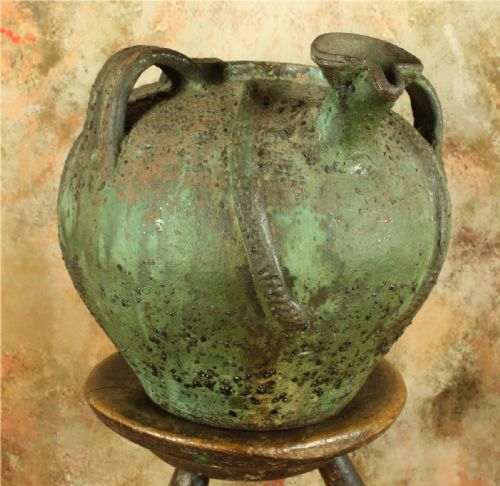

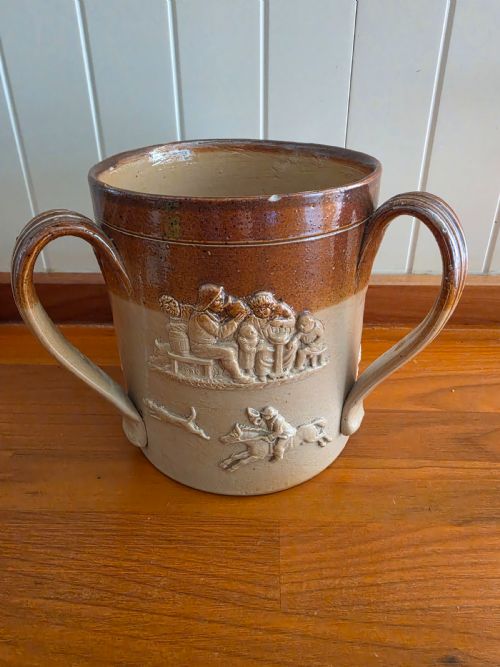


Three Handled Vessel
A three handled vessel offers a striking silhouette and unmatched utility, uniting centuries of craftsmanship in one exceptional form.
Three Handled Vessel
A three handled vessel is a distinctive form spanning centuries of domestic and decorative production, most frequently appearing here as robust stoneware tygs, earthenware jugs, and sterling silver presentation pieces. Collectors encounter diverse regional interpretations, from English country pottery and Victorian Doulton Lambeth salt-glazed ceramics to delicate French crystal glass bowls and pewter Jugendstil vases. These objects bridge utilitarian design and ornamental display, reflecting the varied tastes of periods ranging from the mid eighteenth century through the early twentieth century.
The defining characteristic of these pieces is the presence of three distinct grips, which historically facilitated communal passing at toasts or provided stable handling for heavy liquids. Within the available selection, buyers frequently encounter heavy stoneware tygs decorated by notable ceramic artists alongside refined silver and cut glass loving cups. Each period brings its own characteristic weight and proportion, ensuring that whether the object originates from a Georgian workshop or an Arts and Crafts studio, its purpose remains distinct and visually engaging.
Materials and construction
Potters and metalsmiths relied on durable materials suited to the intended function of the object, utilising dense stoneware, porous earthenware, and heavy sterling silver. Stoneware pieces were salt-glazed and fired at high temperatures to achieve a vitrified, waterproof body capable of enduring daily use, while silver vessels required expert hammering, embossing, and soldering to shape the hollow forms. Crystal glass examples combined blown bodies with applied paste gilt decoration, demanding precise temperature control during shaping.
Surface ornamentation involved specialised techniques such as hand-painting, slip-trailing, silver-mounting, and pewter casting. Artists applied intricate motifs directly onto the leather-hard clay or metal surfaces before final firing or polishing, ensuring the decoration integrated fully with the core material. The attachment of three separate handles required considerable skill to maintain structural balance and symmetry across both ceramic bodies and metalwork.
Assessing quality and execution
The distinction between standard production and the finest examples lies in the crispness of the modelling, the dexterity of the surface decoration, and the overall balance of the form. Superior ceramic pieces exhibit deeply incised or hand-painted details by recognised artists, whereas lesser items rely on simpler, factory-moulded patterns with minimal hand finishing. The execution of the three handles also reveals the maker's proficiency, as top-tier examples display securely joined, perfectly proportioned loops that complement the body without awkward asymmetry.
Material purity and finishing details further separate exceptional pieces from ordinary ones, particularly in silver and glass where weight, clarity, and engraving depth matter immensely. Fine silver and pewter items show sharp, legible hallmarks and deep, clean embossing that retains its definition across the entire surface. Similarly, cut glass bowls demonstrate precise facet cutting and well-preserved gilding, indicating a higher standard of workshop production and careful preservation over time.
Doulton Lambeth·Royal Doulton·Kayserzinn·George Ernest Hawkins
The Three Handled Vessel Glossary
- Tyg
- A traditional English drinking vessel featuring multiple handles designed for communal passing. They usually take a cylindrical form and appear frequently in stoneware and earthenware.
- Loving cup
- A large drinking vessel equipped with two or more handles, traditionally used at banquets and celebratory toasts. These often incorporate precious metals or fine ceramics.
- Stoneware
- A dense, vitreous ceramic fired at high temperatures until non-porous. It provides exceptional durability and served as the primary medium for utilitarian and decorative vessels.
- Jugendstil
- The continental European manifestation of the Art Nouveau movement. It emphasises organic plant motifs and flowing, asymmetrical lines particularly visible in metalwork.
- Paste gilt
- A decorative technique applying gold leaf or metallic paint mixtures to glass or ceramic surfaces. It creates ornate metallic highlights that require gentle handling.
Three Handled Vessel: Frequently Asked Questions
What is a three handled vessel used for?
These pieces were historically designed for communal drinking, feasts, and ceremonial toasts, allowing multiple participants to pass the vessel securely around a table.
Over time, many of these objects transitioned into purely decorative table centrepieces, mantel ornaments, or prized display pieces within collector cabinets.
How do I clean a ceramic tyg?
Careful dusting with a soft, dry cloth is usually sufficient for historic ceramic surfaces to prevent accumulation of dirt without risking the glaze.
Harsh chemical detergents and immersion in water should be avoided, especially on pieces featuring delicate painted decoration or precious metal mounts.
Are these vessels safe for drinking?
While historic pieces were originally created for functional use with liquids, modern consumption from antique vessels is generally discouraged due to potential material degradation.
Older glazes and historic solder or metal compositions may react with beverages, making these items better suited for visual appreciation and display.
How can I tell the period?
Dating relies on examining the specific clay bodies, glaze characteristics, hallmark stamps, and stylistic markers unique to each design movement.
Comparing the decorative motifs, such as Victorian Arts and Crafts incising or Art Nouveau botanical lines, helps place the object within its era of manufacture.