


Rustic Area Rug
A rustic area rug brings hand-knotted village warmth to a floor, offering durable wool pile and rich traditional patterns.
Rustic Area Rug
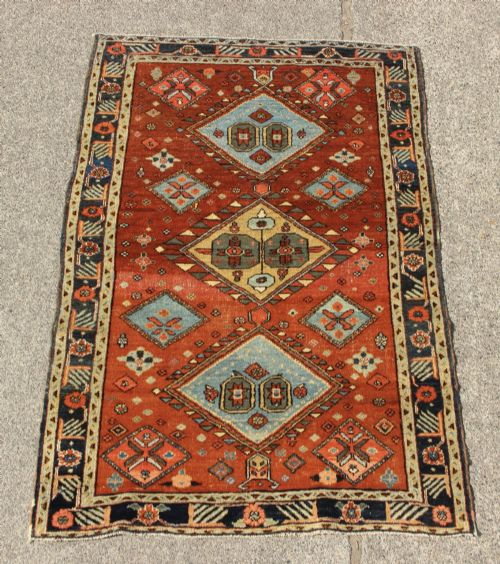
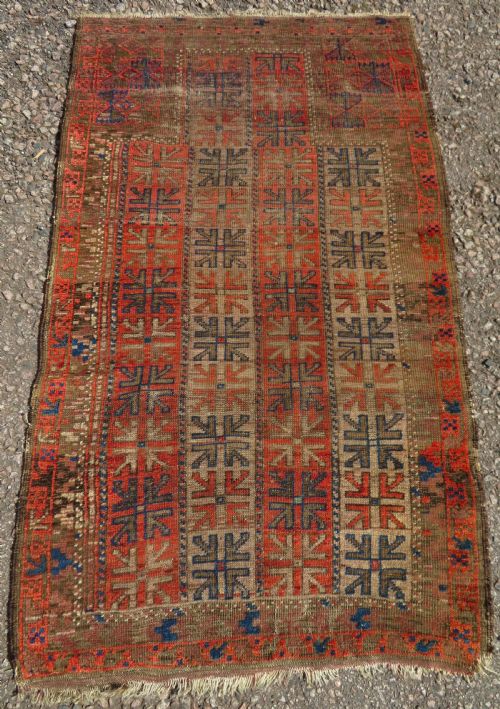
A rustic area rug encompasses handwoven village and tribal carpets originating from Persian, Anatolian, and Caucasian weaving traditions. These floor coverings span production dates from the mid nineteenth century through to the interwar decades, showing the hand of regional makers rather than factory looms.
The version most commonly met on this page is the Persian Heriz rug or carpet, alongside various nomadic tribal pieces such as Baluch, Shiraz, and Anatolian village weaves. They serve as grounding decorative elements in traditional and modern interiors alike, valued for robust construction and earthy palettes.
Materials and construction
These textiles rely primarily on wool pile, occasionally incorporating cotton warps or camel wool for foundation and texture. Hand-spun wool provides the dense, resilient surface that absorbs traditional plant and mineral dyes over generations of use.
Weavers knotted these pieces by hand on vertical or horizontal looms, applying geometric medallions, village motifs, and tribal field patterns. The resulting fabrics combine structural integrity with the slight irregularities inherent in traditional handweaving.
Nomadic weavers occasionally embedded stray goat hairs and spinning errors directly into the field, leaving a permanent signature of the farmyard.
Judgments of quality
Quality in these floor coverings rests upon the integrity of the wool, the saturation and clarity of the dye, and the tightness of the knotting. Finer examples display greater precision in geometric drawing while retaining the organic character of village production.
The condition of the pile and the stability of the foundation dictate desirability among collectors and decorators. Pieces retaining full pile alongside original edge finishes represent the higher end of the surviving range.
The Rustic Area Rug Glossary
- Heriz
- A style of Persian carpet originating from the Northwest region, known for bold geometric medallions and robust structural wool. These rugs are built to endure heavy foot traffic.
- Baluch
- A designation for tribal weaving produced by nomadic groups, frequently featuring dark wool palettes and prayer rug formats. They often incorporate camel wool into the pile.
- Kilim
- A flat-woven carpet or rug made without a pile, produced through interlocking warp and weft threads. These textiles offer lighter placement options for floors and walls.
- Medallion
- A central ornamental design motif placed in the field of a rug. It anchors the geometric symmetry typical of village and tribal weaving.
- Warp
- The vertical foundation threads stretched lengthwise on a loom before knotting begins. Cotton and wool serve as the primary materials for these structural elements.
Rustic Area Rug: Frequently Asked Questions
How do I care for my rug?
Regular gentle vacuuming without a beater bar removes surface grit before it damages the wool pile. Professional specialist cleaning protects the natural dyes and fibres from harsh chemicals.
Keep the textile out of direct, prolonged sunlight to prevent fading of natural colours. Using a quality underlay prevents slipping and cushions the foundation against floor wear.
Where were these rugs made?
Production centres span Persian regions like Heriz, Shiraz, and Khorasan, alongside Anatolian villages and Caucasian weaving districts. Each area developed distinct geometric vocabularies and knotting densities.
Nomadic and village weavers produced these pieces locally using regional sheep wool. Their remote locations preserved traditional tribal motifs distinct from urban workshop output.
Are these rugs durable?
Hand-spun wool pile combined with sturdy cotton or wool foundations makes these textiles exceptionally hard-wearing. They withstand everyday domestic use while developing a softer patina over time.
Thick pile construction absorbs impact and insulates cold flooring effectively. Proper placement on a supportive underlay ensures the structural integrity remains sound for decades.
How do I date a rug?
Stylistic markers, structural materials, and natural dye signatures help establish the approximate period of manufacture. Evaluators look at knot structure and wool preparation alongside regional design evolution.
Mid nineteenth to early twentieth century examples display distinct saturation levels and hand-spun irregularities. Comparing border designs and palette shifts clarifies the historical timeline.