


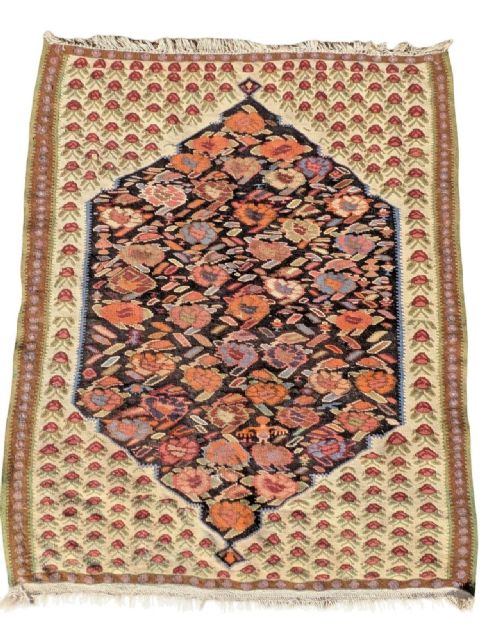
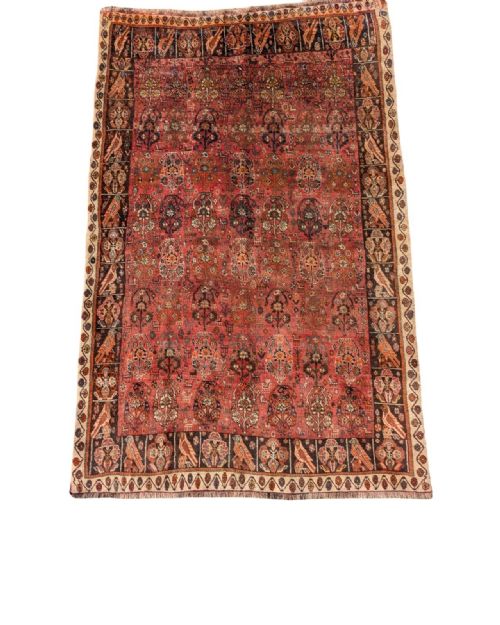
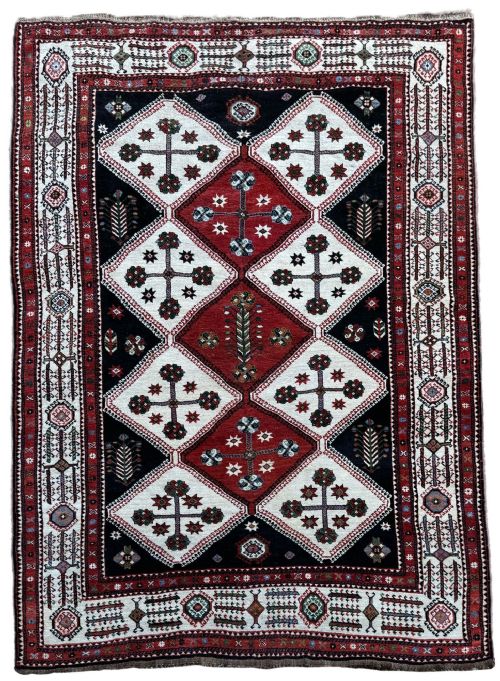
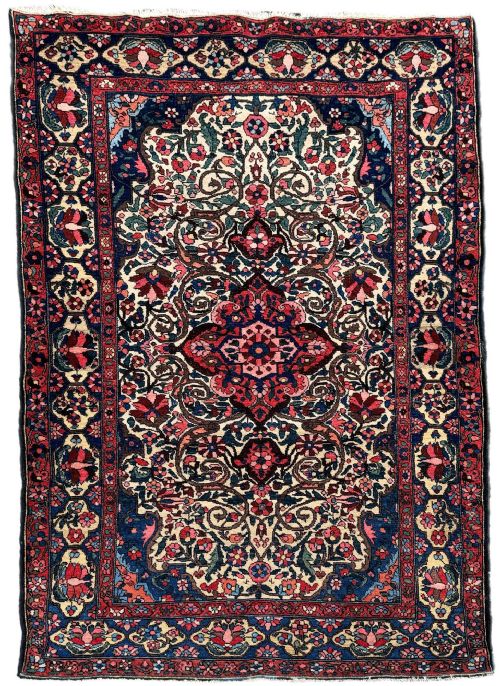
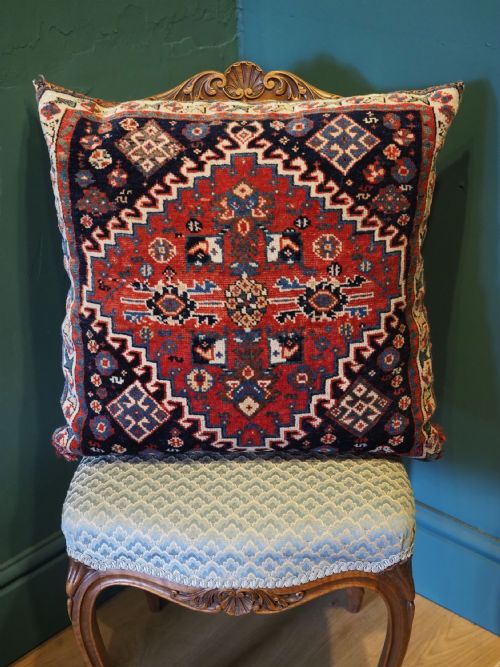
Navy Tribal Rug
A navy tribal rug brings deep indigo wool and geometric nomad designs into a room, offering durability and history.
Navy Tribal Rug
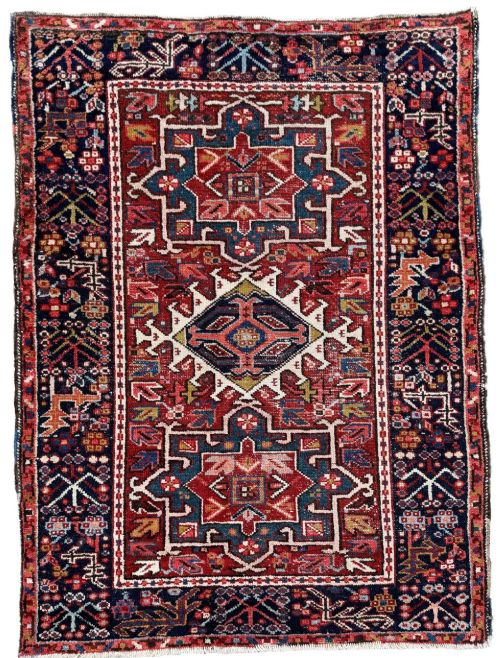
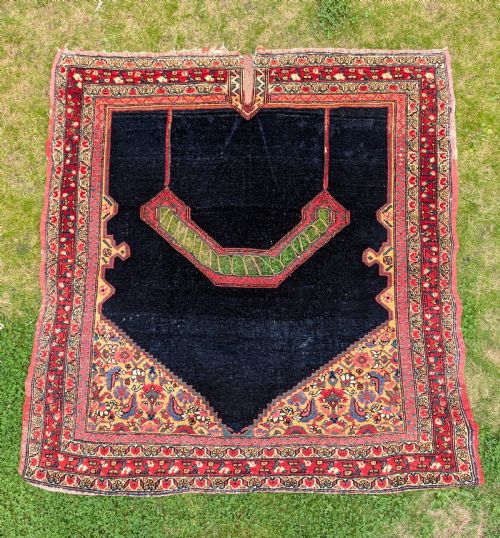
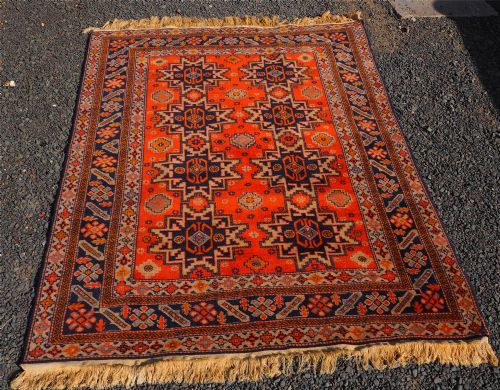
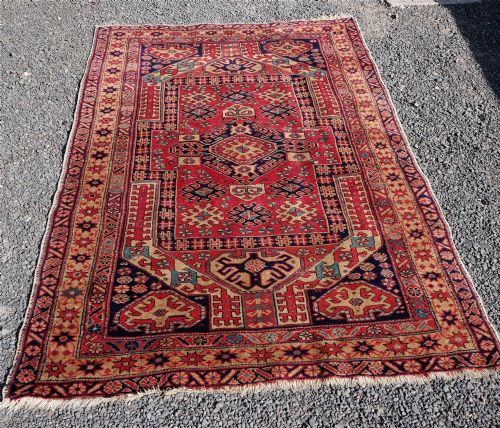
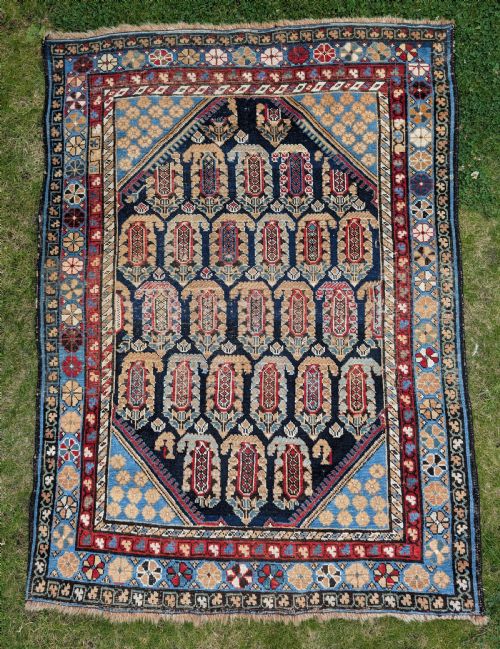
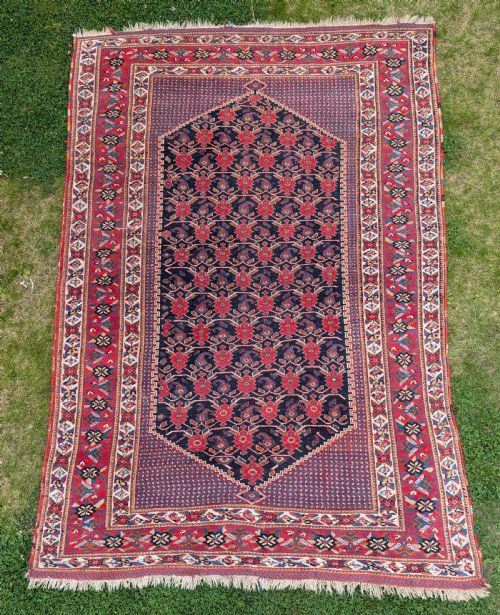
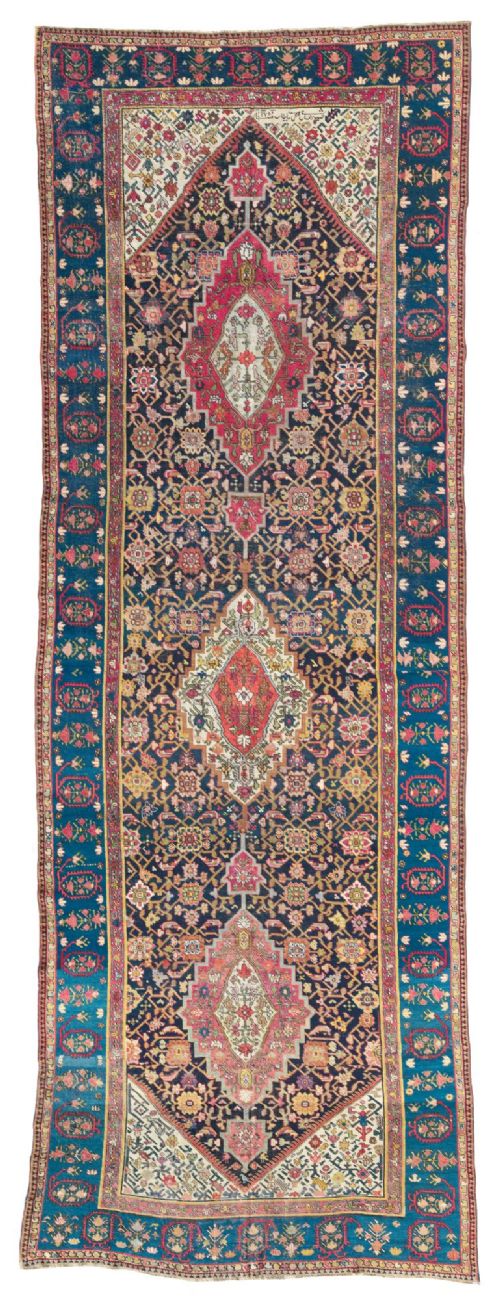
A navy tribal rug combines dark indigo fields with geometric medallions, prayer mihrabs, and lattice patterns originating from nomadic and village weavers. These floor coverings span the nineteenth and early twentieth centuries, appearing in formats ranging from small scatter rugs to long runners and saddle covers.
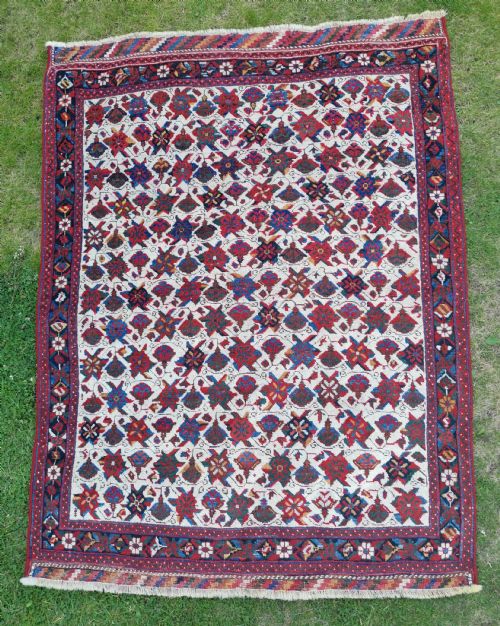
The selections here centre on Persian and Caucasian tribal traditions, including Baluch, Afshar, Khamseh, Qashqai, and Kurdish pieces. Buyers frequently encounter formats such as area rugs, runners, and kilims woven in wool.
Village and nomadic pieces show regional motifs passed down through generations rather than standardised factory designs. Each rug reflects the specific weaver's interpretation of traditional tribal symbols.
Materials and construction
These textiles utilise hand-spun wool for the pile and foundation, often paired with cotton for structural warps and wefts. The combination of resilient wool fibres and tight knotting yields a dense structure built for heavy daily use.
Weavers relied on natural dyes to colour the wool, producing deep navy blues alongside terracotta, madder red, and ivory accents. Natural colourants interact with age to develop soft tonal variations across the pile.
Navy Tribal Rug Retail Price Guide 2026
Typical asking prices for navy tribal rug among the pieces listed under this phrase on Sellingantiques today, from the lower quarter to the upper quarter. They describe what is for sale here now, not the wider market.
Some nineteenth-century nomads repurposed half-khorjin saddlebags into compact rugs, preserving functional travel gear as decorative floor art.
Evaluating quality and execution
Quality rests in the precision of the knotting, the depth of the wool pile, and the complexity of the geometric drawing. Finer pieces display crisp lines in medallions and lattice work, alongside balanced proportions.
The richness of the natural dye palette distinguishes superior examples, where varied tones impart texture to the field. Consistent knot density and secure original selvedges indicate careful domestic or workshop production.
The Navy Tribal Rug Glossary
- Mihrab
- A niche design representing a prayer arch, frequently seen pointed toward Mecca in prayer rugs. This motif directs the eye through the central field of the textile.
- Kelleh
- A large rectangular carpet format, longer than it is wide, traditionally used in Persian reception rooms. These substantial pieces anchor large spaces.
- Runner
- A long, narrow carpet format designed for hallways, corridors, and stairs. They repeat geometric motifs along an elongated axis.
- Medallion
- A central ornamental design motif placed in the middle of the rug field. It often anchors the surrounding geometric and floral patterns.
- Kilim
- A flat-woven carpet or rug produced without a pile by tightly interweaving warp and weft strands. This technique creates a lightweight, reversible textile.
Navy Tribal Rug: Frequently Asked Questions
How do I place a navy tribal rug?
These rugs anchor hallways, sitting rooms, and bedrooms by introducing deep indigo tones and grounding furniture arrangements. Their geometric patterns suit both traditional interiors and modern minimalist spaces.
Runners fit narrow corridors, while area rugs define seating areas. Smaller formats function well as wall hangings or cushion covers.
What materials make up these rugs?
The pile and foundation consist primarily of sheep wool, sometimes hand-spun, which provides natural resilience and lanolin protection. Cotton also appears in foundations for added structural stability.
Weavers dyed these materials using natural colourants derived from plants and minerals. These dyes yield rich indigo blues and earthy reds that mellow gracefully over decades.
How do I identify a tribal rug?
Tribal rugs display geometric medallions, hooked motifs, and stylised animals or plants rather than refined court florals. The designs reflect regional weaving traditions passed down among nomadic and village groups.
Asymmetrical structures and slight irregularities in the borders often point to hand-woven nomadic origins. Each piece carries motifs specific to its producing tribe or region.
How are different periods told apart?
Nineteenth-century pieces typically exhibit deeper natural dye saturation and heavier hand-spun wool structures. Early twentieth-century examples introduce transitional palettes while maintaining traditional village knotting.
Structural analysis of the foundation threads and wool quality helps narrow down the decade of production. Wear patterns and dye ageing offer further clues to a rug's age.