



Vintage Gendje Rug
A vintage gendje rug brings bold Caucasian geometry and rich hand-spun wool into a room.
Vintage Gendje Rug
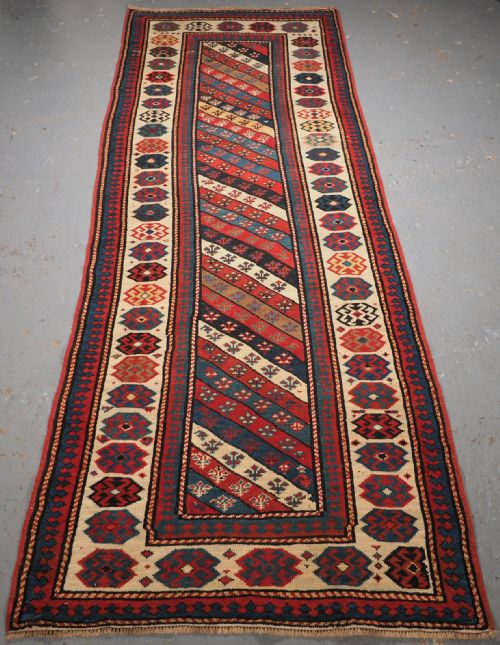
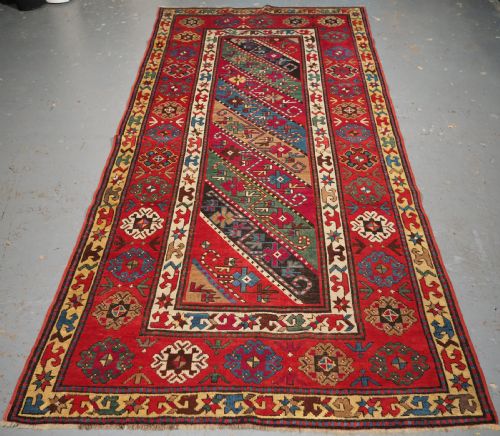
A vintage gendje rug represents tribal weaving from the Eastern Caucasus, created in formats ranging from small prayer rugs to long runners. Buyers seeking a vintage gendje rug encounter pieces featuring distinct geometric motifs, diagonal stripes, and colourful boteh patterns.
The selections span from eighteen-eighty to nineteen-ten, capturing traditional Caucasian tribal aesthetics. These floor coverings function equally well as area rugs or concentrated prayer pieces within contemporary and traditional interiors.
How they were made
Weavers utilised natural materials, relying principally on durable wool and hand-spun wool for both the pile and foundation structures. These natural fibres absorb dye readily, yielding the characteristic saturated tones seen across Caucasian tribal weaving.
The construction relies on traditional knotting techniques executed on vertical looms. This method produces a dense, resilient pile capable of withstanding generations of daily use.
Listings span four decades from eighteen-eighty to nineteen-ten, utilising wool and hand-spun wool across various runner and prayer rug formats.
What varies in quality
Quality rests upon the crispness of the geometric design work and the precision of the knotting. Finer examples display intricate floral lattices and scarce colour grounds with exceptional clarity.
The handling of natural dyes also dictates distinction. Deeper saturation and complex interactions between diagonal stripes or boteh motifs separate standard pieces from superior examples.
The Vintage Gendje Rug Glossary
- Boteh
- A traditional almond-shaped or paisley motif representing a floral spray or cypress tree. It appears frequently in repeating rows across Caucasian tribal rugs.
- Prayer rug
- A smaller format featuring a specific mihrab or arch design at one end. Weavers originally created these for personal devotional use.
- Runner
- A long, narrow carpet format designed for hallways or corridors. These pieces emphasise repeating diagonal stripes or extended floral lattices.
- Hand-spun wool
- Yarn spun by hand rather than by industrial machinery. This process creates subtle variations in thickness and texture within the rug pile.
Vintage Gendje Rug: Frequently Asked Questions
How do I clean a vintage gendje rug?
Vacuum gently without a rotating brush roll to protect the wool pile.
Professional specialist cleaning remains essential for removing deep dirt without harming natural dyes.
Where were these rugs made?
Weavers produced these pieces in the Eastern Caucasus region during the late nineteenth and early twentieth centuries.
They reflect distinct Caucasian tribal traditions shared across local workshops and nomadic groups.
Are these rugs suitable for hallways?
Long runner formats fit narrow corridors and high-traffic transitional spaces.
Their dense wool construction provides natural resilience against regular foot traffic.
How do I date a gendje rug?
Examination of the wool texture, natural dye palette, and structural wear helps determine age.
Most examples date from the eighteen-eighty to nineteen-ten period based on design characteristics.