
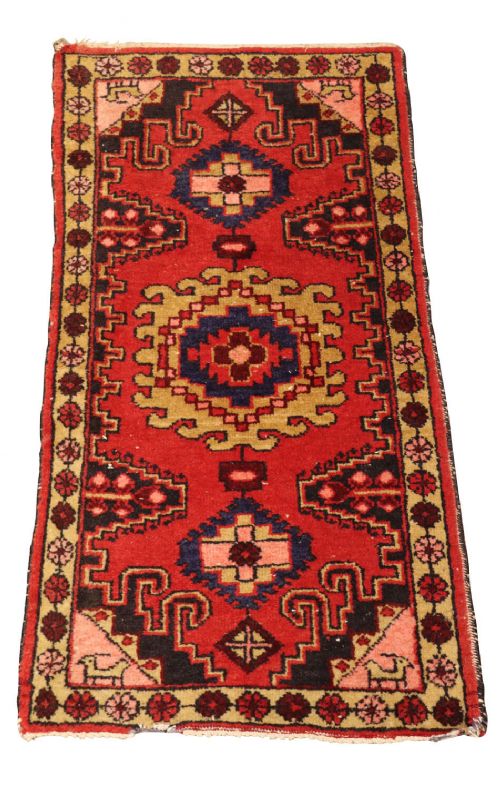
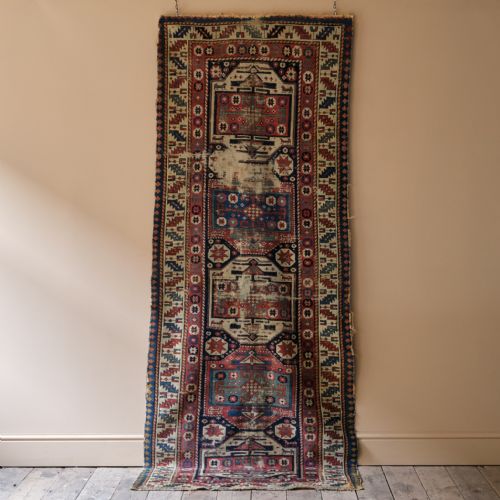
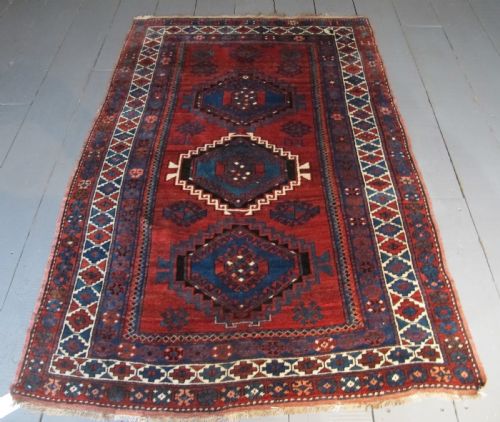


Wool Kazak Runner Rug
Woven with bold geometric motifs in the Caucasus, a wool kazak runner rug brings rustic tribal character and rich natural dyes to a hallway.
Wool Kazak Runner Rug
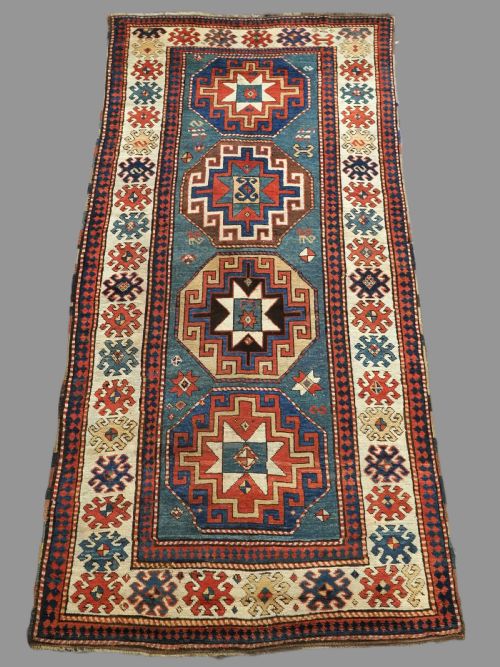
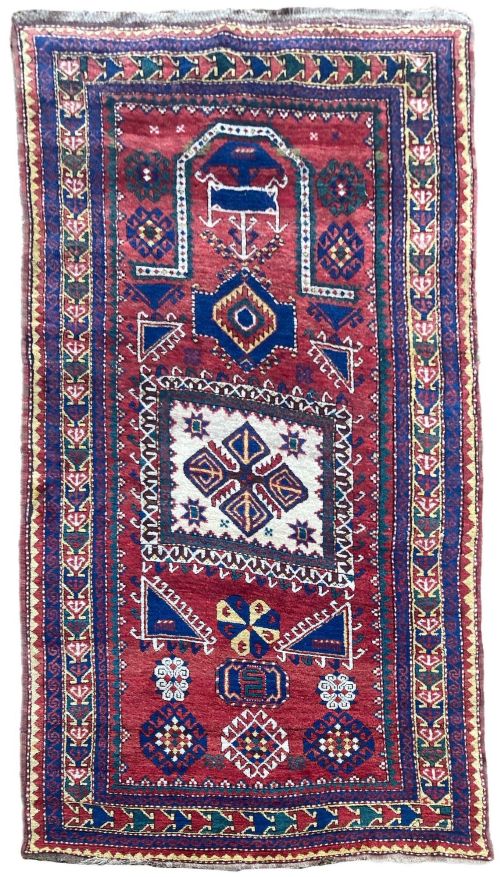
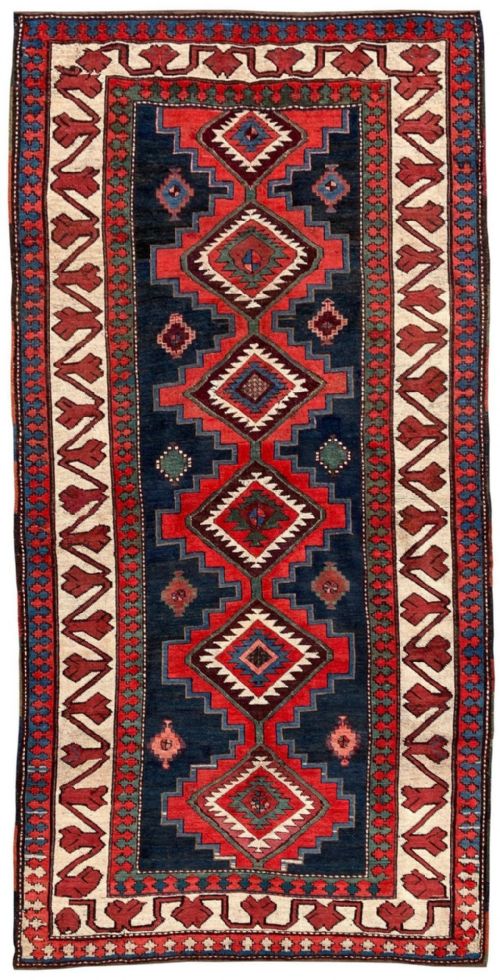
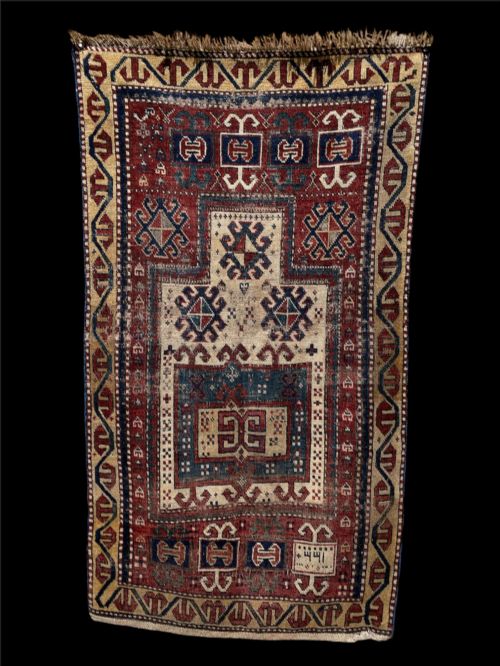
A wool kazak runner rug is a long, narrow tribal weaving originating from the Caucasus region during the nineteenth and early twentieth centuries. These runners typically display geometric medallions, latch hooks, and animal motifs arranged along a central axis.
The pieces available on this page stretch from the eighteen-sixties through to nineteen-thirty, representing distinct regional sub-types such as Moghan, Gendje, and Fachralo. Weavers created these floor coverings primarily for domestic utility within nomadic and village households.
Narrow formats designed for corridors and passages dominate the selection, combining functional durability with striking folk art aesthetics.
How they were made
Traditional weavers constructed these textiles using hand-spun wool for both the pile and the foundational warps and wefts, sometimes incorporating cotton for structural stability. This hand-spun wool yields a dense, resilient pile that absorbs natural plant and mineral dyes with notable depth.
The weavers tied symmetrical or asymmetrical knots by hand, securing the rows with sturdy wool weft threads to create a dense, flat-lying fabric. Natural dyes provided the characteristic palette of madder red, indigo blue, and soft yellow.
Look closely to spot spirited folk art horses and figures woven directly into the geometric fields.
What varies in quality
Quality in these runners depends heavily on the purity and saturation of the natural dyes, alongside the crispness of the geometric drawing. Pockets of brilliant colour and well-drawn latch hooks elevate a piece above simpler, more crudely executed village work.
The fineness of the knotting and the integrity of the original side cords and end finishes also dictate the grade of the weaving. Denser knotting allows for sharper definition in complex medallions and animal motifs.
The Wool Kazak Runner Rug Glossary
- Kazak
- A term applied to rugs woven in the southern Caucasus region, known for bold geometric designs and primary colour palettes.
- Latch hook
- A stepped triangular motif projecting from the edges of medallions or borders, frequently seen in Caucasian tribal weaving.
- Memling gul
- An octagonal guls or medallion featuring hooked appendages all around its perimeter, named after the fifteenth-century painter who depicted similar rugs.
- Boteh
- A stylised almond or paisley motif representing a floral shoot or cypress tree, commonly repeated in rows across Gendje and Kazak fields.
- Fachralo
- A specific village sub-type of Kazak rug distinguished by large central prayer panels or bold rectangular medallions.
Wool Kazak Runner Rug: Frequently Asked Questions
Where were wool kazak runner rugs made?
These runners were woven by village and tribal communities across the Caucasus region, encompassing areas that bridge modern-day Armenia, Azerbaijan, and Georgia. Each valley and district developed distinct preferences for specific medallion structures and border patterns.
Weavers utilised local materials and traditional dyeing recipes passed down through generations, anchoring the stylistic identity of each piece to its specific geographic origin.
How do I care for an antique runner?
Place a quality underlay beneath the rug to prevent slipping and to reduce friction between the wool pile and the floorboards. Vacuum gently with the suction attachment set to low, avoiding motorised beater bars that can catch hand-spun fibres.
Keep the textile out of direct, prolonged sunlight to protect the natural dyes from fading unevenly over time. Rotate the runner occasionally to ensure even wear across high-traffic zones.
How do I distinguish regional types?
Distinguishing between regional sub-types relies on examining the primary motifs, such as the octagonal Memling guls associated with Moghan pieces or the diagonal stripes typical of Gendje runners. Examining the palette also helps, as certain districts favoured scarce blue or yellow grounds.
Structural details, including the choice of wool or cotton for foundation threads, further clarify whether a piece originates from the Karabagh region or further north.
Are natural dyes easy to spot?
Natural dyes derived from plants and minerals display a subtle variation in tone known as abrash, where the colour shifts gently across the field as dye batches change. These organic colours mellow gracefully with age, maintaining a harmonious balance.
Synthetic aniline dyes, introduced later in the nineteenth century, often appear harsher and tend to fade flatly without developing the rich patina characteristic of older natural dyes.