

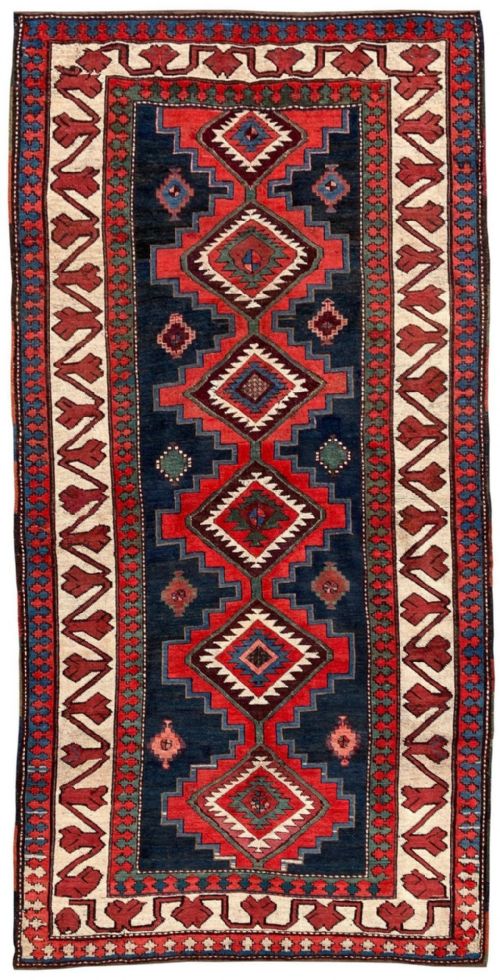
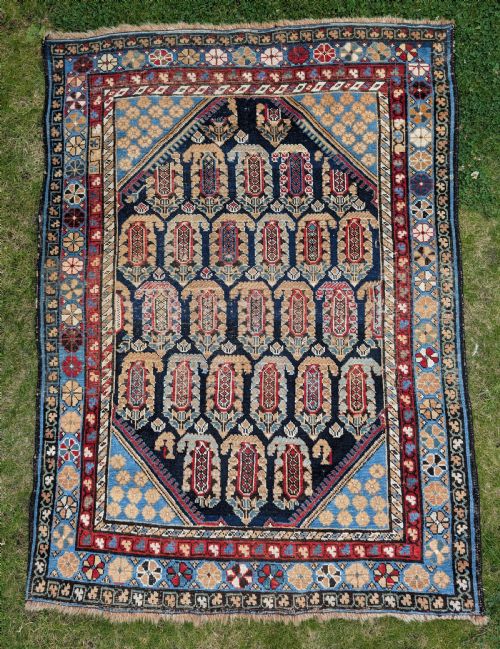
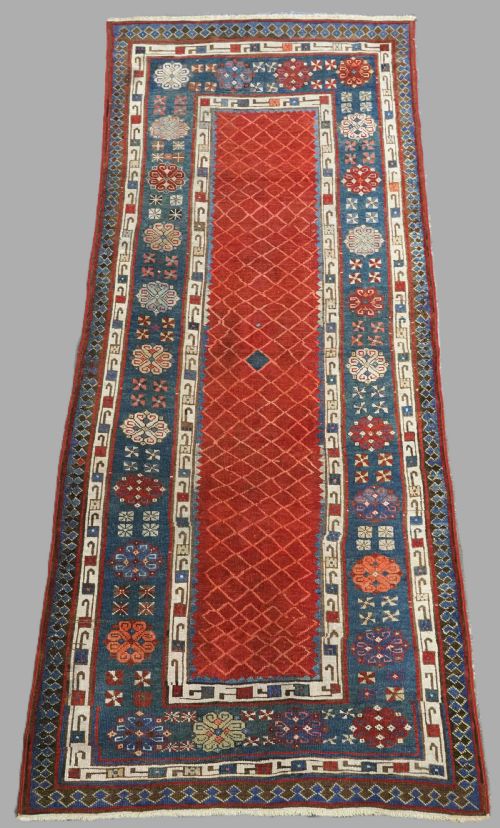
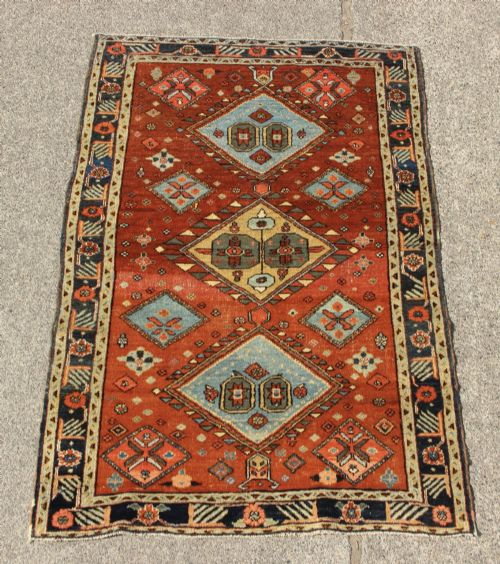
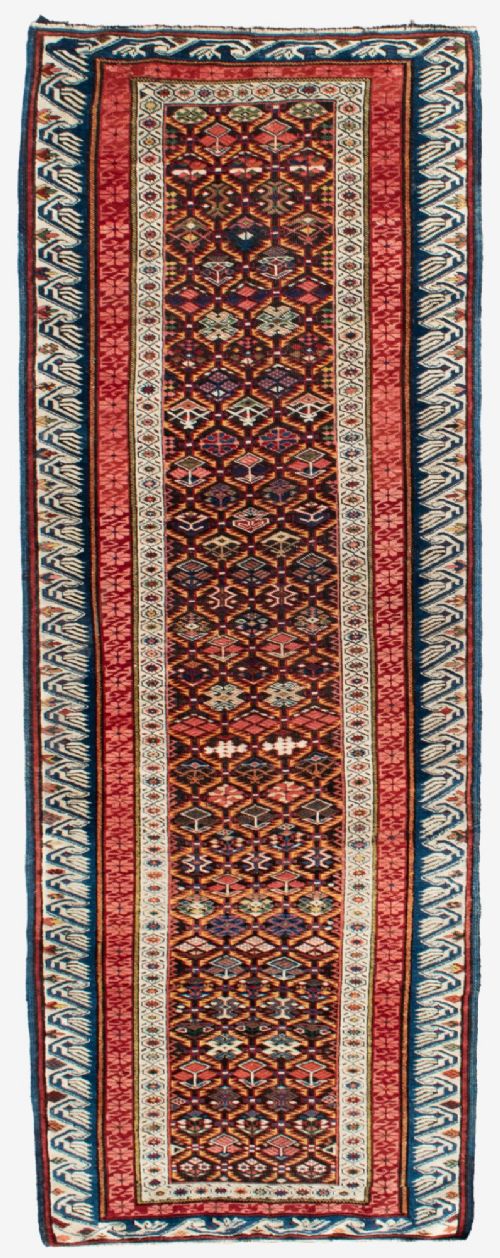
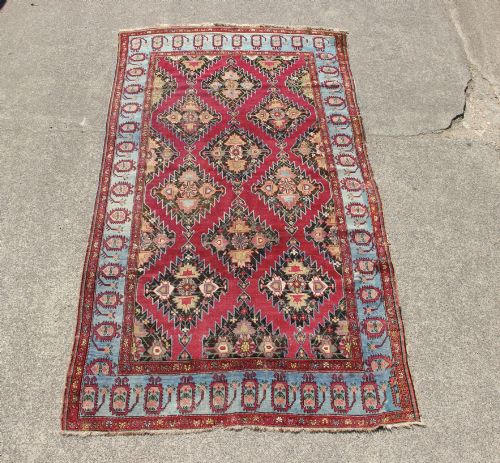
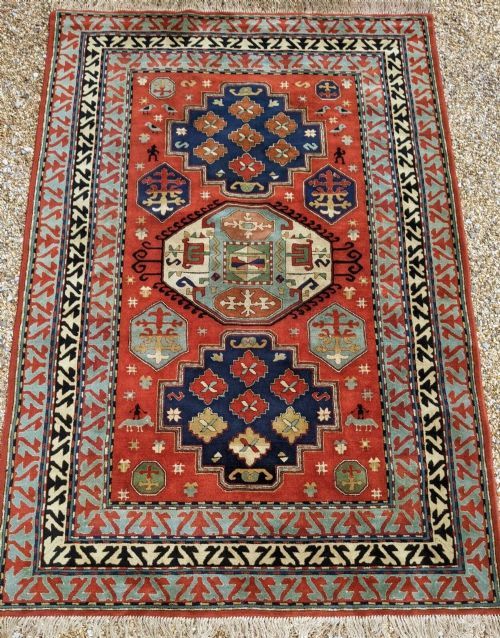
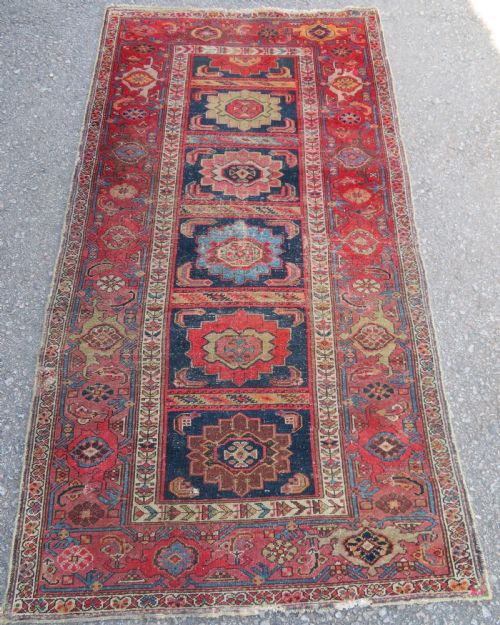
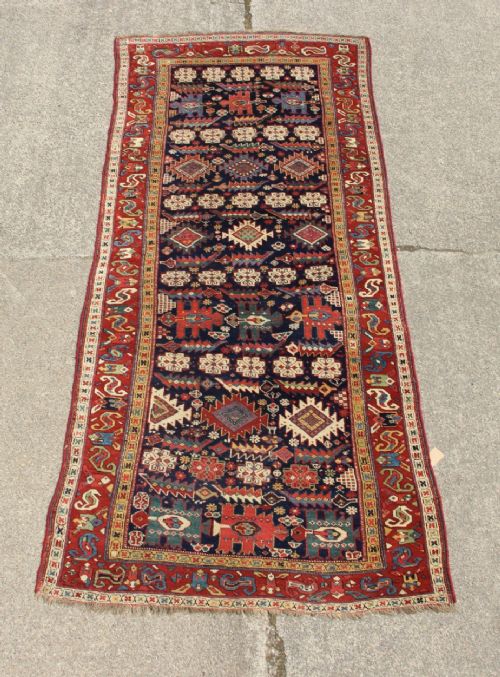
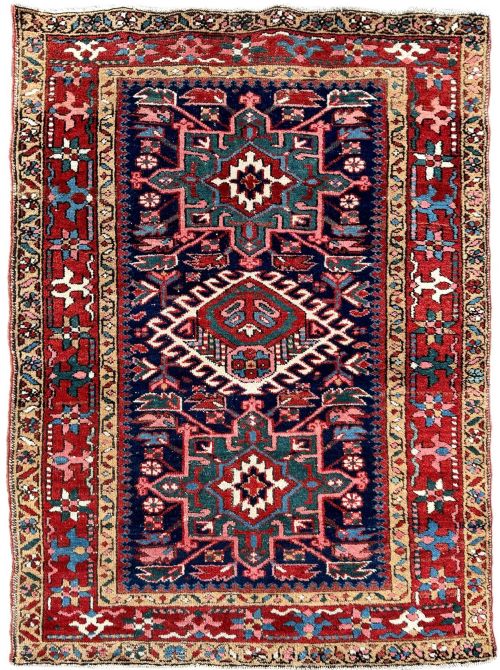
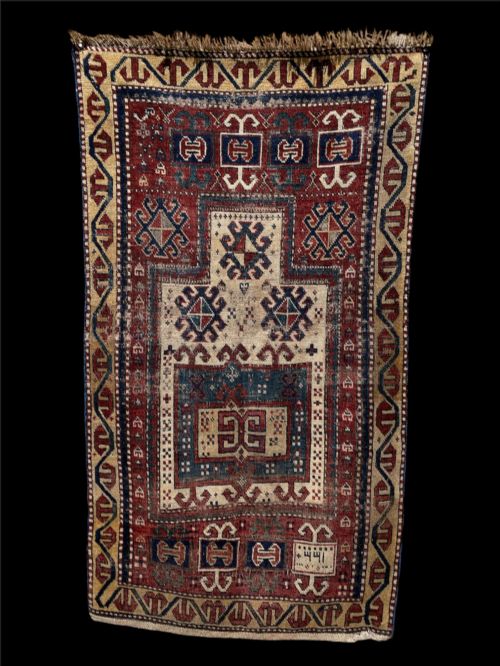
Red and Blue Caucasian Rug
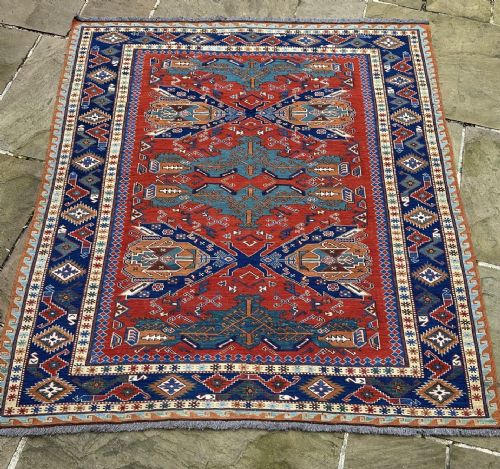
These red and blue caucasian rug examples bring geometric tribal authority and saturated regional palettes directly into modern interiors.
Red and Blue Caucasian Rug
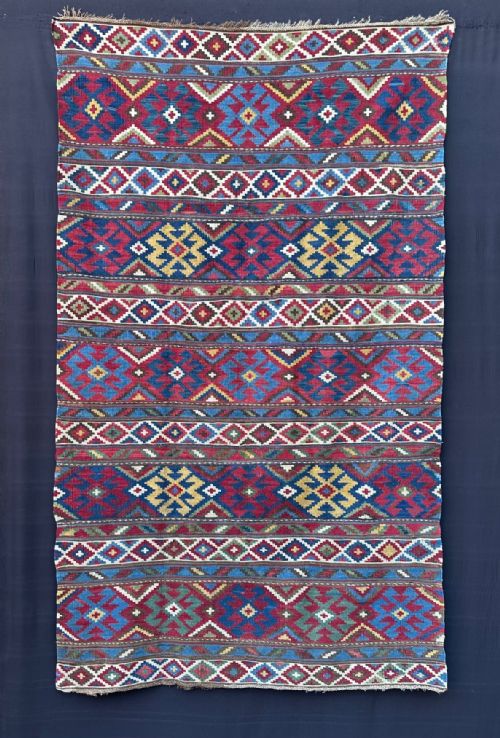
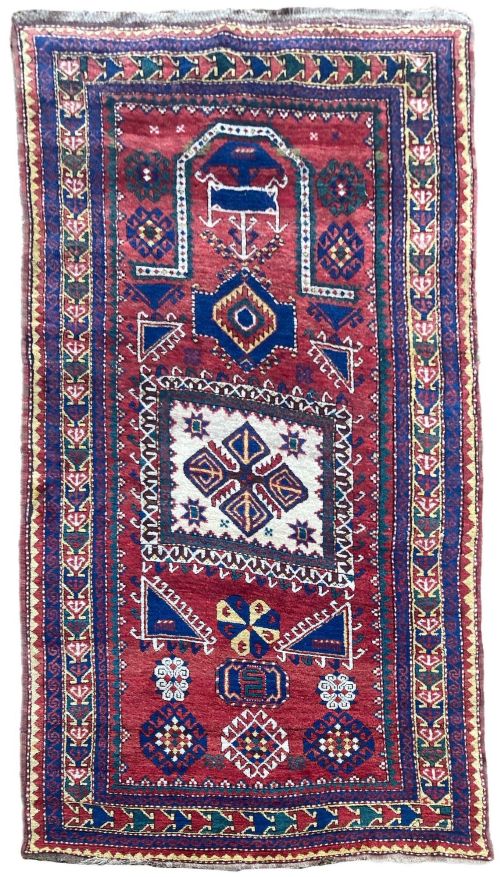
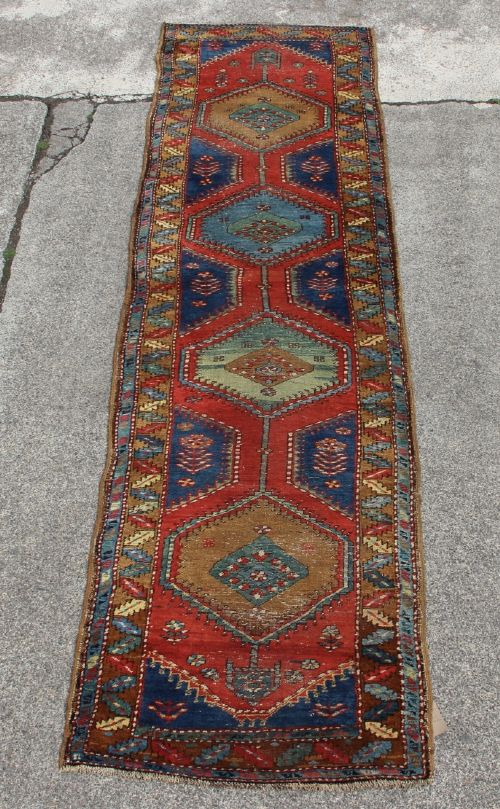
A red and blue caucasian rug brings together saturated primary tones and geometric field patterns woven across the Caucasus region during the nineteenth and early twentieth centuries. These pieces encompass specific regional formats such as Kazak, Shirvan, Talish, and Karabagh types, spanning from small prayer formats to elongated runners.
The selections available here range from tightly woven village carpets dated to the eighteen-eighties and nineties up to later twentieth-century tribal flat-weaves and kilims. Buyers encounter diverse structural variations including medallion layouts, lattice repeats, and directional prayer niches worked in rich madder reds and indigo blues.
Materials and construction
The construction relies fundamentally on hand-spun wool foundation yarns and pile knots, often combined with cotton for structural warps or wefts in later examples. Natural dyes sourced from plants and minerals provide the characteristic deep reds, indigos, and secondary accents that age with stable patination.
Weavers employed traditional knotting and flat-weaving techniques, producing both pile carpets and sumac or kilim structures. These methods create the dense, resilient handle distinctive of Caucasian and related tribal textile art.
Several listed rugs display delightfully crooked geometries, showing where nomadic weavers let their patterns drift off-centre.
Differentiating quality and execution
Quality in these textiles depends heavily on the purity and saturation of the natural dyes, alongside the precision and crispness of the geometric drawing. Finer examples display meticulous knot density and well-balanced abrash where dye batches shift naturally across the field.
The overall integrity of the wool pile and the originality of the side cordings and end finishes also dictate the standard of preservation. Stronger artistic execution reveals itself through confident proportions in medallions, borders, and tribal motifs.
The Red and Blue Caucasian Rug Glossary
- Abrash
- Natural tonal variation within a single colour field caused by shifts in dye batches or hand-spun wool lots.
- Kazak
- A designated style of tribal rug originating from the southwestern region of the Caucasus, known for bold geometric medallions and primary colour palettes.
- Sumac
- A flat-weave technique involving wrapping supplementary weft threads around the warps to create a textured, durable surface.
- Khorjin
- A traditional tribal wool bag face or saddlebag, often woven in flat-weave or pile techniques for utility and decoration.
Red and Blue Caucasian Rug: Frequently Asked Questions
How do I identify a Kazak rug?
Kazak rugs typically display large geometric medallions, hooked polygons, and strong primary colours like red and blue executed in a heavier wool pile.
Their robust construction and tribal iconography distinguish them from finer city-woven Persian carpets.
Where were these rugs made?
These textiles originate from the Caucasus region situated between the Black Sea and the Caspian Sea, encompassing historical weaving centres in modern-day Azerbaijan, Armenia, and Georgia.
Nomadic and village tribes produced them using local materials and traditional designs passed down through generations.
How should I care for an antique rug?
Protect the textile by vacuuming gently without a rotating brush bar and keeping it out of direct, continuous sunlight.
Utilising a breathable underlay prevents slipping and reduces wear between the rug and the floor.