


Caucasian Gendje Carpet
These caucasian gendje carpet pieces are hand-knotted tribal floor coverings from the eastern Caucasus, prized for their saturated natural dyes and geometric village designs.
Caucasian Gendje Carpet
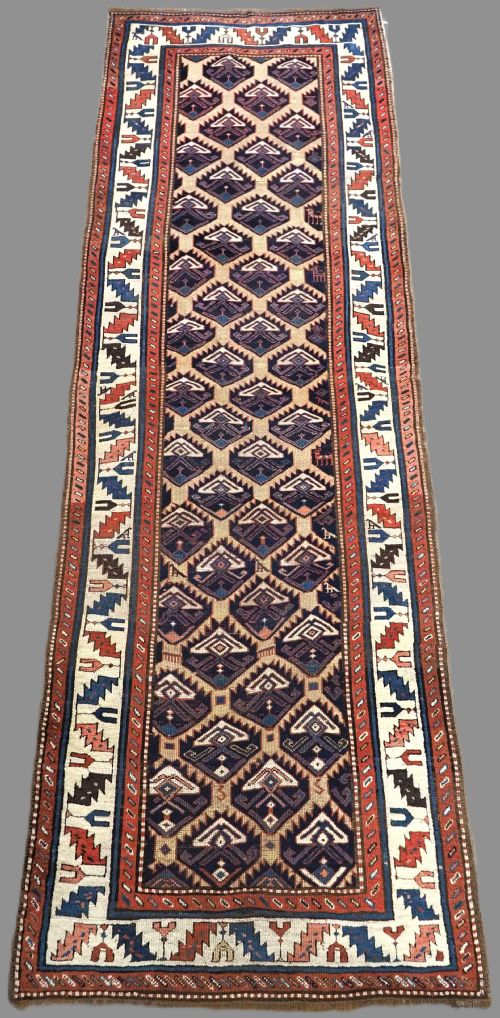
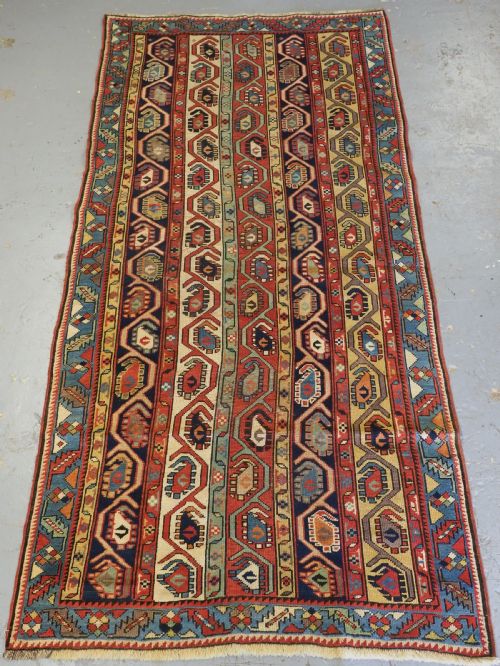
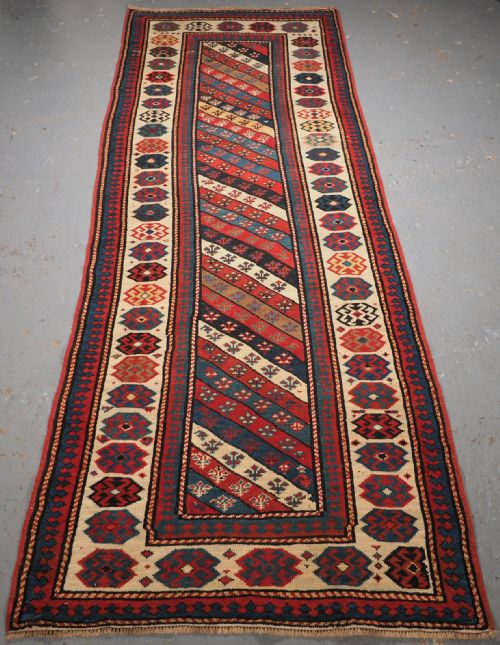
A caucasian gendje carpet represents traditional weaving from the Caucasus region, produced in formats ranging from small prayer rugs to long hallway runners. These tribal pieces frequently display distinct regional patterns such as the boteh motif, diagonal stripes, and geometric lattice designs.
Buyers browsing this selection will encounter formats like the antique prayer rug and the long narrow runner. Many examples date from the late nineteenth century around eighteen eighty to nineteen ten, reflecting the traditional output of eastern caucasian workshops.
The visual vocabulary includes folk art depictions of figures and animals alongside structured floral lattice patterns. Pieces associated with the Gendje region often bridge the design characteristics of neighbouring Caucasian traditions like the Kazak and Talish.
Materials and construction
Construction relies upon hand-spun wool for the pile and foundation structure, yielding a dense and resilient fabric built for sustained utility. Weavers utilised natural dyes to achieve deep colour palettes that retain character over generations.
The fabrication process involves manual knotting on vertical looms, creating firm pile surfaces characteristic of caucasian tribal weaving. Artisans applied traditional dyeing methods to create contrasting grounds, including scarce blue ground variants and multicoloured geometric arrangements.
Certain antique pieces substitute formal medallions for whimsical folk art horses and people trotting across the wool pile.
Assessing quality in regional weaves
Quality rests in the crispness of the geometric drawing and the saturation of the natural dyes used across the field. Finer execution shows in the precision of the lattice work or the sharp alignment of diagonal stripes.
The condition of the hand-spun wool pile and the integrity of the original selvedges dictate the durability of the piece. Superior examples maintain balance in the composition, whether depicting complex floral motifs or figurative folk art.
The Caucasian Gendje Carpet Glossary
- Boteh
- A teardrop or almond-shaped motif with a curved upper end, frequently repeated across the field of eastern caucasian weavings. This ancient symbol represents fertility and life.
- Prayer rug
- A small format rug featuring a mihrab or arch design at one end, traditionally used for personal devotion. These pieces often incorporate specific regional borders and symbolic motifs.
- Natural dyes
- Colourants derived from plant and mineral sources prior to the introduction of synthetic alternatives. They impart rich, variegated tones that age gracefully.
- Runner
- A long, narrow carpet format designed for hallways and corridors. These pieces balance repeated geometric medallions or diagonal stripes within extended proportions.
- Hand-spun wool
- Yarn produced by manual drafting and twisting of fleece rather than industrial machinery. This method creates irregularities that absorb natural dyes with unique depth.
Caucasian Gendje Carpet: Frequently Asked Questions
What is a caucasian gendje carpet?
These pieces are hand-knotted tribal floor coverings originating from the eastern Caucasus during the late nineteenth and early twentieth centuries. They combine durable wool construction with distinctive geometric and floral designs.
Weavers utilised natural dyes to create saturated colour grounds, producing formats that range from compact prayer rugs to extended hallway runners.
How do I identify a gendje rug?
Identification involves looking for characteristic design elements such as diagonal stripes, boteh motifs, and structured lattice patterns. The regional style often shares affinities with neighbouring Kazak and Talish traditions.
Examining the use of hand-spun wool and traditional natural dye palettes helps confirm the geographic origin of these eastern caucasian examples.
Where were these carpets made?
The pieces originate from the Caucasus region, specifically associated with the Gendje area in the eastern Caucasus. Local weaving communities produced these textiles on traditional vertical looms.
Each rug reflects the distinct cultural and aesthetic traditions of caucasian village and tribal artisans working around eighteen eighty to nineteen ten.
How should I care for an antique runner?
Protect the hand-spun wool pile by placing a quality underlay beneath the rug to prevent slipping and reduce friction during daily use. Regular gentle vacuuming without a rotating brush roll maintains the surface.
Keep the textile out of direct sunlight to protect the natural dyes from fading and rotate the piece periodically to ensure even wear.