
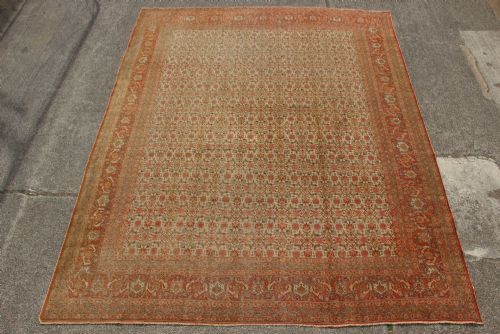
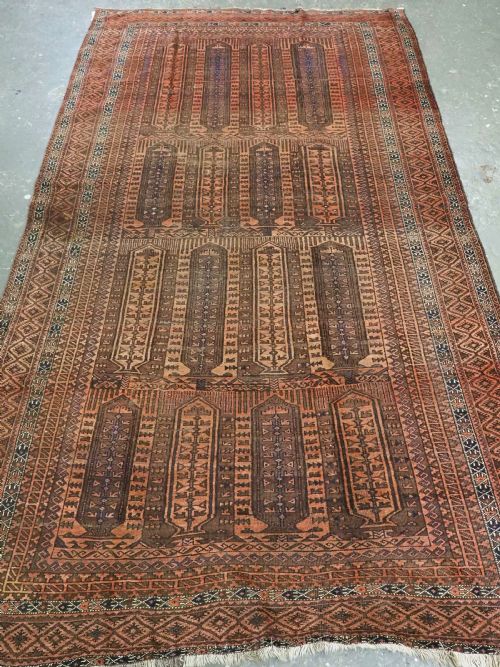
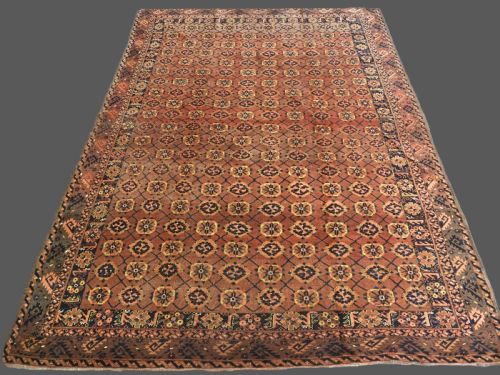
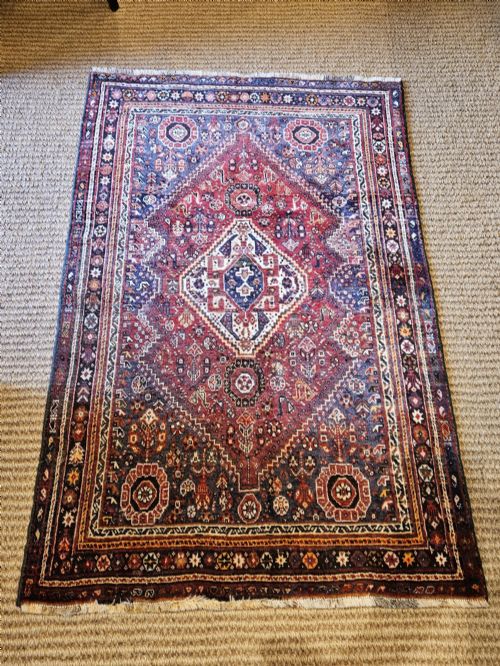
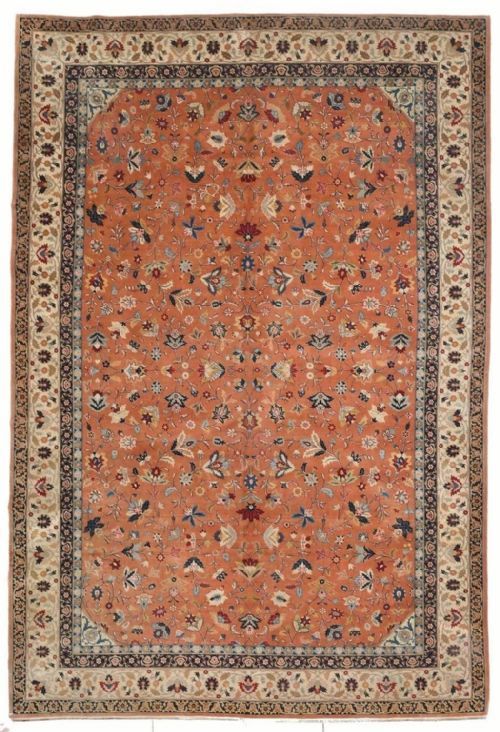
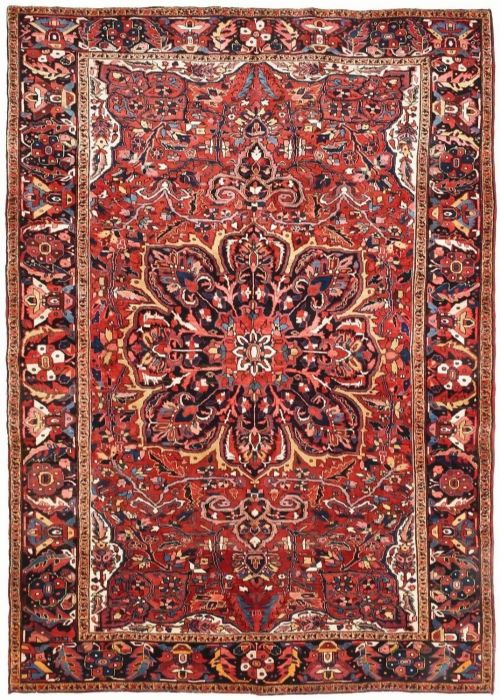
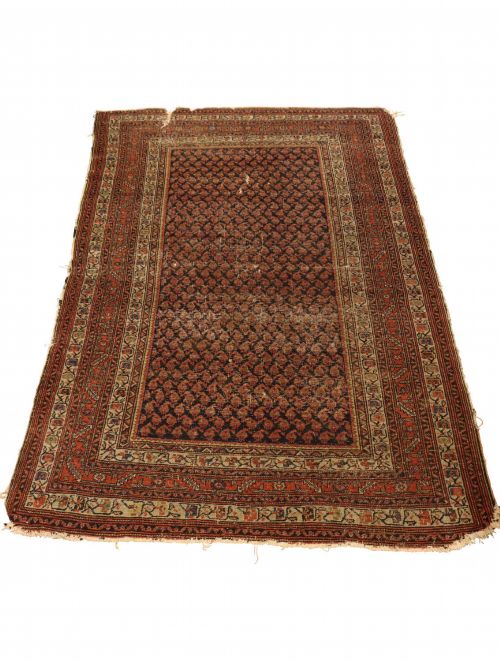


Rust Wool Area Carpet
A rust wool area carpet brings warmth and deep regional character to a room through traditional Persian, Turkmen, and Afghan designs.
Rust Wool Area Carpet
A rust wool area carpet encompasses hand-knotted room-size floor coverings and smaller tribal rugs originating from Persian, Afghan, and Anatolian weaving traditions. The listings here focus primarily on Persian Heriz, Tabriz, and Baluch village and workshop pieces dating from the late nineteenth century into the early twentieth century.
Buyers encounter both large country house formats and compact area rugs featuring traditional motifs such as boteh, calyx lattice, and large gul designs. The palette leans heavily towards rich rust backgrounds framed by intricate geometric or floral borders.
Materials and construction
These carpets rely on durable wool pile, frequently supported by cotton foundations, with occasional use of goat hair in tribal pieces. Weavers utilised natural dyes to achieve deep rust, indigo, and earth tones that soften gracefully over time.
The construction involves hand-knotting techniques executed across various regional densities, ranging from fine urban workshop knots to robust village and nomadic weaves.
The site listings span late nineteenth-century pieces up to the 1930s, featuring wool, cotton, and natural dyes across Persian, Turkmen, and Afghan styles.
Judging the weave and materials
Quality in these carpets rests upon the tightness of the hand-knotting, the precision of the design execution, and the condition of the wool pile. Finer urban pieces from centres like Tabriz display intricate curvilinear detail, whilst tribal rugs rely on bold graphic impact and sturdy material construction.
The Rust Wool Area Carpet Glossary
- Boteh
- A stylised almond or pear-shaped motif representing a floral shoot or cypress tree. It appears frequently in traditional Persian and regional rug designs.
- Gul
- A medallion or repeating octagonal motif used extensively in Turkmen and Baluch tribal carpet weaving. Each pattern often signifies a specific clan or lineage.
- Kilim
- A flat-woven carpet or rug produced without a pile. These pieces utilise slit-weave techniques to create sharp geometric patterns.
- Heriz
- A style of large carpet originating from north-west Persia, known for bold geometric medallions and robust structural wool. They are built to withstand heavy daily use.
Rust Wool Area Carpet: Frequently Asked Questions
How do I care for a wool carpet?
Regular gentle vacuuming without a rotating brush bar keeps dust and grit from settling into the wool pile. Professional cleaning by a specialist familiar with antique textiles is essential for maintaining the integrity of the natural dyes.
Keeping the carpet out of direct, harsh sunlight prevents the rust and indigo tones from fading unevenly. Rotating the floor covering periodically ensures even wear in high-traffic areas.
What is a tribal rug?
Tribal rugs are floor coverings made by nomadic or village weavers for domestic use or local trade rather than urban commercial markets. They typically feature geometric motifs, memory-based designs, and robust materials like sheep wool and goat hair.
These pieces often display charming asymmetries and a direct connection to the maker's cultural traditions. Their rustic character contrasts with the refined precision of city workshop carpets.
How do I date an antique carpet?
Dating relies on examining the specific wool texture, natural dye characteristics, structural foundation materials, and design motifs. Stylistic clues often point to particular decades between the mid-nineteenth century and the early twentieth century.
Wear patterns, edge finishes, and the type of knotting also provide reliable indicators of age. Comparing a piece to documented examples from known weaving regions helps narrow down the period of production.