





Royal Vienna Porcelain Charger
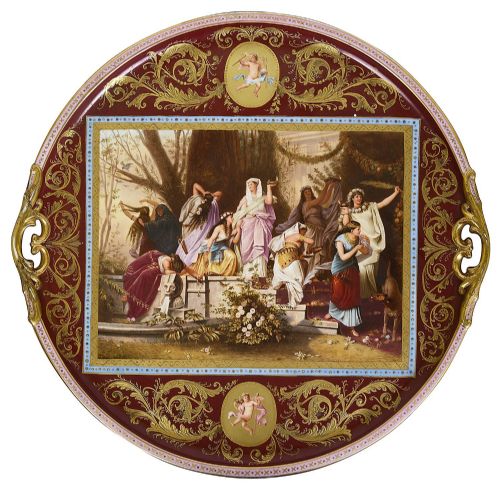
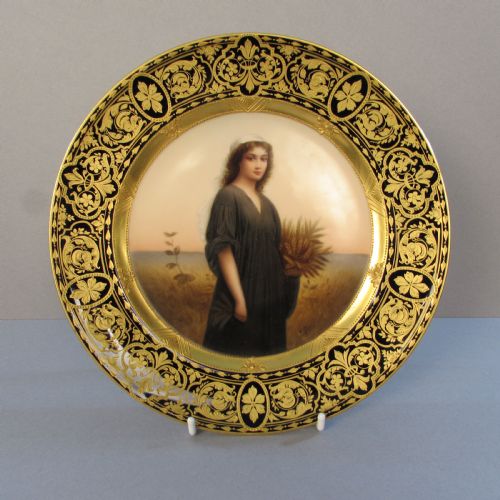
A royal vienna porcelain charger brings hand-painted classical mythology and historical scenes into an interior through intricate enamel work and heavy gilding.
Royal Vienna Porcelain Charger
A royal vienna porcelain charger is a large decorative plate or tray produced in the 19th century and around 1920, often measuring up to sixty centimetres in diameter. These pieces serve primarily for display as cabinet plates and decorative trays rather than dining.
The versions most commonly met on this page date from the nineteenth century, including specific years like 1890 and 1850, alongside later examples from 1920. Styles span Neoclassical, Neoclassical Revival, Grand Regency, and Vienna Historicism.
Motive subjects dominate the central wells of these chargers, featuring narrative scenes such as King Tristan's Death, Venus in the Forge of Vulcan, Caesar at the Grave of Alexander the Great, and the Birth of Adonis. Painters also depict religious or literary moments including the wise and foolish virgins, Bachus and Ariane, and Mother and Child Embrace.
Assessing quality in execution
Quality rests upon the skill of the hand-painted figural composition within the central well. Finer chargers display exceptional draughtsmanship in human anatomy, facial expression, and narrative detail.
The application of cobalt blue and gold gilt varies across pieces, distinguishing standard production from exceptional works associated with named artists such as Wagner, Sibl, or S. Stanley.
Listings feature porcelain, enamel, gold leaf, and cobalt glaze across the 19th Century, 1850, 1890, and 1920 periods.
S. Stanley·Sibl·Wagner
The Royal Vienna Porcelain Charger Glossary
- Charger
- A large decorative plate or tray intended for display on a wall, cabinet, or table rather than for service. These pieces measure considerably larger than standard dinner plates.
- Cabinet plate
- A fine ceramic plate produced specifically for display in a cabinet or on a wall. They showcase intricate painting and precious metal decoration.
- Cobalt glaze
- A rich blue metallic oxide applied under or over the glaze to create deep background colour. It frequently provides a dark contrast to bright gilding.
- Gilding
- The application of gold leaf or powdered gold to ceramic surfaces. This technique highlights rims, borders, and decorative motifs.
- Neoclassical revival
- An artistic movement drawing inspiration from the classical art and culture of ancient Greece and Rome. It shapes the subject matter of many painted scenes.
Royal Vienna Porcelain Charger: Frequently Asked Questions
What is a royal vienna porcelain charger?
A royal vienna porcelain charger is a large hand-painted ceramic plate created for display. These items feature detailed mythological and historical narratives.
They date primarily from the nineteenth century and incorporate rich cobalt blue grounds and heavy gilding.
How were these chargers used?
These pieces were made for display in cabinets, on walls, or upon decorative trays. They functioned as art objects rather than functional tableware.
Collectors showcased them to demonstrate taste and appreciation for classical narrative painting.
How do you date a royal vienna piece?
Dating relies on stylistic markers from the nineteenth century, including Neoclassical Revival and Vienna Historicism aesthetics. Specific pieces bear dates such as 1850, 1890, or 1920.
Artists' signatures and specific painted themes also help place the creation period.
What subjects appear on the painted scenes?
Painters depict scenes from classical mythology, literature, and history. Common subjects include Venus, Adonis, Caesar, and classical figures like the wise and foolish virgins.
Literary and operatic themes such as King Tristan's Death also appear frequently.