
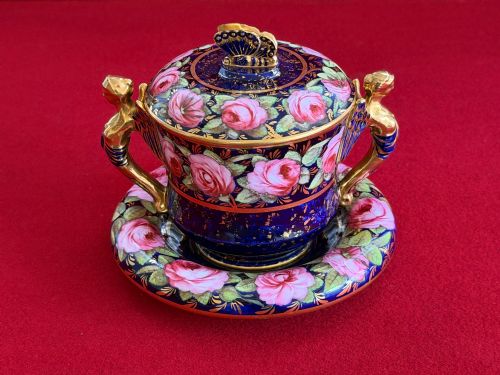
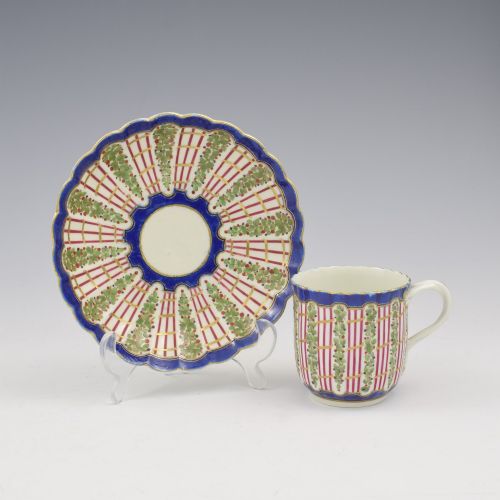
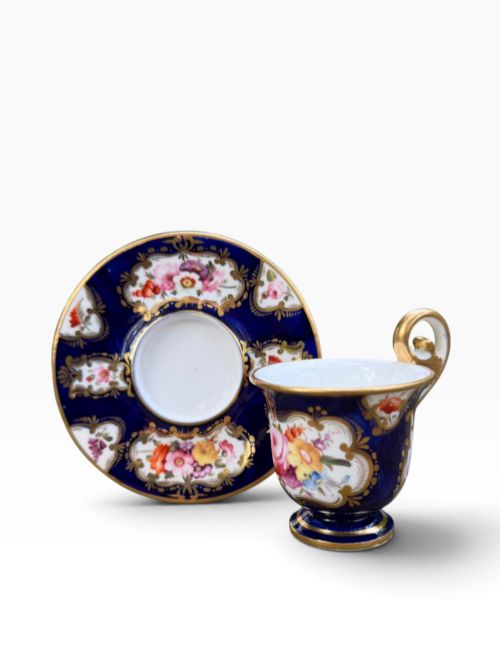


Cobalt Blue Gilt Saucer
A cobalt blue gilt saucer brings rich cobalt enamelling and gold leaf together, offering a touch of refined tea-table history to any room.
Cobalt Blue Gilt Saucer
When you search for a cobalt blue gilt saucer, you find pieces originating from periods spanning the eighteenth century through the Edwardian era, including Regency and Victorian examples. These ceramics often appear alongside matching teacups, coffee cups, or cabinet plates.
The version you are most likely to meet on this page is a porcelain saucer decorated with deep cobalt enamel and gold leaf or gilding. Many examples connect directly to notable English and continental factories.
Some pieces form part of larger services, while others survive as single cabinet cups and saucers or decorative plates. They reflect the shifting neoclassical revival and grand regency tastes of their respective decades.
How they were made
Potters shaped these vessels using porcelain, bone china, or soft-paste porcelain, depending on the period and factory origin. Soft-paste porcelain and bone china provided the fine white canvas required for detailed painting.
Craftsmen applied cobalt enamel to create the deep blue ground, often incorporating gold leaf or gilding to highlight borders and motifs. Firing fixed the metallic lustre and enamel firmly to the ceramic body.
Aurora and Cephales share a quiet moment in gold leaf on a Vienna cabinet plate while the tea gets cold.
What varies in quality
The precision of the gilding and the depth of the cobalt enamel separate the standard production from the finest cabinet pieces. Hand-painted details and signed artwork indicate a higher grade of manufacture.
The fineness of the porcelain body and the complexity of the pattern, such as intricate hop trellis designs or historical service commissions, distinguish superior examples.
Royal Crown Derby·Spode·Coalport·Derby·Flight Barr And Barr·Gardner Porcelain Moscow Factory·Yates·Royal Vienna
The Cobalt Blue Gilt Saucer Glossary
- Cobalt enamel
- A deep blue vitreous colour fused to the ceramic body during firing. It provides the striking dark ground seen on these saucers.
- Gilding
- The application of gold leaf or powdered gold to the surface of the porcelain. This technique accents rims, handles, and painted reserves.
- Soft-paste porcelain
- An early artificial ceramic composition made from glass and clay mixtures. It preceded true hard-paste porcelain in many English factories.
- Cabinet cup
- A decorative porcelain cup intended for display in a cabinet rather than daily tea drinking. These pieces often feature elaborate painted scenes.
- Trio
- A matched set consisting of a teacup, a coffee cup, and a saucer. They were popular in eighteenth and nineteenth-century households.
Cobalt Blue Gilt Saucer: Frequently Asked Questions
What is a cobalt blue gilt saucer?
A cobalt blue gilt saucer is a ceramic dish decorated with rich blue enamel and gold leaf, often made to accompany a matching teacup or coffee cup.
These pieces date from periods such as the eighteenth century, Regency, and Victorian eras, reflecting the high standards of historic porcelain factories.
How do I identify eighteenth century porcelain?
Eighteenth-century porcelain is often identified by soft-paste bodies, hand-painted underglaze blue details, and specific factory forms from makers like Worcester or Derby.
Examining the foot ring, paste texture, and any underglaze factory marks helps determine the exact period and origin.
Can I use antique saucers for tea?
While these saucers were originally made for dining and tea service use, antique pieces made of soft-paste porcelain or bone china require careful handling.
Many collectors prefer to display cabinet cups and saucers to protect the delicate gilding and enamel from daily wear.
What does cabinet plate mean?
A cabinet plate is a decorative ceramic piece designed primarily for display in a cabinet rather than for serving food.
These plates often feature elaborate hand-painted scenes, extensive gilding, and fine cobalt borders associated with high-status makers.