


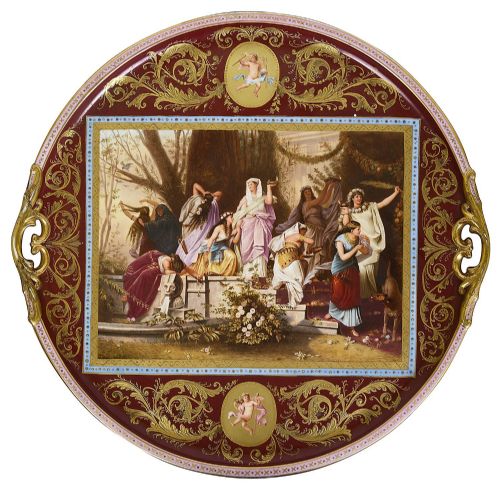


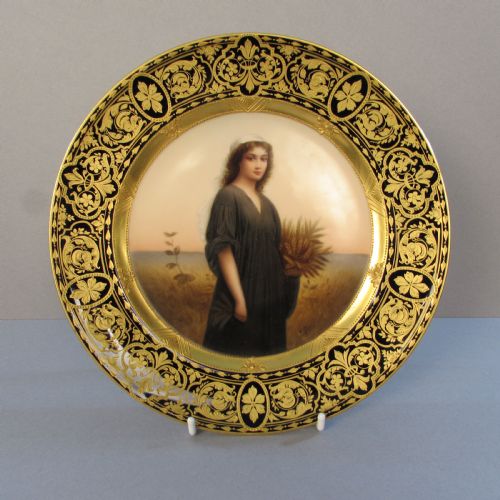

Royal Vienna Cabinet Plate
A royal vienna cabinet plate brings classical myth and historic theatre to porcelain, prized for rich hand-painted scenes and deep cobalt borders.
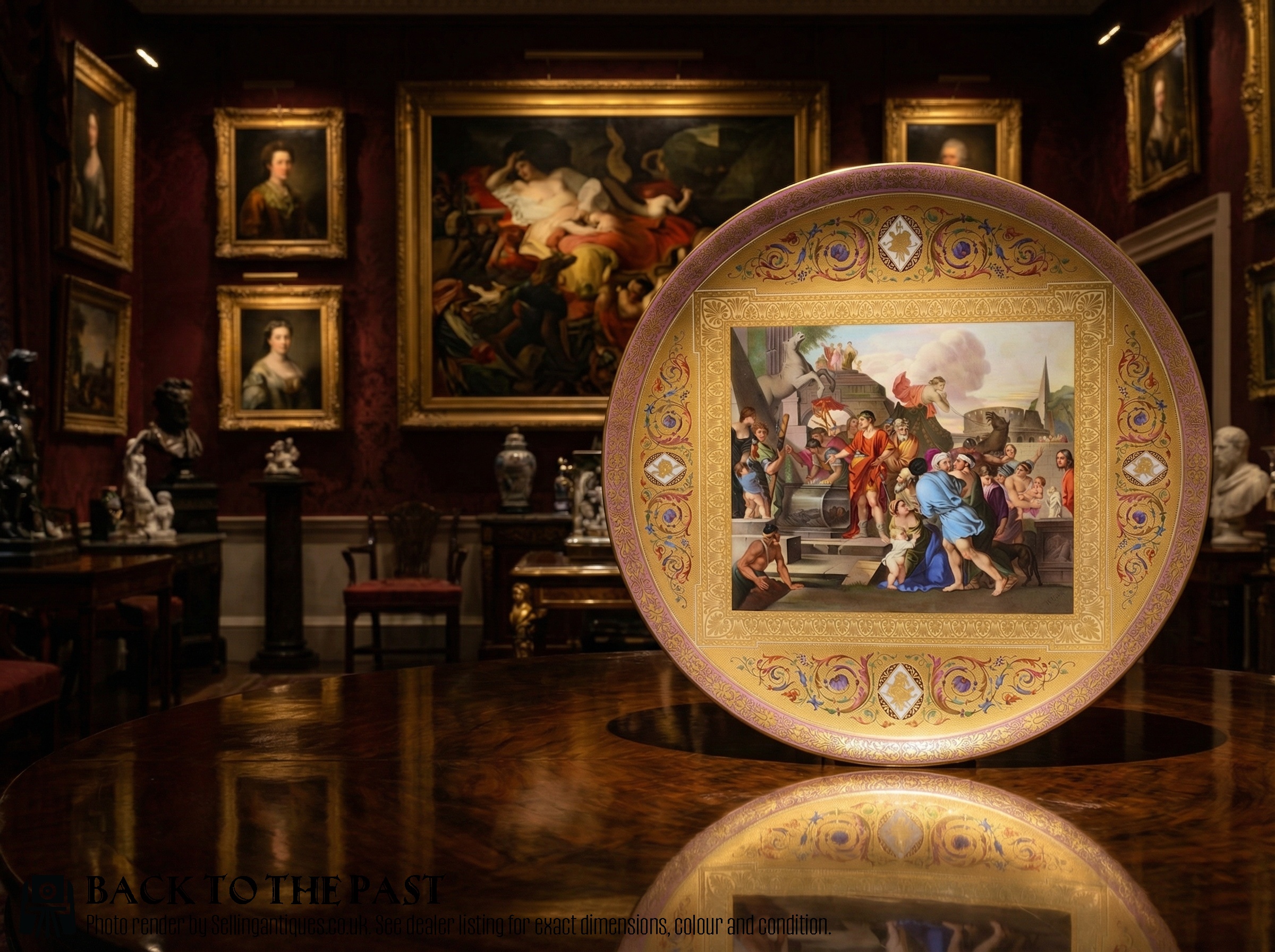
Royal Vienna Cabinet Plate
A royal vienna cabinet plate stands among the grandest expressions of nineteenth-century decorative porcelain. These pieces take the form of heavy plates, large chargers, and decorative trays designed primarily for display in cabinets rather than dining.
Most examples encountered on this page date to the nineteenth century, spanning periods from mid-century dates like eighteen-fifty through eighteen-ninety and into nineteen-twenty. They frequently display mythological, historical, or literary subjects drawn from classical narratives.
The dominant forms combine expansive painted central medallions with ornate borders. Collectors find that these plates range from modest decorative examples to massive chargers spanning up to sixty centimetres in diameter.
Assessing quality and craftsmanship
Quality rests principally upon the skill of the hand-painted narrative scene at the centre of the plate. Finer pieces display named subjects and artist signatures, reflecting individual studio execution rather than mass production.
The treatment of the surrounding ceramic body also defines the tier of the piece. Pierced porcelain borders, heavy raised gilding, and deep cobalt grounds require advanced firing and finishing techniques that separate superior examples from plain variants.
The decorative forms recorded include cabinet plates, large chargers, and decorative trays reflecting neoclassical and historicism styles.
The Royal Vienna Cabinet Plate Glossary
- Cabinet plate
- A decorative ceramic plate intended for display in a cabinet rather than for table use. These pieces often feature elaborate painted artwork and rich gilding.
- Cobalt glaze
- A deep blue metallic oxide glaze fired onto porcelain to create intense background colour. It frequently provides a contrasting field for gold leaf ornamentation.
- Charger
- A large decorative plate or tray exceeding standard dining dimensions. In nineteenth-century porcelain, these large surfaces allowed artists to paint complex multi-figure scenes.
- Gilding
- The application of gold leaf or powdered gold onto the ceramic surface. This technique highlights rims, handles, and border motifs with a brilliant metallic sheen.
- Neoclassical
- An artistic style inspired by the classical art and culture of ancient Greece and Rome. It informs the heroic figures and dramatic narratives painted on these plates.
Royal Vienna Cabinet Plate: Frequently Asked Questions
How were cabinet plates used?
Cabinet plates served as ornamental objects displayed within drawing rooms and parlours rather than functional tableware. Their delicate painted surfaces and heavy gilding made them unsuited for dining.
Wealthy collectors placed them on stands or hung them in glazed cabinets to demonstrate taste and sophistication.
How do I identify a nineteenth-century piece?
Nineteenth-century examples frequently feature detailed classical scenes accompanied by artist signatures or titled subjects written on the reverse or front. The presence of dense cobalt blue and raised gold leaf is typical of this era.
Porcelain weight and painting style help distinguish true nineteenth-century production from later revival pieces.
Who painted these porcelain plates?
Skilled porcelain painters executed the detailed figurative artwork, sometimes signing their work with names such as Wagner, Sibl, or S. Stanley. These artists worked in specialised painting studios.
Their signatures indicate a higher grade of artistry and individual hand execution.
How should I display them safely?
Display these plates using sturdy wall brackets or dedicated cabinet stands designed to support heavy porcelain. Ensure the mount secures the edges without placing undue pressure on the painted surface.
Keep them away from direct sunlight to preserve the vibrant enamel colours and gold leaf over time.