


Gilt Porcelain Wall Plaque
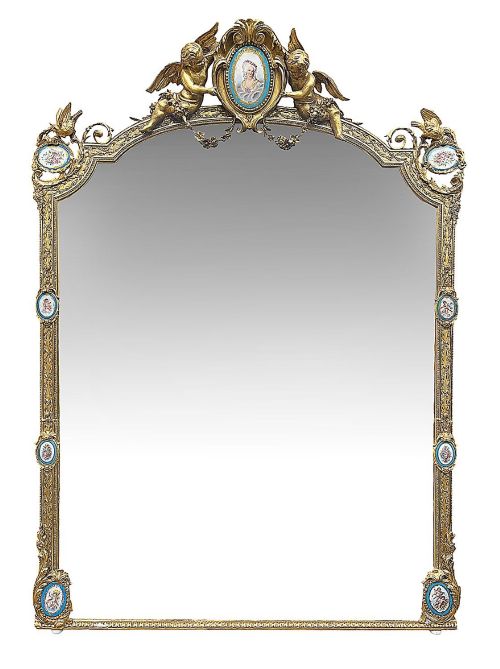
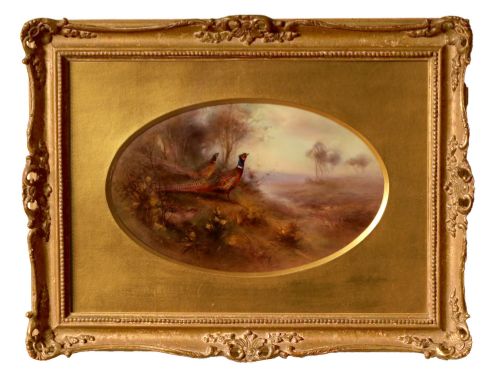
These gilt porcelain wall plaque examples bring hand-painted artistry and framed presence to any interior.
Gilt Porcelain Wall Plaque
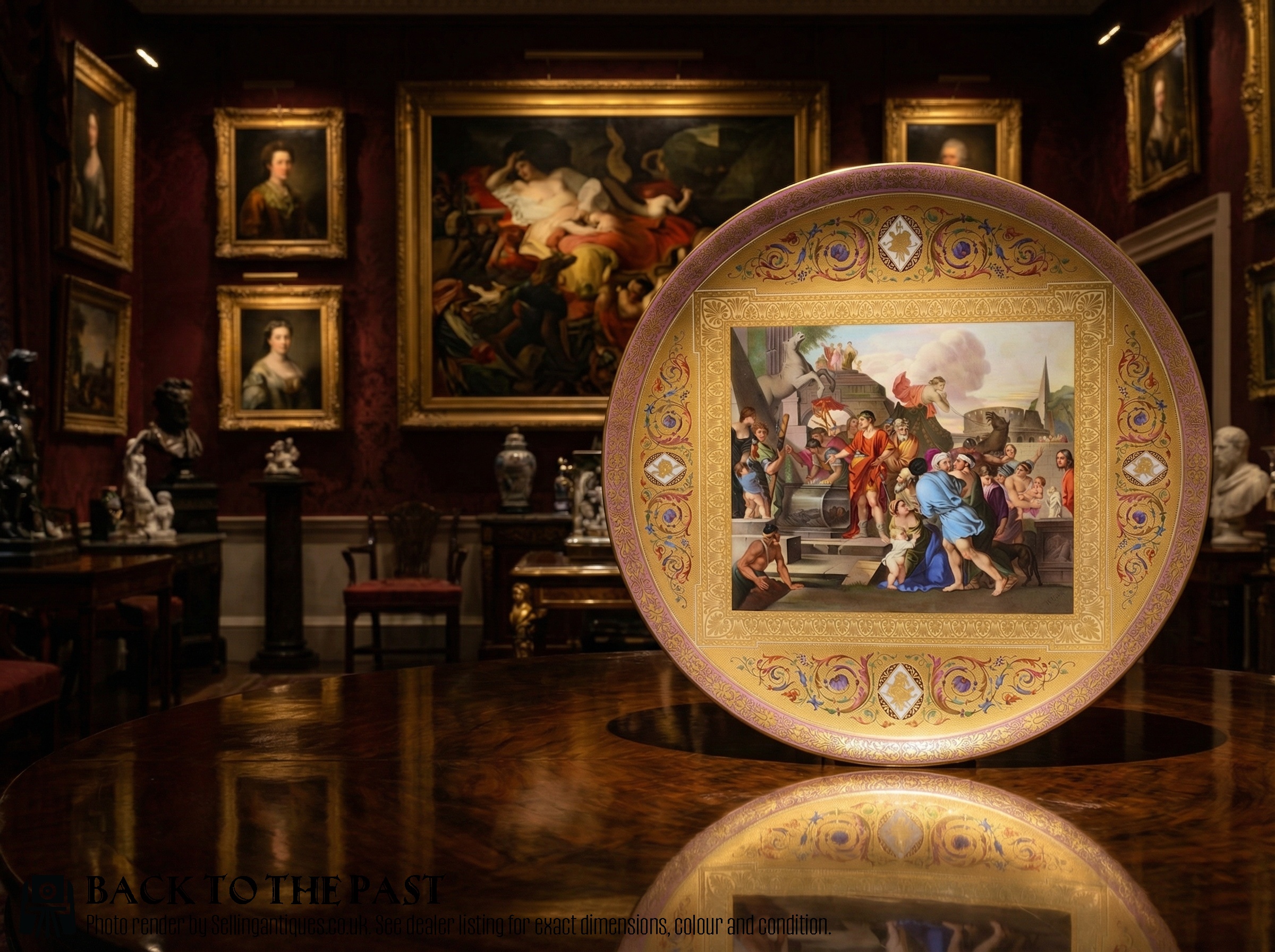
A gilt porcelain wall plaque combines ceramic artistry with decorative framing to create striking wall art. These pieces range from cabinet plates and chargers to dedicated painted plaques.
Most examples originate from the nineteenth century, encompassing Victorian, Edwardian, and revival aesthetics. European manufactories dominate the selection, particularly Vienna, Royal Worcester, and Sevres.
Makers utilised ceramic surfaces as canvases for mythological scenes, portraits, and naturalistic studies. Framing often incorporates giltwood, ormolu, or velvet surrounds to enhance the porcelain centre.
How they were made
Craftsmen shaped porcelain bodies through moulding or turning before applying detailed hand-painted mineral pigments. Kiln firing fixed these enamel colours permanently to the glazed ceramic base.
Gilding involved the application of gold leaf or liquid gold to borders, frames, and highlights. Carved wooden frames, glass panels, and velvet mounts were then fitted to house and protect the porcelain.
Watch for young boys eating fruit and classical deities whispering secrets from within their gilded frames.
What varies in quality
Painting execution separates standard output from exceptional works. Fine artist signatures, such as Stinton or Wagner, indicate superior hand-painted detail in figures and natural subjects.
The quality of the surrounding frame and mounting materials defines the overall piece. Elaborate ormolu mounts, carved giltwood frames, and heavy porcelain bodies reflect higher production standards.
Royal Worcester·Royal Vienna·KPM·Sevres
The Gilt Porcelain Wall Plaque Glossary
- Cabinet plate
- A decorative ceramic plate intended for display rather than dining. These items often feature elaborate hand-painted scenes and gilt borders.
- Charger
- A large decorative plate or platter. They serve as substantial wall art or centrepieces within a collection.
- Ormolu
- Gilded bronze used for decorative mounts and frames. This technique provides a bright metallic finish around porcelain plaques.
- Enamel
- Vitrified glass powder fused to porcelain during firing. It supplies the vibrant colours seen in figurative and landscape painting.
Gilt Porcelain Wall Plaque: Frequently Asked Questions
How do I hang a porcelain plaque?
Most framed plaques arrive with secure hanging hardware integrated into the wooden or ormolu frame. Ensure the wall fixing supports the combined weight of the ceramic and heavy frame.
Avoid hanging pieces in direct sunlight to protect hand-painted enamel colours from fading over time.
Are these plaques signed by artists?
Many fine examples bear artist signatures or manufactory marks on the front or reverse. Signatures by notable painters add significant interest to nineteenth-century works.
Manufactory stamps help identify the origin and approximate production period of the porcelain body.
How do I clean a gilt frame?
Dust giltwood and ormolu frames gently using a soft, dry brush. Avoid liquid cleaners that can damage fragile gold leaf and surrounding velvet mounts.
Keep moisture away from the join between the frame and the porcelain plaque.
What subjects appear on these plaques?
Common subjects include classical mythology, historical scenes, and detailed bird or landscape studies. Artists frequently copied master paintings onto porcelain canvases.
Portraiture and romanticized figures also feature prominently across nineteenth-century continental pieces.