



Neoclassical Painted Porcelain Plate
A neoclassical painted porcelain plate brings classical mythology and rich gilding to your table, offering refined cabinet pieces created by European manufactories.
Neoclassical Painted Porcelain Plate
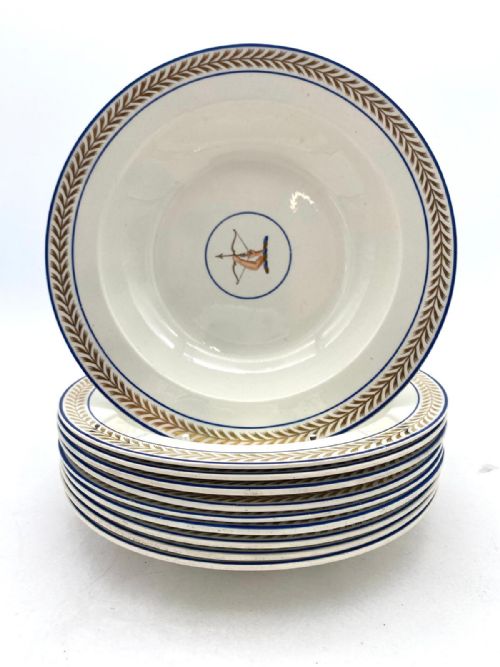
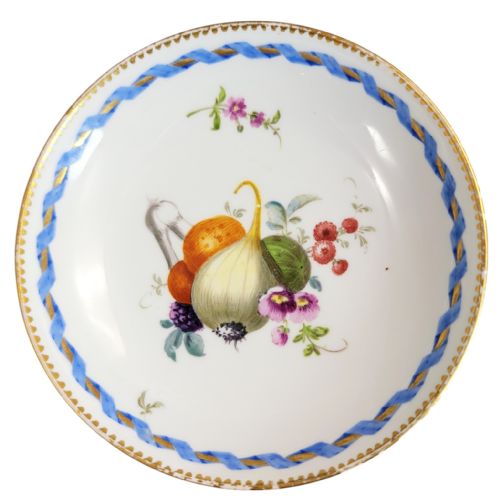
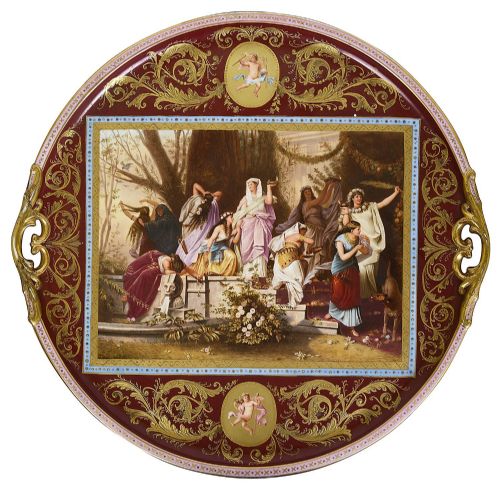
A neoclassical painted porcelain plate combines classical motifs with finely painted mythological scenes, appearing in forms such as decorative chargers, cabinet plates, pudding bowls, saucers, and trays. These pieces bridge the eighteenth and nineteenth centuries, reflecting the enduring aesthetic of Georgian and neoclassical revivals across European production.
The selection centres heavily on nineteenth-century Vienna porcelain chargers alongside earlier eighteenth-century English creamware and German hard-paste porcelain. Buyers encounter substantial chargers measuring up to sixty centimetres alongside more intimate cabinet plates and saucers.
Makers such as Wedgwood, Meissen, and Royal Vienna dominate the offerings, bringing signed figure paintings and cobalt blue borders with gold leaf highlights. Each form demonstrates a specific application of classical narrative subjects onto functional and decorative ceramic surfaces.
How they were made
Hard-paste porcelain and creamware form the foundational ceramic bodies, shaped into plates, chargers, and bowls before undergoing high-temperature firing. Enamel paints provide the detailed palette for mythological figures and narrative scenes.
Gold leaf and gilding are applied by hand to borders and rims, framing the central painted subjects with metallic brilliance. Skilled artists frequently sign their miniature compositions directly onto the porcelain surface before final glazing.
Object forms range from small saucers and pudding bowls to large decorative chargers measuring up to sixty centimetres in diameter.
What varies in quality
The refinement of the painted narrative separates standard decorative items from superior cabinet pieces, particularly when artists execute complex mythological figures with precision and named subjects. Master painters like S. Stanley or Sibl elevate specific plates through detailed portraiture and careful shading.
The application and preservation of gold leaf and cobalt blue grounds indicate the original workshop expenditure, where richer gilding and intact armorial borders signal higher production standards.
Wedgwood·Meissen·Royal Vienna
The Neoclassical Painted Porcelain Plate Glossary
- Neoclassical
- A style reviving the art and culture of ancient Greece and Rome. It appears across these plates through symmetrical borders and mythological narratives.
- Hard-Paste Porcelain
- A dense, durable ceramic material composed of kaolin and petuntse. It fires at very high temperatures to create a smooth, vitreous body suitable for detailed enamel painting.
- Creamware
- A refined earthenware developed in England during the eighteenth century. Its pale yellowish-cream tone provides a warm ground for armorial transfers and painted decoration.
- Gilding
- The application of gold leaf or powdered gold onto the surface of ceramic objects. It highlights rims, borders, and classical motifs with a reflective metallic finish.
- Cabinet Plate
- A decorative plate intended for display in a cabinet rather than for dining use. These pieces often feature elaborate painted scenes and pierced rims.
Neoclassical Painted Porcelain Plate: Frequently Asked Questions
What is a neoclassical painted porcelain plate?
A neoclassical painted porcelain plate is a decorative ceramic piece featuring classical mythological scenes, figures, and gilt borders produced by European factories.
These items range from large chargers to small cabinet plates, reflecting eighteenth and nineteenth-century aesthetic revivals.
How were these plates used originally?
Larger chargers and pudding bowls served dining and display functions in wealthy households, while cabinet plates were primarily intended for visual appreciation.
Plates with armorial designs also marked family lineage and status during formal gatherings.
How do I care for antique porcelain plates?
Antique porcelain and delicate enamel decoration require gentle dusting with a soft, dry cloth rather than immersion in water.
Displaying them securely on plate stands prevents accidental drops and preserves fragile gold leaf highlights.
How can I tell periods apart?
Eighteenth-century examples often feature creamware bodies or early hard-paste porcelain with restrained armorials or simple borders.
Nineteenth-century Vienna pieces frequently display dense mythological narratives, signature inscriptions, and rich cobalt blue grounds with heavy gilding.