


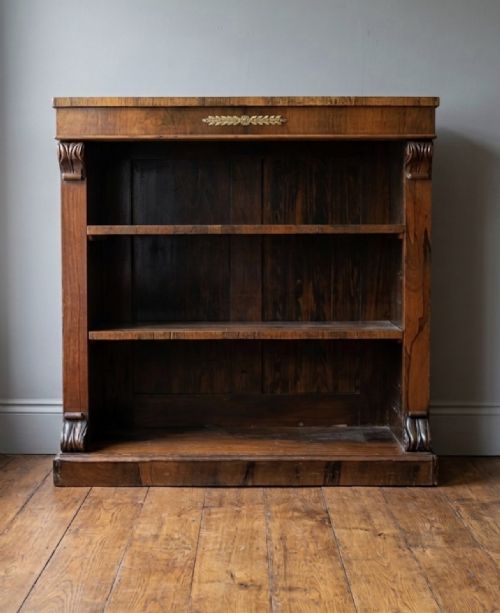
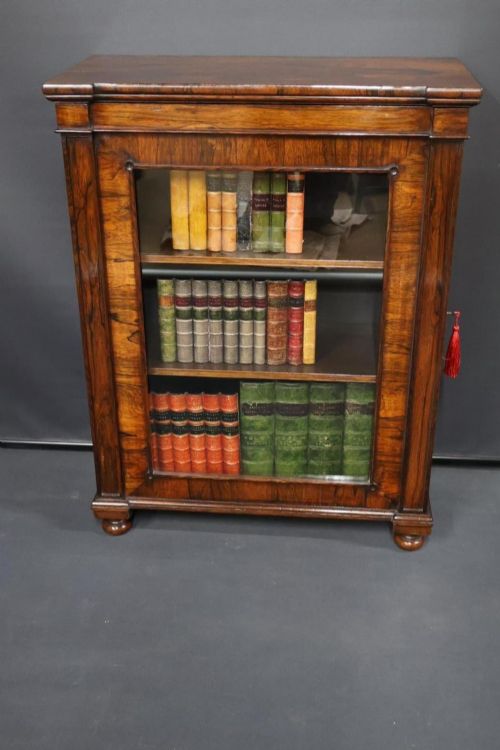


Rosewood Low Side Bookcase
A rosewood low side bookcase brings rich timber grain and compact proportions to a room, holding books and display pieces with quiet dignity.
Rosewood Low Side Bookcase
A rosewood low side bookcase brings together the functions of a cabinet and a bookshelf, keeping volumes at hand while offering a surface for display. These pieces appear most frequently from the Regency, William IV, and Victorian periods, spanning the nineteenth century.
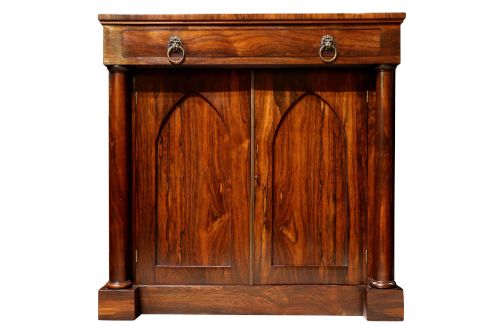
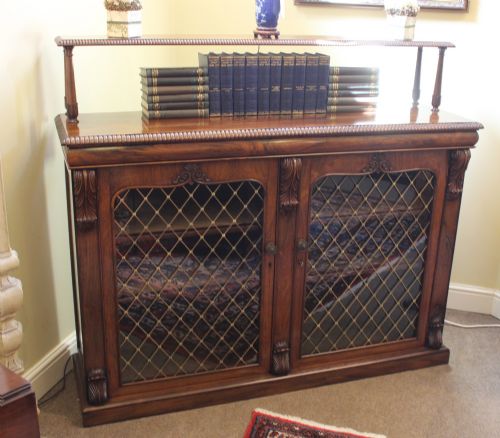
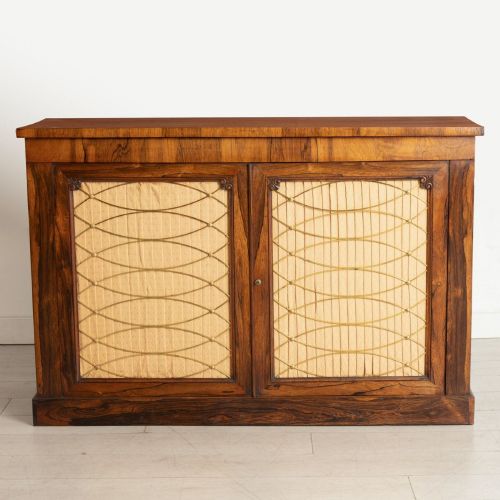
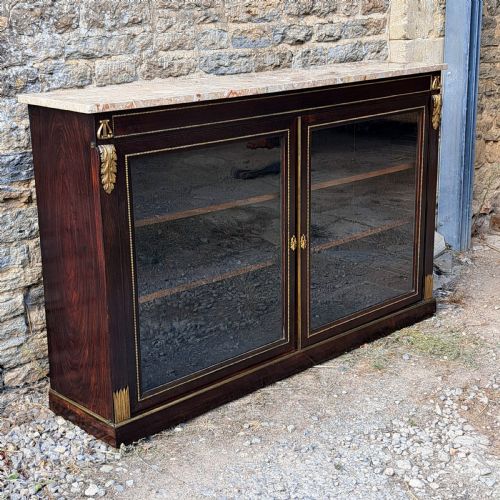
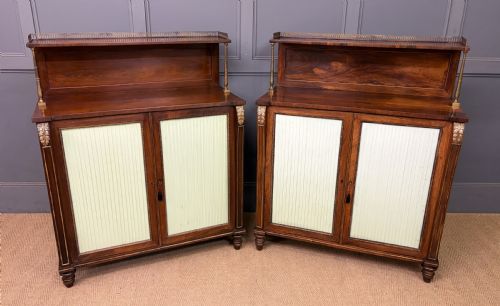
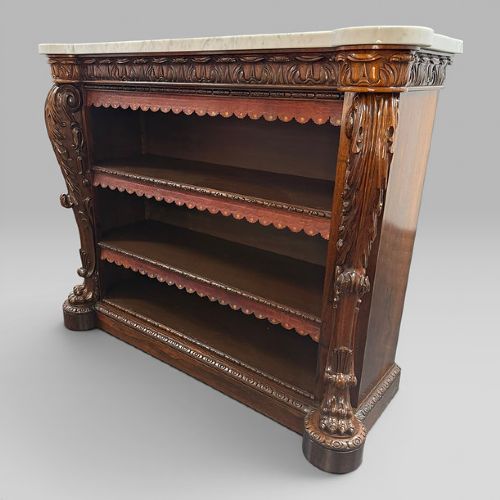
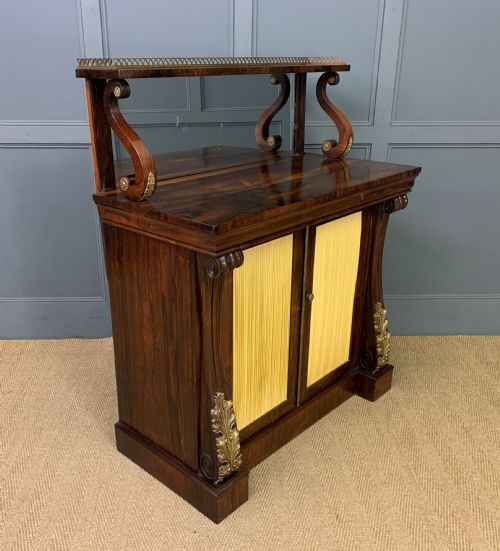
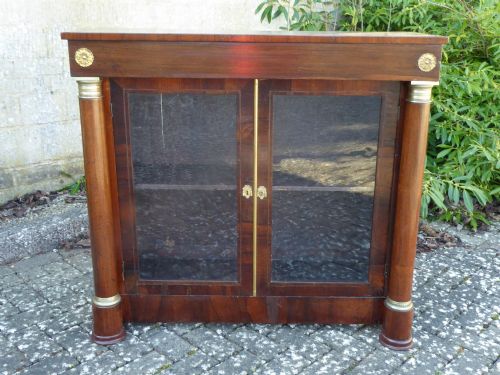
The form varies across side cabinets, chiffoniers, pier cabinets, and open or glazed bookcases. Many examples incorporate brass inlay, marble tops, or pleated fabric panels behind lattice doors, reflecting the refined tastes of their era.
Makers of the period utilised dense exotic timbers, adapting the proportions to suit drawing rooms and libraries. A buyer finds both open-shelf formats and closed cabinet designs equipped with panelled or glazed doors.
Materials and construction methods
Cabinetmakers constructed these pieces using solid rosewood and rosewood veneers applied to secondary foundational timbers. Workshops frequently enhanced the dark grain with brass inlay, parcel gilding, and fine turned columns.
Interiors often incorporate adjustable shelving, while select pieces pair the timber with white marble tops, mirror glass panels, or silk and fabric linings. Brass mounts and grilles complete the detailing on finer examples.
Some cabinetmakers secreted leather dummy books across doors, letting a neat row of bindings hide a cupboard.
Distinctions in craftsmanship
The standard of execution rests in the choice of timber figure, the precision of brass inlay work, and the integrity of the structural joinery. Pieces featuring heavier architectural elements like barley twist columns or breakfront carcases demand greater skill from the cabinetmaker.
Subtle details such as original glass, well-figured Rio rosewood veneers, and integrated leather dummy books elevate an example. The harmony of proportions between the low height and the width dictates the visual balance of the piece.
Gillows of Lancaster
The Rosewood Low Side Bookcase Glossary
- Chiffonier
- A low cabinet with doors enclosing shelves, often topped with a shelf superstructure on small columns. This form gained popularity during the Regency period.
- Pier cabinet
- A narrow cabinet designed to stand against the wall space between windows. These pieces frequently feature glazed doors for the display of delicate items.
- Breakfront
- A cabinet design where the central section projects forward from the flanking wings. This configuration adds architectural depth to side cabinets and bookcases.
- Rio rosewood
- A dense, heavily figured timber sourced from South America. Cabinetmakers prized this material for its rich colour and dark grain patterns.
- Dummy books
- Artificial book spines mounted on doors or fronts to conceal storage spaces. These decorative elements appear on select Regency library pieces.
Rosewood Low Side Bookcase: Frequently Asked Questions
What is a rosewood low side bookcase?
A rosewood low side bookcase is a compact nineteenth-century storage piece designed to hold books while maintaining a low profile beneath display items.
These cabinets combine open shelving or enclosed cupboards, often elevated on plinths or short feet to suit formal reception rooms.
How do I date a rosewood bookcase?
Dating relies on stylistic markers such as brass inlay patterns, timber selection, and overall architectural proportions. Regency and William IV pieces often display classical restraint, whereas Victorian examples introduce heavier turning.
Examining the secondary woods and construction methods inside the carcase provides further confirmation of the period.
Where were these bookcases placed?
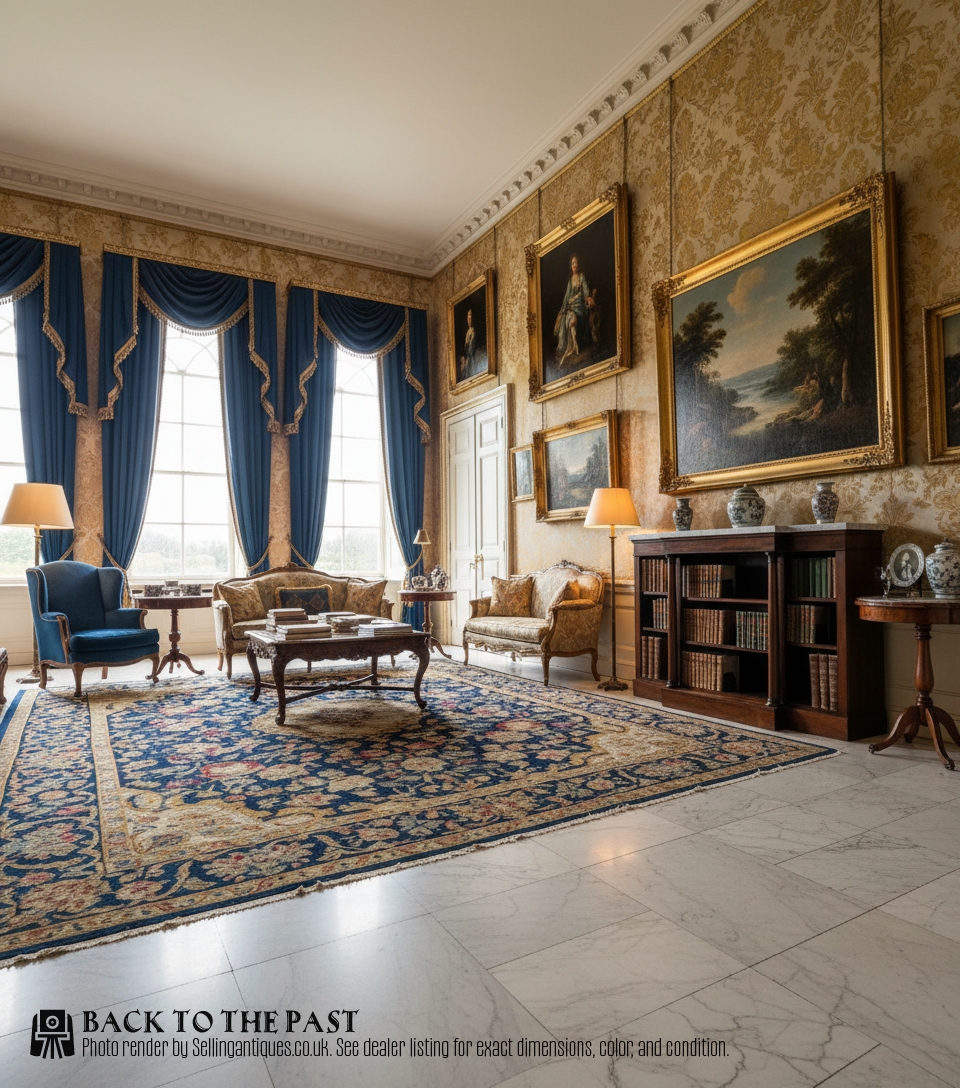
These cabinets sat against drawing room walls, libraries, and parlours where height needed to be kept below window sills. Their low stature allowed them to function as serving surfaces or display tiers.
Pairs of cabinets frequently flanked a fireplace or filled specific wall alcoves in grand nineteenth-century interiors.
How do I care for rosewood furniture?
Rosewood requires stable humidity levels and protection from direct sunlight to prevent the timber and veneers from drying out. Regular dusting with a soft, dry cloth preserves the polished finish.
Applying wax polish sparingly helps maintain the natural lustre of the grain without building up a heavy residue.