
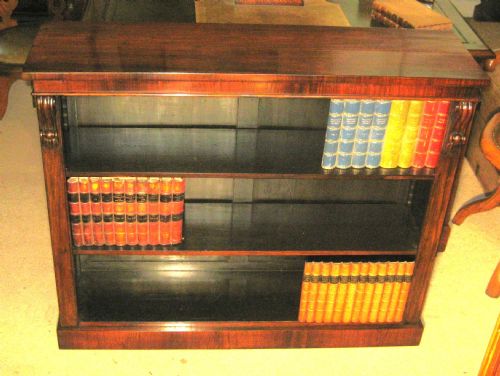
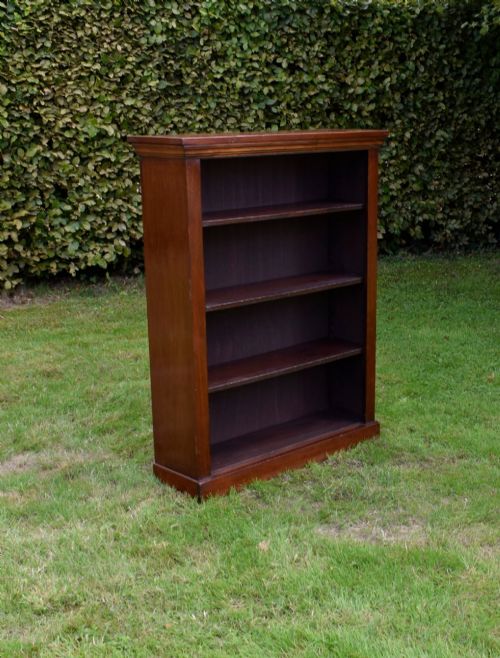
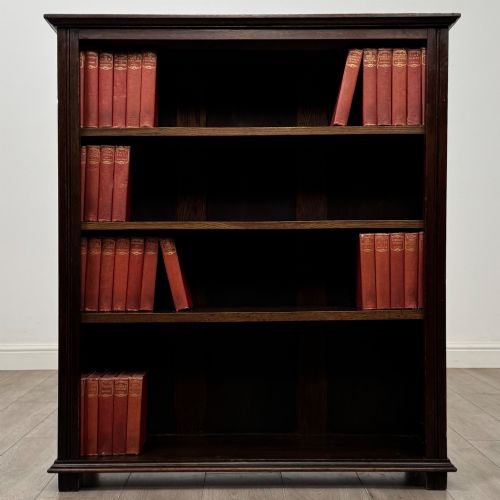
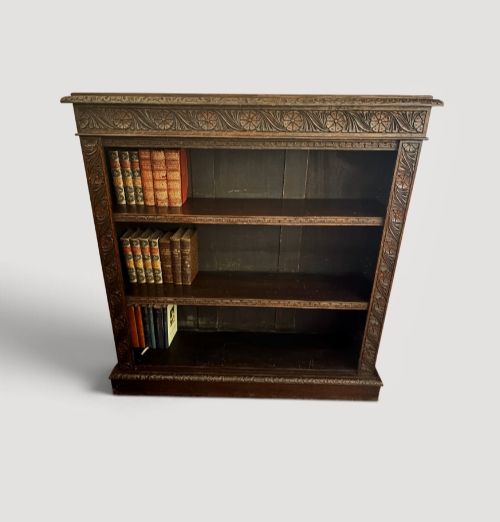
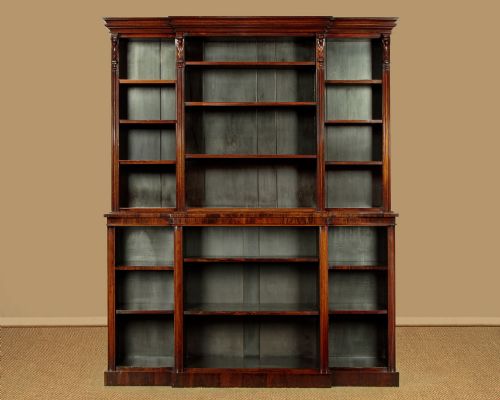
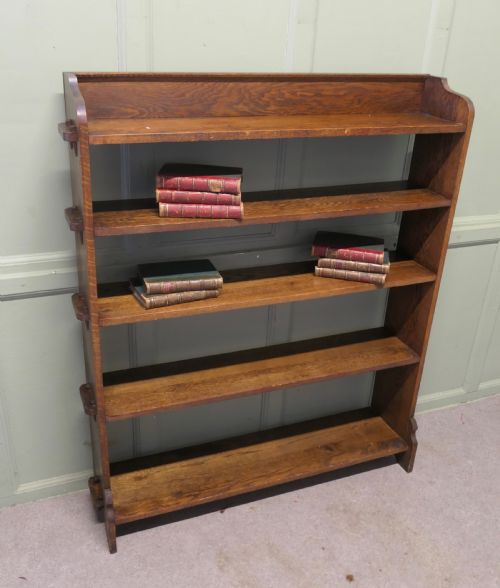
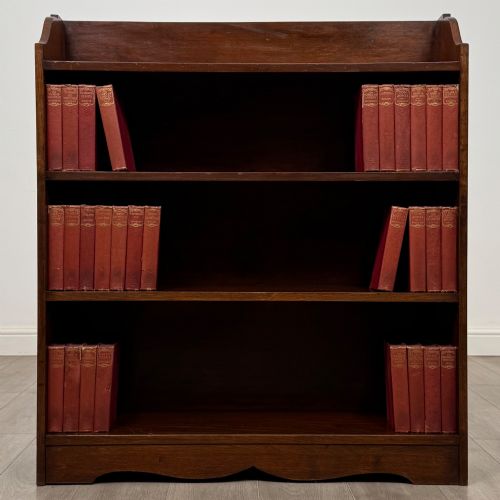
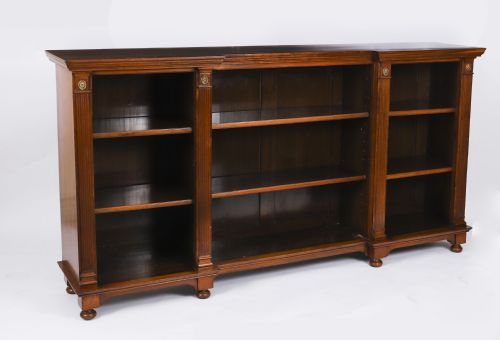
Open Front Bookcase Unit
An open front bookcase unit brings timeless utility and timber warmth to a room, offering immediate access to volumes while anchoring a study or drawing room.
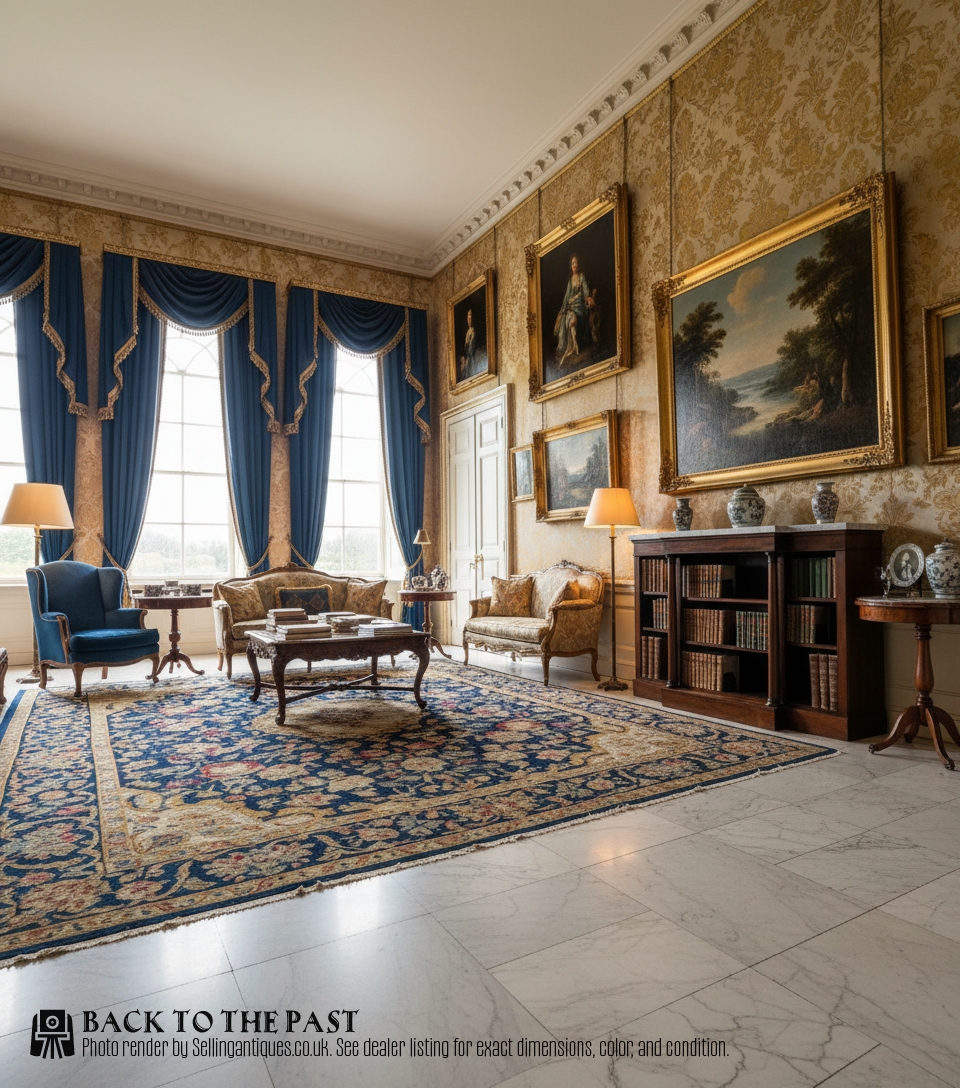
Open Front Bookcase Unit
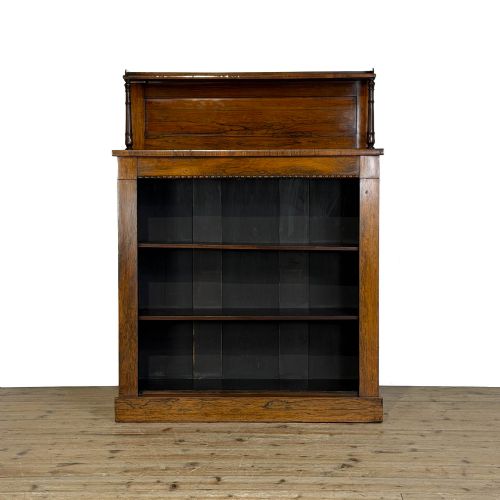
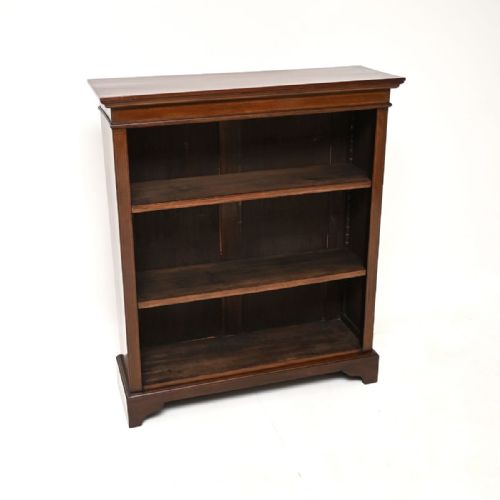
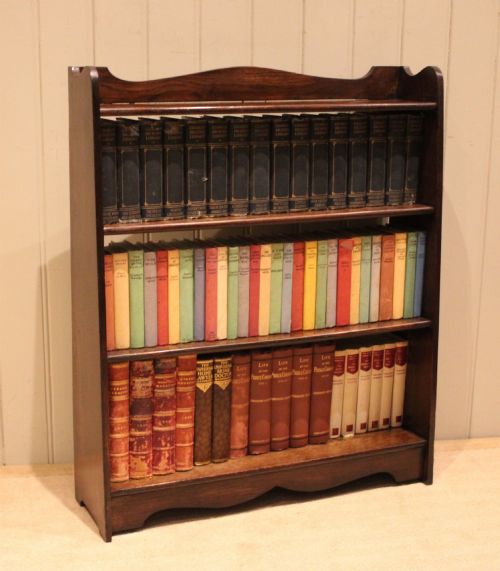
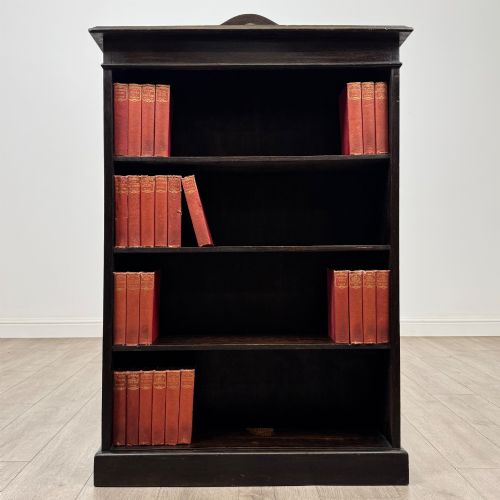
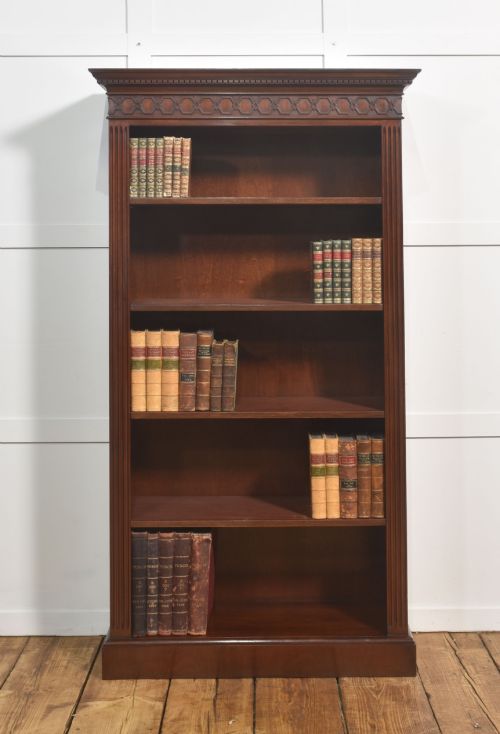
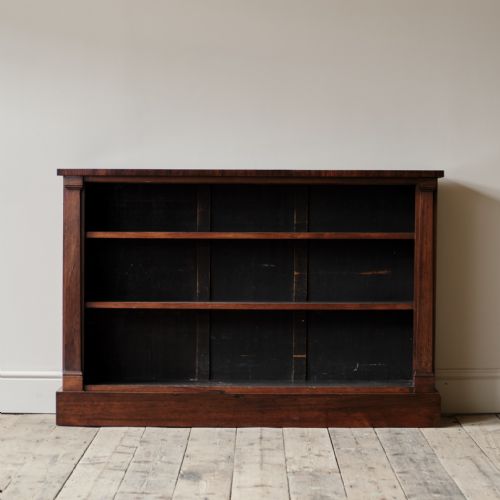
An open front bookcase unit provides accessible shelving for libraries and living spaces, appearing across periods from the early nineteenth century through the art deco era. You meet formal Regency rosewood pieces, substantial Victorian oak designs, and lighter Edwardian inlaid mahogany models.
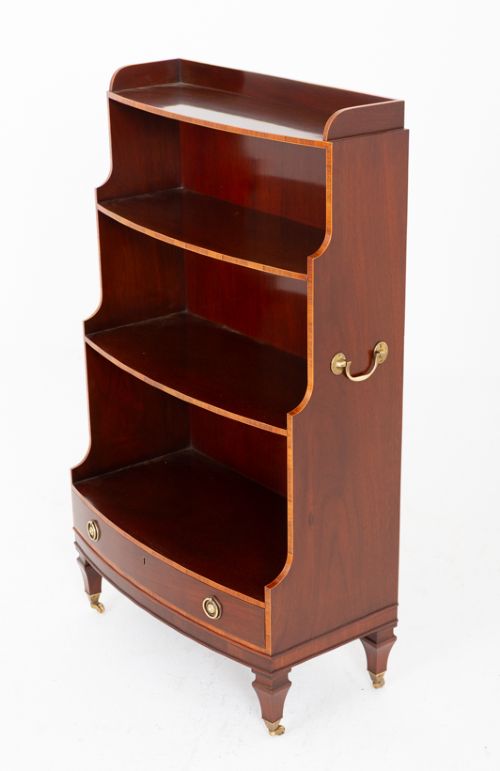
The format ranges from compact waterfall shelves to large breakfront configurations fitted with adjustable internal shelving and drawers. These pieces accommodate varied collections while maintaining an open elevation that suits domestic interiors.
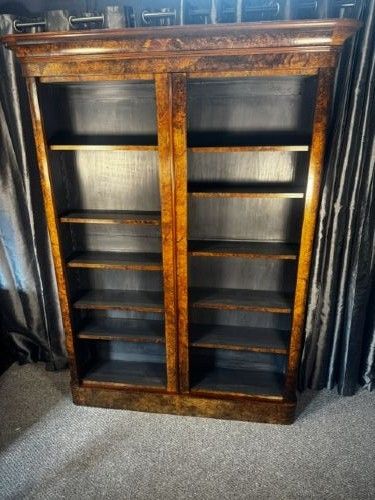
Makers utilised timber grains to decorative effect, producing items in burr walnut, pollard oak, and birdseye maple alongside standard mahogany and pine. Styles span neoclassical influences, arts and crafts simplicity, and Georgian revival interpretations.
How they were made
Cabinet makers built these units using solid hardwoods and decorative veneers, applying mahogany, oak, and rosewood over sturdy carcases. Brass inlays, ormolu mounts, and delicate stringing frequently highlight the primary timbers.
Construction details include adjustable shelf mechanisms, carved mouldings, and panelled plinths that manage the weight of heavy book collections. Breakfront profiles require precise joinery to articulate the projecting central sections without warping over time.
The listings span Victorian, Edwardian, and Art Deco periods, utilising mahogany, oak, rosewood, and walnut.
What varies in quality
Quality rests in the choice of timber figure, such as richly grained burr walnut or figured mahogany, and the crispness of carved details or inlaid brass work. Superior examples exhibit balanced proportions and integrated architectural elements rather than plain box construction.
The sophistication of the internal mechanics, including functional adjustable shelving brackets and secondary drawer linings in oak or mahogany, separates utilitarian pieces from fine library furniture.
Sir Charles Barry
The Open Front Bookcase Unit Glossary
- Breakfront
- A cabinet design where the central section projects forward from the flanking wings. This architectural form creates depth and shadow across the facade.
- Waterfall bookcase
- A set of open shelves that graduate in depth from bottom to top, following a stepped profile. The stepped edges resemble the cascading tiers of a waterfall.
- Ormolu
- Gilded bronze mounts applied to furniture for decorative enrichment. These metallic elements catch the light and punctuate dark wood surfaces.
- Pollard oak
- Timber taken from trees that were cut back to encourage dense branching, resulting in a mottled and swirling grain pattern. It yields a distinctive decorative surface on Victorian furniture.
- Stringing
- Thin inlaid lines of contrasting wood or light-coloured timber used to outline panels and drawers. It adds delicate definition to mahogany and walnut surfaces.
Open Front Bookcase Unit: Frequently Asked Questions
Are the shelves adjustable on these bookcases?
Many period examples feature adjustable shelving supported by wooden racks or brass studs, allowing you to alter shelf heights for varying book sizes.
Simpler or earlier vernacular pieces may have fixed shelves integrated directly into the structural sides of the carcase.
How do I distinguish Victorian from Edwardian pieces?
Victorian open front bookcase units generally employ heavier timbers, deeper carving, and darker finishes such as rosewood or pollard oak.
Edwardian models tend toward lighter mahogany constructions, often featuring delicate satinwood inlay, stringing, and neoclassical motifs.
Where should I place an open front bookcase?
These units suit studies, libraries, and living rooms where easy access to books is desired and natural light enhances the timber grain.
Avoid positioning them in direct sunlight or against damp exterior walls to protect the veneer and solid wood carcase.