
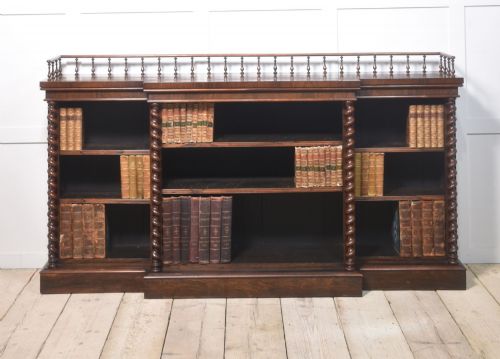
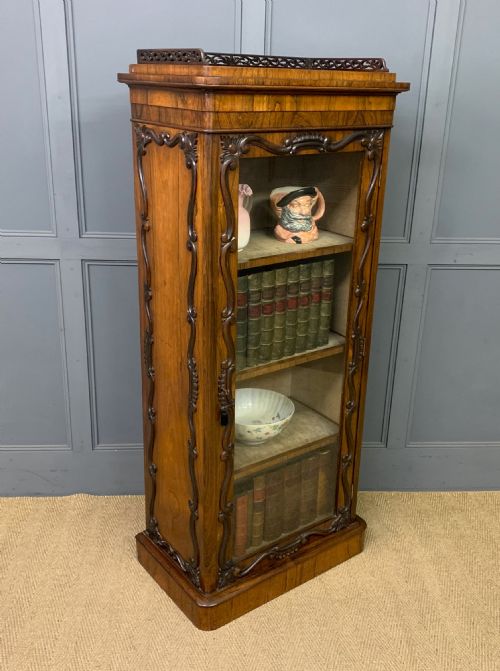
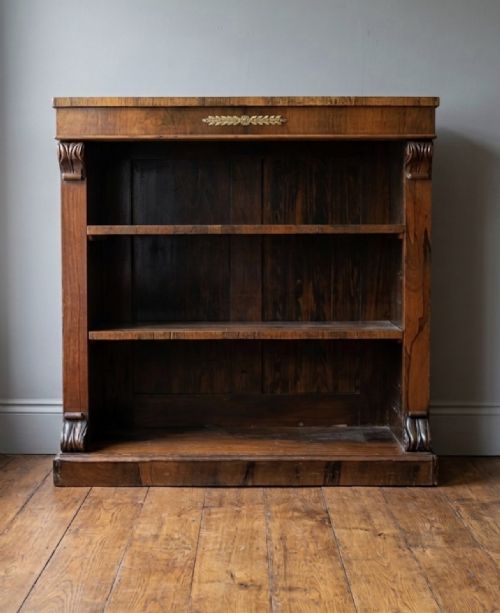


Victorian Rosewood Bookshelf
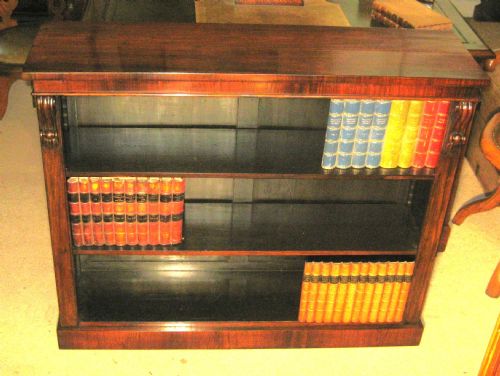
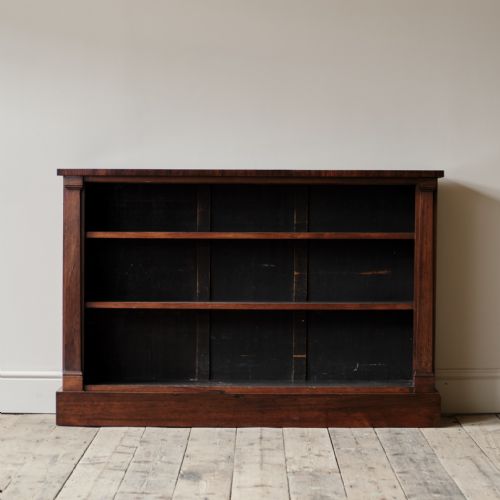
A victorian rosewood bookshelf brings rich dark timber and sturdy open storage into a room, offering both practical utility and classic nineteenth-century character.
Victorian Rosewood Bookshelf
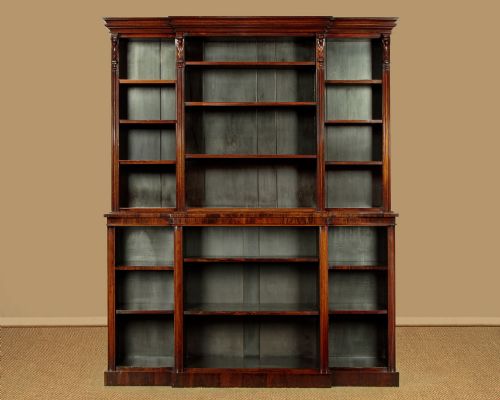
A victorian rosewood bookshelf primarily takes the form of an open bookcase, though tiered étagères, wall shelves, and waterfall bookcases appear across the selection. These pieces originate predominantly from the nineteenth century, with specific examples carrying dates from the eighteen-forties, eighteen-fifties, eighteen-sixties, and eighteen-eighties.
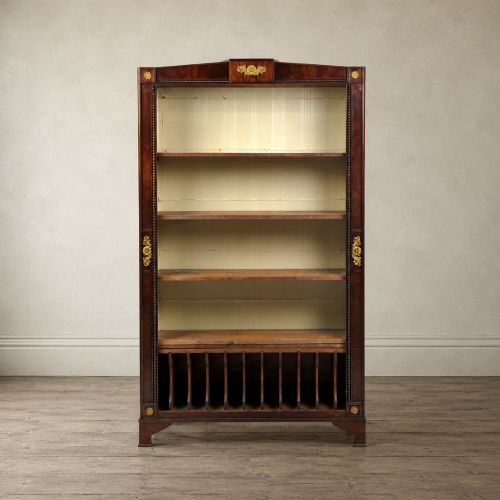
Most items on show date to the Victorian era, accompanied by pieces from the Edwardian, William IV, Regency, and French Empire styles, alongside Anglo-Indian designs. Buyers will frequently encounter open bookcases alongside multi-tiered whatnots and display shelves intended for books and ornaments alike.
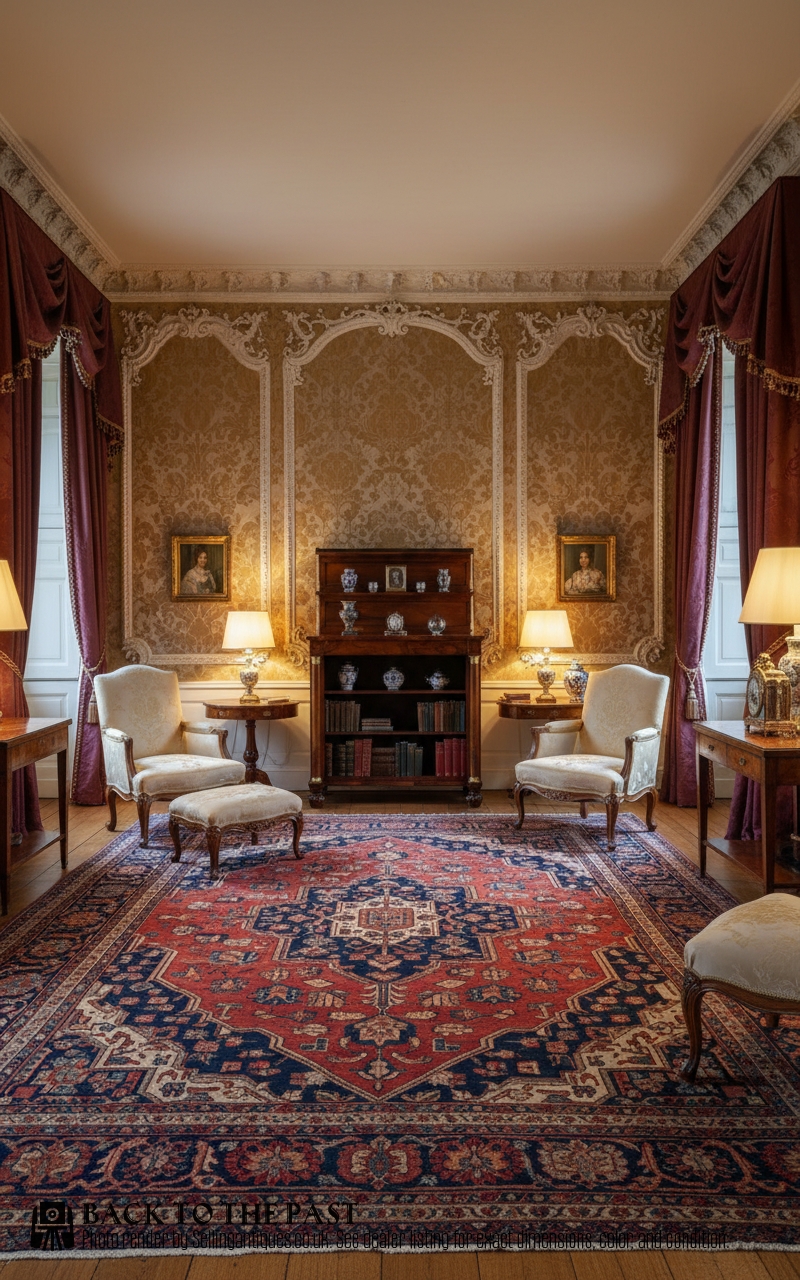
Assessing Quality and Craftsmanship
Quality in these bookcases rests on the depth of the timber grain and the precision of the veneer work. Finer examples display carefully matched rosewood figures across breakfront facades and cabinet doors, paired with robust internal carcases.
Execution of decorative elements such as carved corbels, applied mouldings, and inlay distinguishes standard production from finer workshop output. The integrity of structural joints and the smoothness of adjustable shelving mechanisms further separate the tiers of craftsmanship.
Victorian Rosewood Bookshelf Retail Price Guide 2026
Typical asking prices for victorian rosewood bookshelf among the pieces listed under this phrase on Sellingantiques today, from the lower quarter to the upper quarter. They describe what is for sale here now, not the wider market.
Several pieces arrive ready to hold generations of novels after surviving centuries of changing interior fashions without losing their charm.
James Winter·Samson And Son London
The Victorian Rosewood Bookshelf Glossary
- Rosewood
- A dense, heavily figured timber known for its deep dark colour and prominent grain patterns. It forms the primary visual and structural material for these nineteenth-century pieces.
- Breakfront
- A cabinet or bookcase design where the central section projects forward from the flanking wings. This architectural arrangement creates depth and shadow on the front elevation.
- Waterfall bookcase
- A shelving unit featuring tiers that step back progressively from bottom to top, creating a profile resembling descending water. These pieces often incorporate graduated shelves for smaller volumes.
- Étagère
- An open piece of furniture with multiple tiers used for displaying ornaments, books, or small objects. These freestanding stands often feature slender supports and decorative galleries.
- Corbel
- A projecting bracket carved from timber to support a shelf or superstructure. They provide both structural reinforcement and decorative weight beneath upper cornices.
Victorian Rosewood Bookshelf: Frequently Asked Questions
How do I style a rosewood bookshelf at home?
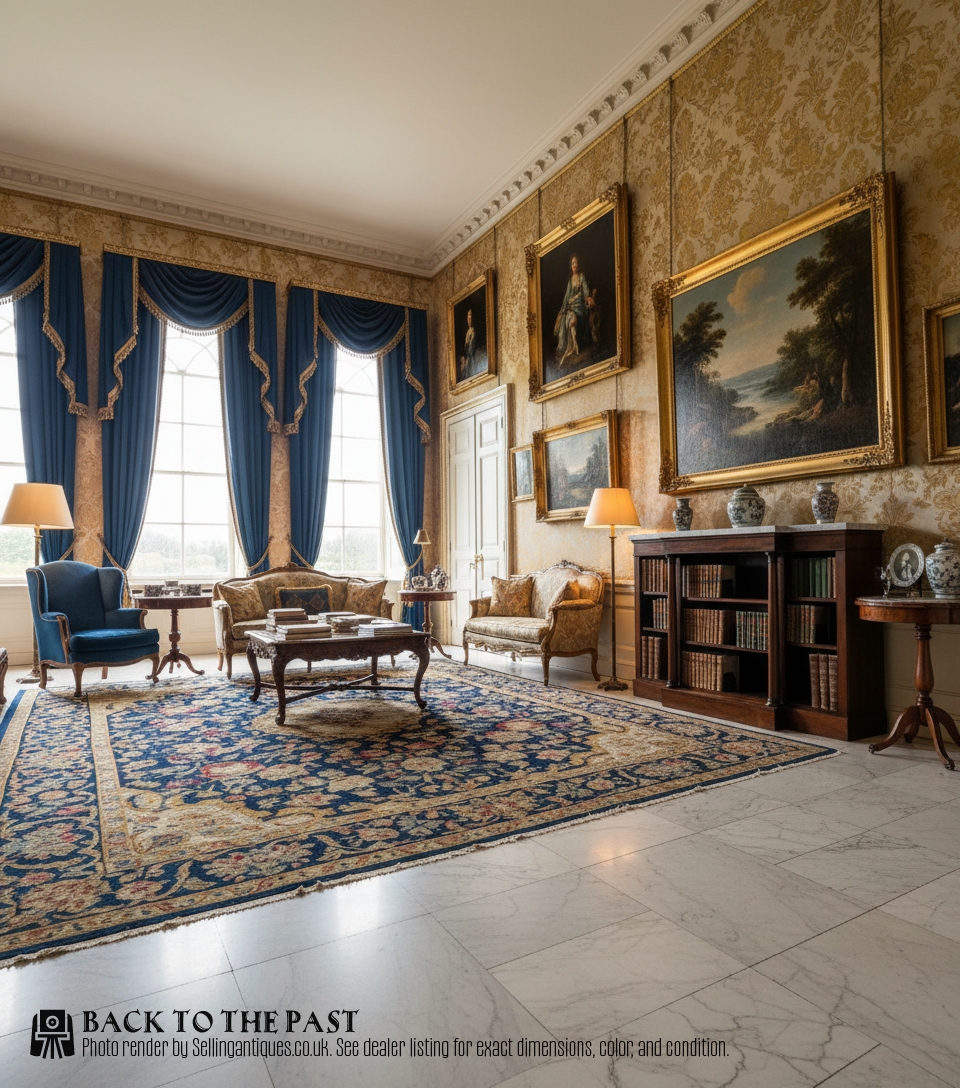
Place open bookcases against plain walls to let the dark grain of the timber stand out without visual competition. Mix vertical book groupings with horizontal stacks and small decorative objects across the shelves.
Ensure the room receives adequate natural light so the rich tones of the wood remain visible. Keep heavier volumes on the lower shelves for stability.
What is the difference between an étagère and a bookcase?
An étagère consists of multiple open tiers primarily designed for display rather than heavy library storage. They feature lighter frames and often include slender uprights.
Bookcases are built specifically to support the weight of numerous books across deeper and sturdier shelves. Many Victorian designs bridge this gap by offering open shelving suited to both display and reading material.
How can I tell a Victorian bookcase from a Regency one?
Regency pieces often display classical restraint, incorporating architectural elements like brass grille doors, reeded pilasters, and simpler proportions influenced by ancient Greece and Rome. They typically date from the early nineteenth century.
Victorian examples frequently introduce heavier carving, richer rosewood veneers, and more varied forms such as waterfall shelves or breakfront configurations. They reflect the industrial expansion and eclectic revival styles of the later nineteenth century.
Are these bookshelves suitable for heavy modern books?
Nineteenth-century open bookcases comfortably hold standard hardbacks and novels when the shelves and supports are structurally sound. Some pieces include adjustable shelf mechanisms that allow you to alter shelf heights for larger volumes.
Distribute heavy art books evenly across the lower shelves rather than crowding the upper tiers. Inspect the interior supports to ensure they take the weight of modern collections.