


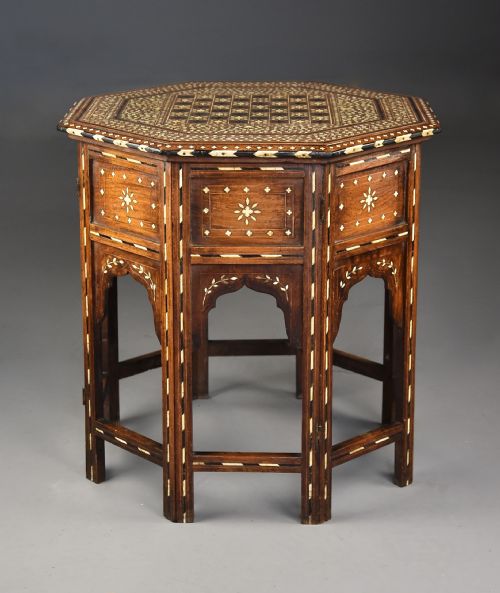
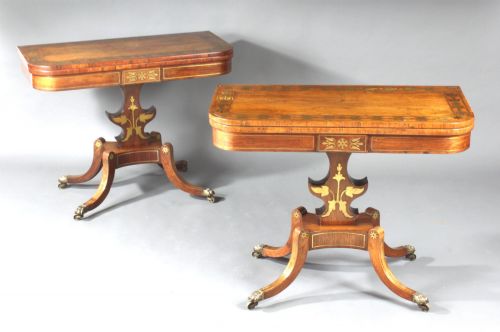
Rosewood Gaming Table
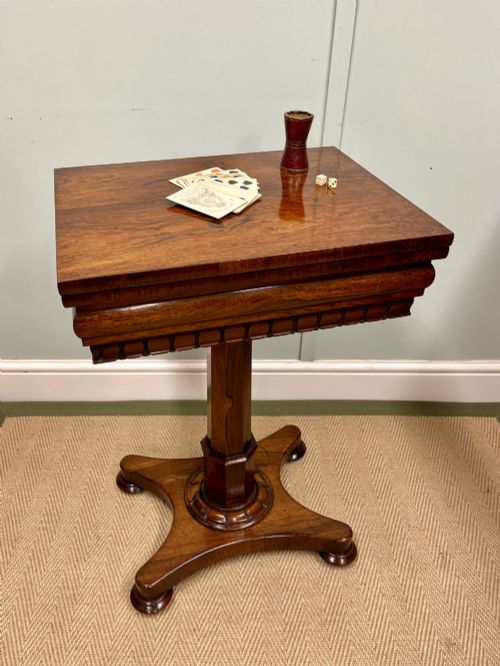
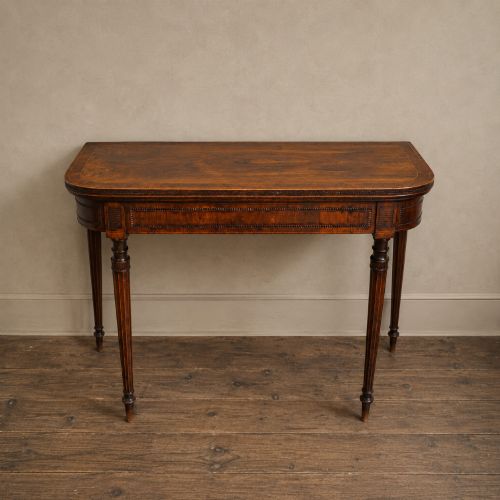
A rosewood gaming table is a domestic piece for cards and chess, built from heavy dark timber and found across Regency and Victorian rooms.
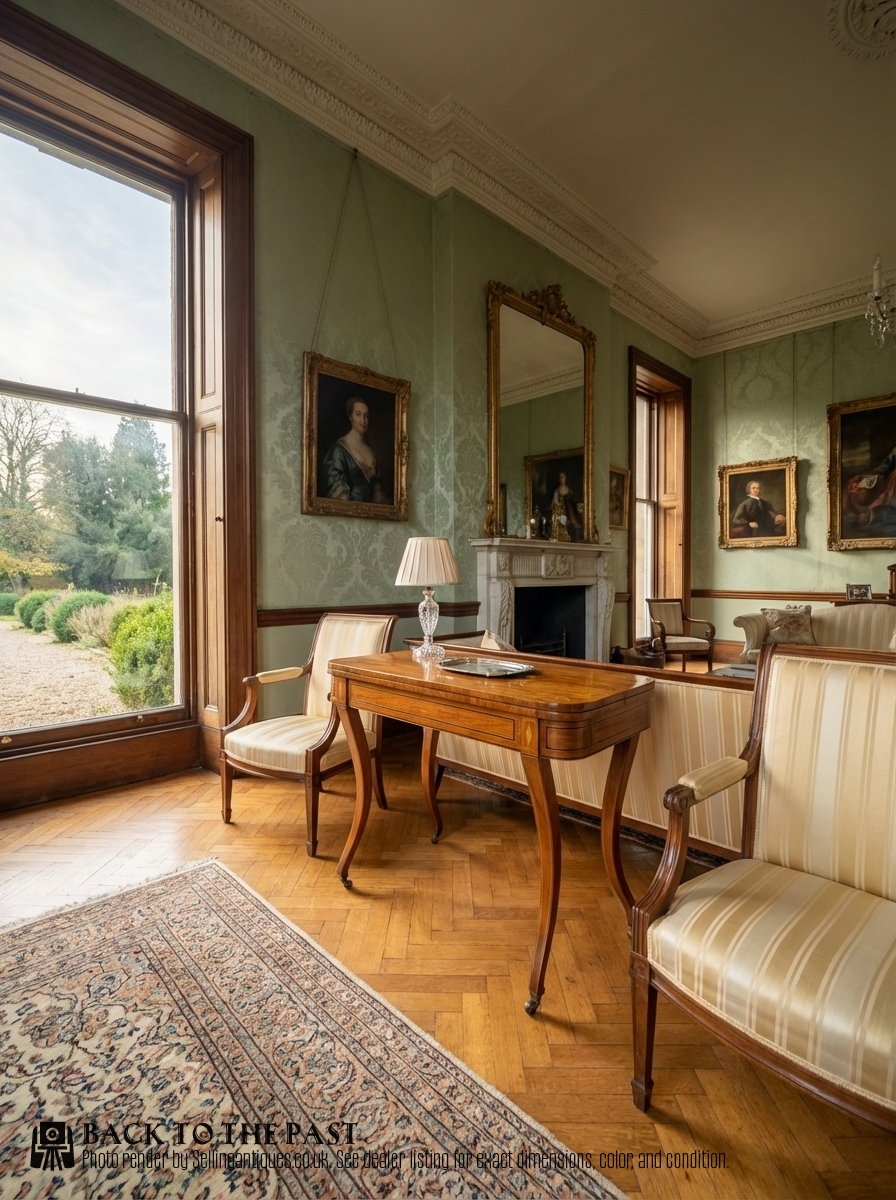
Rosewood Gaming Table
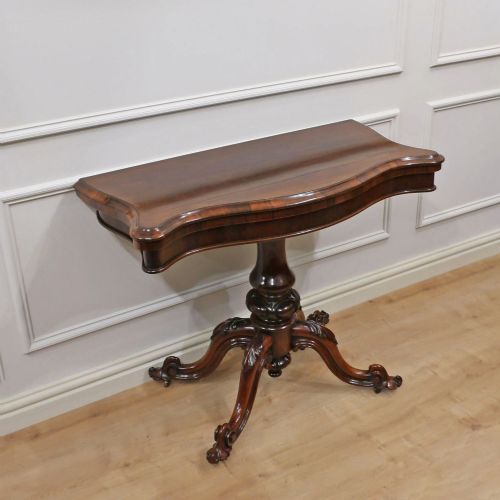
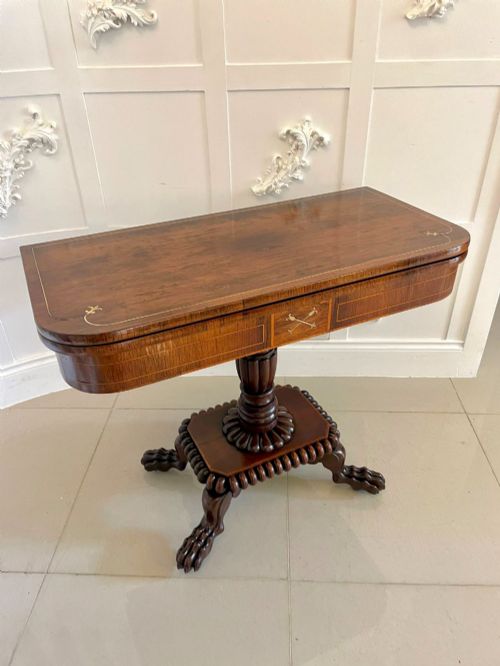
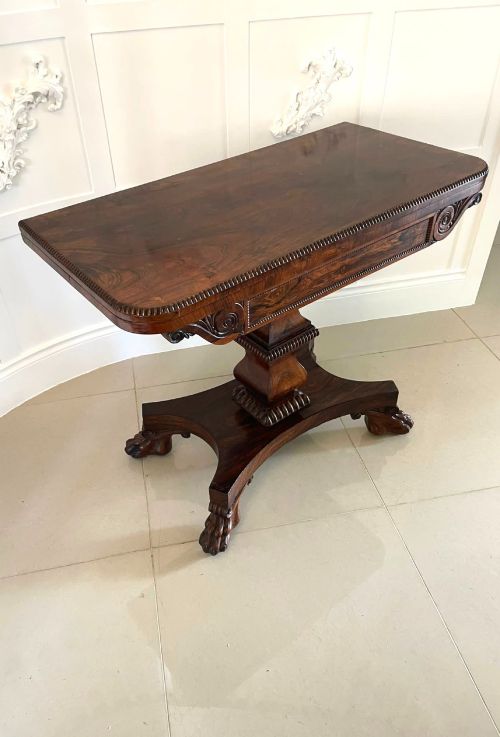
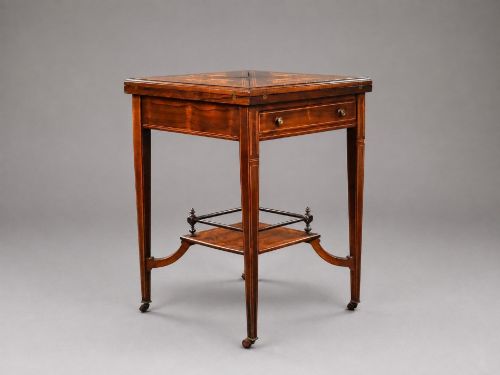
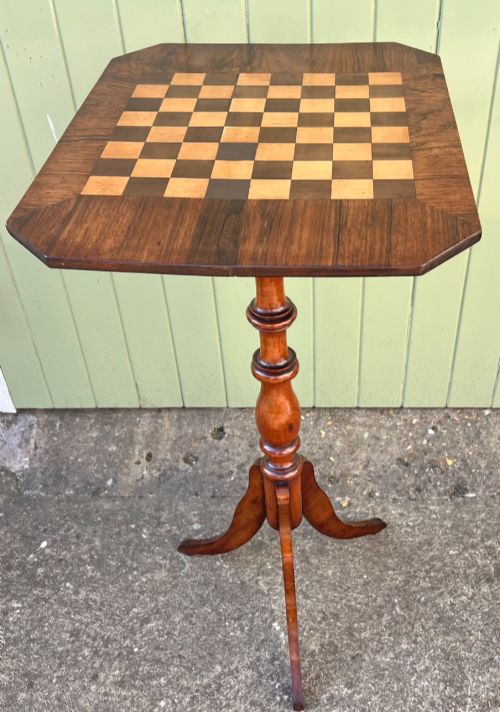
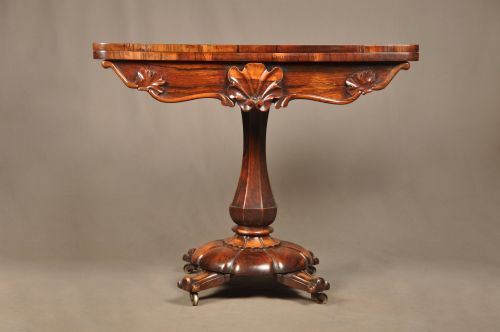
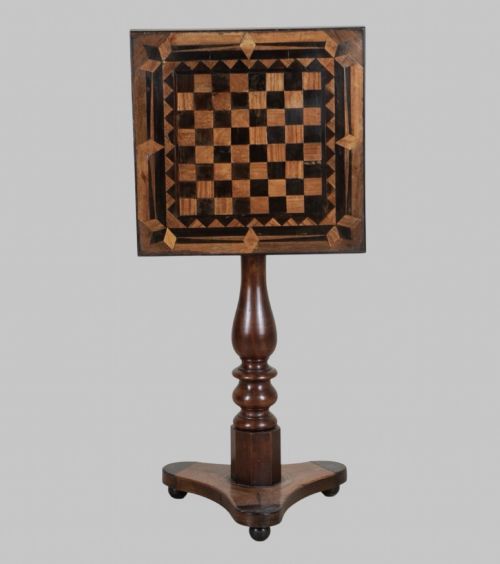
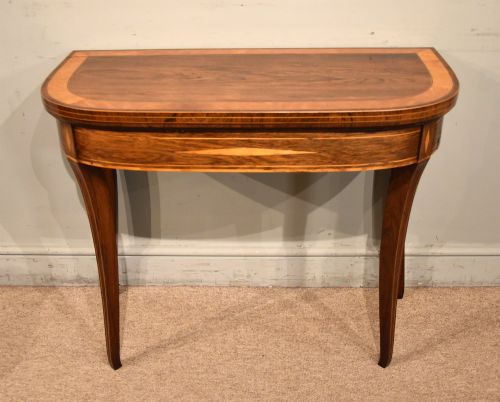
A rosewood gaming table serves social evenings through fold-over tops, swivel mechanisms and compartments designed specifically for cards and chess. These items appear chiefly across Regency, William IV and Victorian periods, taking forms such as card tables, chess tables and envelope tables.
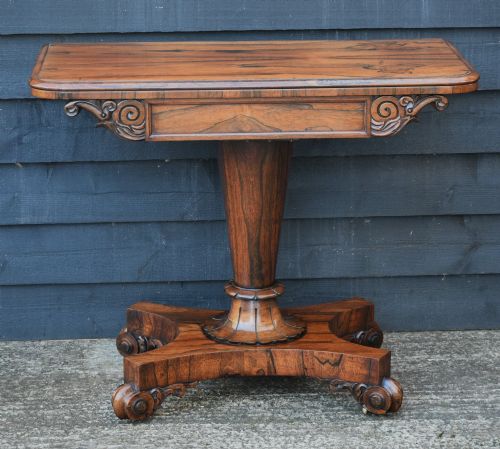
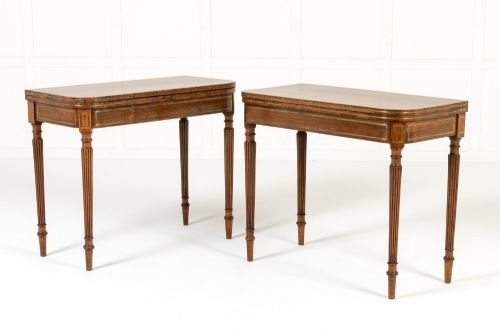
The most frequent examples on this page are Regency card tables with fold-over tops, alongside William IV and Victorian variations on pedestal bases. Occasional pieces like nest of tables with integrated chess boards also emerge from nineteenth-century workshops.
Makers and designers from these eras utilised distinct regional styles, producing items ranging from classical British pedestal designs to Anglo-Indian inlaid occasional and chess tables. Each variation reflects the evolving social habits of nineteenth-century households.
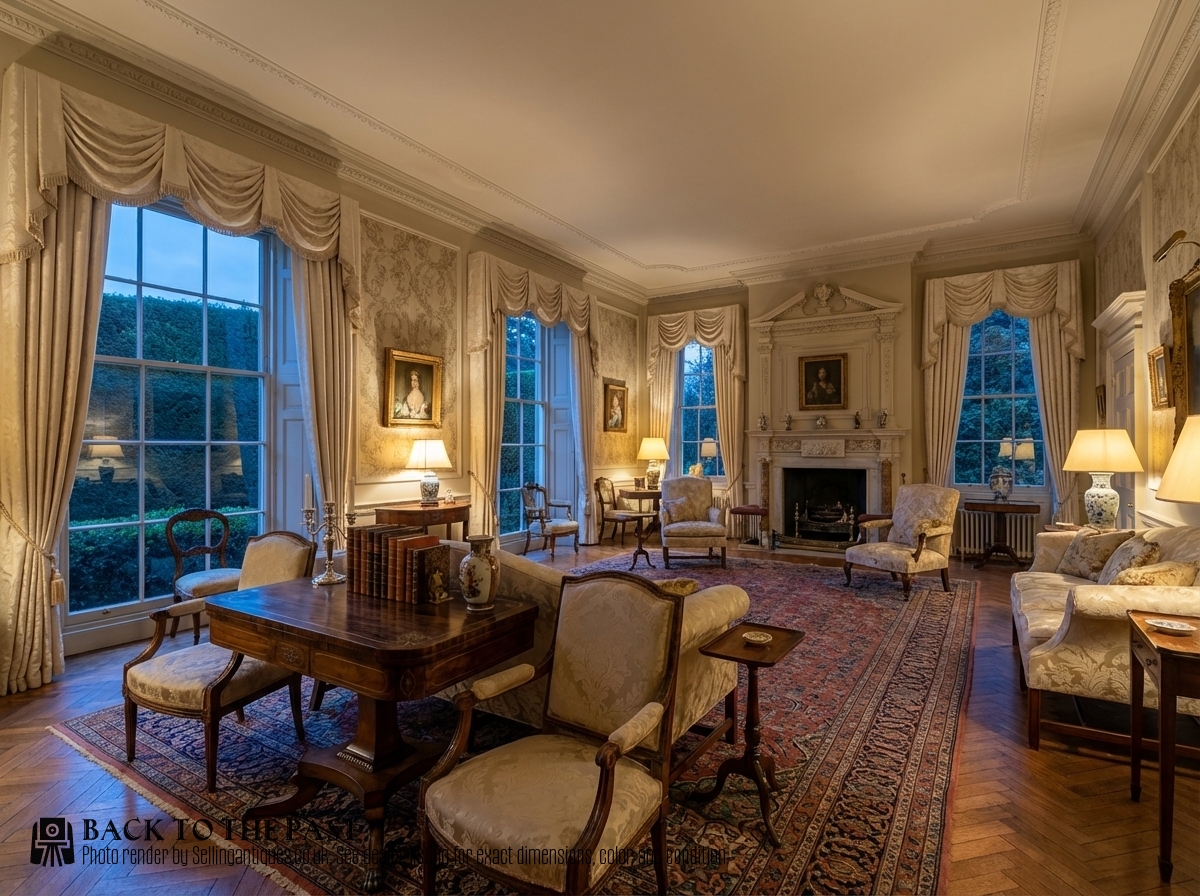
Judging the standard of execution
The caliber of a rosewood gaming table rests on the depth of the timber's figure and the precision of its contrasting wood and brass inlay. Pieces displaying crisp carving on scroll pedestals or dolphin bases stand apart from simpler domestic examples.
Construction integrity defines the upper tier, visible in how smoothly a swivel top operates and how tightly a fold-over leaf meets its apron when closed. Integrated elements like chess boards within nest tables or envelope mechanisms require exact tolerances to maintain structural harmony over decades of use.
Rosewood Gaming Table Retail Price Guide 2026
Typical asking prices for rosewood gaming table among the pieces listed under this phrase on Sellingantiques today, from the lower quarter to the upper quarter. They describe what is for sale here now, not the wider market.
George Bullock·Gillows·Maple & Co.
The Rosewood Gaming Table Glossary
- Rosewood
- A dense, heavily grained dark timber prized for nineteenth-century cabinet work. It takes a high polish and provides a rich ground for brass and lighter wood inlay.
- Baize
- A coarse woollen fabric used to line the playing surfaces of card tables. It offers a soft texture that protects counters and stops cards from sliding.
- Crossbanded
- A border technique where narrow strips of veneer are laid across the grain of the main surface. It frames the top of a gaming table with contrasting wood figures.
- Sabot
- A metal sleeve fitted to the foot of a furniture leg. They frequently appear in brass on Regency and William IV pedestal bases.
- Envelope table
- A square card table with four triangular flaps that swivel open to form the playing surface. The design became popular during the Edwardian period.
- Ormolu
- Gilded bronze used for decorative mounts and accents on elite furniture. It brings a bright metallic contrast to dark rosewood frames.
Rosewood Gaming Table: Frequently Asked Questions
What is a rosewood gaming table used for?
These tables served nineteenth-century drawing rooms as multi-functional furniture for evening entertainment. Fold-over tops opened to reveal baize surfaces for card games, while specialised chess tables accommodated board games.
When not in use, the tops closed flat to function as side or console tables against a wall. Some designs included integrated work boxes or nested structures for versatile domestic use.
How do I tell a Regency table from a Victorian one?
Regency tables, generally dating from the early nineteenth century, favour classical architectural lines, brass inlay, and carved pedestal supports like lyres or dolphins. They often exhibit lighter satinwood stringing against the dark rosewood body.
Victorian examples tend to feature heavier proportions, darker finishes, and more robust carving on octagonal or pillar bases. Envelope card tables and more elaborate marquetry are also characteristic of later nineteenth-century production.
Can I use a card table for dining?
Card tables were built for games and conversation rather than heavy dining. Their internal mechanisms, fold-over leaves, and swivel hinges are not engineered to support the weight and movement of dinner service.
Using them for display, writing, or light card playing preserves the structural integrity of the pivoting top and delicate pedestal joints.
What maintenance does rosewood require?
Rosewood benefits from stable indoor humidity and protection from direct sunlight, which can fade the rich grain over time. Occasional light waxing maintains the finish without building up heavy residues.
Care should be taken with baize-lined interiors, keeping them dry and free from moisture to preserve the fabric surfaces.