


Rosewood Flower Stand
A rosewood flower stand elevates botanical displays, bringing rich timber grain and carved detail to period interiors.
Rosewood Flower Stand
A rosewood flower stand serves primarily as a support for jardinières, urns and decorative plants within a room. When exploring a rosewood flower stand, buyers encounter distinct forms such as pedestal stands, occasional tables and low pot tables designed for display.
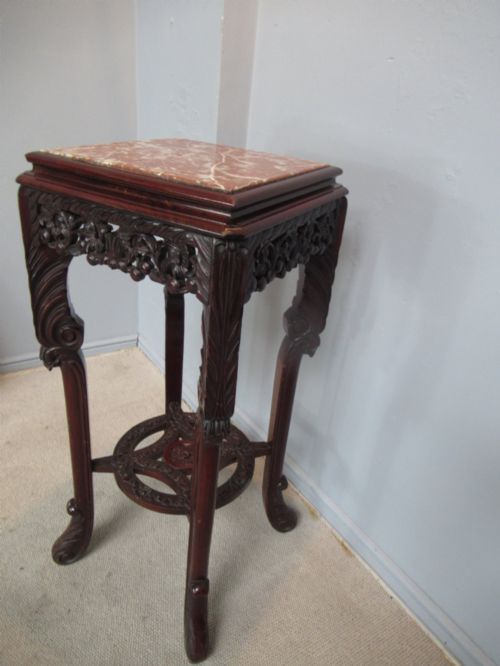
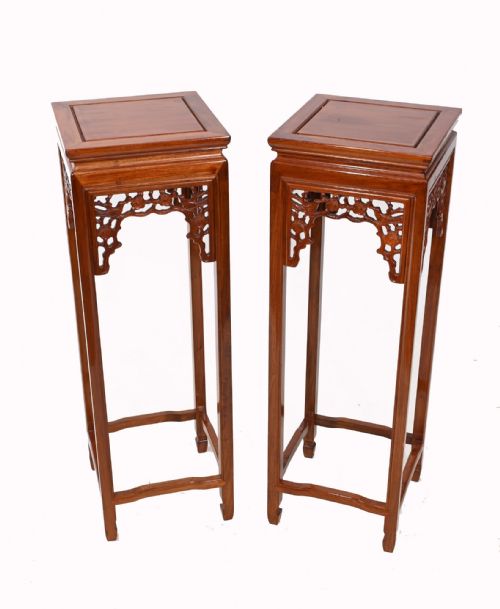
The majority of pieces originate from the nineteenth century, encompassing Victorian creations alongside Chinese Export and Qing Dynasty workshop productions. These objects manifest as square, rectangular or multi-tiered structures intended to elevate foliage or pottery off the floor.
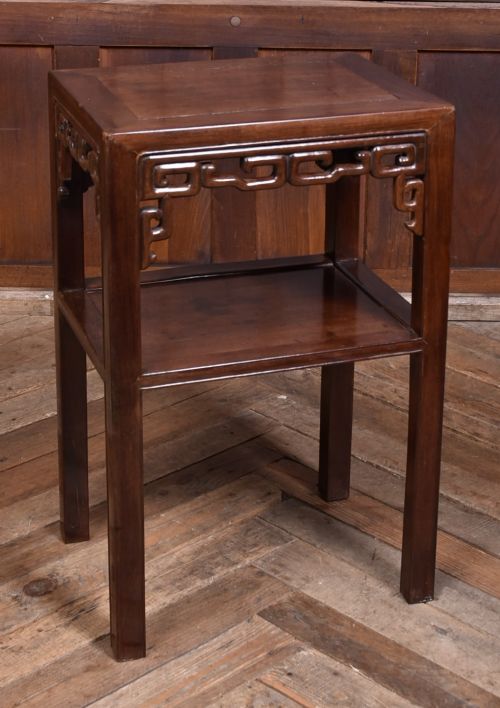
Examples frequently combine solid timber framing with inset panels, creating stable platforms suited for heavy ceramic vessels. Surviving pieces demonstrate the varied domestic requirements of nineteenth-century interiors, functioning equally as vase supports and side tables.
Materials and Construction
Construction relies heavily on dense exotic timbers including rosewood, hongmu, padouk and general hardwood, chosen for their structural strength and deep colouration. Artisans combined traditional joinery methods to frame heavy tops without relying on modern fasteners.
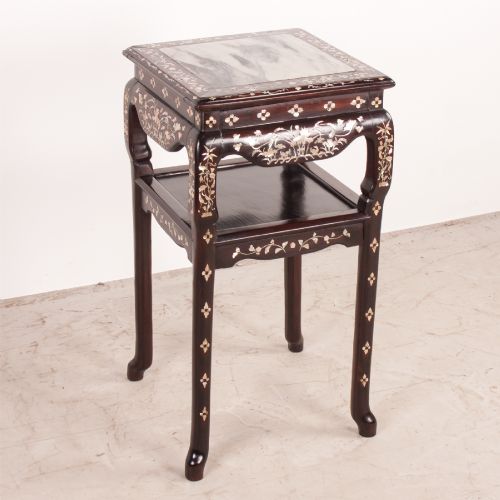
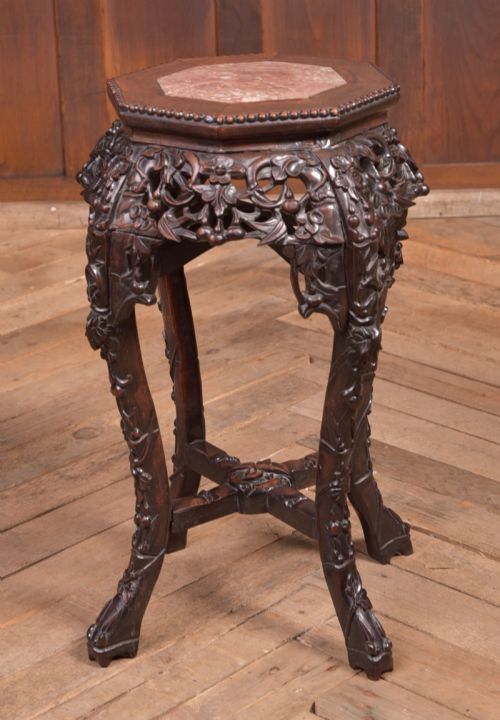
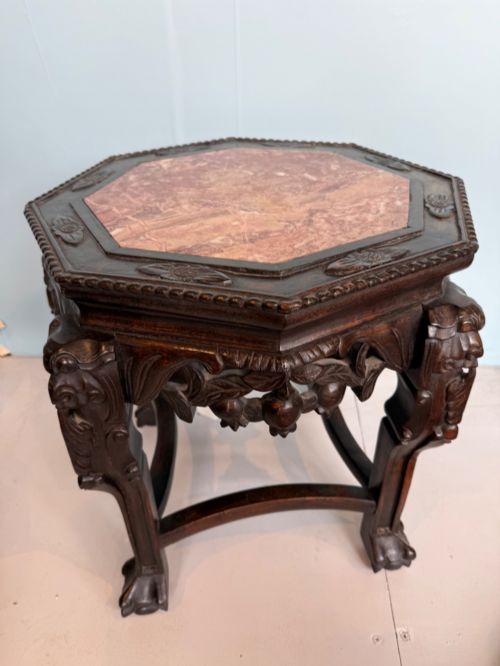
Many surfaces incorporate inset panels of rouge marble, providing a cool, stable surface resistant to water and soil spillage from potted plants. Decorative elaboration often involves mother-of-pearl inlay or intricate hand-carving depicting traditional motifs.
Additional detailing occasionally integrates painted timber and brass elements to accent the primary hardwood structure. Surface finishes were traditionally rubbed to a soft sheen that highlights the natural grain variations of the timber.
Current listings feature nineteenth-century pieces incorporating marble, brass, and mother-of-pearl across various regional styles.
Evaluating Craftsmanship
Quality rests significantly upon the depth and crispness of the hand-carving executed across the apron and legs. Superior items display undercut detailing and well-defined motifs rather than shallow, mechanical incisions.
The choice of secondary materials marks another distinction, seen in the selection of figured hardwood and the precise fitting of inset marble tops. Tight joints and substantial timber weight indicate careful workshop production intended to support heavy ceramic vessels securely.
Proportion and structural integrity define the most successful examples, where balanced legs and stable frames prevent tipping. The integration of decorative elements like mother-of-pearl inlay requires precise placement to achieve lasting visual harmony.
The Rosewood Flower Stand Glossary
- Jardiniere stand
- A tall or low support specifically constructed to hold a decorative plant pot or ceramic bowl.
- Marble top
- An inset stone slab fitted into the upper surface of a table or stand to provide a durable display area.
- Hongmu
- A dense, heavy Chinese hardwood prized for its dark red-brown tone and suitability for intricate carving.
- Torchere
- A tall ornamental stand originally designed to support a candle or light fixture, later adapted for floral displays.
- Mother-of-pearl inlay
- Iridescent shell fragments embedded into timber surfaces to form decorative patterns and pictorial designs.
Rosewood Flower Stand: Frequently Asked Questions
What is a rosewood flower stand used for?
These pieces serve to elevate potted plants, ceramic jardinières and decorative vases within a room. Their sturdy construction provides a stable display platform that protects flooring from moisture.
Historically, they functioned as central decorative elements or corner accents in nineteenth-century interiors. Today, they continue to support botanical displays while adding structural interest to living spaces.
How do I identify a Qing Dynasty stand?
Qing Dynasty stands typically feature dense tropical hardwoods such as hongmu or rosewood combined with traditional Chinese joinery. Look for characteristic carved motifs, inset marble panels and proportions suited for ritual objects or plants.
Many pieces from this tradition date from the nineteenth century and reflect classic export or domestic design standards. Examining the underside and joint construction often reveals the hand-worked nature of the period.
Are these stands strong enough for heavy pots?
The dense hardwoods utilised in these pieces provide high structural strength capable of supporting substantial ceramic vessels. Inset marble tops offer an especially resilient surface that withstands weight and occasional water spills.
Construction methods rely on robust framing and heavy timber legs designed to bear downward pressure securely. Owners can safely place weighty ceramic planters on these tables without risking structural failure.
How do I care for a marble top?
Maintaining marble inset panels involves wiping surfaces clean with a damp cloth and avoiding harsh chemical cleaners. Using protective mats under heavy or damp pots prevents moisture rings and scratches on the stone.
Applying a neutral stone sealer periodically helps protect the polished finish from stains. Regular dusting keeps the surrounding hardwood frame and the stone panel looking well-maintained.