


Carved Rosewood Urn Table
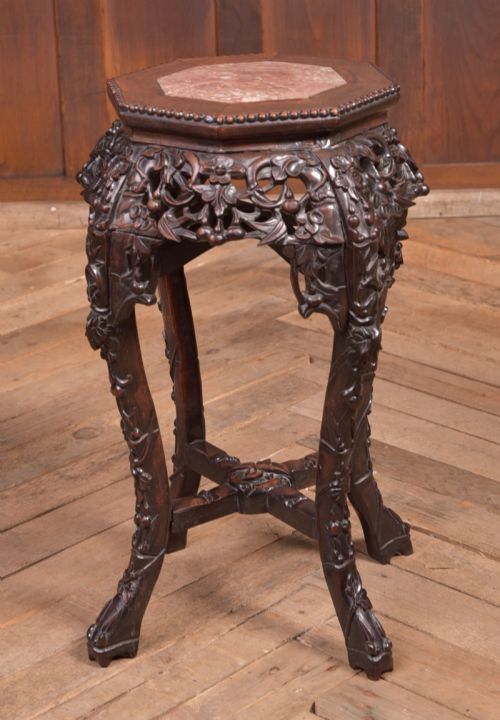
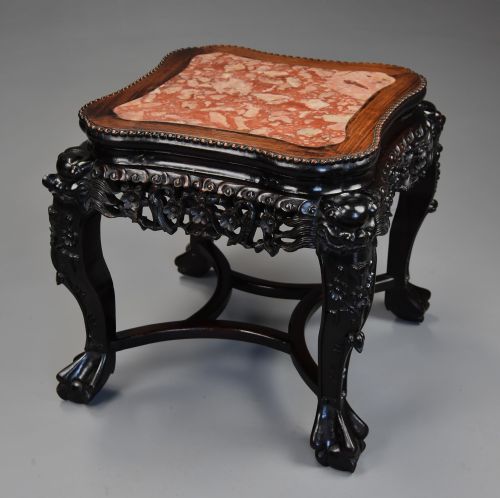
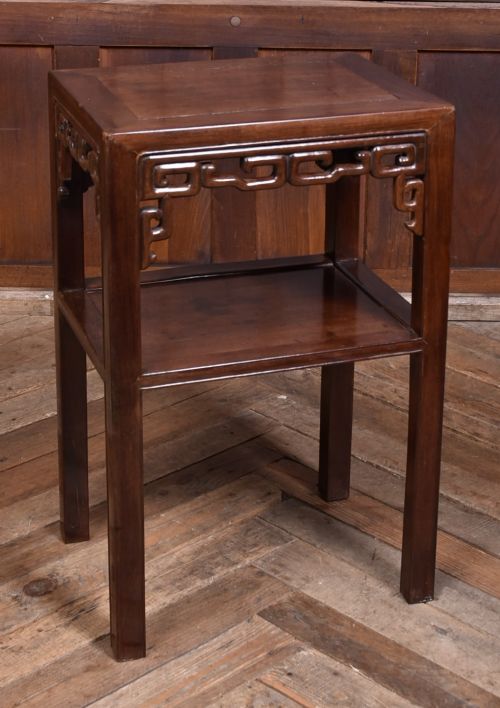
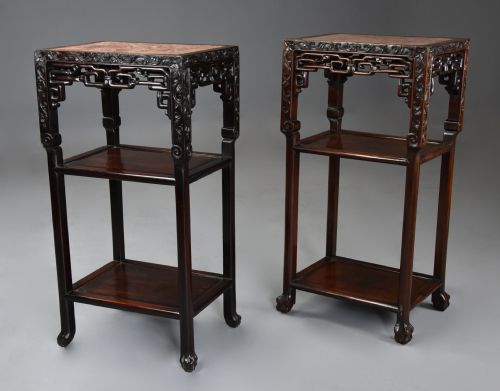
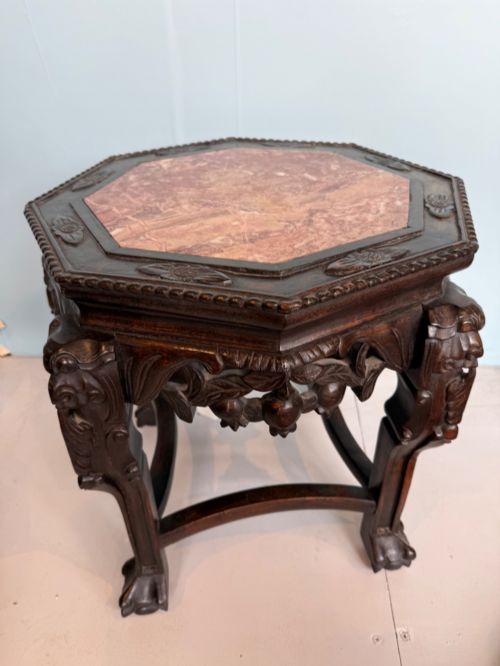
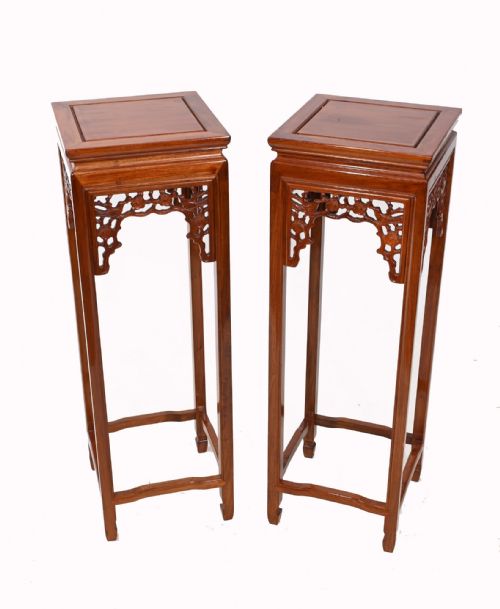
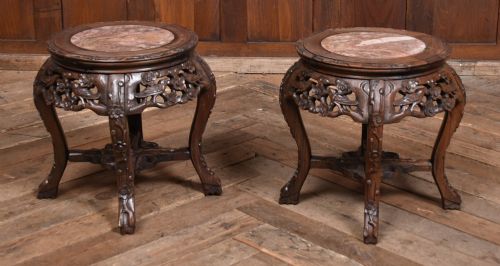
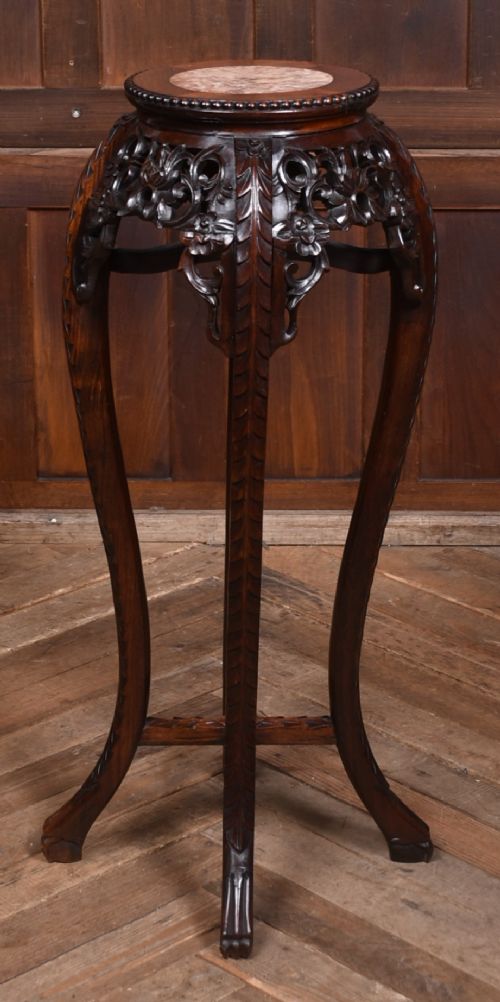
These carved rosewood urn table examples are compact hardwood supports designed to display decorative vessels and plants.
Carved Rosewood Urn Table
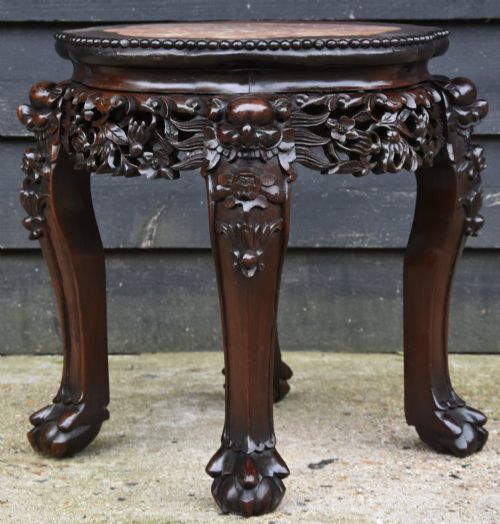
A carved rosewood urn table typically appears as a low table, plant stand, jardiniere stand, or pedestal originating from Chinese export production and the Qing Dynasty. Makers fashioned these pieces from dense tropical timbers to hold heavy ceramic vessels, vases, and decorative urns in domestic interiors.
The specimens seen on this page span the nineteenth century through the Edwardian period, encompassing Victorian imports and Chinese traditional forms. Buyers encounter square, rectangular, and hexagonal formats, frequently incorporating inset stone surfaces suited for holding damp plant pots.
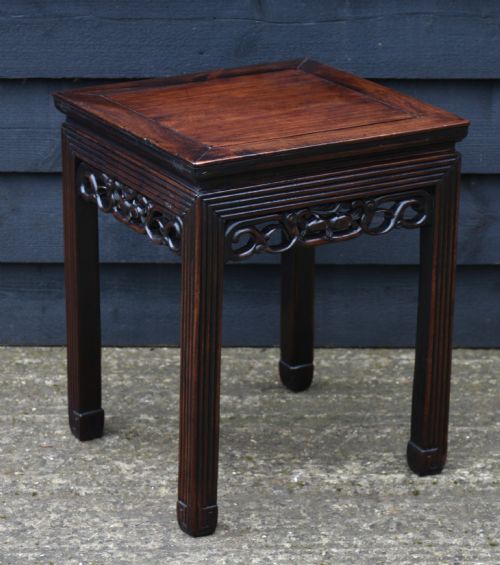
Many examples function as side tables or occasional tables alongside their primary role as jardiniere supports. The construction reflects traditional joinery methods applied to exotic hardwoods imported into British and international markets during the nineteenth century.
How they were made
Craftsmen shaped these items from solid rosewood, padouk, hongmu, and general oriental hardwoods, often selecting heavy timbers capable of supporting substantial weight. Artisans carved intricate floral motifs, foliage, and scrolling details directly into the dense material.
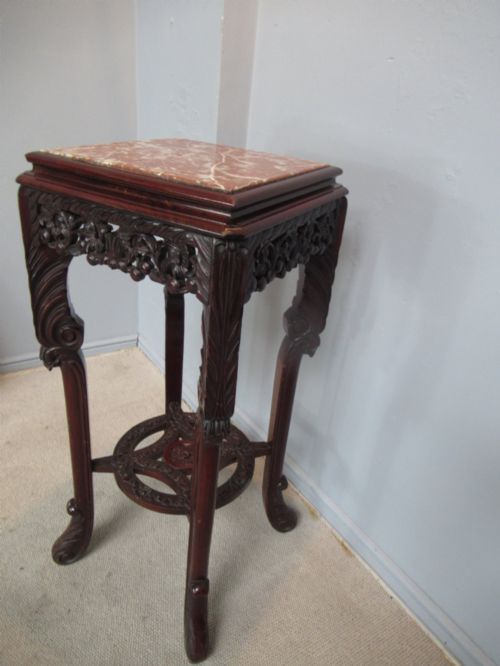
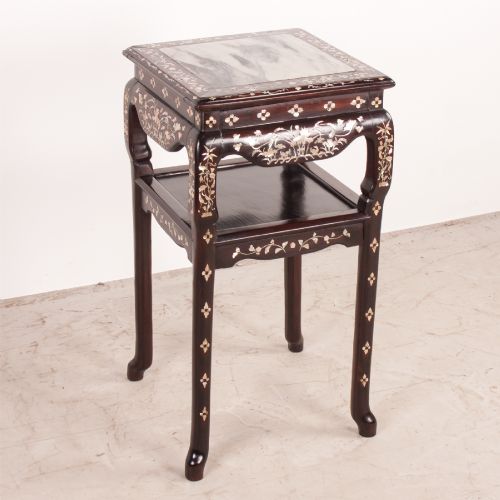
Many tables incorporate inset slabs of smooth marble or rouge marble fitted precisely into the timber frames to provide a durable, water-resistant surface. Specific pieces also integrate mother-of-pearl inlay into the hardwood panels to create contrasting decorative patterns.
Listings feature items spanning the nineteenth century, the Victorian era, and the Edwardian period.
What varies in quality
Quality depends upon the crispness of the hand carving and the selection of the primary timber. Denser hardwoods like hongmu and solid rosewood display sharper sculptural detail than softer or mixed utility woods.
The integration of the marble insert dictates the standard of the piece, with tightly fitted, unblemished stone indicating superior manufacturing. Well-executed joinery without excessive metal reinforcement separates standard commercial items from finer workshop productions.
The Carved Rosewood Urn Table Glossary
- Rosewood
- A dense, heavy timber prized for its dark grain and durability in fine furniture. Artisans utilised this material for carved stands and tables destined for formal interiors.
- Jardiniere
- An ornamental pot or stand for holding plants and flowers. These vessels sat atop pedestals and low tables within nineteenth-century reception rooms.
- Hongmu
- A traditional Chinese term denoting red wood or dense tropical hardwoods. Workshops employed these heavy timbers for Qing Dynasty furniture and export items.
- Padouk
- A durable reddish timber imported from Asian and African regions. Cabinetmakers turned this material into sturdy stands and occasional tables.
- Inlay
- A technique where contrasting materials such as mother-of-pearl are embedded into the wood surface. This ornamentation appears on specific nineteenth-century Chinese occasional tables.
Carved Rosewood Urn Table: Frequently Asked Questions
What is a carved rosewood urn table used for?
These tables served primarily as elevated platforms for heavy ceramic jardiniere pots, urns, and decorative vases in nineteenth-century interiors. The sturdy hardwood frames and stone inserts protected underlying carpets and furniture from moisture.
Today, owners utilise these compact stands as occasional lamp tables, coffee tables, or plant display pedestals in smaller domestic spaces.
How do you identify a Qing Dynasty stand?
Qing Dynasty stands display traditional Chinese carving motifs, including floral panels, scrolling foliage, and pierced aprons executed in dense hardwoods. The presence of huali or hongmu timber combined with traditional joinery points to this origin.
Many examples feature inset marble tops designed to hold plant pots without damaging the polished wooden framework beneath.
Are all these tables made of solid rosewood?
The inventory comprises various dense oriental timbers, including solid rosewood, padouk, hongmu, and general Asian hardwoods. While many pieces feature solid rosewood construction, others utilise related tropical woods grouped under traditional hardwood classifications.
Descriptions often specify the exact timber variety alongside secondary materials like marble or mother-of-pearl.
How do I care for a marble top stand?
Marble inserts require gentle cleaning with a damp cloth to remove dust and minor marks without abrasive chemicals. Keeping the stone dry prevents moisture accumulation in the surrounding wooden joints.
Treat the rosewood frame with appropriate furniture wax periodically to maintain the timber finish and protect against environmental dryness.