

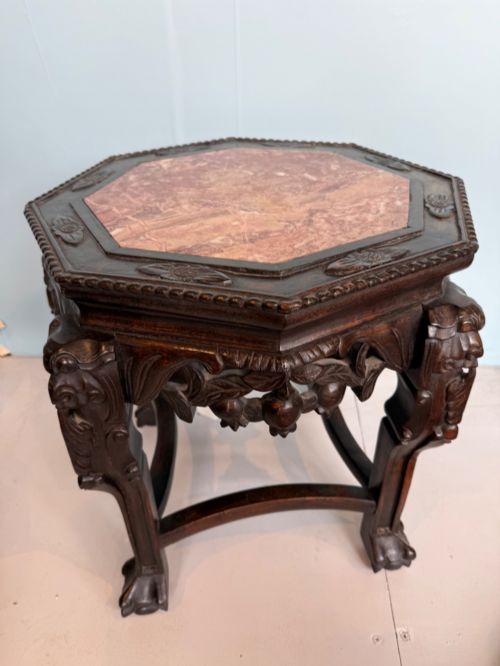
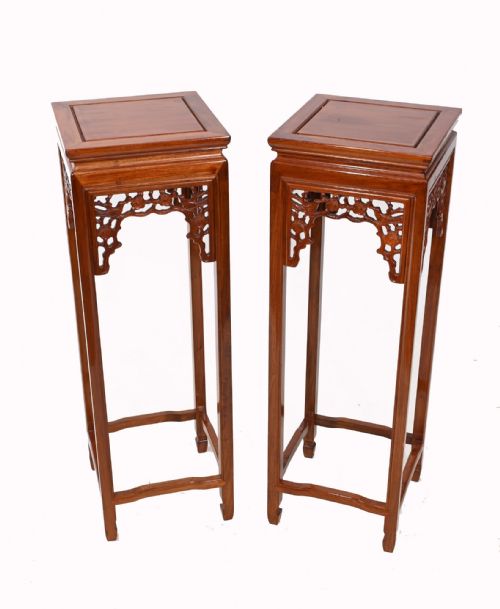
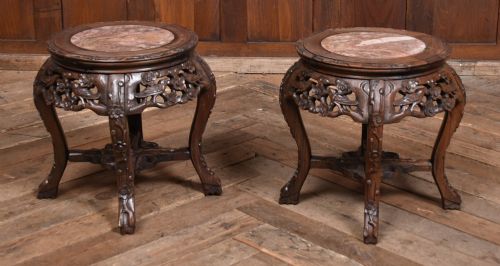
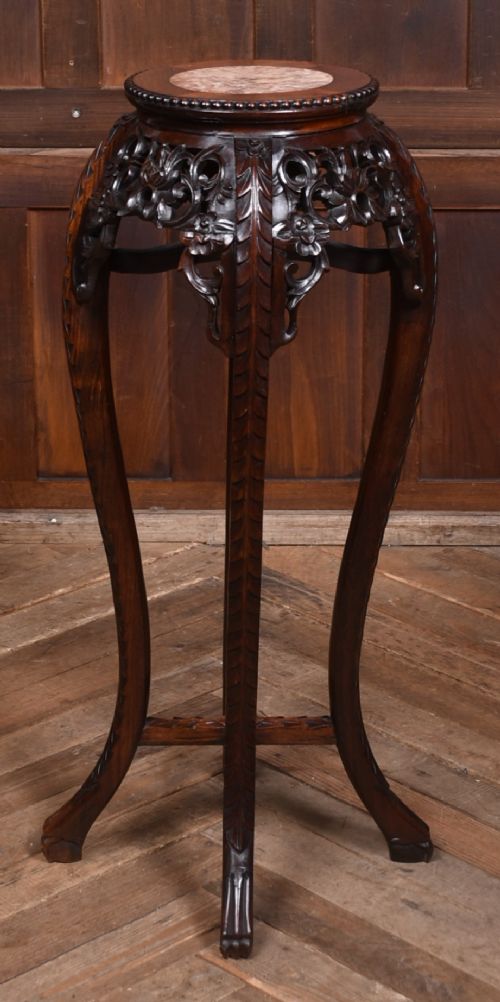


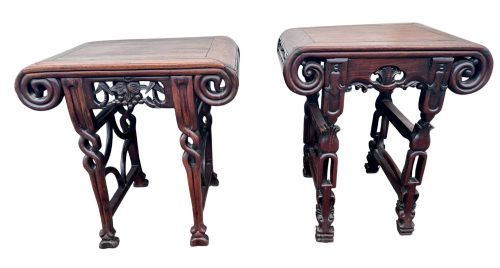


Chinese Carved Pedestal
A chinese carved pedestal brings tactile depth and historic presence to a room, holding plants or vessels with carved authority.
Chinese Carved Pedestal
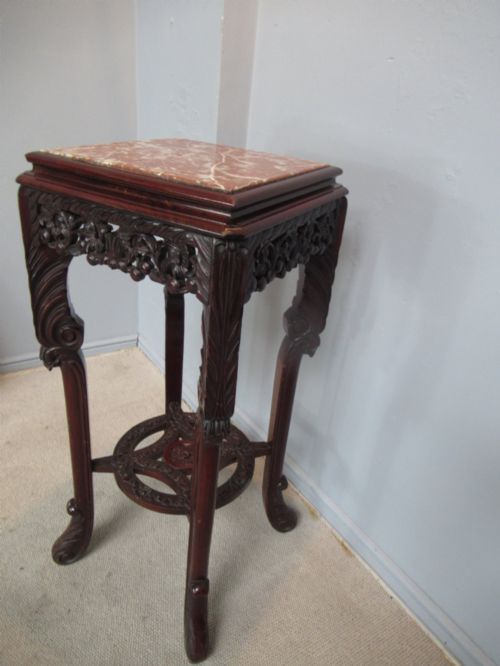
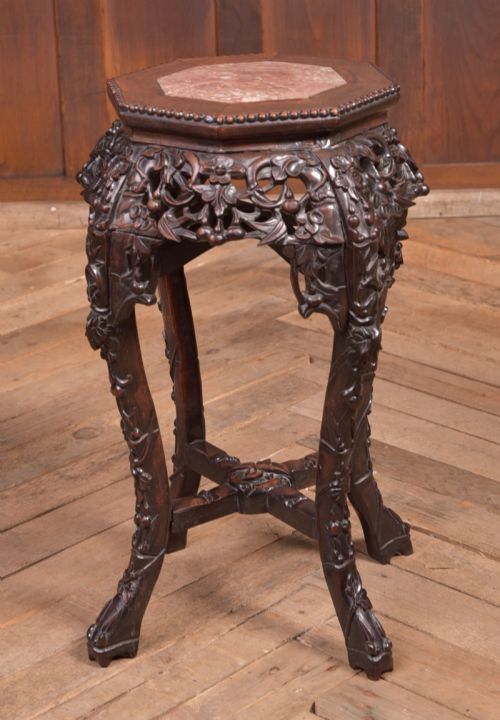
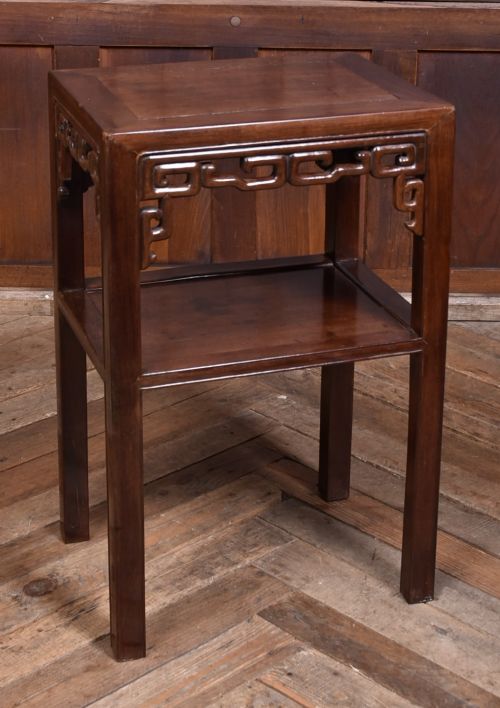
A chinese carved pedestal serves primarily to elevate objects such as vases, planters, and sculptures within a room. These supports appear predominantly as plant stands, jardiniere stands, and occasional tables originating from the nineteenth and early twentieth centuries. The version most commonly met on this page is the freestanding hardwood stand featuring an inset marble top.
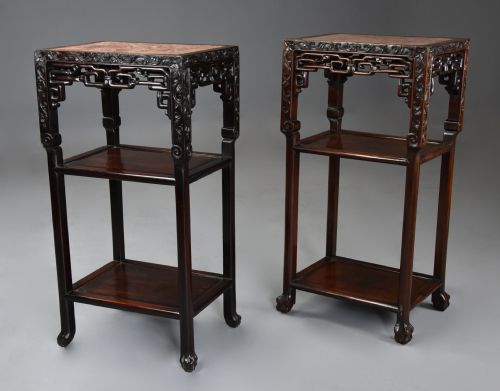
Makers and workshops structured these forms during the Qing dynasty and the subsequent transition into the early twentieth century. Designs range from rectangular and circular pot stands to tall torchère forms and low side tables. Buyers encounter single pieces as well as matched pairs suited for symmetrical interior display.
Materials and construction methods
Artisans built these supports using dense timbers native to the region, including hardwood, rosewood, padouk, hongmu, and rootwood. These heavy woods provided the structural integrity required to support elaborate hand-carving without warping or yielding under weight.
Workers integrated contrasting inlays and decorative surfaces into the timber frame, utilising marble, quartz, mother-of-pearl, and brass details. Surfaces occasionally received polychrome paint or lacquer finishes to accentuate the carved relief and figural motifs.
Listings feature items dated from the eighteenth to the early twentieth century, encompassing the Qing dynasty and Victorian eras.
Judging the quality of a chinese carved pedestal
Depth and crispness of the hand-carving distinguish finer examples from simpler production. Superior pieces display undercut foliage, dragons, or pierced woodwork with distinct, sharp contours rather than soft or shallow incisions.
The choice of secondary materials and joinery integrity define the upper tier. Heavy, unblemished inset marble or quartz slabs tightly fitted to dense hardwood frames indicate superior workshop standards.
The Chinese Carved Pedestal Glossary
- Hardwood
- Dense, slow-growing timber selected for traditional furniture and stands. It resists heavy carving pressure and provides a dark, durable foundation.
- Jardiniere stand
- A tall piece of furniture designed specifically to hold a ceramic plant pot or flower bowl. These stands typically feature elevated platforms and waterproof inserts.
- Marble top
- A polished stone slab inset into the wooden surface of a table or stand. This feature provides a cool, stable resting place for decorative vessels.
- Padouk
- A heavy, durable reddish-brown timber utilised in fine Asian furniture. It darkens naturally over time with exposure to light.
- Torchère
- A tall, slender stand or pedestal designed to support a lamp or single display object. The form originates from European lighting stands but appears frequently in far eastern export production.
Chinese Carved Pedestal: Frequently Asked Questions
What is a chinese carved pedestal used for?
These supports hold decorative items such as ceramic vases, planters, lamps, and sculptures. They elevate objects to eye level to highlight their craftsmanship within a room.
Historically, scholars and collectors used them to display prized natural specimens, scholar rocks, and exotic plants. Today, they function similarly in domestic interiors as accent furniture.
How do I identify a nineteenth century piece?
Nineteenth-century examples display traditional Qing dynasty joinery, dense timbers like hongmu or padouk, and hand-carved floral or dragon motifs. The patination on the wood often shows deep, natural lustre developed through decades of handling.
In-person inspection reveals traditional construction methods without modern metal fasteners. The presence of natural ageing on both the timber and any inset marble or quartz top confirms the period.
Can these stands support heavy plants?
Hardwood and padouk stands possess significant structural density designed to bear substantial weight. Their robust frames easily accommodate heavy ceramic jardinieres and large potted plants.
However, delicate rootwood or inlaid surfaces require careful placement to avoid surface scratching or strain. Checking the stability of the legs and joints ensures safe daily use.
What is the difference between a plant stand and a jardiniere stand?
Plant stands and jardiniere stands both elevate greenery, but jardiniere stands often feature inset marble or stone tops specifically designed to withstand moisture. Plant stands may utilise solid timber tops suitable for dry pots or sculptural objects.
In practice, makers used the terms interchangeably during the nineteenth century. Both fulfill the same functional role within traditional and export interiors.