


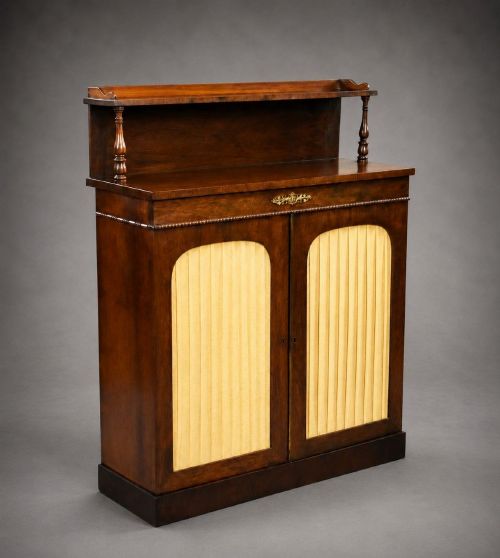


Rosewood Cupboard Shelf
These rosewood cupboard shelf pieces bring rich timber figures and enclosed display to period interiors.
Rosewood Cupboard Shelf
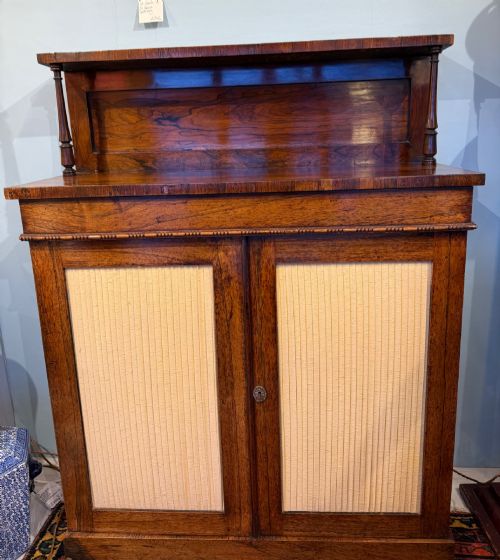
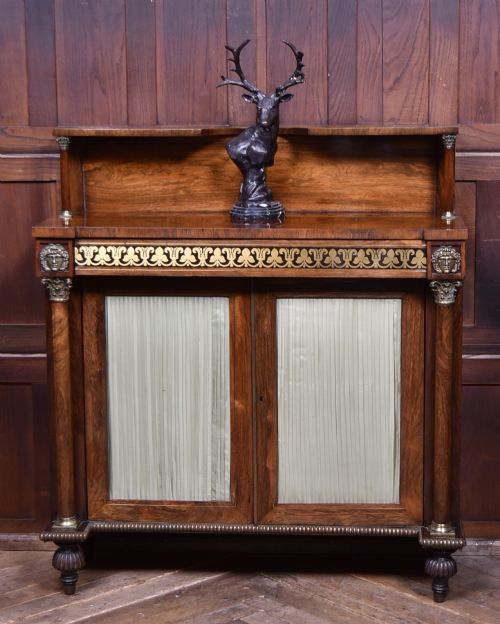
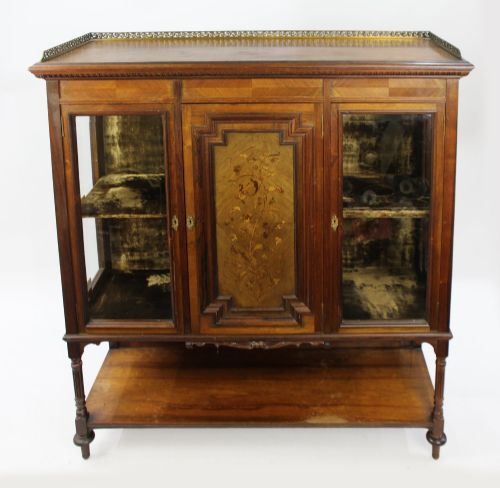
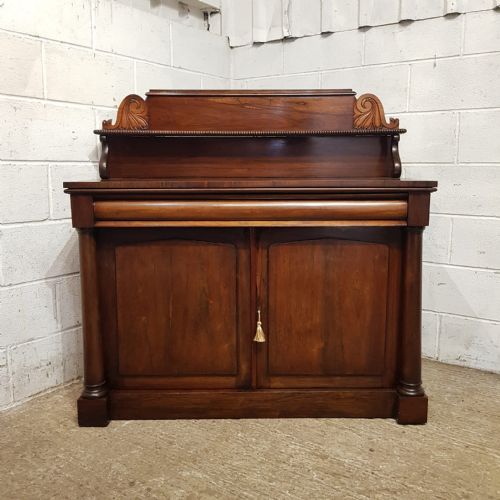
A rosewood cupboard shelf combines lower enclosed storage with upper display surfaces, appearing frequently as chiffoniers, side cabinets, and bookcases across this selection. These forms span the Regency, Victorian, and Edwardian eras, alongside a Japanese shodana cabinet and mid-nineteenth century open bookcases.
Buyers encounter early nineteenth century Regency examples alongside later Victorian and Edwardian iterations, reflecting shifts from grand brass inlay to simulated grain finishes and inlaid details. The underlying forms serve varied domestic functions, functioning equally as corner cabinets, display cabinets, and sideboards.
Makers from Gillows emerge in connection with these forms, anchoring the tradition of high craftsmanship within the nineteenth century records. Each piece demonstrates how cabinetmakers integrated shelving with cupboard storage to suit changing interior demands.
Construction and materials
Makers utilised solid rosewood and wood veneers over secondary hardwoods, incorporating brass inlay and simulated grain finishes to achieve varied aesthetic effects. Surface decoration frequently involved painted treatments and fine inlay work, particularly on late Victorian and Edwardian examples.
Structural elements accommodated fabric panels and glass doors where display was required, balancing the dense weight of the primary timber with lighter glazed or open sections. Original grained finishes and brass mounts demonstrate the technical precision applied by nineteenth-century workshops.
Rosewood Cupboard Shelf Retail Price Guide 2026
Typical asking prices for rosewood cupboard shelf among the pieces listed under this phrase on Sellingantiques today, from the lower quarter to the upper quarter. They describe what is for sale here now, not the wider market.
A simulated rosewood finish lets a modest timber wear a very expensive coat.
Distinctions in craftsmanship
Quality reveals itself through the crispness of brass inlay, the grain selection in rosewood veneers, and the integrity of original grained finishes. Superior examples maintain intact glass, balanced proportions, and well-executed joinery across both the enclosed cupboard and upper shelving.
The sophistication of decorative details, from simulated rosewood paintwork to attribution-linked cabinetmaking, separates standard regional work from exceptional metropolitan production. Preservation of original surfaces and hardware remains central to the standing of each piece.
Gillows
The Rosewood Cupboard Shelf Glossary
- Chiffonier
- A low cabinet featuring enclosed cupboards below and shelves above, frequently utilised for serving or display in nineteenth-century interiors.
- Simulated rosewood
- A painted or grained surface finish applied to alternative timbers to imitate the rich dark figuring of genuine rosewood.
- Shodana
- A traditional Japanese multi-tiered display cabinet with staggered shelves and small cupboards, characteristic of Meiji period craftsmanship.
- Grained finish
- A decorative paint technique mimicking natural wood grain, often preserved on Regency period pieces.
- Veneer
- A thin layer of superior rosewood applied over a stable secondary hardwood foundation to provide decorative exterior surfaces.
Rosewood Cupboard Shelf: Frequently Asked Questions
What distinguishes a chiffonier from a side cabinet?
A chiffonier specifically pairs an enclosed lower cupboard with raised upper shelves for display. Side cabinets often present a broader surface without the distinct tiered upper superstructure.
Both forms served domestic storage and display roles across the Regency and Victorian periods, using rosewood and secondary hardwoods.
How do I date a rosewood cabinet?
Dating relies on stylistic markers such as brass inlay typical of the Regency period versus the darker, heavier proportions of late Victorian examples. Edwardian pieces often display lighter inlaid motifs.
Construction techniques, timber selection, and hardware also provide clear indicators of manufacturing eras ranging from eighteen-ten to nineteen hundred.
What is simulated rosewood?
Simulated rosewood is a painted or grained surface treatment applied to a base timber to replicate the characteristic dark grain and warm reddish-brown tones of genuine rosewood. This technique was common in Regency workshops.
Cabinetmakers utilised this method to achieve luxurious visual effects while managing material costs and timber availability.
Where were these cabinets placed in a home?
These pieces typically stood against parlour or dining room walls to store tableware, linens, or books while displaying decorative objects on upper shelves. Corner variants fitted efficiently into smaller reception spaces.
Their dual function as storage and display furniture made them central items in nineteenth-century domestic interiors.