

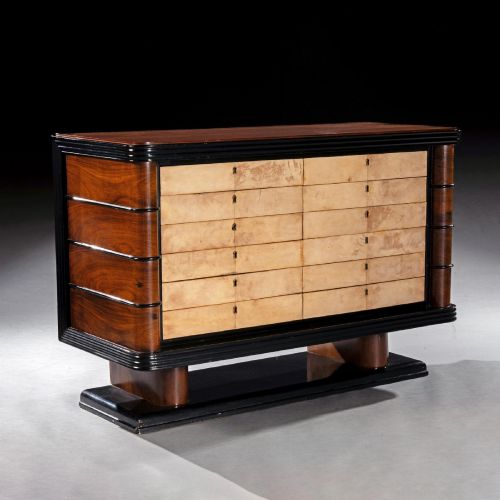
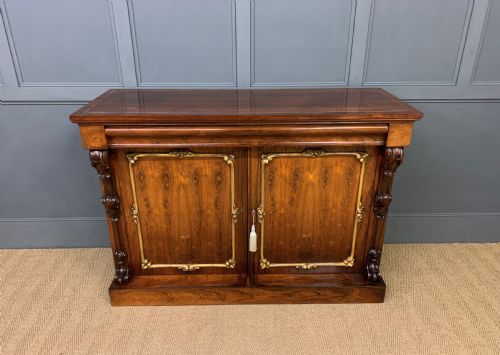
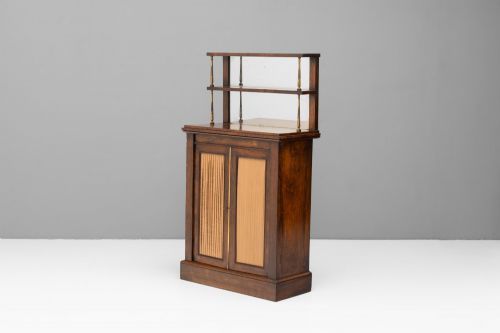
Rosewood Credenza Sideboard
A rosewood credenza sideboard brings rich timber and refined storage to a room, drawing on Regency, Victorian and William IV traditions.
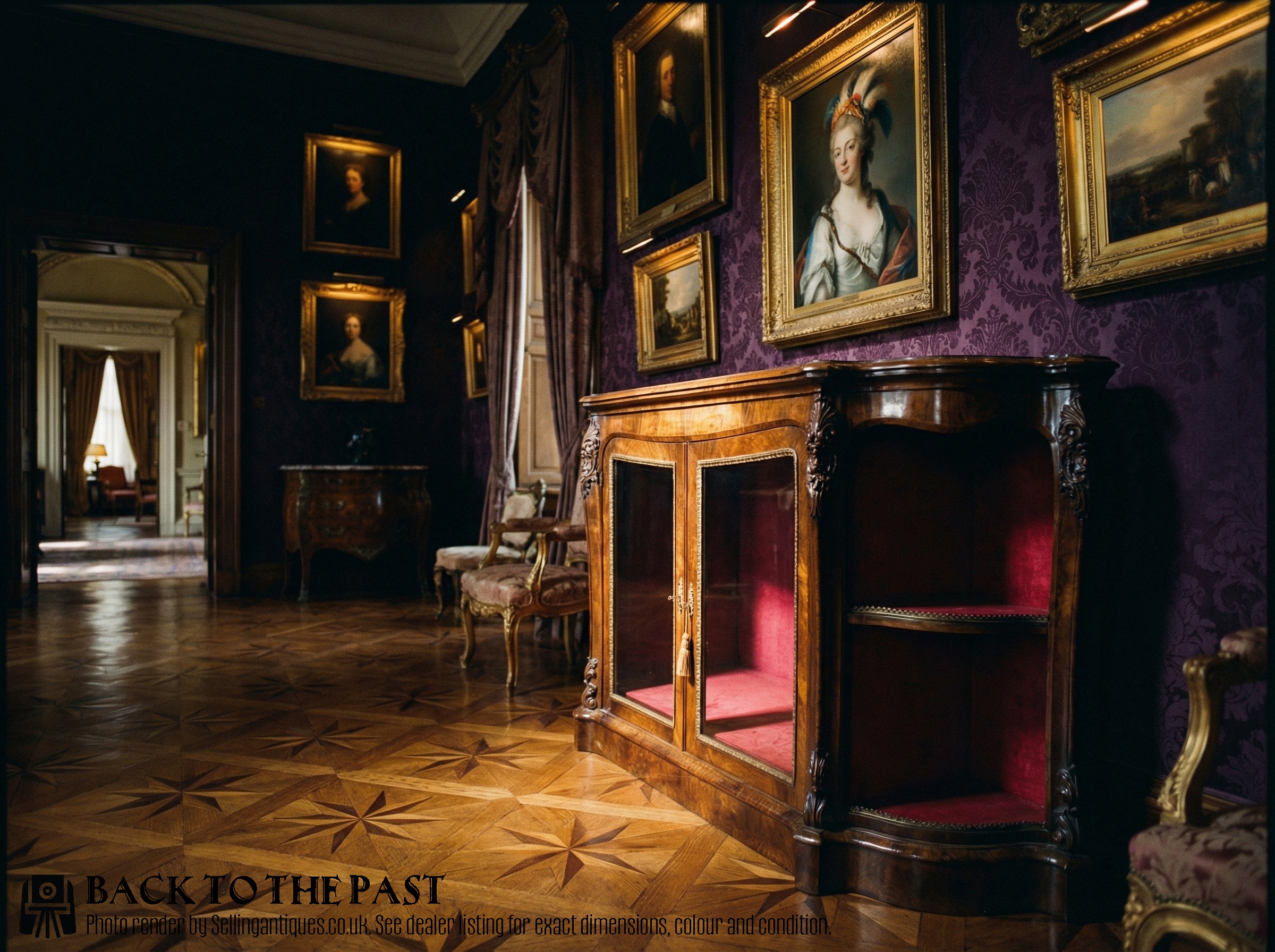
Rosewood Credenza Sideboard
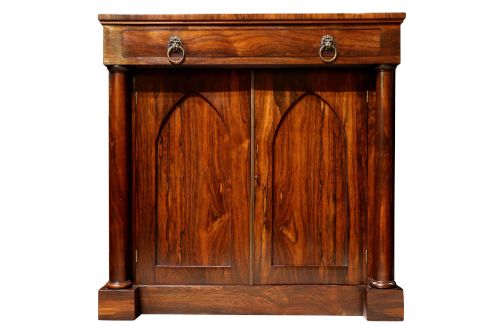
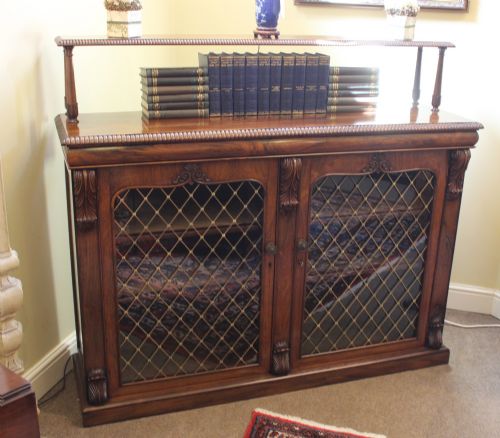
A rosewood credenza sideboard encompasses low cabinets, chiffoniers, and display pieces originating from periods including the Regency, William IV, and Victorian eras. These items served formal dining rooms and parlours to store tableware, display ornaments, and conceal household items.
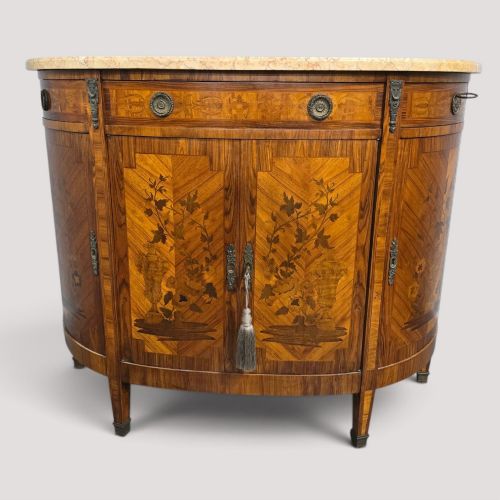
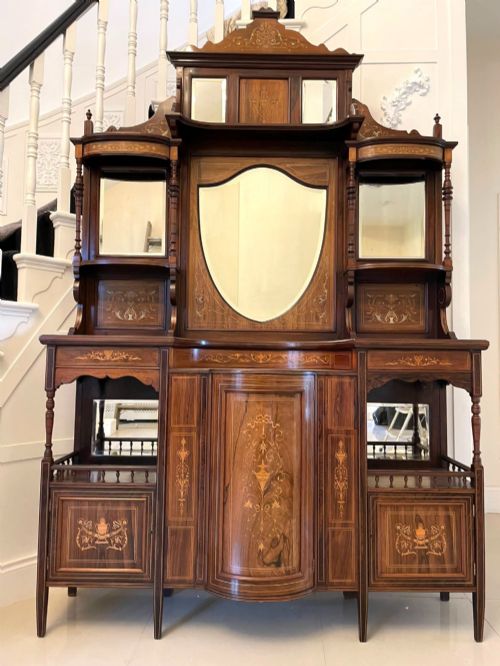
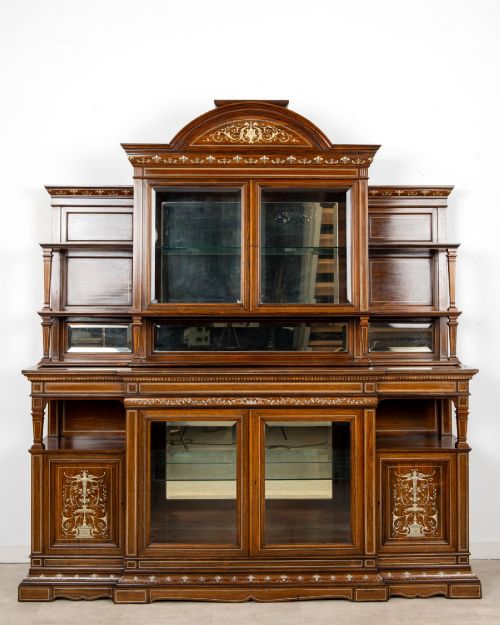
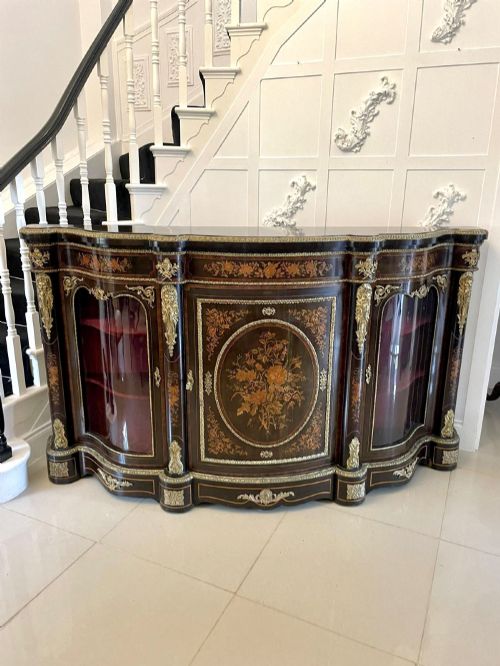
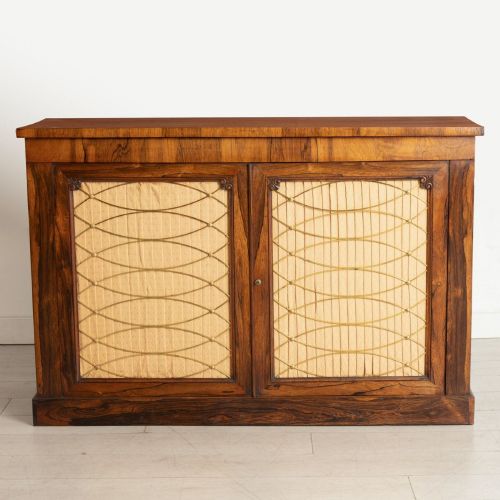
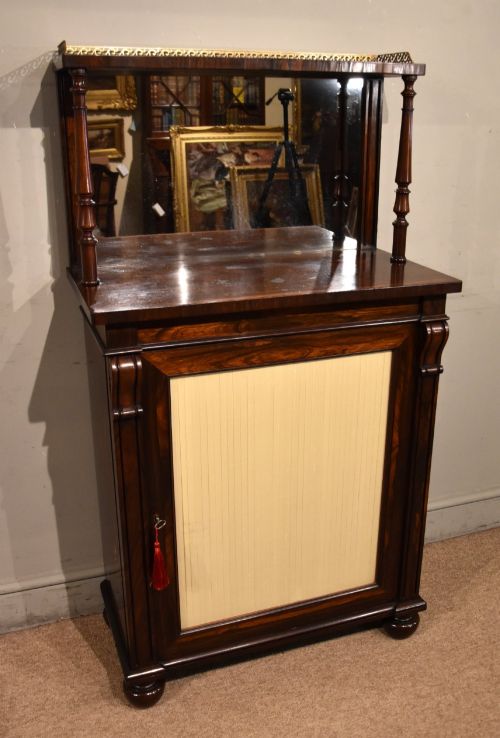
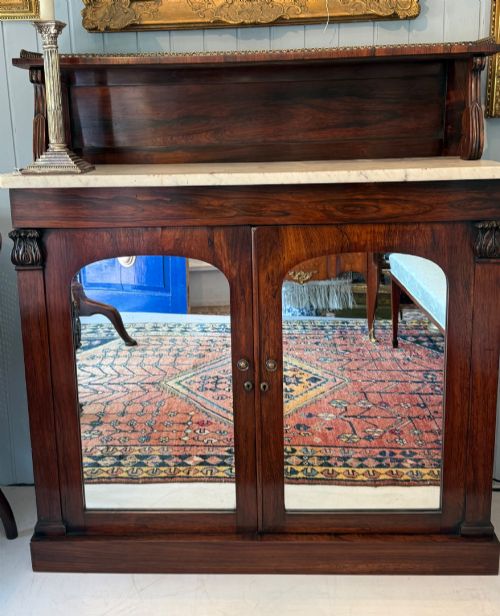
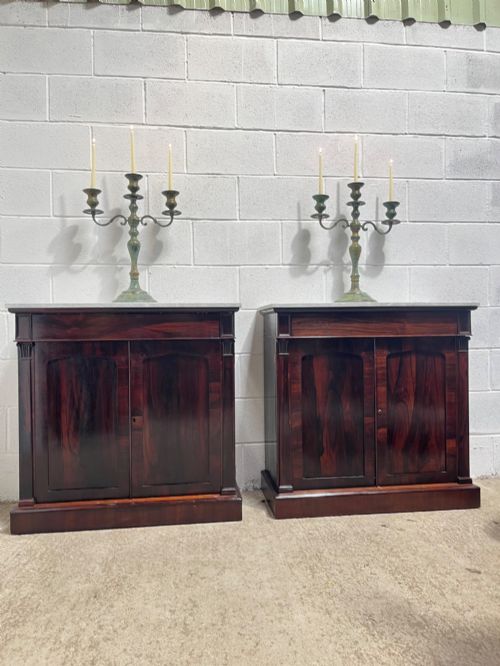
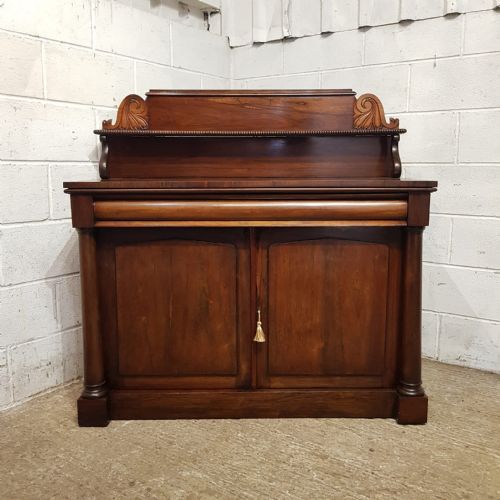
The version most commonly encountered on this page is the Victorian or Regency rosewood chiffonier or side cabinet, often featuring panelled doors or mirrored backs. Pieces range from straightforward mid-century side cabinets to elaborate serpentine credenzas equipped with marble tops and ormolu mounts.
Origins stretch from British workshops to French ateliers and Anglo-Indian makers, incorporating diverse regional interpretations of form. Makers such as Gillows, Holland & Sons, and Collinson & Lock appear among these listings, connecting pieces to documented cabinet-makers.
Materials and technique
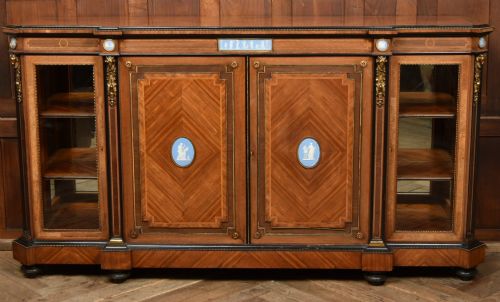
Makers utilised dense rosewood veneers applied to solid carcases, often highlighting the distinctive dark grain through French polishing. Brass inlay, marquetry, and satinwood banding decorate the surfaces, while gilt bronze or ormolu mounts accent structural corners and door frames.
Interiors frequently incorporate adjustable shelving, fabric-backed panels with pleated chiffon, and mirrored doors that reflect light within the room. White or coloured marble tops appear on select Victorian credenzas, providing a durable and decorative upper surface.
Rosewood Credenza Sideboard Retail Price Guide 2026
Typical asking prices for rosewood credenza sideboard among the pieces listed under this phrase on Sellingantiques today, from the lower quarter to the upper quarter. They describe what is for sale here now, not the wider market.
Listings feature rosewood, satinwood, and burr walnut alongside marble tops, mirrored backs, and ormolu mounts across the nineteenth century.
Evaluating craftsmanship
The standard of a rosewood credenza sideboard rests on the depth of the timber grain, the precision of brass or marquetry inlay, and the crispness of carved details. Superior examples exhibit seamless veneer matching across curved serpentine fronts and doors that hang true without sag.
Hardware execution dictates overall grade, distinguishing mass-produced items from workshop pieces with hand-chased ormolu mounts and original brass grilles. The integration of secondary timbers and the retention of original glass or marble further separate standard production from exceptional furniture.
Collinson & Lock·Holland & Sons·Gillows
The Rosewood Credenza Sideboard Glossary
- Chiffonier
- A compact sideboard or cabinet featuring a raised shelf or superstructure on top, common in Regency and Victorian interiors. Doors often enclose fabric-pleated panels or plain wood.
- Ormolu
- Gilded bronze mounts applied to furniture for decorative effect. This technique was favoured by cabinet-makers to accent corners and borders on formal Victorian pieces.
- Marquetry
- The art of forming decorative patterns using thin veneers of different coloured woods. Craftsmen cut pieces to fit into geometric or floral designs across door panels and tabletops.
- Serpentine
- A curved furniture front shaped in a convex-concave-convex wave line. This profile requires skilled carpentry and precise veneer work to follow the sweeping contours.
Rosewood Credenza Sideboard: Frequently Asked Questions
How do I date a rosewood sideboard?
Dating relies on stylistic markers such as classical brass inlay from the Regency period or heavy serpentine marble configurations typical of Victorian production. Construction methods inside the drawers also provide clues to the decade of manufacture.
Secondary woods visible inside and the specific cut of the rosewood veneer help narrow down whether a piece originates from the early nineteenth century or the later Victorian decades.
Where were these cabinets placed originally?
These pieces stood against dining room walls to hold silver, linen, and glassware, or served in drawing rooms to display porcelain and books.
Their low profiles allowed them to sit beneath windows or mirrors without blocking light or obstructing movement around formal reception rooms.
Can I use a credenza for modern storage?
Interior depths and adjustable shelving make these cabinets suitable for housing modern media equipment, tableware, or paperwork in contemporary living spaces.
Care should be taken to measure internal cabinet clearances before storing bulky items behind antique panelled or glass doors.