
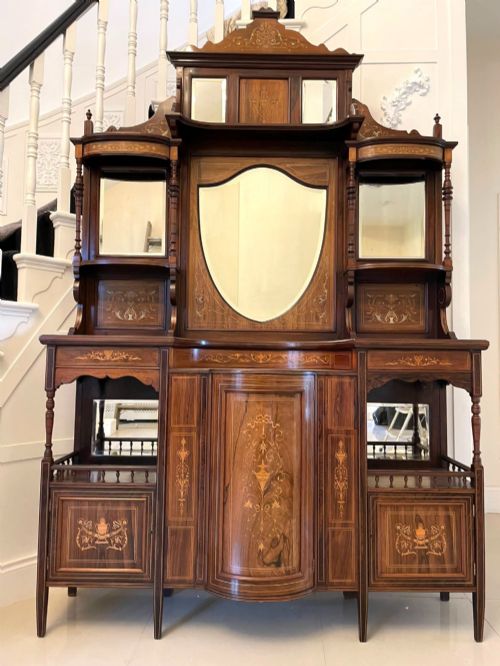
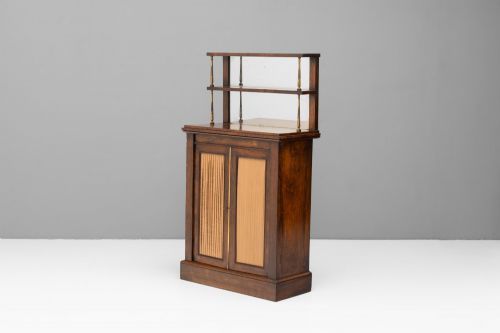


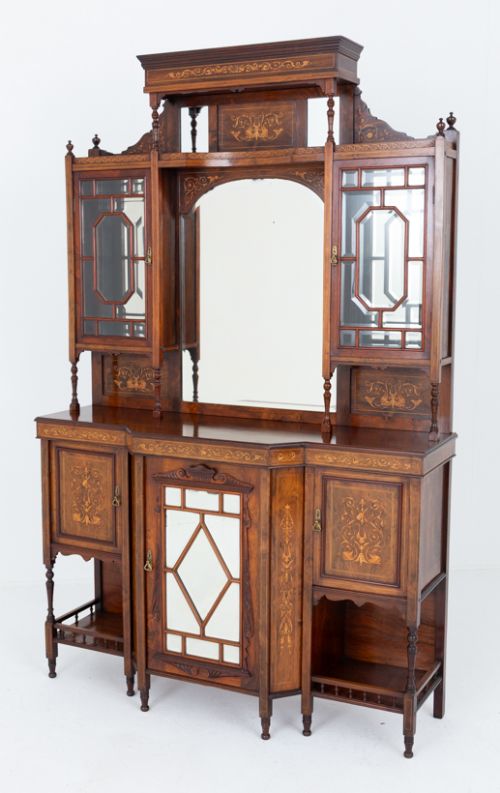


Rosewood Display Chiffonier
These rosewood display chiffonier examples combine rich timber with practical display, offering both storage and a surface for ornaments.
Rosewood Display Chiffonier
A rosewood display chiffonier combines the enclosed storage of a traditional base cabinet with open shelving or glazed display areas above. These pieces emerge from the 19th Century, spanning Regency, Victorian, and Edwardian periods.
The version most commonly met on this page is the Victorian or Regency side cabinet incorporating glass doors, mirrored backs, or open bookshelves. Makers often integrated marble tops, fabric linings, or specialised compartments for books and display items.
Formations vary from compact corner cabinets and neat bookcases to large breakfront sideboards and mirrored parlour cabinets. The underlying structure frequently bridges multiple categories such as sideboards, credenzas, and bookcases.
Distinctions in Quality and Execution
Quality rests upon the precision of the cabinetwork, particularly the execution of the inlay, the tightness of the joinery, and the selection of figured rosewood veneer. Finer examples display meticulous attention to detail in brass work, marquetry, and painted elements.
The refinement of proportions and the integrity of original glass, mirrors, and hardware distinguish high-end cabinet making from standard production. Pieces bearing attribution to known makers often demonstrate superior structural ambition and artistic coordination.
Some Victorian parlour cabinets double as mobile art galleries, fitted with tiny shelves specifically designed for miniature ceramic figurines.
Collinson & Lock·Howard and Sons·James Plunckett
The Rosewood Display Chiffonier Glossary
- Chiffonier
- A low sideboard or cabinet, traditionally featuring enclosed lower doors and often surmounted by shelving or a mirror.
- Marquetry
- Decorative veneer work forming intricate patterns or pictures using various woods and other materials.
- Palisander
- A dense, dark tropical timber belonging to the rosewood family, prized for its rich grain and colour.
- Breakfront
- A piece of furniture whose central section projects forward from the flanking sections.
- Credenza
- An elegant sideboard or display cabinet typically standing low to the floor, often fitted with doors or glass panels.
Rosewood Display Chiffonier: Frequently Asked Questions
What is a rosewood display chiffonier?
A rosewood display chiffonier is a 19th-century low cabinet made from dense rosewood timber, combining closed storage with open shelves, glass doors, or mirrored sections.
These pieces served as functional furniture for dining rooms and parlours, providing both a surface for serving and a place to exhibit prized household objects.
How do I identify a Regency period piece?
Regency pieces typically date from the early 19th century and feature restrained classical lines, often accented with brass inlay or mounted grilles.
Look for balanced proportions, neat open bookcases, and clean architectural forms that distinguish the Regency aesthetic from later Victorian ornamentation.
Where were these cabinets placed in a home?
They were traditionally positioned against walls in principal entertaining spaces such as drawing rooms, dining rooms, and parlours.
The inclusion of mirrored backs and glass panels helped reflect light and showcase porcelain, books, or decorative objects within the room.
How do I care for antique rosewood surfaces?
Keep rosewood furniture out of direct sunlight and away from extreme temperature fluctuations to prevent the timber and veneer from drying out.
Dust gently with a dry, soft cloth and avoid commercial silicone polishes that can damage the historical polish of the wood.