
Georgian Open Shelf Cabinet
A georgian open shelf cabinet brings architectural rhythm to a room, offering display space that turns stacked volumes into a focal point.
Georgian Open Shelf Cabinet
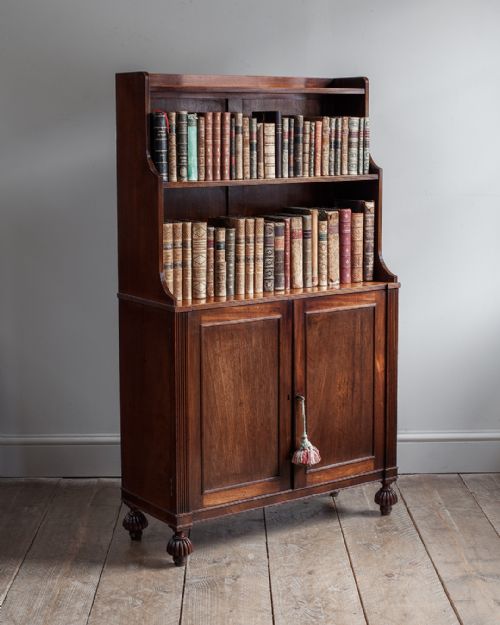
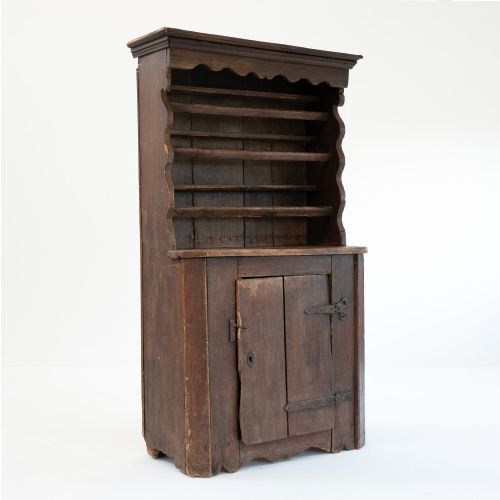
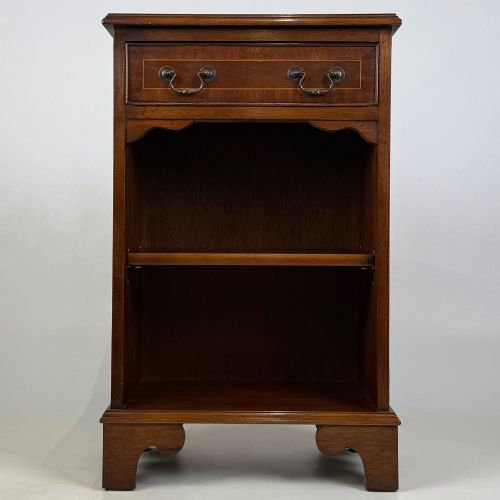
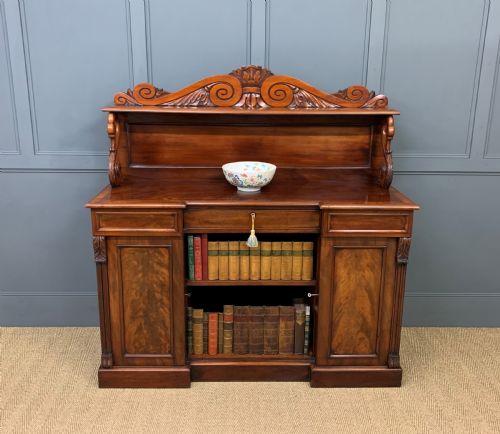
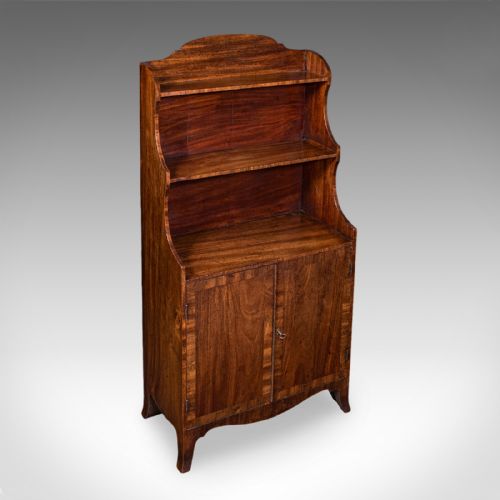
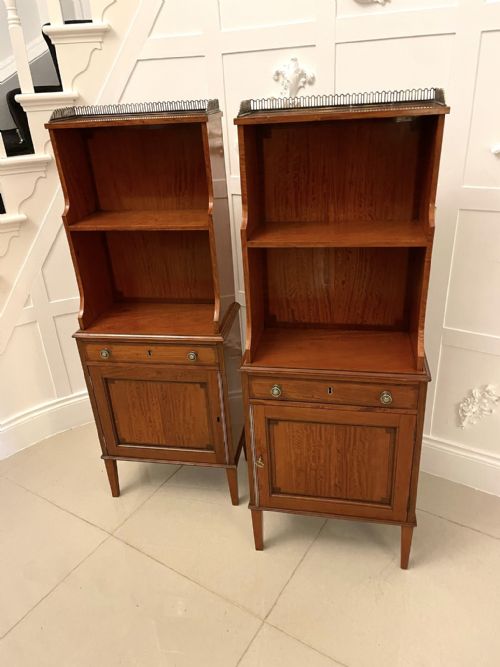
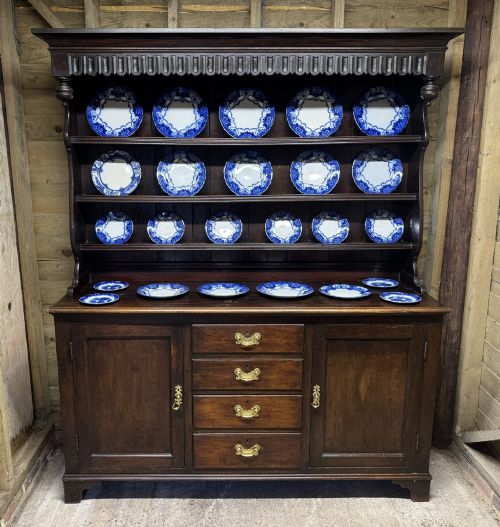
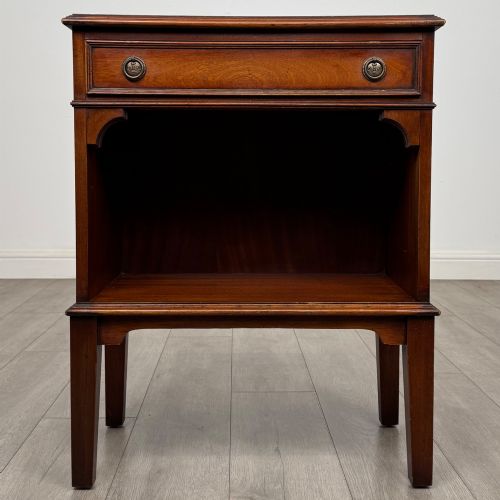
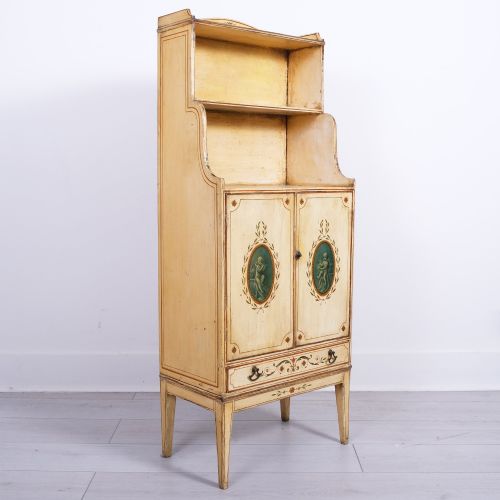
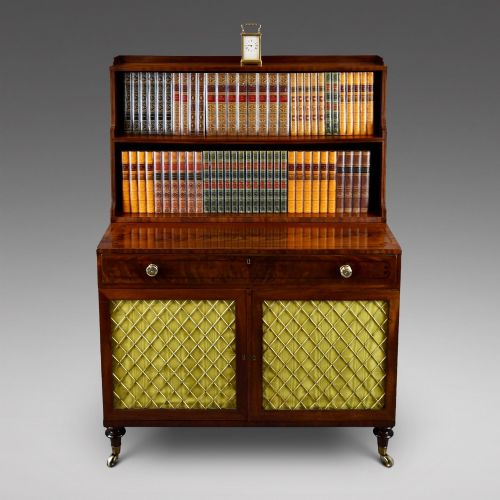
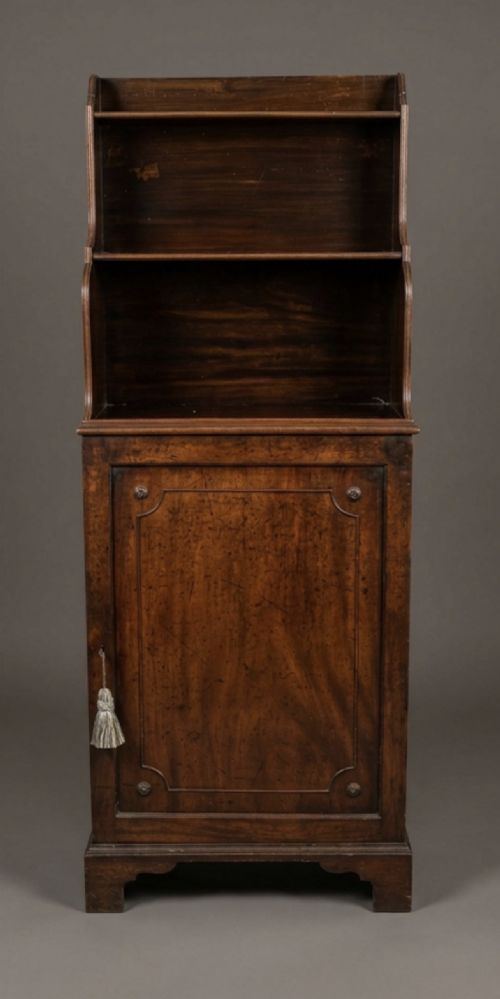
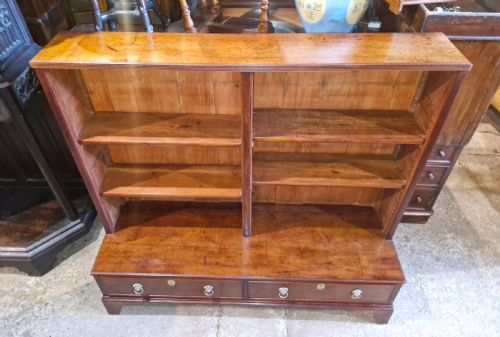
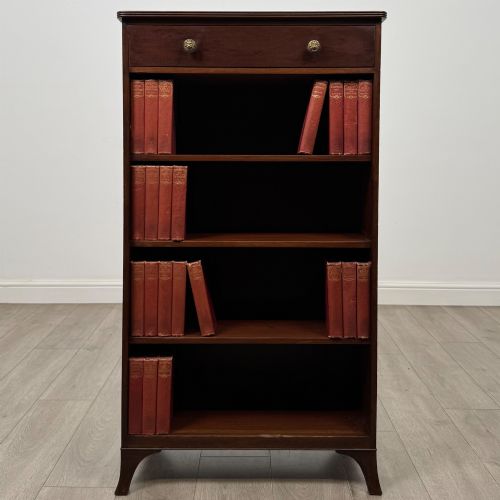
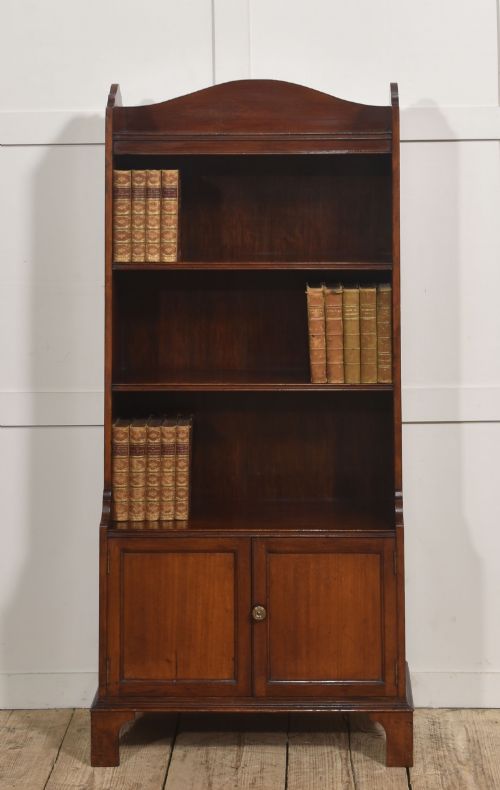
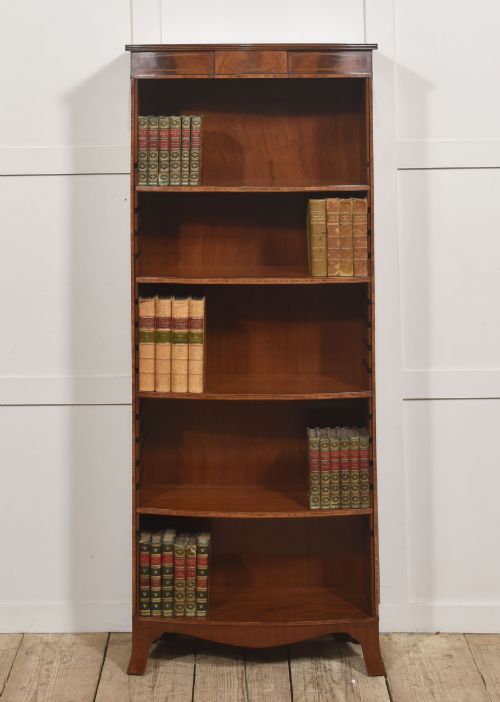
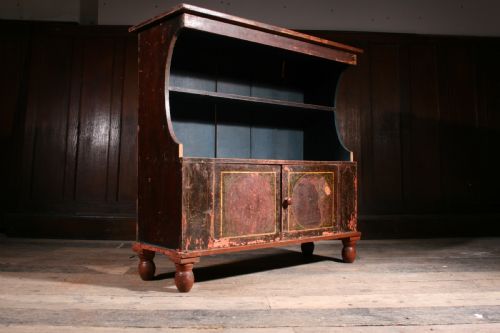
When you search for a georgian open shelf cabinet, you encounter bookcase and shelving formats spanning the 18th century, Regency period, and later revival years. The forms range from dwarf bookcases and chiffoniers with cupboard bases to tall open display shelves and waterfall tiers.
Mahogany predominates, alongside rosewood, oak, satinwood, and painted finishes. Many examples incorporate glazed or panelled doors below open upper tiers, merging enclosed storage with accessible display space.
Construction and materials
Cabinet makers utilised dense timber stocks, notably mahogany and flame mahogany, often pairing figured veneers with solid secondary woods like pine and oak. Brass details appear on Regency brass-inlaid items, adding metallic contrast to dark polished grain.
Joinery techniques relied on dovetailed board construction and pegged joints for structural stability under heavy book loads. Surface treatments span traditional wax polish, original paint, and satinwood finishes with inlaid friezes.
Some waterfall bookcases cascade their shelves so steeply they resemble architectural staircases built for miniature royalty.
Distinctions in quality
Quality rests in the selection of timber grain, where symmetrical flame mahogany or figured walnut elevates a piece above standard stock. Crispness of carved mouldings and the precision of inlaid brass work separate accomplished cabinet work from simpler output.
Proportion and scale dictate desirability, particularly in diminutive or breakfront formats that balance height and depth harmoniously. Originality of surface finish and unaltered shelving tiers also command closer attention.
Gillows·Maple & Co.
The Georgian Open Shelf Cabinet Glossary
- Waterfall bookcase
- A tiered shelving unit where each successive shelf steps back from the one below it. This cascading form gained popularity during the Regency period.
- Breakfront
- A cabinet design where the central section projects forward from the flanking wings. This architectural arrangement creates depth and shadow across the facade.
- Chiffonier
- A low cabinet featuring a cupboard base beneath shelving or a drawer. Regency examples frequently combine open book storage with enclosed lower compartments.
- Frieze
- The flat decorative band running along the upper portion of a cabinet beneath the cornice. Makers often adorned this area with contrasting wood inlays.
Georgian Open Shelf Cabinet: Frequently Asked Questions
How do I identify a Georgian bookcase?
Georgian bookcases typically display restrained classical proportions, rectilinear cabinetry, and dense timber grains like mahogany or oak. Details such as bracket feet and dental cornices often signal the period.
Later revival pieces replicate these traits, so timber age and construction joinery help confirm the date of manufacture.
Where should I place a dwarf bookcase?
A dwarf bookcase works well beneath dado height or against low wall spaces where tall furniture would overwhelm the room. Their modest elevation leaves wall space above free for art.
These cabinets suit studies, sitting rooms, and hallways, offering accessible surface space alongside low-level book storage.
Are these cabinets purely for books?
While designed for libraries and studies, these open shelf units accommodate ceramics, collections, and decorative objects. Enclosed cupboard bases below allow for concealed storage.
Their flexible interior layout suits modern living spaces that require both display areas and hidden utility.