


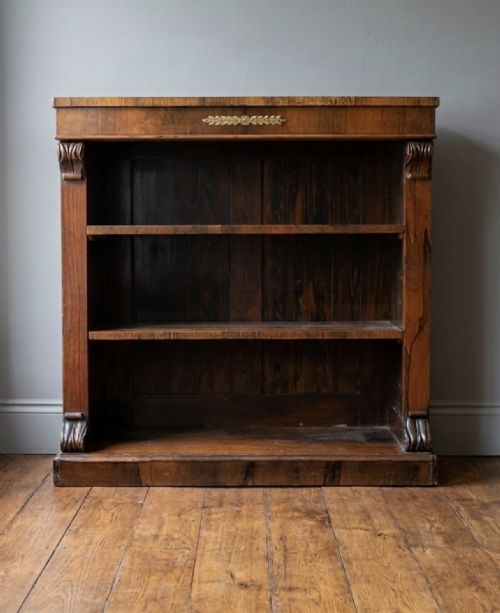


Regency Rosewood Book Cabinet
A regency rosewood book cabinet brings refined architectural timber and adjustable display space into a room.
Regency Rosewood Book Cabinet
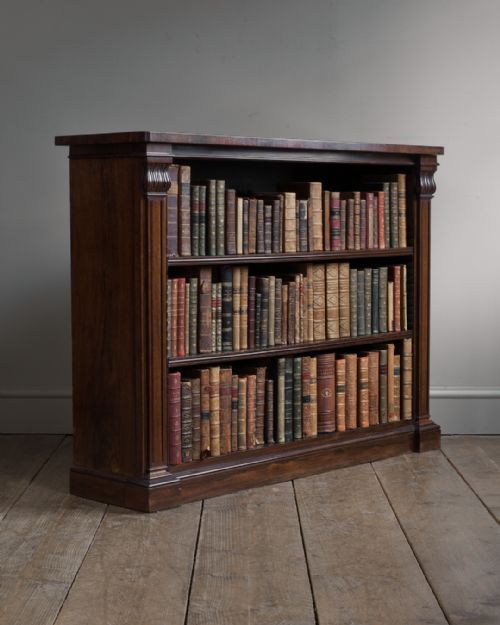
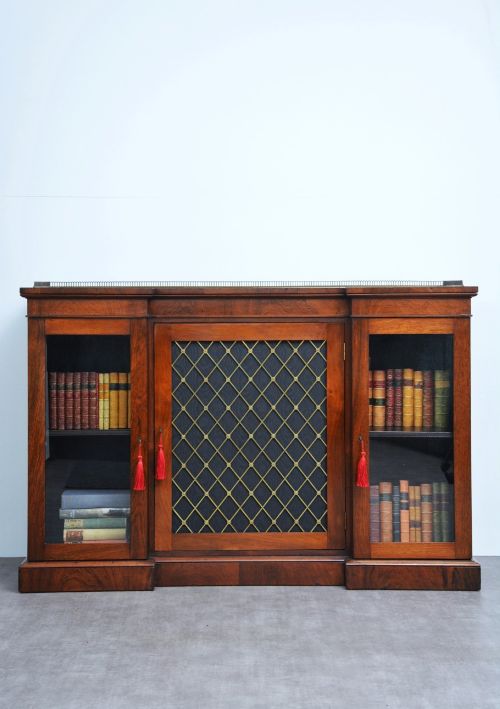
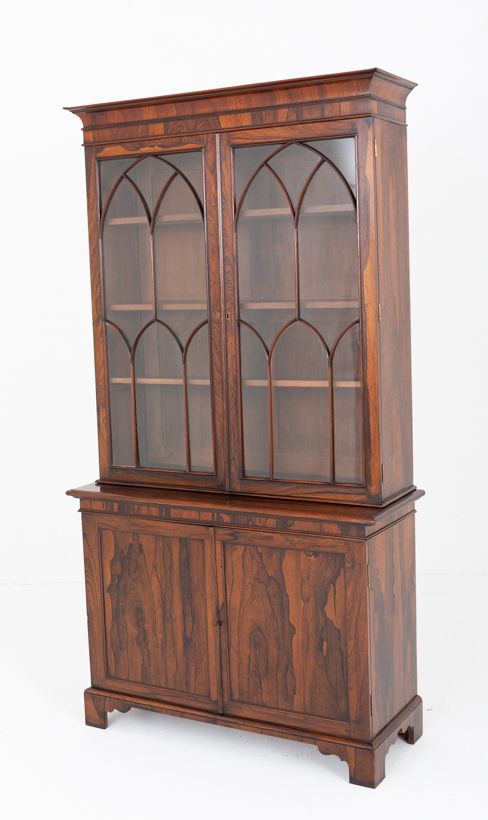
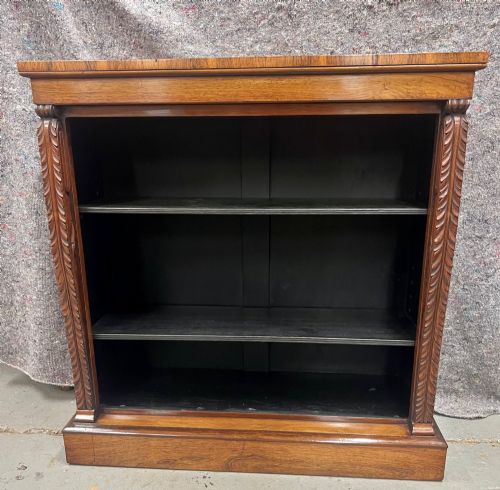
A regency rosewood book cabinet combines storage and display, appearing across open bookcase forms, glazed door configurations, and chiffonier designs. The pieces recorded here span the Regency, William IV, and Victorian periods, alongside later twentieth-century revival examples.
Open shelf variants dominate the available selections, frequently featuring adjustable timber shelving or small cabinet bases beneath. Closed formats often incorporate brass grilles, glass panes, or leather dummy books to conceal contents while maintaining a formal aesthetic.
Compact dwarf cabinets and larger breakfront formats represent the scale variation within this furniture group. Origins trace primarily to nineteenth-century British cabinet making tradition, supplemented by later revival interpretations.
What Varies in Quality
Grain selection and veneer matching dictate visual coherence across large panels and doors. Superior examples display continuous timber figuring thoughtfully aligned by the maker.
The integration of secondary materials such as marble tops, brass grilles, and finely turned columns separates standard utilitarian furniture from more ambitious architectural commissions.
Regency Rosewood Book Cabinet Retail Price Guide 2026
Typical asking prices for regency rosewood book cabinet among the pieces listed under this phrase on Sellingantiques today, from the lower quarter to the upper quarter. They describe what is for sale here now, not the wider market.
Recorded materials include rosewood, brass, mahogany, oak, pine, glass, marble, and fabric.
The Regency Rosewood Book Cabinet Glossary
- Rosewood
- A dense, heavily figured tropical timber prized for its dark grain and polished finish. It served as the primary decorative surface veneer for high-status nineteenth-century cabinetry.
- Chiffonier
- A low sideboard or cabinet featuring shelves or a superstructure on top. This form frequently combines book storage with enclosed lower cupboards.
- Breakfront
- A cabinet design where the central section projects forward from the flanking wings. This architectural arrangement creates depth and rhythm across the piece.
- Secretaire
- A cabinet incorporating a pull-down writing drawer fitted with small interior compartments and pigeonholes. It merges desk functionality with bookcase storage.
Regency Rosewood Book Cabinet: Frequently Asked Questions
How do I style a rosewood book cabinet?
Position the cabinet against a neutral wall to let the dark grain and brass details stand out without competing with surrounding decor. Keep displayed books and objects balanced in tone to complement the timber.
Ensure the piece sits away from direct heat sources to protect the polished rosewood veneer from drying out over time.
What is a dwarf bookcase?
A dwarf bookcase is a lower, shorter cabinet designed to sit below dado height while still providing useful shelf space. These compact proportions suit smaller rooms without overwhelming the wall.
Many examples include marble tops or enclosed cupboards beneath the open upper shelves.
Where were these cabinets placed originally?
Nineteenth-century interiors featured these cabinets in libraries, drawing rooms, and formal parlours to house leather-bound volumes and display decorative porcelain. Their finished backs and refined timber made them suitable for prominent central wall placement.
Glazed doors protected valuable texts from dust and smoke in coal-heated homes.
How do I identify a Regency period piece?
Look for classical architectural proportions, restrained brass inlay, and native or exotic timber veneers characteristic of early nineteenth-century design. Proportions tend to be clean and balanced, drawing inspiration from classical antiquity.
Later Victorian and revival pieces often echo these forms but employ heavier construction methods or different secondary woods.