

Regency Tiered Bookcase
A regency tiered bookcase offers stepped open shelving that brings architectural rhythm to a room while keeping volumes close to hand.
Regency Tiered Bookcase
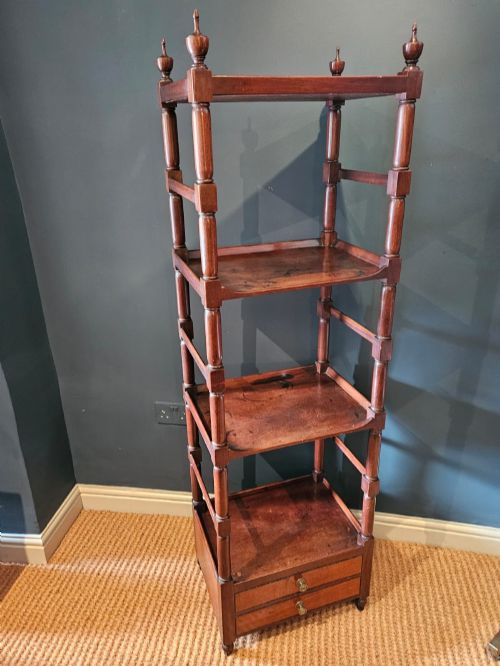
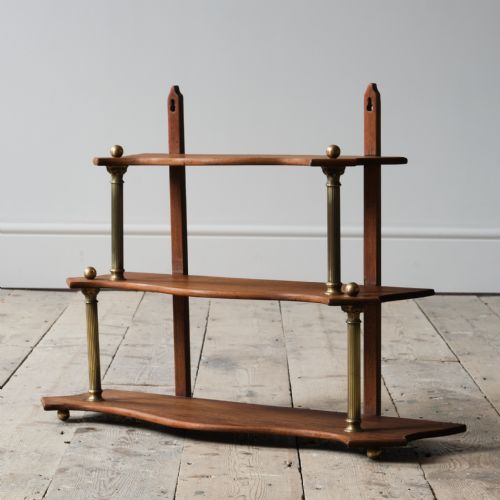
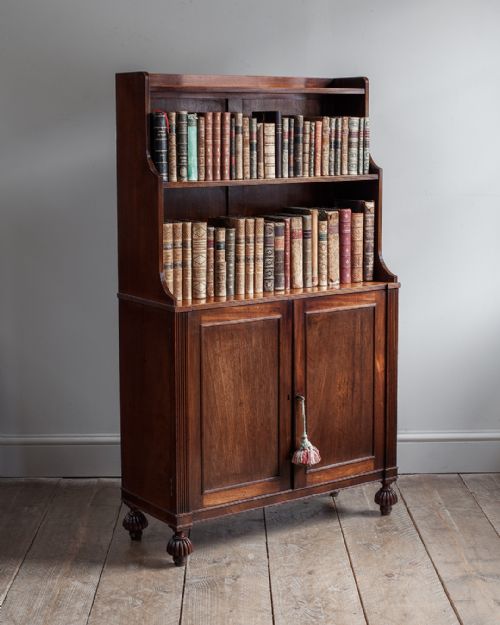
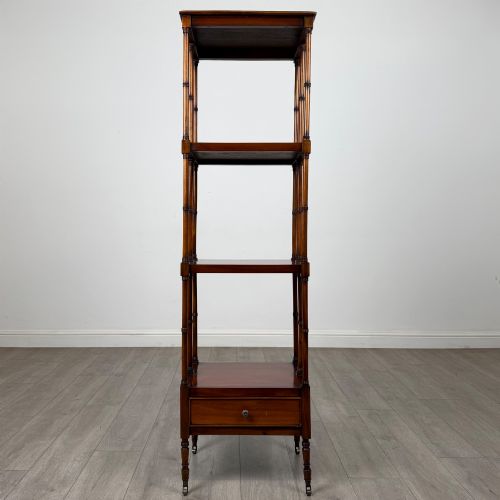
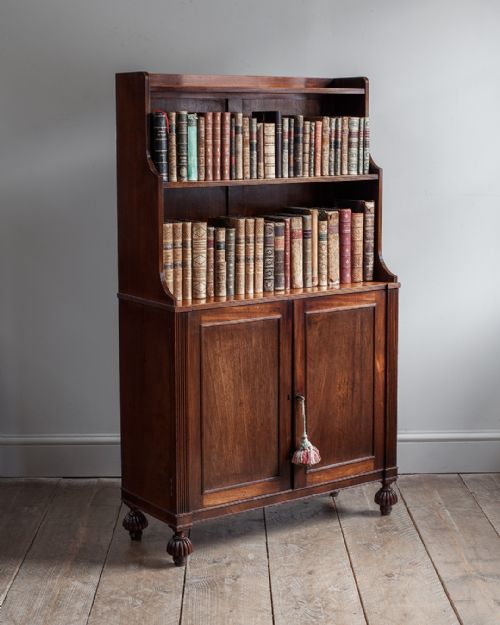
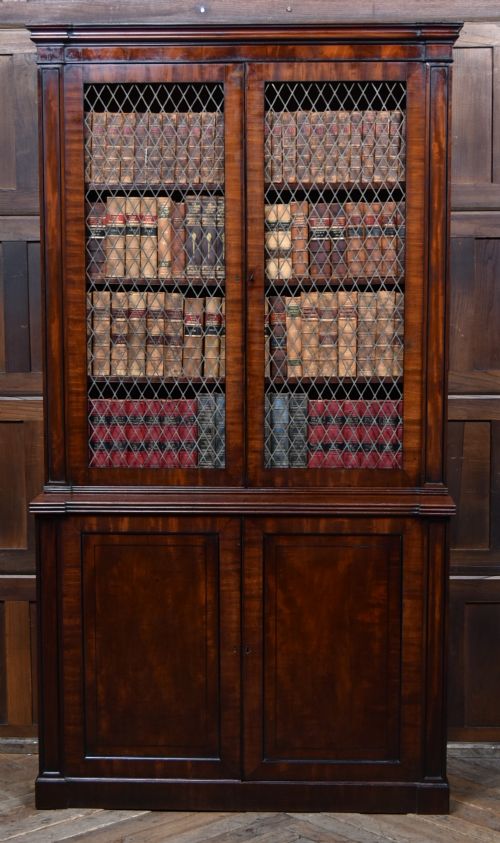
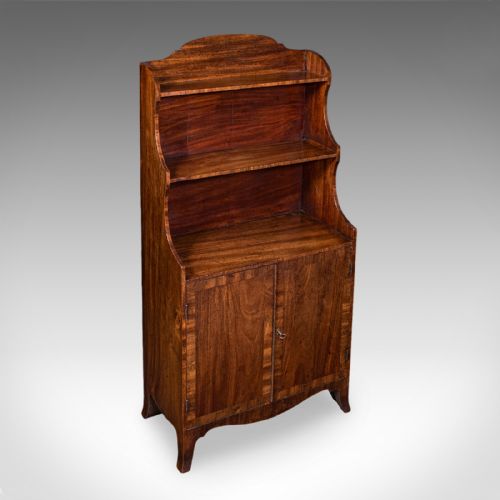
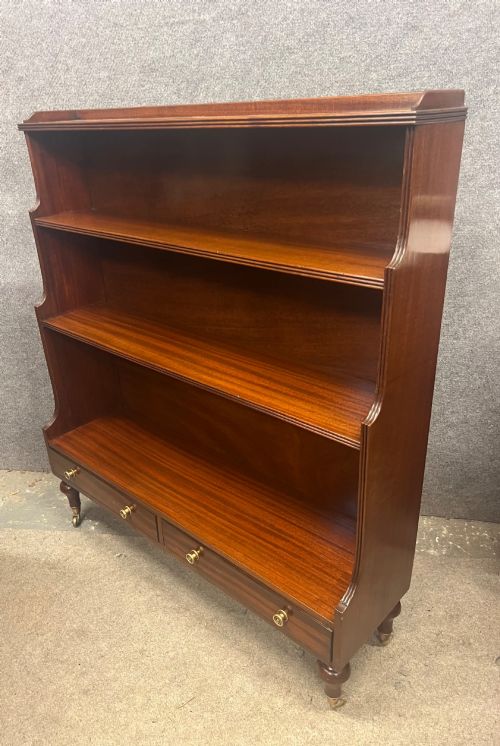
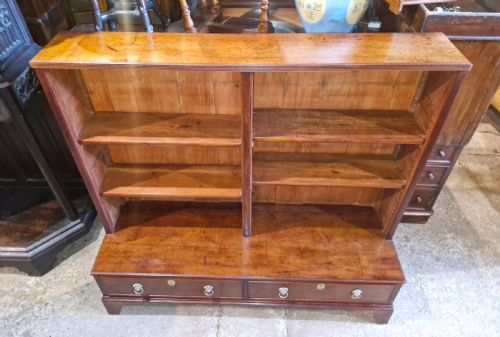
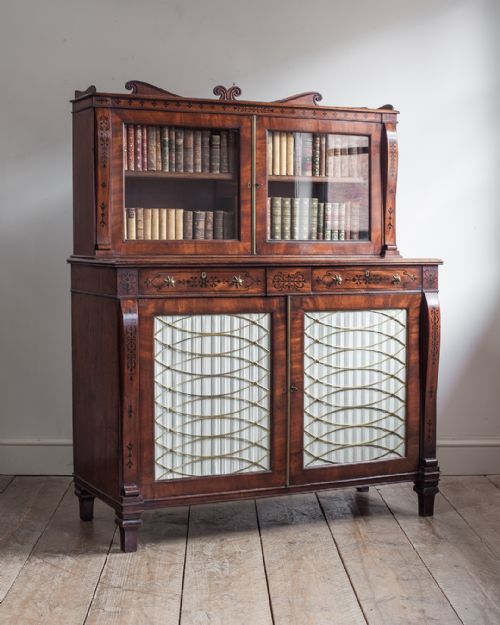
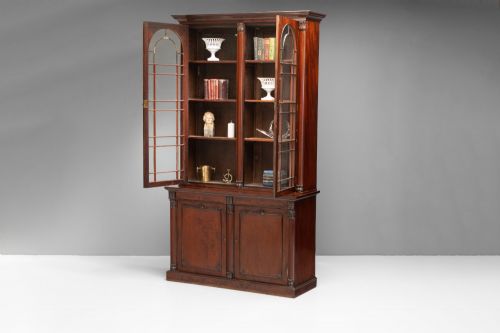
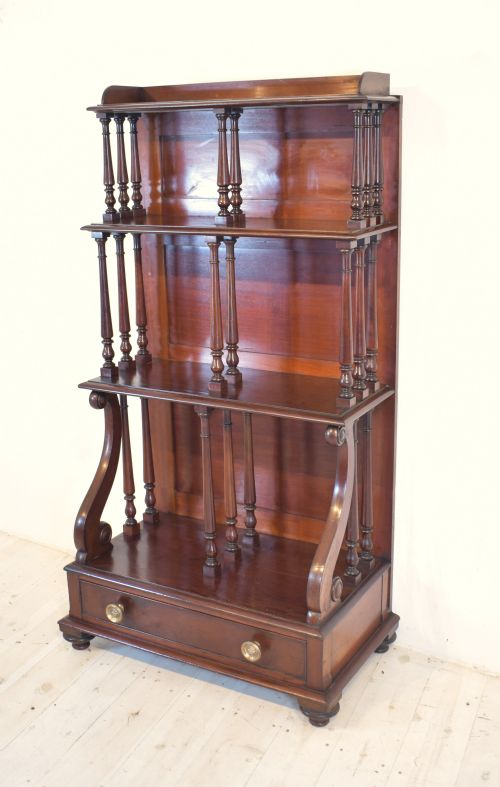
When searching for a regency tiered bookcase, buyers encounter a variety of multi-level open shelving units, including freestanding waterfall bookcases, what-nots, and wall-hanging shelves. These pieces range from compact dwarf cabinets to tall freestanding display stands designed to hold books and decorative objects.
The selections span the Regency period alongside Georgian and William IV eras, with later revival pieces also represented. Mahogany and rosewood form the majority of the surviving examples, often built with graduating tiers that step back towards the top.
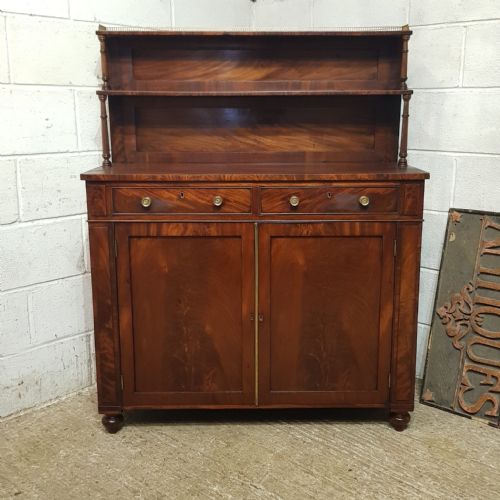
Originating as practical furniture for organised rooms, these tiered forms combine upright supports with multiple horizontal ledges. Buyers frequently find variations like open display shelves, chiffoniers with lower cupboards, and portable bookshelf units.
How they were made
Cabinetmakers constructed these tiered pieces primarily using dense timbers such as mahogany and rosewood, frequently incorporating decorative details like satinwood crossbanding and boxwood stringing. Selected pieces integrate brass elements for structural supports or hanging fixtures.
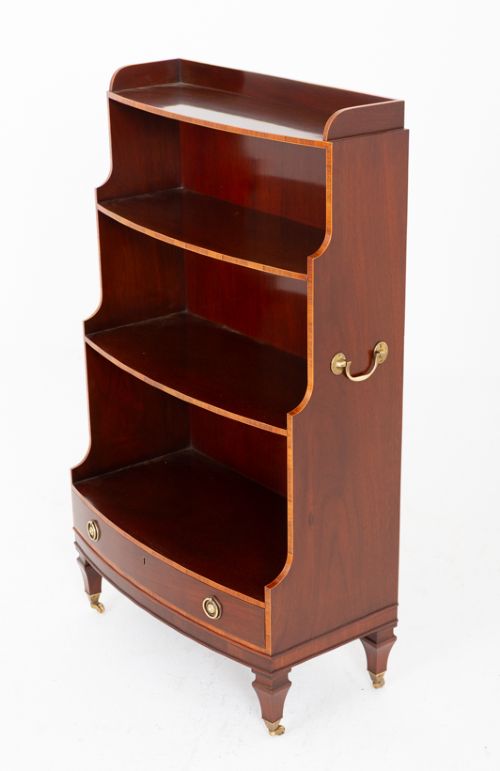
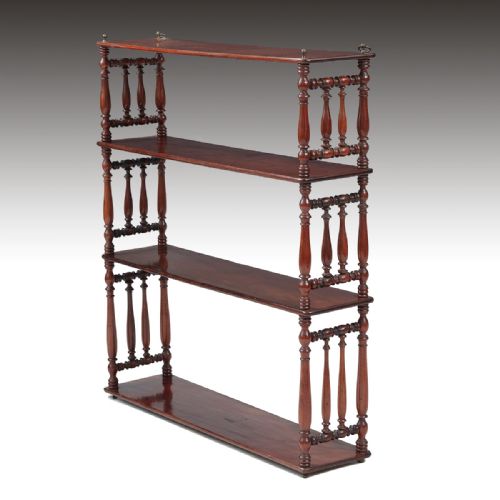
The joinery relies on traditional methods to secure the graduating shelves, whether fixed to vertical side panels in a waterfall silhouette or supported by turned upright columns in what-not configurations. Timber selection prioritises rich grain patterns and deep natural tones.
Portable bookshelves from the nineteenth century allowed travellers to pack their favourite library into flat crates before the steam train arrived.
What varies in quality
The calibre of a tiered bookcase rests upon the selection of timber veneers and solid woods, where finely figured mahogany or rich rosewood elevates the piece significantly. Superior examples display precise inlay work, such as delicate stringing and neat crossbanding along the shelf edges.
Proportion and structural harmony also dictate distinction, separating standard utility furniture from exceptional cabinetmaking. The crispness of turned supports, the integration of brass mounts, and the balance of graduating tier depths mark the finer items in this category.
Gillows
The Regency Tiered Bookcase Glossary
- Waterfall bookcase
- A tiered shelving unit where each successive shelf steps back from the one below it, creating a cascading profile. This style gained popularity during the Regency period for displaying books and ornaments.
- What-not
- An open multi-tiered piece of furniture designed for displaying small objects or books. These freestanding stands feature several platforms supported by slender columns.
- Crossbanding
- A decorative border of veneer laid around the perimeter of a shelf or top so that the grain runs perpendicular to the main surface. It adds a neat contrasting frame to mahogany and rosewood pieces.
- Chiffonier
- A low cabinet featuring shelving above or enclosed cupboard space below. Surviving Regency examples combine open display tiers with functional storage compartments.
- Stringing
- Thin inlay lines of contrasting wood, such as boxwood, set flush into the surface of the timber. This technique outlines drawers, shelves, and panels on finer cabinets.
Regency Tiered Bookcase: Frequently Asked Questions
What is a waterfall bookcase?
A waterfall bookcase is a tiered open shelving unit where each shelf steps back progressively from the bottom to the top. This design creates a sloping profile that reduces visual weight.
Cabinetmakers utilised this form in mahogany and rosewood to display books and decorative objects in principal rooms.
How do I use a what-not?
A what-not functions as a multi-level display stand for books, small collections, and ornaments. Its open tiers allow items to be viewed from multiple angles.
Placed against a wall or in a corner, it provides vertical storage without overwhelming smaller spaces.
What is the difference between a chiffonier and a bookcase?
A chiffonier typically combines lower enclosed cupboards with upper shelving or display tiers. A standard bookcase focuses entirely on open horizontal ledges for storing volumes.
Both forms appeared frequently during the Regency and Georgian periods in rich timbers.
How can I tell a Regency bookcase from a revival piece?
Regency pieces exhibit the construction methods, timber patination, and cabinetmaking details characteristic of the early nineteenth century. Mahogany and rosewood show natural age and wear consistent with the period.
Revival pieces, such as those from the Edwardian era or the nineteen-twenties, often display different finishing techniques and standardised timber stocks.