




Rosewood Book Cabinet
A rosewood book cabinet brings rich tropical grain and refined display space to a room, uniting open shelving and enclosed storage in dense dark timber.
Rosewood Book Cabinet
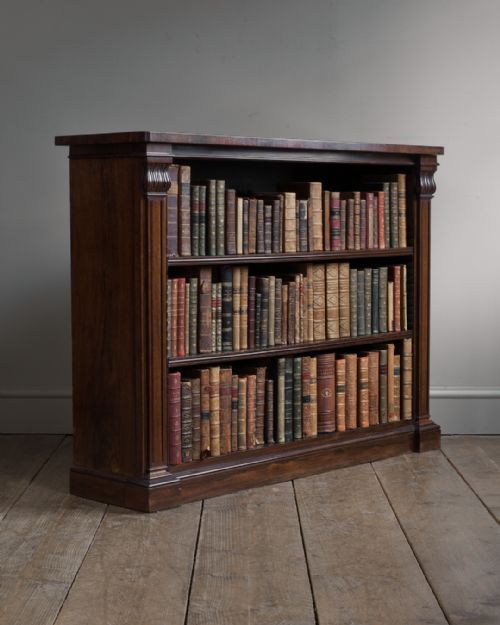
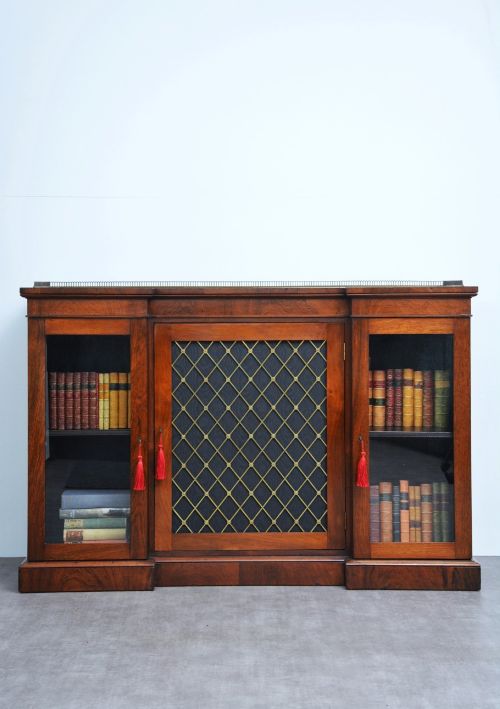
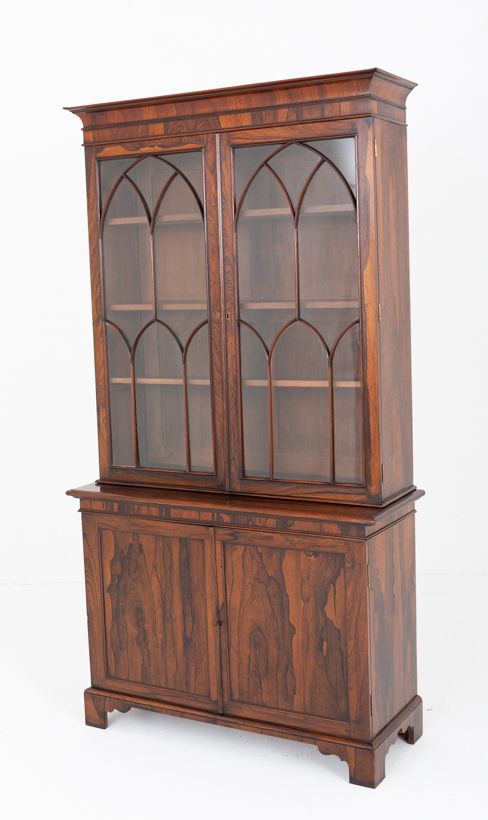
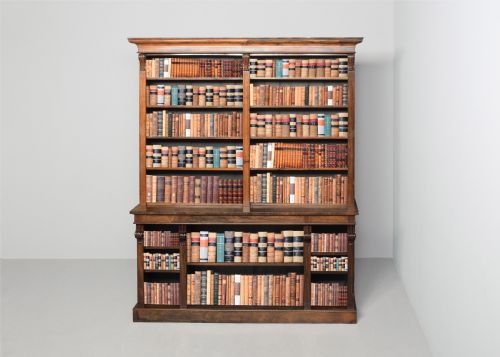
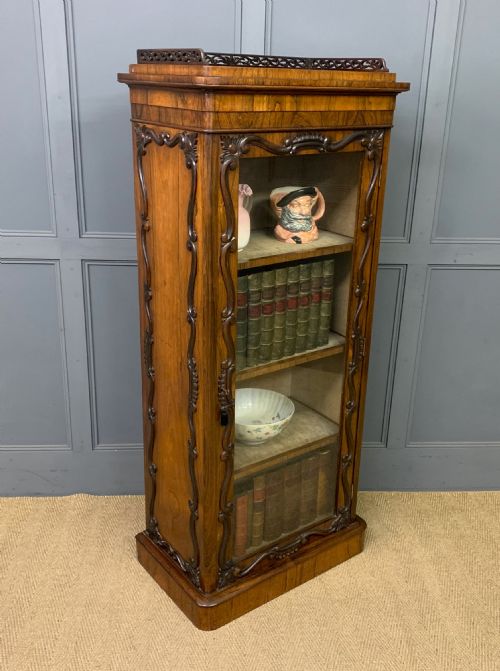
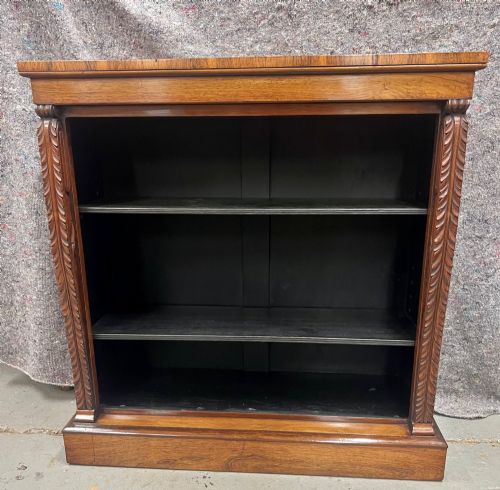
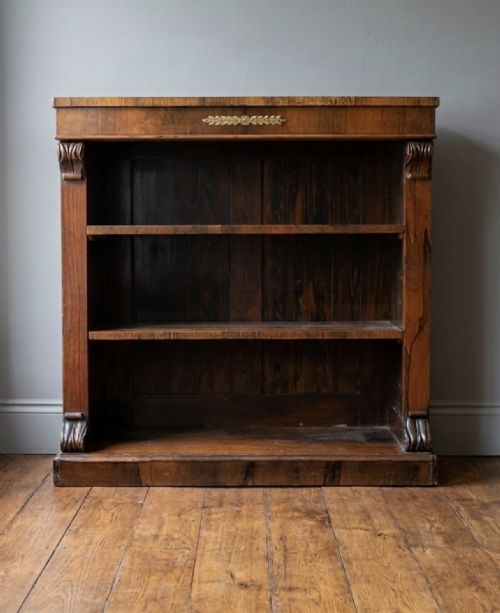
When you search for a rosewood book cabinet, you encounter versatile furniture pieces designed to hold volumes while displaying decorative objects on shelves or behind glass doors. The selection spans open bookcases, glazed display cabinets, dwarf side cabinets, and compact chiffoniers.
The pieces appearing on this page originate predominantly from the nineteenth century, including Regency, William IV, and Victorian eras. Open bookcases and glazed cabinets dominate the current offerings, alongside side cabinets and secretaire forms equipped with drop fronts.
Makers and cabinetmakers of these periods utilised dense imported timbers to create low library pieces and tall display furniture. Many examples integrate adjustable shelving, brass grilles, or marble tops within proportions suited to domestic reception rooms.
Materials and construction methods
Cabinetmakers constructed these pieces using solid or veneered rosewood applied over secondary foundational timbers such as pine, oak, or mahogany. Grain patterns received careful alignment across doors and drawer fronts to present striking visual symmetry.
Construction details include brass inlays, parcel-gilding, and ormolu mounts that accent the dark timber. Glazed doors utilise timber framing to protect library collections, while marble tops provide durable surfaces on dwarf side cabinets.
Rosewood Book Cabinet Retail Price Guide 2026
Typical asking prices for rosewood book cabinet among the pieces listed under this phrase on Sellingantiques today, from the lower quarter to the upper quarter. They describe what is for sale here now, not the wider market.
Listings feature nineteenth-century periods including Regency, William IV, and Victorian eras, utilising rosewood, brass, glass, marble, and oak.
Judging the standard of manufacture
Quality rests upon the selection of timber veneers and the precision of cabinet joinery. Pieces featuring highly figured grain, crisp carving, and robust internal framing stand apart from simpler utilitarian items.
Refinements such as integrated brass grillwork, fine ormolu mounts, and original adjustable shelf mechanisms indicate higher workshop standards. The integrity of the timber surface and the retention of original fittings dictate the standing of individual pieces.
James Winter
The Rosewood Book Cabinet Glossary
- Rosewood
- A dense, dark timber featuring pronounced dark grain markings, prized for nineteenth-century cabinetmaking. This wood takes a high polish and forms the primary decorative surface.
- Chiffonier
- A low cabinet featuring shelving above a closed cupboard base. This form evolved during the Regency and Victorian periods to serve dining and drawing rooms.
- Secretaire
- A cabinet incorporating a fitted writing drawer with a drop-down flap. This dual-purpose design conceals pigeonholes and small drawers behind a writing surface.
- Ormolu
- Gilded bronze ornamentation applied to furniture as decorative mounts. Artisans cast and chased these metal elements to enrich the cabinet exterior.
- Breakfront
- A cabinet design where the central section projects forward from the flanking wings. This architectural arrangement creates depth and visual rhythm in large library pieces.
Rosewood Book Cabinet: Frequently Asked Questions
How do I identify Regency pieces?
Regency pieces often display classical restraint, clean architectural lines, and occasional brass inlay or parcel-gilding. The proportions tend to remain lower and more compact than later Victorian variants.
Cabinetmakers working in this period utilised figured rosewood veneers and occasionally incorporated marble tops or brass grilles into dwarf bookcase designs.
Where were these cabinets placed?
Libraries, drawing rooms, and studies housed these cabinets to store leather-bound volumes and display ornamental objects. Dwarf versions fit beneath window sills or against principal salon walls.
Taller glazed examples stood in libraries to protect fragile volumes from dust while maintaining visual access to book bindings.
How do I care for rosewood furniture?
Protect antique rosewood from direct sunlight and extreme humidity fluctuations to prevent veneer cracking or fading. Maintaining stable indoor room environments preserves the polished timber surface.
Apply occasional specialist wax polish sparingly with a soft cloth to nourish the wood without building up heavy residues.