
Mahogany Library Shelf
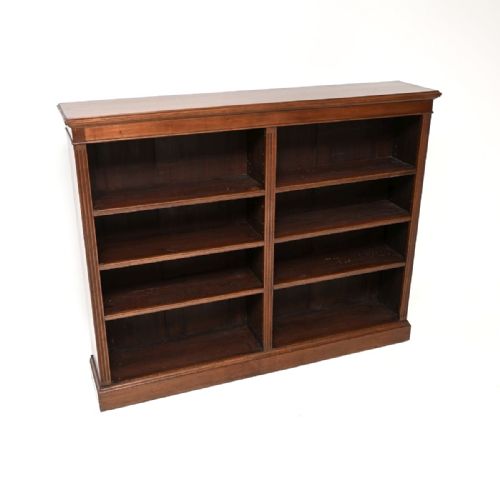
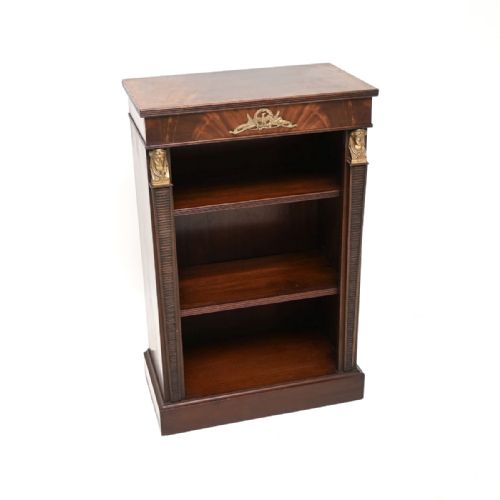
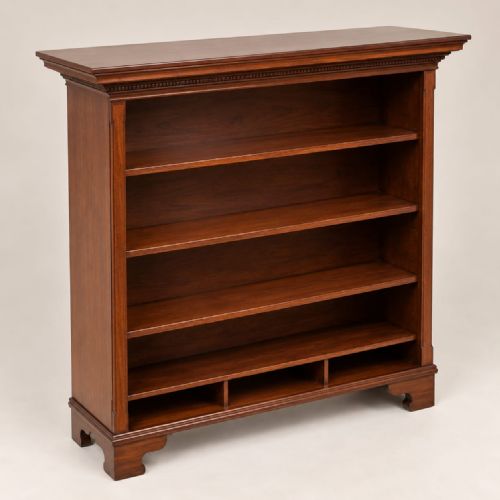
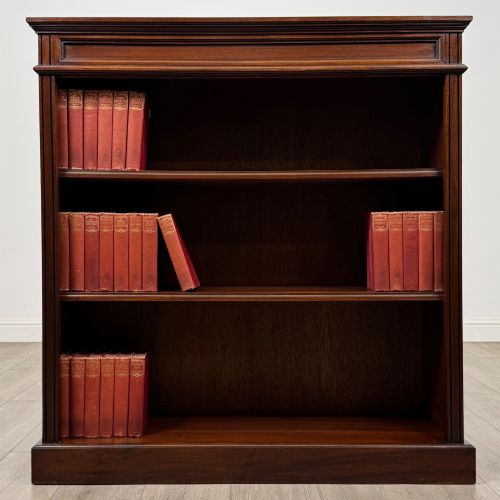
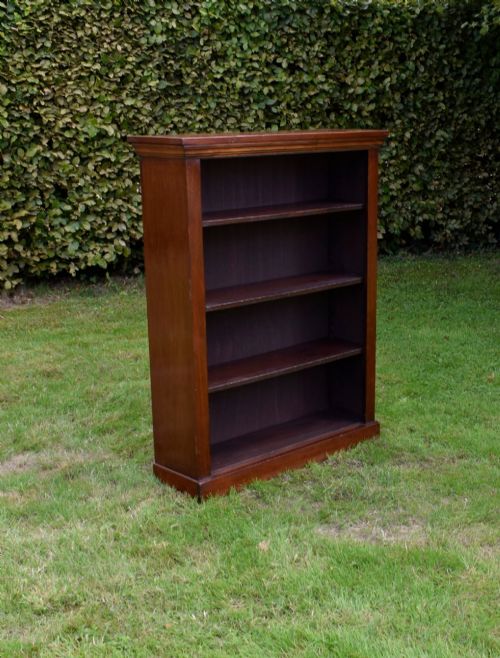
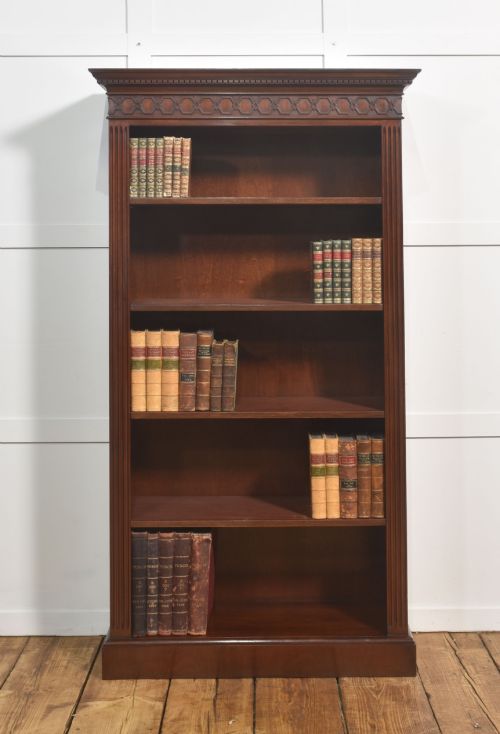
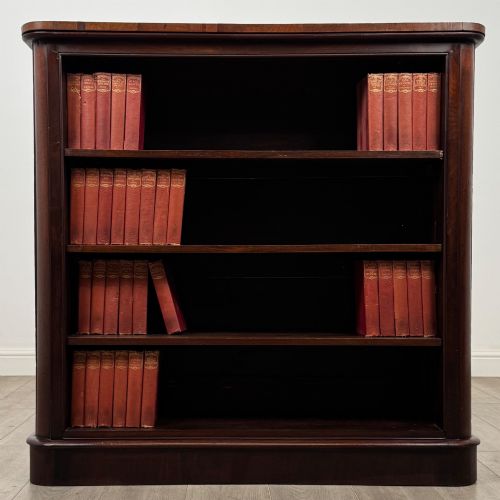
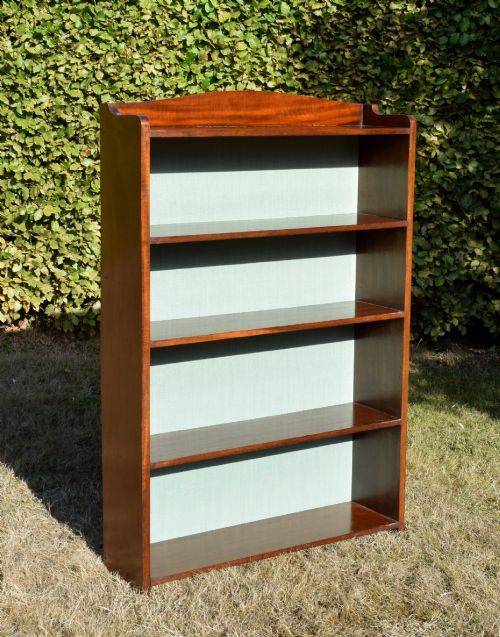
A mahogany library shelf provides sturdy storage for volumes while displaying the deep grain of traditional timber in working rooms.
Mahogany Library Shelf
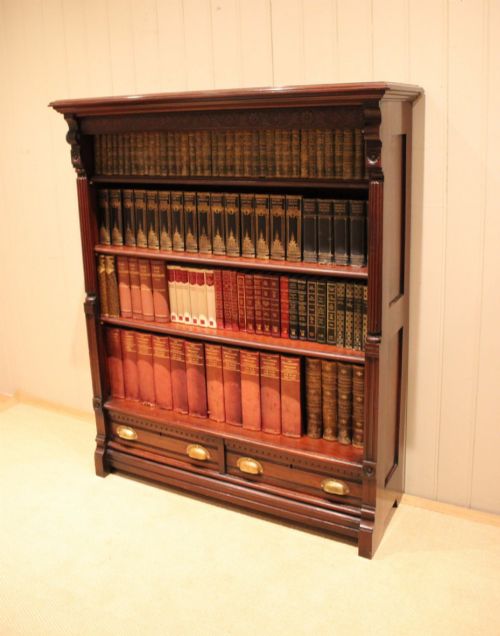
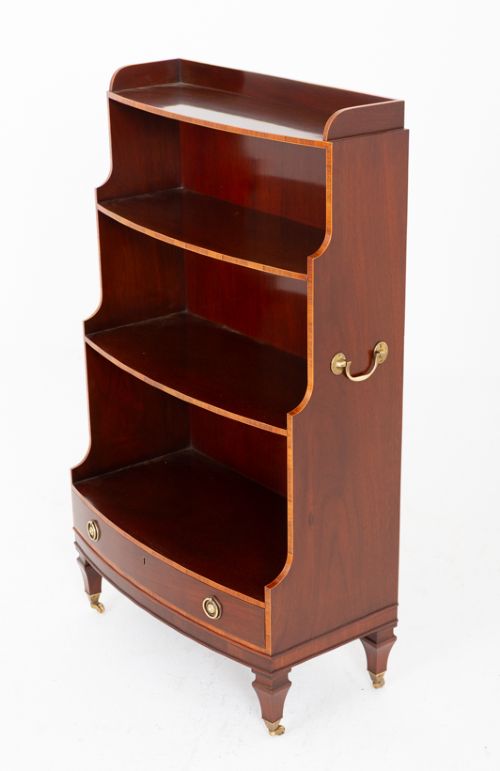
When searching for a mahogany library shelf, a buyer encounters various open bookcases, tiered stands, and whatnots spanning multiple eras. The pieces range from straightforward Victorian open shelving to tiered Regency waterfall designs intended for everyday book storage.
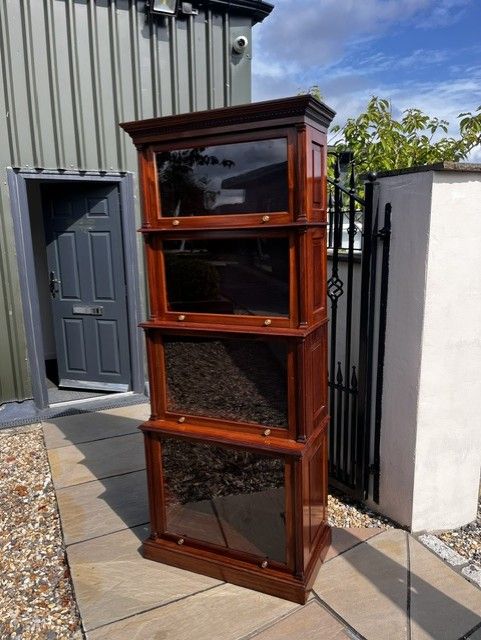
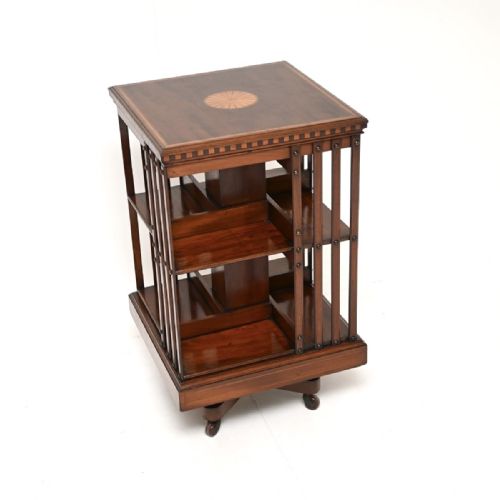
The selections on this page lean heavily towards nineteenth and early twentieth-century examples, including revolving models and sectional barrister variants. Cabinets with adjustable shelves and lower cupboards also appear alongside compact tiered stands and tables with integrated bookshelf bases.
Originating predominantly from British workshops across Georgian, Victorian, and Edwardian periods, these items reflect domestic study habits of past centuries. Most surviving examples offer functional tiered platforms or open bays designed to hold leather-bound volumes within easy reach.
How they were made
Cabinet makers constructed these library pieces primarily using solid mahogany and figured mahogany veneers applied over secondary timbers. Brass castors, hinges, and gallery rails frequently provide structural accents and functional movement on revolving or tiered variants.
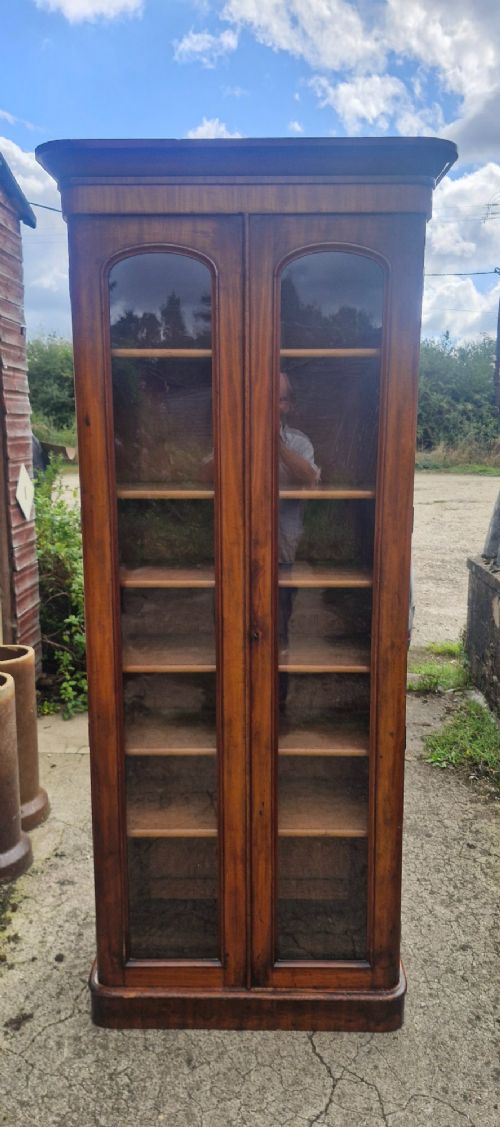
Joinery techniques relied on dovetailed shelves, rebated backs, and pegged joints to support the considerable weight of heavy books. Secondary materials such as glass doors, inlaid satinwood stringing, and fabric linings occasionally supplement the main mahogany construction.
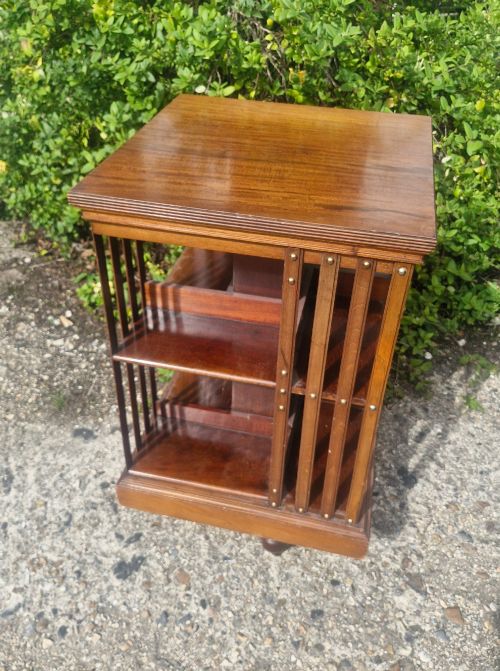
Early revolving bookcases let Victorian readers consult entire encyclopaedias without ever leaving their armchairs.
What varies in quality
The distinction between standard utility furniture and finer library pieces rests largely on timber selection and decorative restraint. Pieces featuring figured mahogany veneers, subtle satinwood inlay, or well-executed turned galleries indicate higher workshop standards.
Mechanical complexity also separates simpler open shelves from superior revolving bookcases or modular barrister systems. Smooth rotation mechanisms and precise sectional stacking demonstrate sophisticated carpentry absent in more basic domestic shelving.
Gillows·Waring and Gillows·Globe Wernicke
The Mahogany Library Shelf Glossary
- Waterfall bookcase
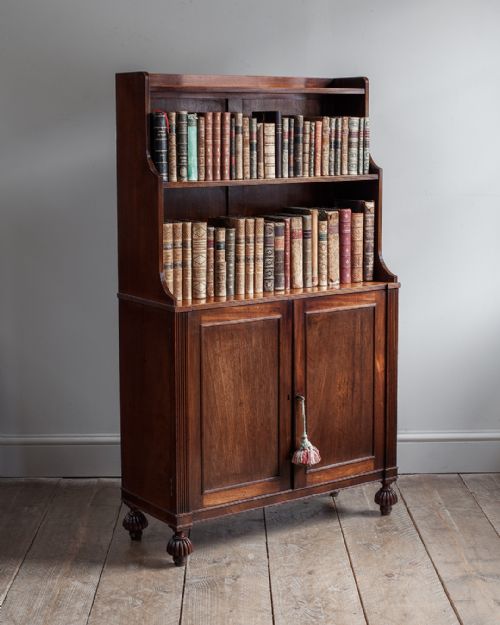
- A tiered shelving unit where each successive shelf is narrower and set back from the one below it. This stepped profile became particularly popular during the Regency period.
- Breakfront
- A large cabinet or bookcase whose central section projects forward from the flanking wings. This architectural arrangement creates depth and visual rhythm across the facade.
- Revolving bookcase
- A freestanding tiered shelf mounted on a concealed pivot and cruciform base. It allows a reader to access multiple directions of books from a stationary seating position.
- Whatnot
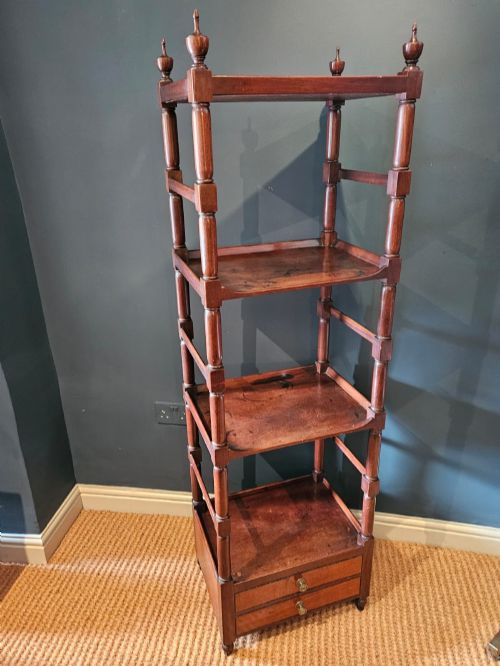
- A multi-tiered open stand designed for displaying books, ornaments, or small objects. The form developed in the eighteenth century and persisted through the Victorian era.
- Barrister bookcase
- A modular sectional bookcase featuring glass-fronted tiers that lift and slide inward on pivot hinges. This design allowed libraries to expand vertically by stacking matching units.
Mahogany Library Shelf: Frequently Asked Questions
How do revolving bookcases work?
Revolving bookcases sit upon a concealed internal pivot and a heavy cross-shaped base that allows the upper tiers to spin freely.
This mechanism lets readers access multiple stacks of books from a single spot beside a desk or armchair.
What are adjustable shelves?
Adjustable shelves rest on movable wooden ratchets, brass studs, or shelf strips that allow the vertical spacing between tiers to change.
This adaptability accommodates books of varying heights, a feature commonly found in nineteenth-century library furniture.
What is a whatnot?
A whatnot is a multi-tiered open stand supported by slender corner posts, designed to hold books and small decorative objects.
These versatile pieces moved easily between drawing rooms and libraries during the Georgian and Victorian periods.
What distinguishes sectional bookcases?
Sectional bookcases consist of separate stacking modules featuring glass doors that lift and retract overhead.
Developed around the turn of the twentieth century, these modular units allowed libraries to grow one shelf at a time.