

Vintage Etagere Shelf
These vintage etagere shelf designs span multiple tiers and open formats, bringing practical display space into period interiors.
Vintage Etagere Shelf
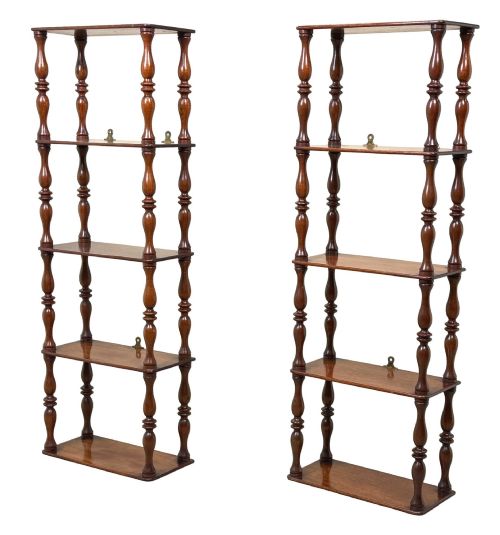
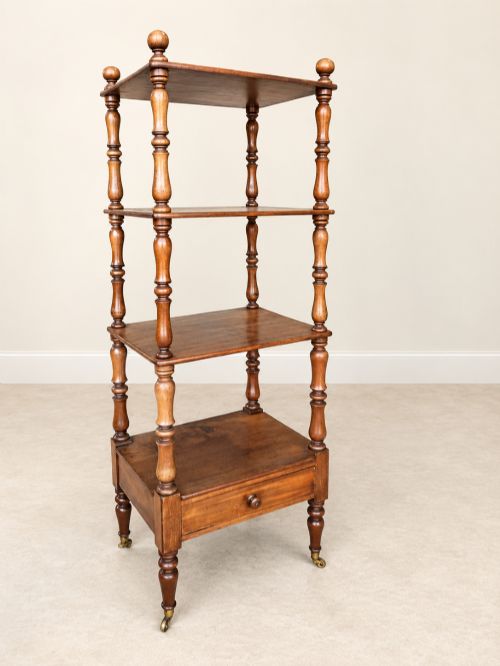
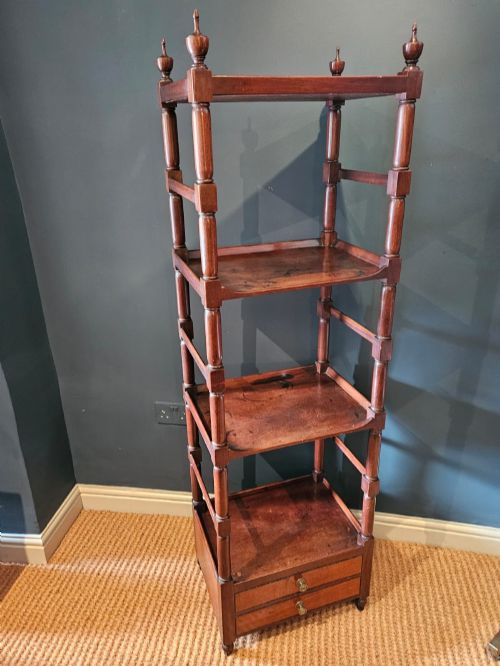
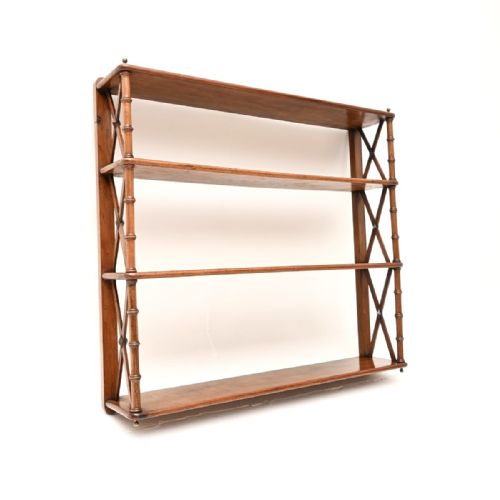
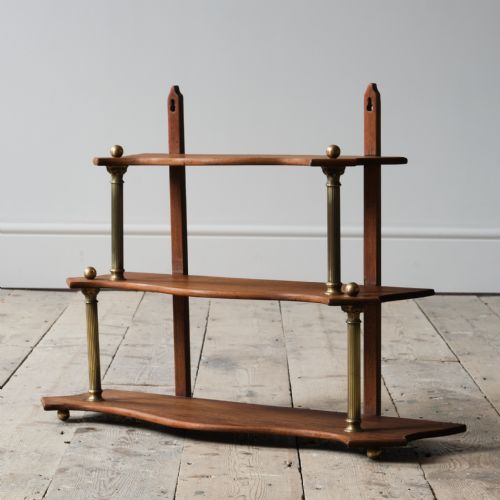
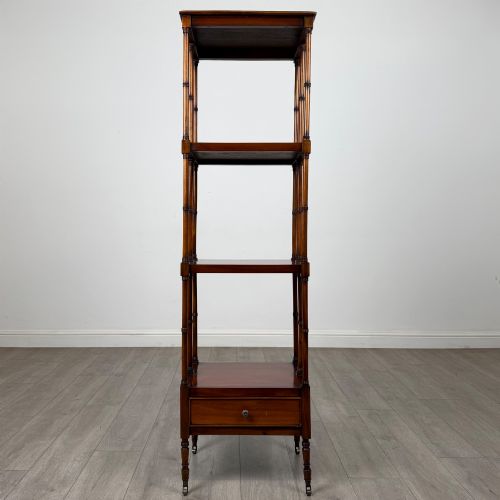
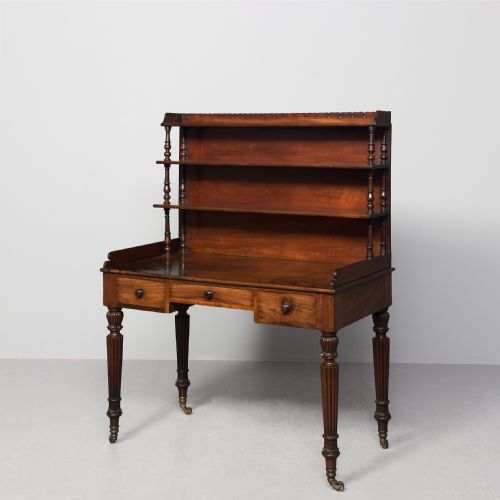
A vintage etagere shelf provides multi-tiered open storage for displaying ornaments, books, and collections across various rooms. These pieces appear in forms such as wall hanging shelves, corner units, standing whatnots, and display cabinets.
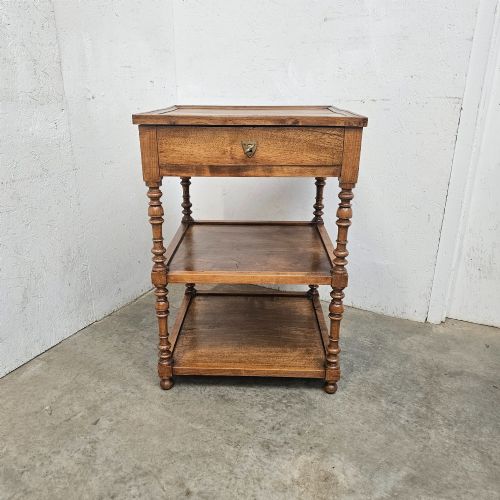
The selections span the 19th Century, Victorian, Edwardian, and Regency periods, reflecting changing domestic fashions. Buyers commonly encounter walnut, mahogany, and rosewood versions alongside bamboo and wrought iron creations.
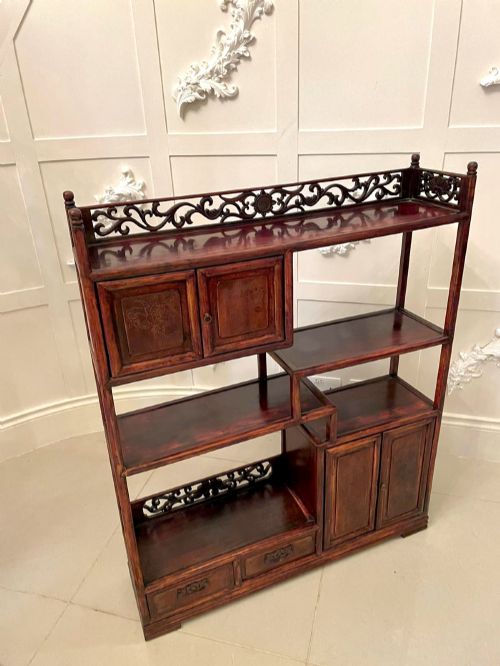
Makers utilised diverse regional styles ranging from French Provincial and French Chateau to Chinese Qing Style and Victorian Chinoiserie. Pieces operate as functional furniture while offering architectural vertical interest to interiors.
How they were made
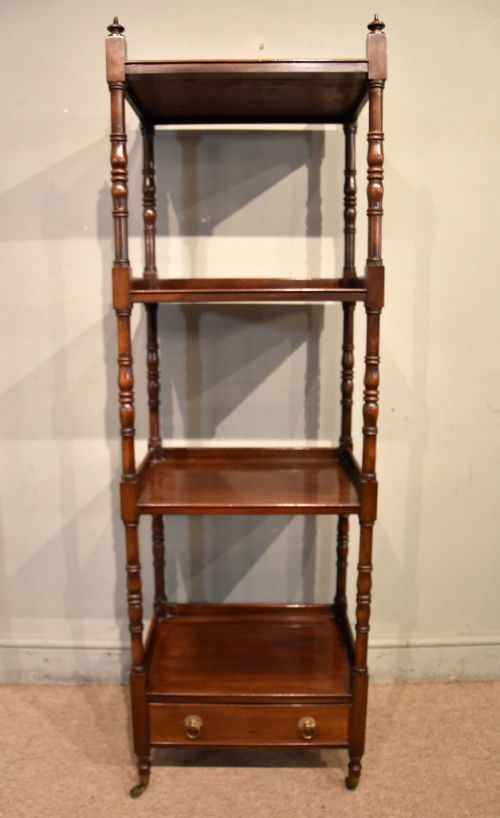
Cabinet makers utilised dense hardwoods such as mahogany, walnut, rosewood, and ebonised wood for structural framework and turned supports. Brass hardware, ormolu mounts, and glass components supplemented the timber builds.
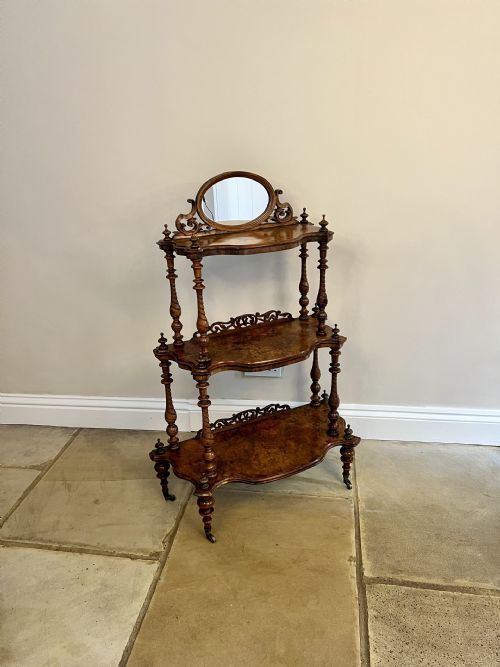
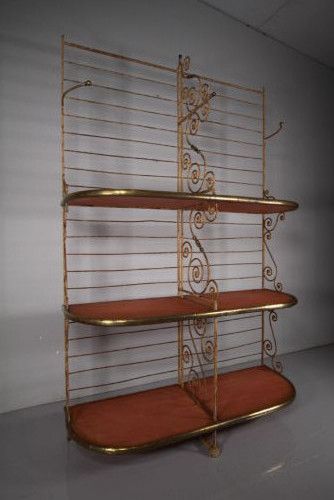
Alternative constructions incorporated natural bamboo, lacquered finishes, and forged wrought iron for lighter or industrial applications. Decorative techniques featured inlaid parquetry, marquetry, pierced fretwork, and scroll-work.
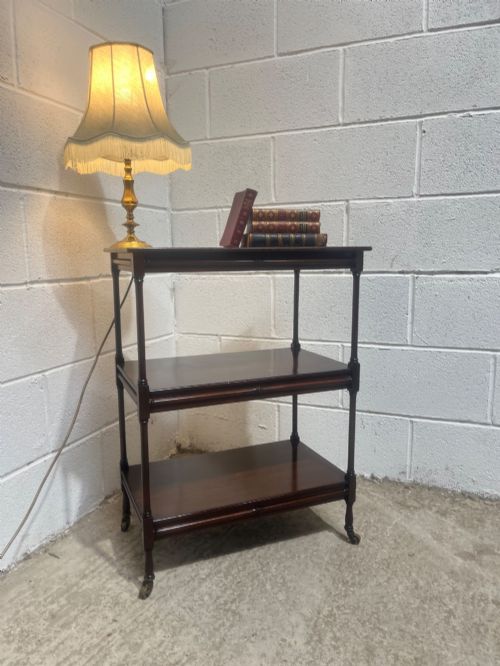
Joinery techniques supported multi-tiered formats including four-tier what-nots, waterfall shelves, and wall-mounting bookcases with turned legs and castors.
Some nineteenth-century bakers clearly possessed an eye for interior design, judging by the surviving ornate wrought-iron bakery racks.
What varies in quality
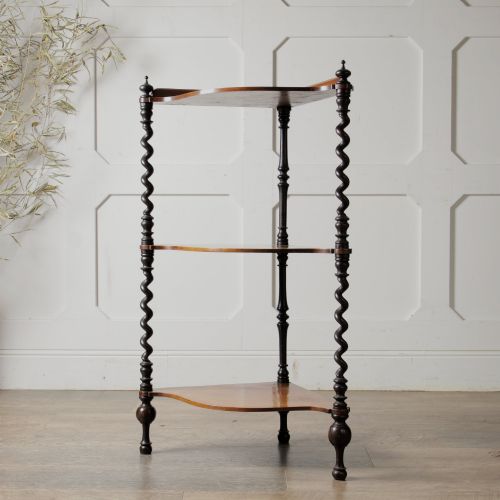
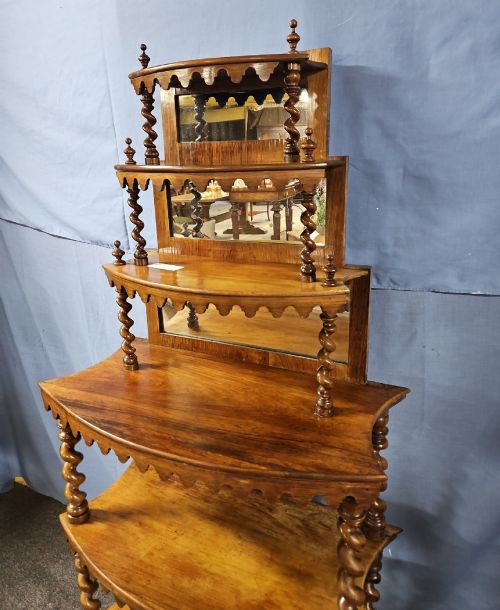
The refinement of the timber and the precision of inlaid parquetry or marquetry distinguish standard pieces from superior examples. Quality manifests in the crispness of carved details like pierced fretwork, barley twist supports, and bobbin turnings.
The integration of decorative metalwork, such as ormolu mounts and brass fittings, marks the standard of the manufacturer. Structural integrity across multiple tiers and stability in standing or wall-mounted formats determine the execution.
James Mein of Kelso·Samson and Son London
The Vintage Etagere Shelf Glossary
- Etagere
- A piece of furniture consisting of a set of open shelves for displaying small objects or ornaments. These tiered stands developed in France and became popular throughout the nineteenth century.
- Whatnot
- An open shelved piece of furniture designed for displaying ornaments or books. This term appears frequently interchangeably with etagere in nineteenth-century British records.
- Marquetry
- Decorative woodwork where pieces of veneer are fitted into a ground to form ornamental patterns. Craftsmen applied this technique to surfaces of nineteenth-century display cabinets and tables.
- Ormolu
- Gilded bronze ornamentation applied to furniture mounts and decorative objects. French cabinet makers utilised these cast metal details during the nineteenth century.
- Fretwork
- Ornamental design worked in wood with a fretsaw, creating pierced open patterns. Victorian cabinet makers incorporated this technique into corner whats-not and wall shelves.
Vintage Etagere Shelf: Frequently Asked Questions
How were antique etagere shelves used?
These shelves served primarily in reception rooms and parlours for exhibiting porcelain, small sculptures, framed photographs, and prized volumes. Their open construction allowed light to pass through while keeping collections organised.
Portable bookshelves and tiered trolleys also provided functional utility for moving books or serving items within domestic spaces.
How do I style a vintage etagere shelf?
Balance heavier items on lower tiers with lighter ceramic or glass pieces on upper shelves to maintain visual stability. Grouping objects by material or colour helps create a cohesive display rather than a cluttered surface.
Allowing empty space around groupings lets the timber grain, bamboo, or metal framework of the shelf remain visible.
How can I tell Victorian shelves apart from Regency pieces?
Regency shelf designs often feature restrained classical lines, dark mahogany timbers, and simpler architectural proportions. Victorian examples frequently introduce heavier ornamentation, such as barley twist supports, pierced fretwork, and burr walnut veneers.
Later Victorian and Edwardian iterations also embraced exotic influences like Chinoiserie and bamboo construction.