
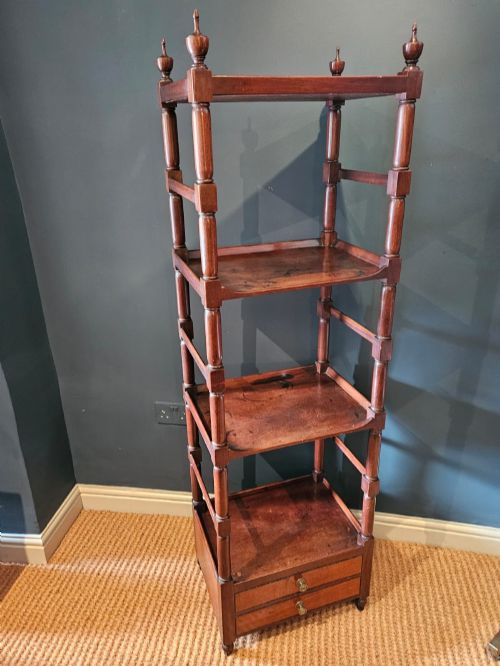
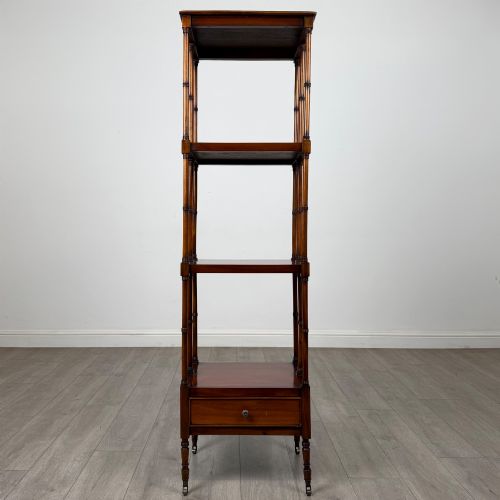
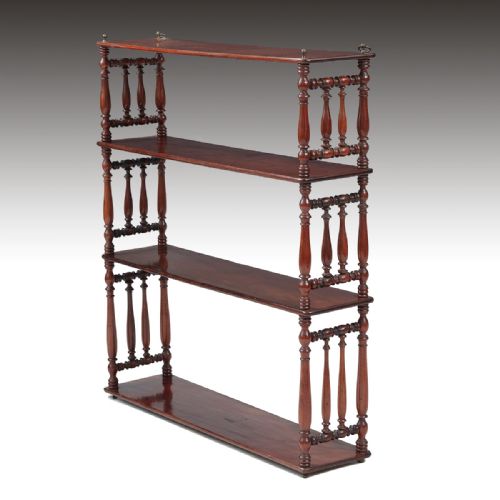
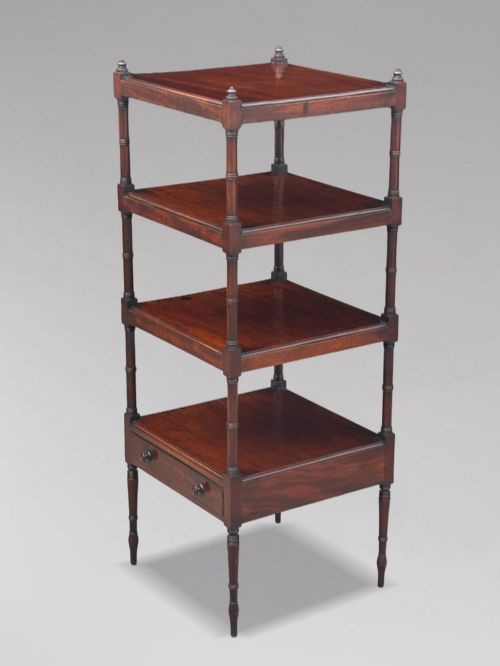


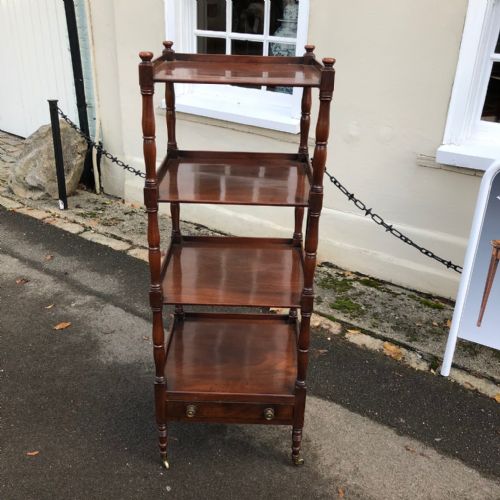
Regency Four Tier Shelf
A regency four tier shelf delivers architectural clarity and tiered display space, offering the exact vertical proportion that disciplined interiors require.
Regency Four Tier Shelf
A regency four tier shelf spans freestanding whatnots, etageres, and wall-mounted hanging shelves produced across the Regency, Georgian, and nineteenth-century periods. These pieces serve primarily to display books, porcelain, and decorative objects upon graduated horizontal surfaces.
Mahogany and rosewood dominate the construction, often accented with brass details or cane panels, appearing in forms from tapering etageres to A-frame whatnots and music stands. The freestanding whatnots and hanging shelves represent the most common configurations found within this grouping.
Originating in periods spanning George III through to Edwardian revivals, these four-tier pieces reflect both formal Regency design and later nineteenth-century interpretations. Buyers encounter standard upright shelf units alongside specialised music stands fitted with multiple graduated tiers.
How they were made
Cabinetmakers constructed these shelves using dense timbers such as mahogany and rosewood, selected for their grain and structural stability. These woods provide the necessary rigidity to support four distinct tiers without excessive bulk.
Metal elements like brass appear as structural supports, gallery rails, or hanging brackets, adding functional contrast to the timber. Selected examples incorporate cane work, introducing texture alongside the solid wood surfaces.
Music stands disguised as shelving allowed nineteenth-century musicians to keep their scores tidy between impromptu drawing-room recitals.
What varies in quality
The refinement of the timber selection and the crispness of the turning on the upright supports dictate the standing of a piece. Superior examples exhibit carefully matched grain patterns across all four tiers and precise joinery that maintains rigidity.
The integration of secondary materials, such as finely cast brass mounts or well-woven cane, separates standard utility items from higher-status examples. The overall proportion, from tapering forms to balanced A-frame profiles, determines the visual success of the structure.
The Regency Four Tier Shelf Glossary
- Whatnot
- A freestanding open shelving unit with multiple tiers, designed for displaying small ornaments and books. It emerged in popularity during the late eighteenth century and remained a staple through the Victorian era.
- Etagere
- A piece of furniture consisting of a set of open shelves for displaying small objects or ornaments. The term often overlaps with whatnot, though it frequently denotes a lighter, more decorative structure.
- A-frame
- A structural profile where the sides taper inward from bottom to top, creating a stable triangular silhouette. This construction method provides exceptional stability for graduated shelving units.
- Hanging shelves
- Wall-mounted shelving units featuring multiple tiers, designed to save floor space while displaying books or decorative items. They are secured directly to the wall via integrated brackets or plates.
Regency Four Tier Shelf: Frequently Asked Questions
What is a four tier shelf used for?
These pieces function primarily as open display units for books, ceramics, and decorative objects within domestic interiors. The graduated tiers allow for the organised arrangement of items by height and weight.
Historically, they populated libraries, drawing rooms, and parlours where accessible surface area was required. Today, they serve the same practical display purpose while adding period character to a room.
How do I identify a Regency period piece?
Regency furniture typically displays classical restraint, clean architectural lines, and fine timber selection such as mahogany or rosewood. Details like brass accents and tapering uprights are characteristic of the period.
Distinguishing original pieces from later revivals involves examining the joinery, timber ageing, and construction methods. Edwardian and later nineteenth-century interpretations often show subtle differences in tool marks and wood preparation.
Where should I place a whatnot in my home?
Freestanding whatnots and etageres suit corners or flat walls in living areas, studies, and bedrooms where vertical space is underutilized. Their open sides prevent them from visually crowding smaller rooms.
Hanging wall shelves require secure mounting to wall studs to support the weight of the timber and displayed objects safely. Placing them above a sideboard or desk creates a balanced compositional anchor.
What is the difference between a whatnot and an etagere?
While both terms describe multi-tiered open shelving units, etagere often implies a lighter, more decorative French-influenced design. Whatnot is a traditional English term frequently applied to sturdy freestanding shelf units.
In practice, makers and dealers used these terms interchangeably throughout the nineteenth century. The physical construction - whether tapering, A-frame, or freestanding - matters more than the historical terminology used in the listing.