


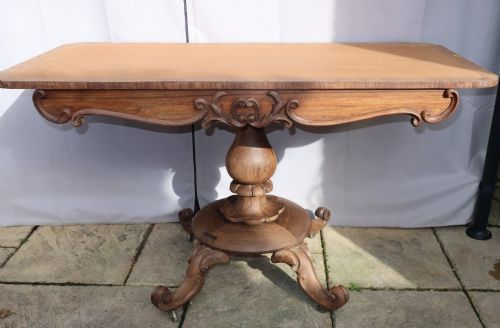
Rosewood Center Table
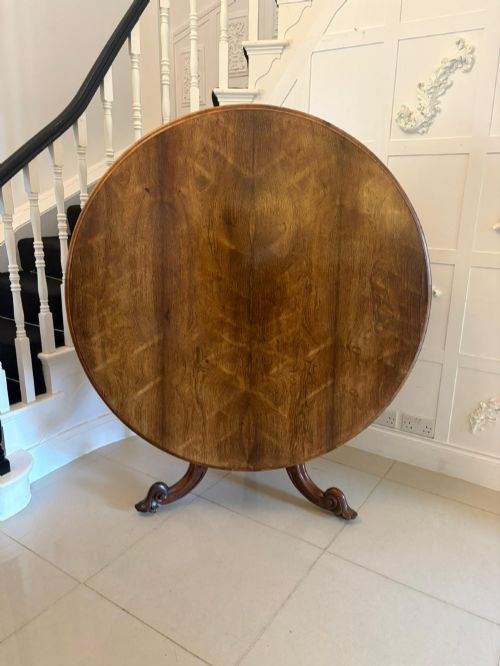
A rosewood centre table commands the room, bringing rich timber grain and period presence to the middle of a floor.
Rosewood Center Table
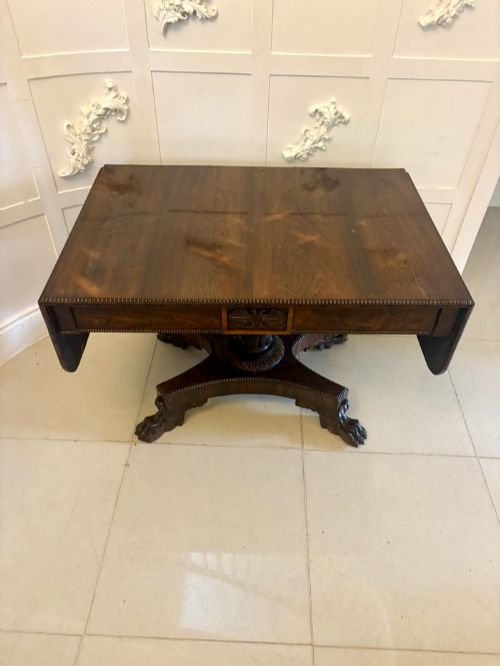
A rosewood centre table stands free in a room, designed to be viewed from all sides rather than pushed against a wall. The pieces found here span the nineteenth century, including Georgian, Regency, William IV, and Victorian periods, alongside specific forms like circular breakfast tables, library tables, and sofa tables.
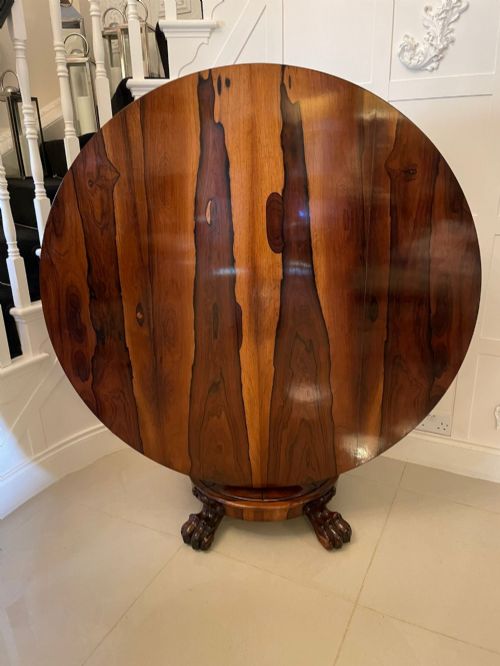
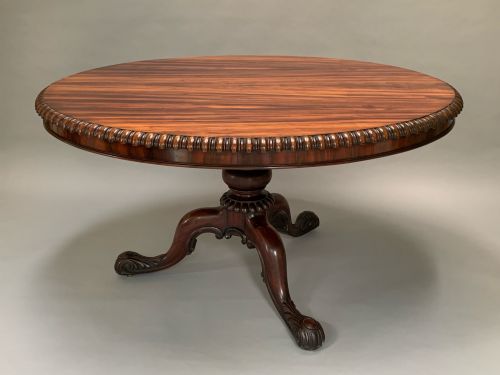
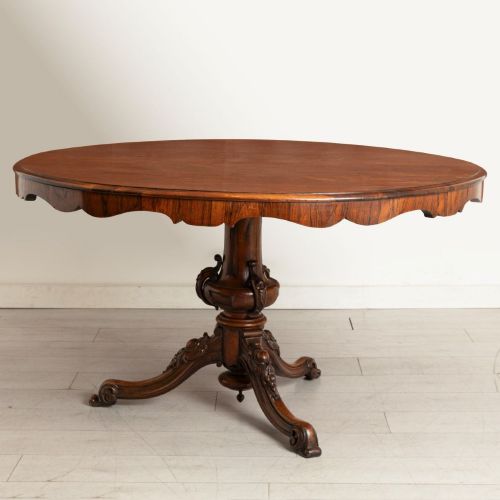
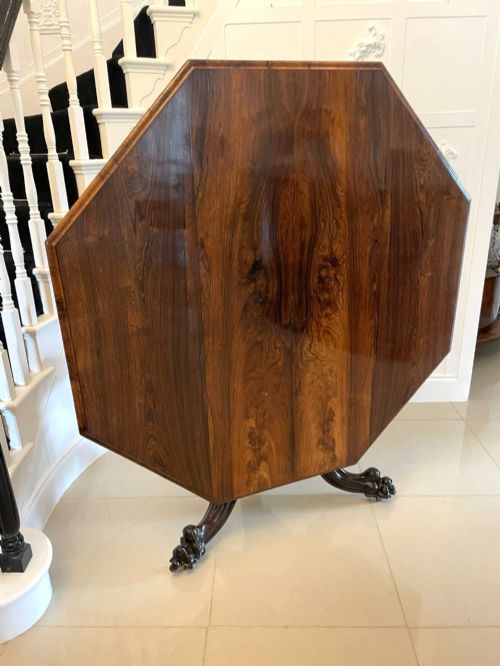
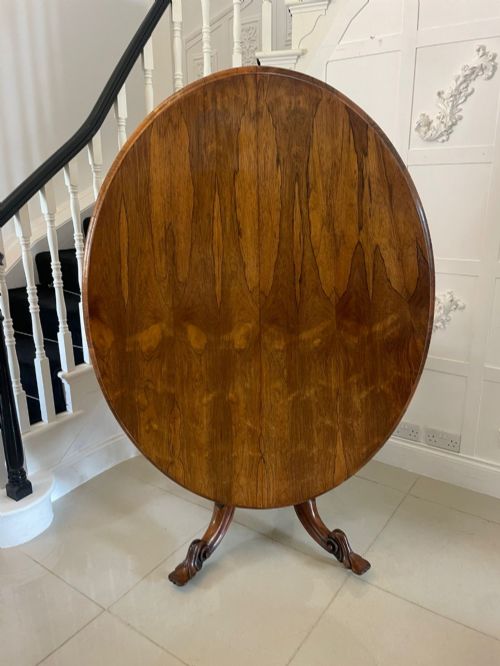
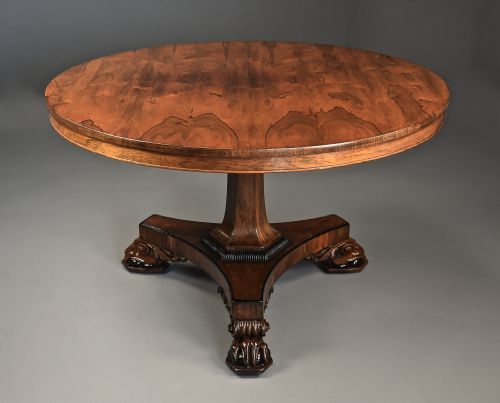
Most examples meet you as circular dining or loo tables resting on heavy central pedestals, or as rectangular library and occasional tables supported by carved legs. Makers and cabinetmakers of the period utilised the deep, figured grain of the timber to create striking visual focal points in grand drawing rooms and libraries.
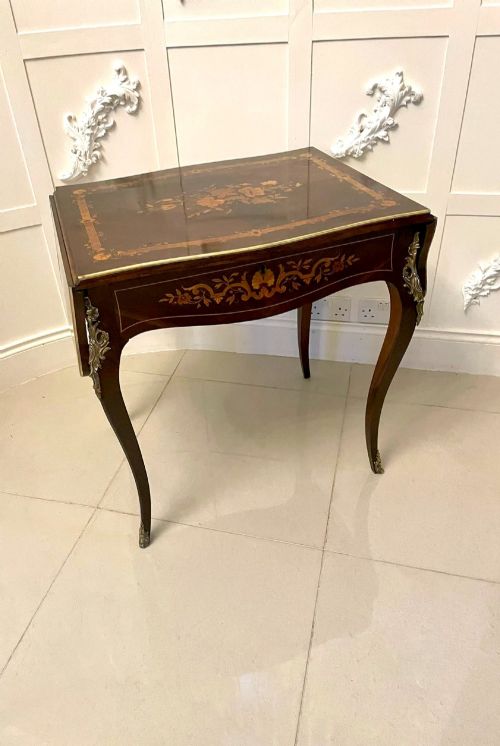
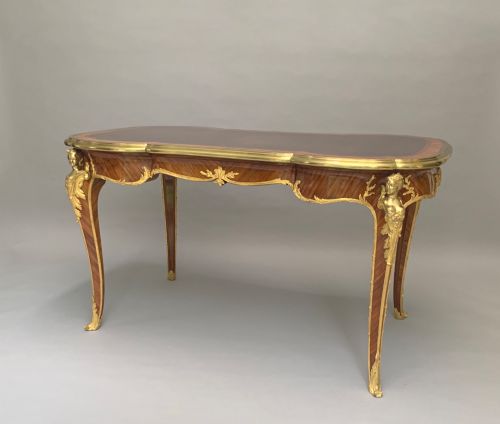
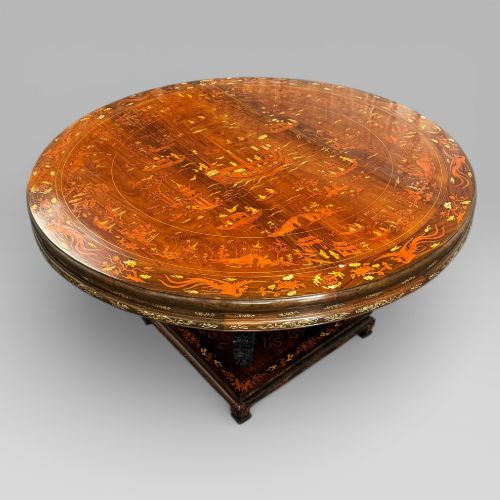
Origin and stylistic influences vary widely across the selection, encompassing French marquetry work, Anglo-Indian craftsmanship, and Chinese export pieces alongside standard British cabinetmaking. Whether you encounter a tilt-top breakfast table or a parquetry-inlaid occasional piece, each design serves the central placement for which it was originally built.
How they were made
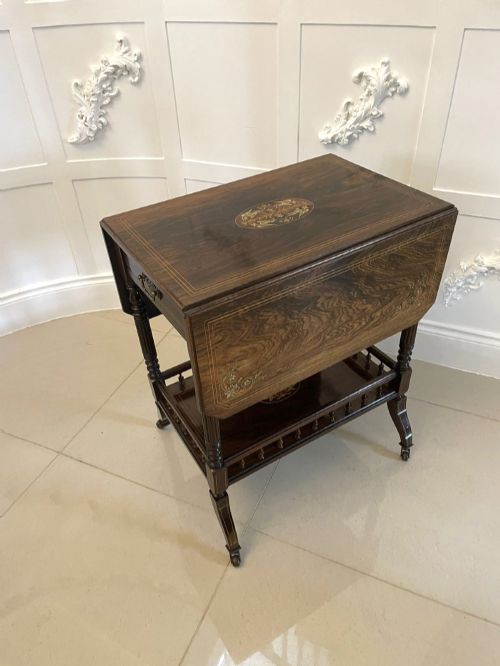
Cabinetmakers constructed these tables using solid rosewood or applied fine rosewood veneers over secondary timbers like mahogany, arranging the grain to catch the light. Brass inlay, ormolu mounts, and mother-of-pearl detailing were frequently integrated into the surfaces of finer examples, particularly during the Regency and Victorian periods.
Structural support relied on robust timber framing, utilising turned and carved solid rosewood bases, triform pedestals, and occasionally paw feet to bear the weight of heavy stone or timber tops. Marquetry and parquetry techniques involved cutting intricate patterns of contrasting woods, such as kingwood and fruitwood, to decorate the tabletops.
A sixteen-sided table proves that nineteenth-century makers could not resist turning basic geometry into an ambitious exercise in woodworking.
What varies in quality
The distinction between ordinary and exceptional work lies in the depth of the timber figuring and the precision of the cabinetmaking. Master workshops achieved superior harmony in the matching of veneer grains across a large circular top, ensuring the pattern radiates naturally from the centre.
Carving execution defines the higher tiers of the range, where floral motifs, paw feet, and pedestal bases display crisp hand-chiselled detail rather than soft or mechanical moulding. The integration of high-grade brass inlay, marquetry, or ormolu mounts also separates standard utility furniture from pieces produced by notable makers.
Francois Linke·Gillows·Edwards & Roberts·Mein of Kelso·Peters of Genoa
The Rosewood Center Table Glossary
- Marquetry
- Decorative veneer work forming pictorial or geometric patterns using various coloured woods. This technique requires immense skill to fit individual pieces together seamlessly.
- Parquetry
- Geometric mosaic woodwork used for flooring and tabletops. It relies on repeating angular shapes to create dynamic patterns across the surface.
- Ormolu
- Gilt bronze mounts applied to furniture for decorative effect. The technique involves coating bronze in a mercury-gold amalgam and firing it.
- Tilt-top
- A tabletop mechanism allowing the surface to pivot vertically for storage when not in use. It is commonly found on nineteenth-century breakfast and loo tables.
- Crossbanding
- A border veneer applied around the edge of a tabletop with the grain running perpendicular to the centre. This frames the primary timber and protects the edge grain.
Rosewood Center Table: Frequently Asked Questions
Where should a centre table go?
These tables are designed to float in the middle of a room, allowing circulation and appreciation from every angle. They traditionally anchor large reception spaces, libraries, or grand entrance halls.
Ensure there is adequate walking space around the perimeter so the piece functions naturally within the room's layout without obstructing pathways.
What is a loo table?
A loo table is a nineteenth-century circular or oval table designed for the popular card game of loo. They typically feature a tilt-top mechanism for easy storage against a wall.
In modern settings, their generous proportions make them suitable as occasional dining or display tables while retaining their historic tilting function.
How do I date a rosewood table?
Dating relies on stylistic clues, construction methods, and the specific characteristics of the timber and mounts. Regency and William IV pieces often display bold classical pedestals and brass inlay, while Victorian examples lean toward heavier carving and marquetry.
Cross-referencing leg turnings, base construction, and veneer thicknesses helps narrow the decade of manufacture.
Can I use a library table for dining?
Library and centre tables vary in height and knee clearance, so checking dimensions is essential before using one for dining. Many nineteenth-century examples offer ample surface area and sturdy pedestals.
Consider pairing the table with appropriate period chairs to ensure comfortable seating height relative to the table apron.
How do I care for rosewood?
Rosewood benefits from stable indoor humidity and protection from direct sunlight, which can fade the rich timber tones over time. Regular dusting with a soft, dry cloth preserves the polished finish.
Avoid commercial silicone sprays and consult a professional restorer if the surface requires deep cleaning or wax maintenance.