
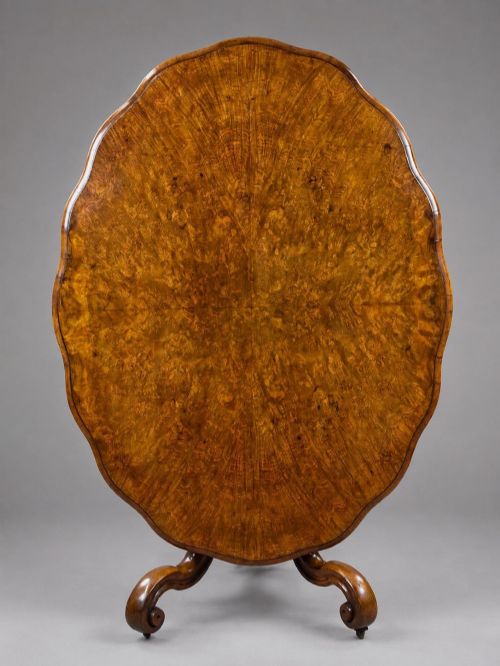


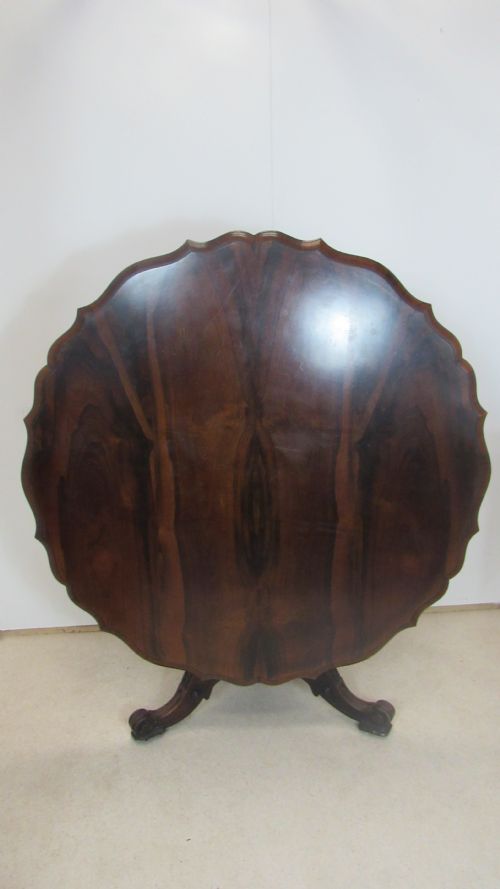


Scalloped Edge Dining Table
A scalloped edge dining table brings distinctive movement and organic shape to a room, offering an inviting surface for meals.
Identifying Scalloped Edge Dining Table Forms
Forms include pedestal dining tables, centre tables, campaign silver tables, and complete dining sets with chairs. Woods such as rosewood, burr walnut, walnut, teak, oak, and hardwood appear alongside brass and fabric elements.
The style crosses conventional boundaries, appearing in Victorian, Anglo-Indian Colonial, and Art Deco iterations. Buyers seeking this phrase encounter circular shapes, shaped tops, and pedestal supports designed for everyday dining or central display.
Materials and Construction Methods
Cabinet makers utilised dense hardwoods like rosewood, burr walnut, walnut, teak, and oak to build these tables. The selection of figured veneers, particularly burr walnut and rosewood, highlights the natural grain across the shaped surfaces.
Structural elements frequently involve pedestal bases that support the heavy timber tops. Additional materials such as brass fittings and fabric components integrate into specific forms like campaign silver tables and dining sets.
Retail Price Guide 2026
Typical UK retail prices for scalloped edge dining table, calculated from the Sellingantiques database of over a million retail prices indexed since 2003. This retail price guide relies exclusively on Sellingantiques data; no external sources or auction records are used, so the figures do not describe the wider market.
Several tables feature curves shaped by hand long before power tools existed, ensuring no two perimeters match entirely.
Distinctions in Quality and Execution
Quality reveals itself in the precision of the curves along the perimeter and the selection of timber veneers. Finer examples display symmetrical grain patterns across burr walnut and rosewood surfaces that enhance the visual rhythm of the curves.
The stability of the pedestal base and the integrity of the joinery separate superior pieces from standard iterations. Well-executed execution ensures that the decorative outline remains balanced with the structural weight of the timber top.
The Scalloped Edge Dining Table Glossary
- Burr walnut
- A prized timber harvested from the warted growths of walnut trees, yielding intricate, swirling grain patterns. It adds rich texture to nineteenth-century table tops.
- Pedestal table
- A table supported by a central column rather than four corner legs. This construction allows greater legroom and often incorporates a circular shaped top.
- Rosewood
- A heavy, durable hardwood with a deep reddish-brown colour and dark grain markings. It was a favoured material for Victorian dining and centre tables.
- Campaign table
- Portable furniture designed for travel by military officers or administrators. These pieces often feature modular construction and brass hardware.
- Centre table
- A freestanding table designed to be viewed from all sides in the middle of a room. They frequently feature circular or shaped tops suitable for display.
Frequently Asked Questions
How do I use a scalloped edge dining table?
These tables function primarily as dining surfaces or central display pieces within a room. The curved perimeter softens the geometry of a dining space while accommodating seating for meals.
Peculiar shapes such as circular rosewood tops and pedestal bases allow for flexible chair placement and straightforward movement around the perimeter.
What periods do these tables come from?
The available pieces originate from the Victorian era, the nineteenth century, and the nineteen thirties. Specific dates recorded include eighteen fifty and eighteen seventy.
Design influences range from traditional Victorian and Anglo-Indian Colonial to geometric Art Deco styles, reflecting shifts in cabinet making across decades.
Which woods are most common?
Makers relied heavily on rosewood and burr walnut for their rich grain and dark tones. Other utilised materials include standard walnut, teak, oak, and general hardwood.
Some pieces incorporate contrasting elements like brass hardware and fabric components to complete specific colonial or campaign forms.
How do I care for rosewood and walnut?
Maintain these timber surfaces by keeping them away from direct sunlight and excessive moisture. Regular dusting with a soft cloth preserves the polished finish of the wood.
Avoid chemical polishes that can build up over time and obscure the natural figure of burr walnut or rosewood veneers.
Are these tables suitable for small spaces?
Pedestal designs and circular tops often work well in compact rooms because they eliminate corner legs that restrict movement. The curved edges help reduce visual bulk in tighter interiors.
Selecting a table with a central column provides maximum clearance for chairs tucked underneath when not in use.