

Rosewood Bureau Desk
A rosewood bureau desk combines rich timber with a fitted writing compartment, offering a compact workspace built for formal correspondence.
Rosewood Bureau Desk
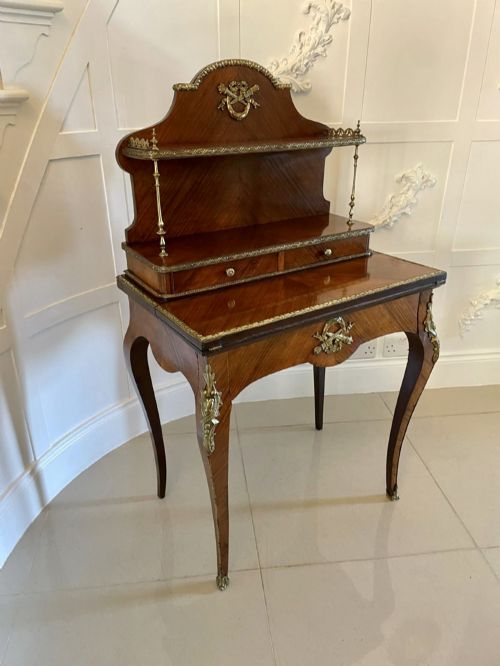
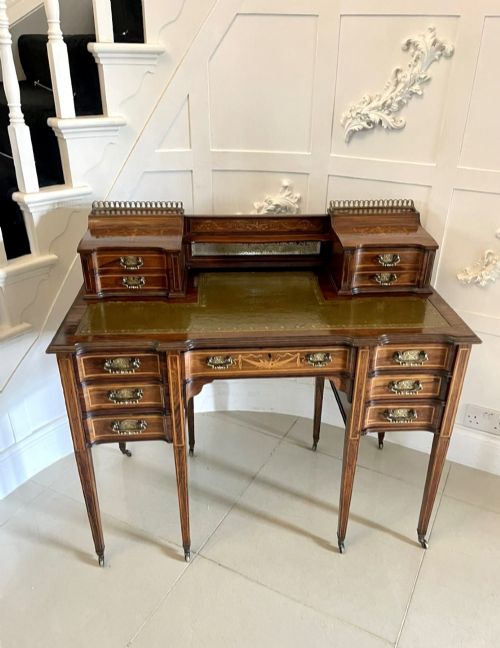
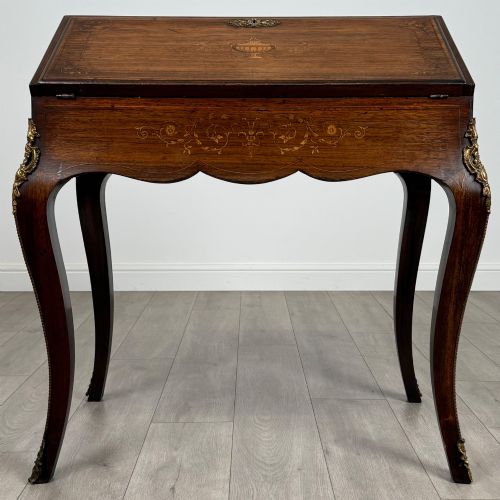
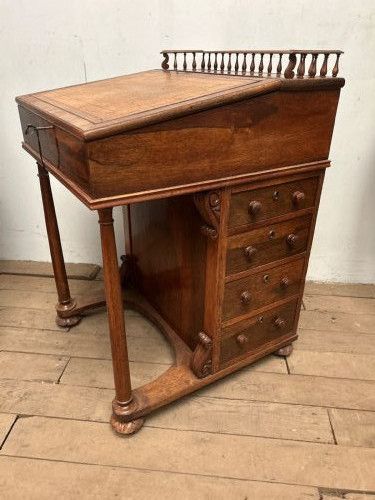
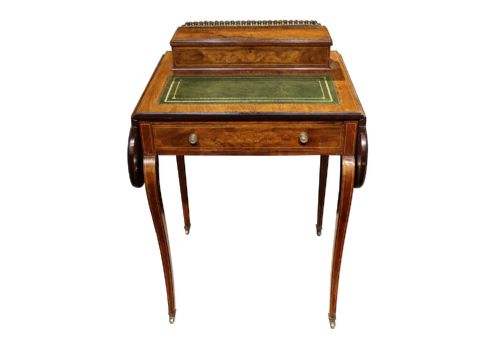
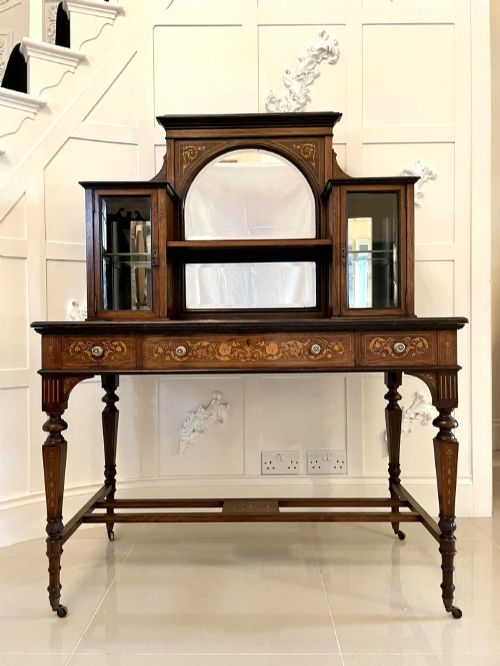
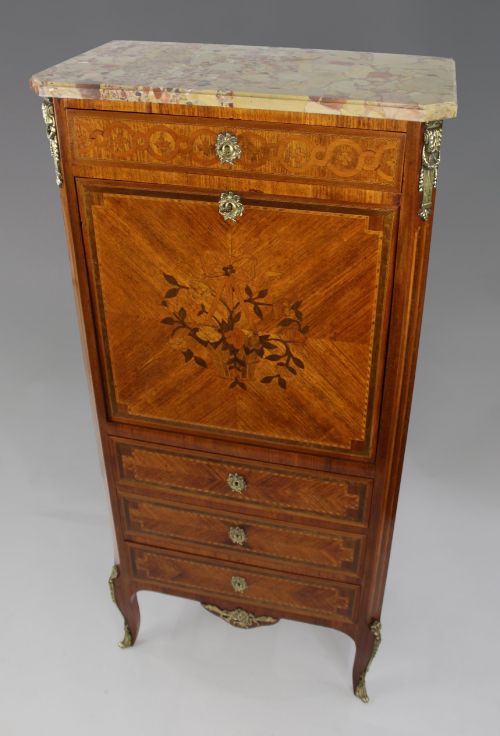
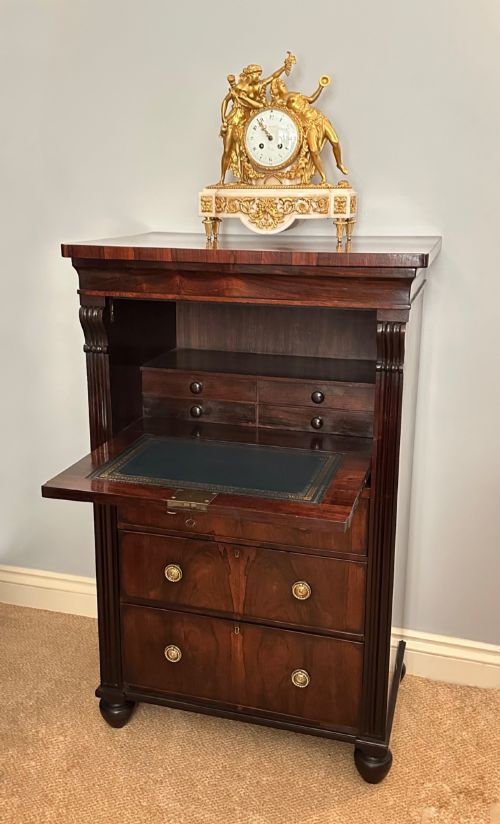
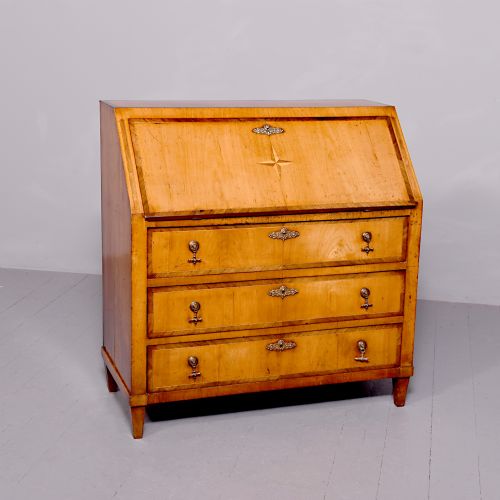
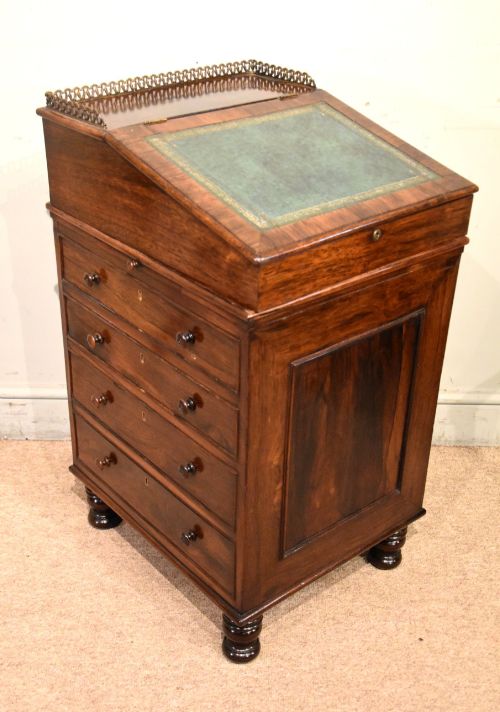
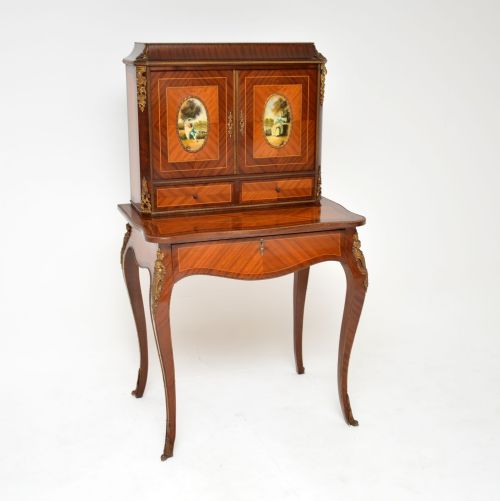
A rosewood bureau desk encompasses various compact writing furniture forms, including sloping fall-front bureaux, Davenport desks, and refined Bonheur du Jour writing cabinets. These pieces emerge predominantly from the nineteenth century, spanning the Regency and Victorian eras, alongside select eighteenth-century examples and Edwardian revivals.
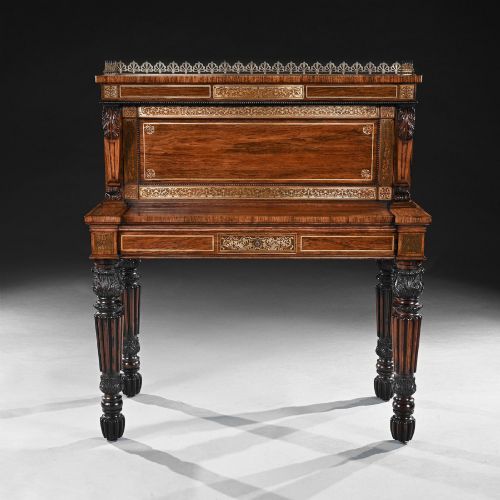
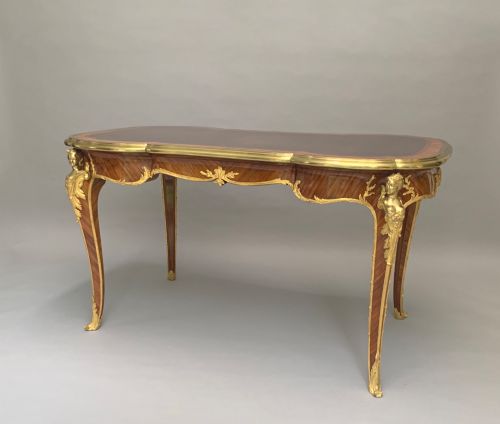
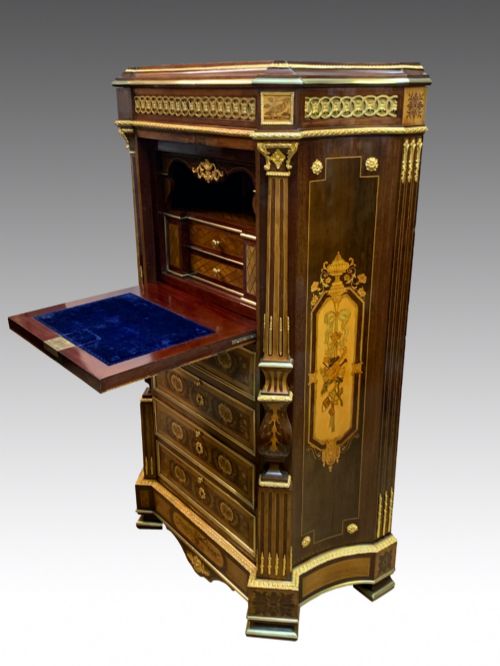
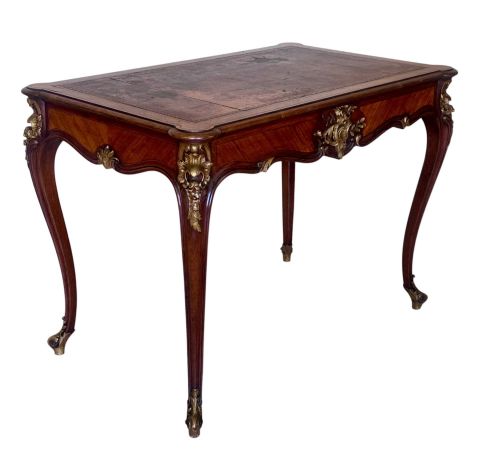
Buyers frequently encounter English and French interpretations on this page, ranging from Davenport desks with side compartments to elaborate Continental marquetry writing tables. The selection balances sturdy English brass-inlaid cabinetwork with ornate French Louis XV style pieces bearing ormolu mounts.
Materials and construction
Makers constructed these desks using dense tropical rosewood timber, often laid as veneers over secondary woods or combined with kingwood, satinwood, and tulipwood for intricate marquetry and parquetry patterns. Metal enrichment played a major role, utilising cast ormolu mounts and precise brass stringing inlaid directly into the grain.
Internal compartments incorporated leather writing surfaces, small drawers, and secret caches, showcasing meticulous joinery. Structural stability relied on solid framing for carcases, while decorative surfaces depended on skilled hand-cutting of contrasting wood veneers.
Several pieces conceal secret drawers designed to keep private correspondence entirely out of sight.
Standards of craftsmanship
Quality rests upon the precision of the timber matching and the sharpness of the brass inlay work rather than mere age alone. Superior examples display seamless parquetry where grain directions complement the overall shape of the bureau.
Hardware and mounts distinguish fine workshop production from standard commercial output. Cast ormolu mounts with crisp chasing and well-fitted internal locking mechanisms indicate higher tier manufacturing origins.
Gillows Oxford Street Workshop·Francois Linke·Maison Krieger·CH. Jeanselme and Co·Donald Ross·John MaClean
The Rosewood Bureau Desk Glossary
- Bureau
- A writing desk featuring a sloping lid that opens to reveal a fitted interior of pigeonholes and small drawers.
- Davenport
- A compact pedestal writing desk with a sloped, hinged writing surface and side drawers, originating in the nineteenth century.
- Marquetry
- Decorative veneer work forming pictorial or geometric patterns using various coloured wood veneers.
- Ormolu
- Gilded bronze applied as decorative mounts, feet, and gallery rails on fine furniture.
- Bonheur du Jour
- A light lady's writing desk featuring a small cabinet or superstructure on the top surface.
Rosewood Bureau Desk: Frequently Asked Questions
How do I use a bureau desk daily?
Lower the fall-front lid to reveal the writing surface and internal compartments for storing stationery.
Close the lid when finished to conceal correspondence and maintain a tidy room appearance.
Where should I place my rosewood desk?
Position the piece away from direct sunlight and heat sources to prevent the rosewood veneer from drying and cracking.
Freestanding models look striking in the centre of a study, while smaller versions fit neatly against a drawing room wall.
How do I identify Regency pieces?
Regency items typically display classical restraint, often incorporating striking brass inlay lines against dark rosewood surfaces.
Construction details and proportions from the early nineteenth century help distinguish these from later Victorian revivals.